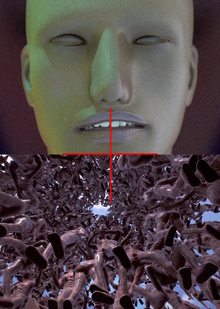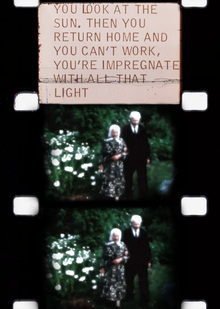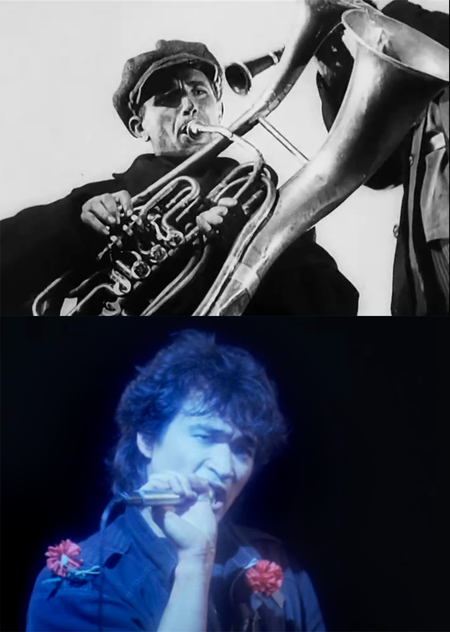
The musician—a figure who was not always prominent in Soviet cinema. Performers could boldly assert themselves only in «Perestroika» films; they naturally captured the audience’s attention precisely when domestic music was undergoing a true rock revolution. Nevertheless, the musician as a character existed on screens since the very beginnings of Soviet cinematic art. It is noteworthy that even in the silent film era, trumpeters, horn players, and drummers constantly appeared on screen—their presence was essential despite the fact that the melodies of their instruments could not be heard. Therefore, in a production, the musician is important not only as a music performer but as an archetype reflecting the mood of the era, the values, struggles, and needs of the people: for what compels a character to take up an instrument, how they interact with the audience, and the style in which they play can communicate far more than the lyrics or the melody of their song.
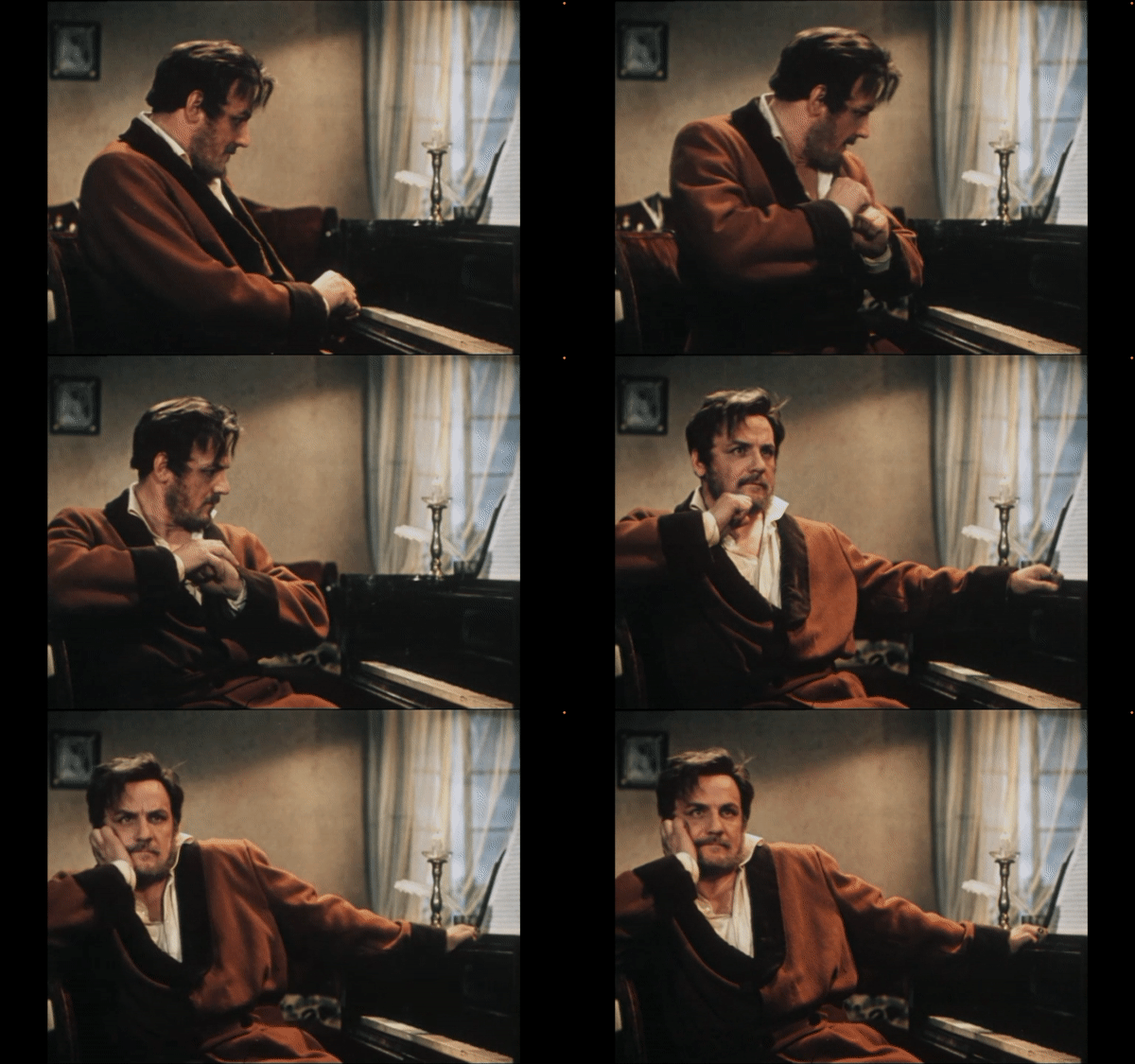
«Glinka» (1952, directed by Grigory Alexandrov)
A seemingly simple, straightforward motif—a person playing an instrument—gains depth, multi-dimensionality, and even contradictions when examined chronologically. After all, during the period when the political system—and consequently, the film production process and the lives of every Soviet citizen—was undergoing radical changes, this image could not remain static. In Sergei Eisenstein’s «Old and New, ” the orchestra is barely discernible among shots of working agricultural machinery; in „Asse, ” the character Viktor Tsoi, conversely, „managed to appear maximally separate from everything else“ (Barabanov, 2008). There is likely little in common between Arkady Dzyubin and the Banana Boy—the protagonists of Mark Bernes in the film „Two Fighters“ and Sergei Bugaev in the same „Asse.“ Two cult films are separated by four decades; the characters sing about different things, play differently, and do so for different reasons—yet the underlying method remains the same.
«Assa» (1987, directed by Sergei Solovyov)
In the visual study, «The Evolution of the Musician’s Image in Soviet Cinema, ” we will trace the transformation of the self-presentation and self-perception of musicians in Soviet cinema from their emergence until their demise—analyzing their appearance, emotions, gestures, modes of interaction with others, and the space surrounding the characters. It can be argued that new archetypes emerged with the arrival of different periods in domestic film art, and over seven decades, six of the most prominent and significant performer categories were identified: (1) the musician as part of the system, (2) the comedian, (3) the war casualty, (4) the genius, (5) the musician who speaks through music, and (6) the rebel. The films for each section of the study are presented in chronological order, and a category may span several decades, as these archetypes were reinforced within cinema and did not disappear with the advent of subsequent periods.
Part of the system
«Enthusiasm: Symphony of the Donbas» (1930, dir. Dziga Vertov)
At the dawn of Soviet cinema, the musician was always part of a large mechanism—usually a military orchestra. The musical instrument became a tool in the literal sense—an instrument, because the melodies being performed were most often a tool of propaganda. For the performers, music was not yet an end in itself, but a means to an end. The musicians' movements were precise and honed: the role of the orchestral player was to play their part flawlessly and not let down the others.
«Kino-Eye» (1924, directed by Dziga Vertov)
«Battleship Potemkin» (1925, dir. Sergei Eisenstein)
«Battleship Potemkin» (1925, dir. Sergei Eisenstein)
A musical instrument is visually juxtaposed with weapons in Sergei Eisenstein’s film «Battleship Potemkin.»
«Mother» (1926, directed by Vsevolod Pudovkin)
«Old and New» (1929, directed by Sergei Eisenstein)
«Battleship Potemkin» (1929, directed by Sergei Eisenstein)
In Sergei Eisenstein’s «Old and New, ” musicians accompany the noise of passing cars with „the sounds of military orchestras, the sounds of demonstrations, waving banners, red stars, shouts of greetings, martial slogans, and orators’ speeches, etc., introduced into the sounds of the machines, into the sounds of the competing workshops“ (Vertov, 2008). Parallel montage is used to emphasize the visual similarity between the construction of musical instruments and the internal workings of new technologies.
«Enthusiasm: Symphony of the Donbas» (1930, dir. Dziga Vertov)
«Man with a Movie Camera» (1929, dir. Dziga Vertov)
The montage techniques in Dziga Vertov’s «Man with a Movie Camera» also reveal that the pianist is merely one component of a complex theatrical system.
Comic
«Kuban Cossacks» (1949, directed by Ivan Piryev)
With the arrival of the Stalin era, the genre of musical comedy gained popularity: music on screen began to be performed for amusement and entertainment. The image of the performer was associated with laughter and was not taken seriously; the musician was often placed in a comical situation or joked with those around them. The hero’s face, or that of his audience, always held a wide smile.
«A Ticket to Life» (1931, directed by Nikolay Eck)
«A Ticket to Life» (1931, dir. Nikolai Ekke)
«Merry Guys» (1934, directed by Grigory Alexandrov)
While the main character in Grigory Alexandrov’s film «Merry Fellows» plays a melody on a pipe, cows, goats, and piglets burst into the dining room set for guests—a comedic effect achieved through the use of parallel editing.
«Cheerful Guys» (1934, directed by Grigory Alexandrov)
«Happy Guys» (1934, directed by Grigory Alexandrov)
«Circus» (1936, directed by Grigory Alexandrov)
«The Rich Bride» (1937, directed by Ivan Piryev)