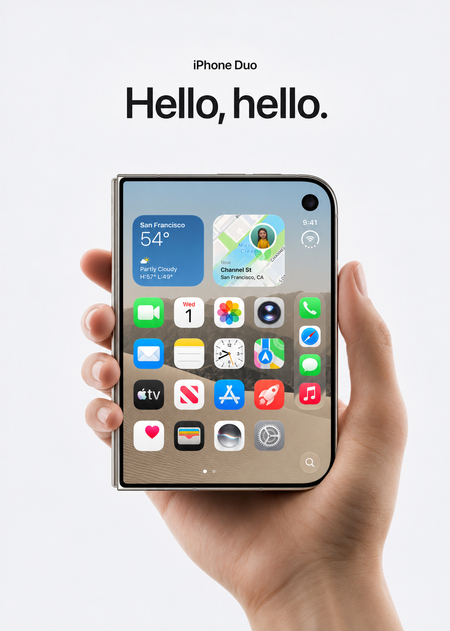
For many years, Apple perfected the familiar iPhone form factor, but now it offers a device that can fold in half. This in itself is attention-grabbing, but a more intriguing question arises. How do you convince a person that the new design genuinely changes their smartphone experience, rather than just looking unusual?
Concept.
The research concept involves analyzing how Apple presents the iPhone Duo using visual and auditory techniques and explains the benefits of its unconventional foldable design. The main question is how to convince the viewer that the change in the smartphone’s form truly unlocks new possibilities, rather than merely attracting attention.
The core of the research is the hypothesis that Apple makes the new technology comprehensible through familiar, everyday scenarios. The company employs short vignettes, humor, editing, visual juxtapositions, and sound to generate interest in the device and address potential consumer doubts.
The study examines how the commercial is structured, what benefits Apple highlights, and why it chooses these specific methods of demonstration. Special attention is paid to the perception of the advertisement—its emotional impact and how convincingly it conveys the product’s central idea.
Forming the First Impression.
The first thing Apple focuses on is not the camera, the processor, or other technical specifications. The main event is the phone’s unfolding itself. One simple motion transforms the familiar iPhone into a device with entirely different capabilities.
Apple uses a completely white background, drawing the focus solely to the device and a person’s hands. This design choice allows viewers to concentrate on the change in form without distraction from the surrounding environment. When closed, the iPhone fits comfortably in one hand, but upon unfolding, it transforms into a large screen that is easier to manage with two hands. The difference in scale becomes evident without the need for additional explanations.
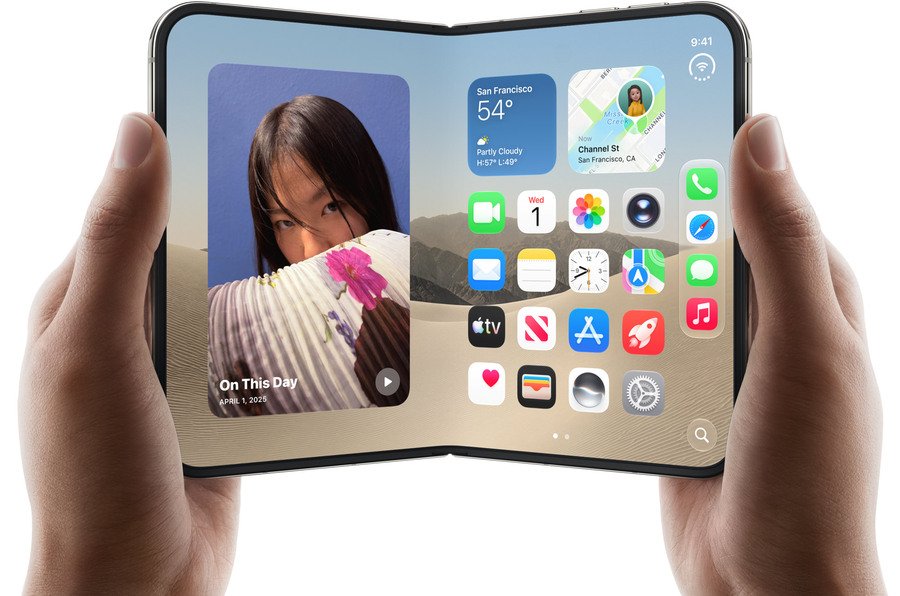
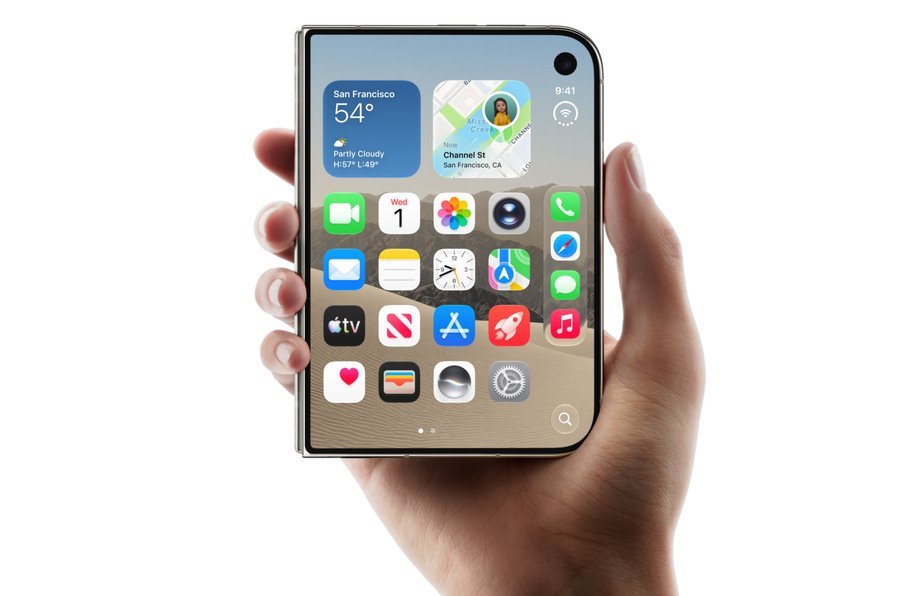
Interestingly, the interface remains recognizable. Viewers see familiar iOS applications and elements, just on a significantly larger scale. Apple presents this new design not as something entirely foreign, but as an extension of the familiar iPhone user experience.
Streamlining communication.
A single impressive reveal is not enough to convey the benefits of a new device. For the buyer, it’s not just about seeing how the phone’s form changes; it’s about understanding how they will be able to use it differently.
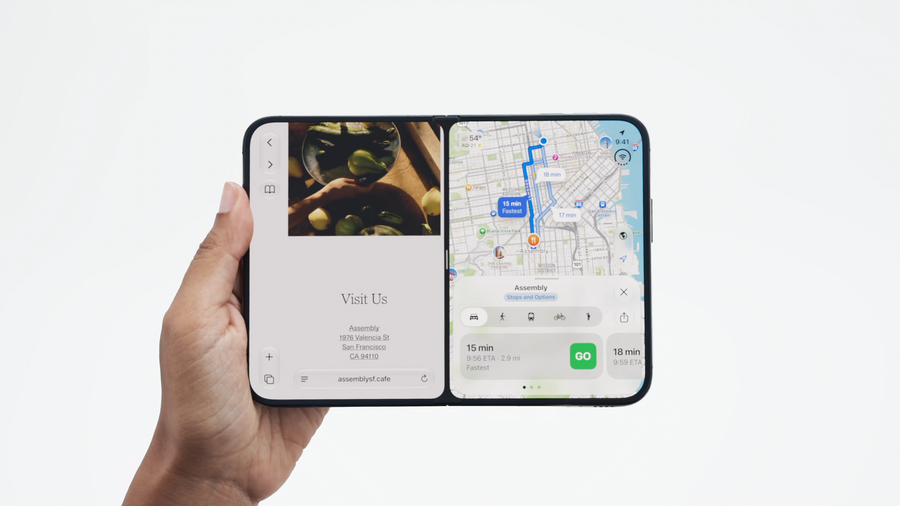
In an Apple advertisement, multitasking is shown not just through individual images, but through a sequence of actions. A user finds a restaurant in Safari, opens Maps next to it, and immediately plots a route without closing the page. The applications can then be swapped or the combination can be saved for later use. Instead of simply stating that split-screen functionality is available, Apple demonstrates a concrete, everyday scenario. Because of this, the viewer understands not only how the feature works but also how many unnecessary switches it allows them to skip.
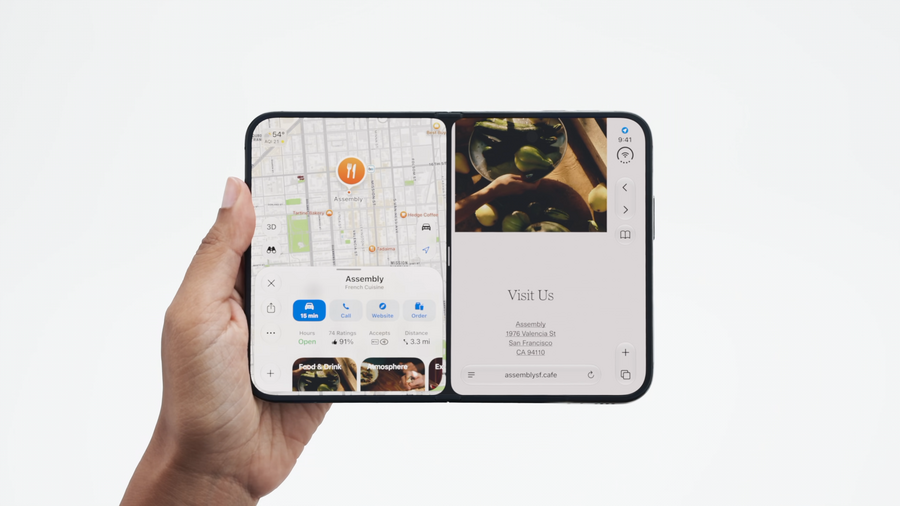
Humor in Advertising Communication.
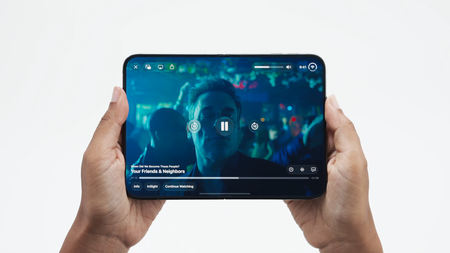
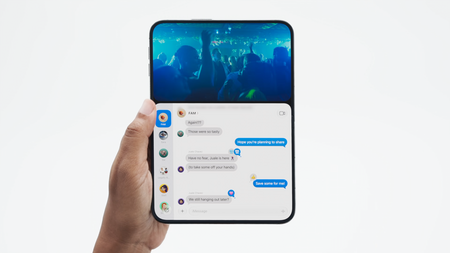
Following Apple, another model of multitasking is presented. On one half of the screen, a TV series is playing, while on the other, a chat with friends is open. The narrator plays on the title of the series, Your Friends & Neighbors, linking what is happening on the screen with the ability to communicate with friends and neighbors simultaneously.
This small touch of humor makes the demonstration of the feature more vivid. Meanwhile, the white background, close-ups of the phone, and finger movements help the viewer easily track the interface changes.
Complex technology through a simple scenario.
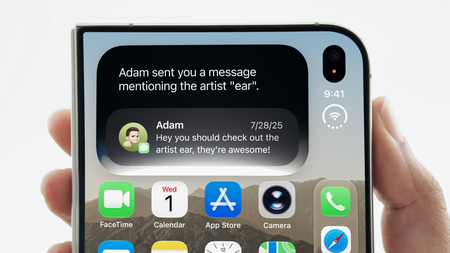
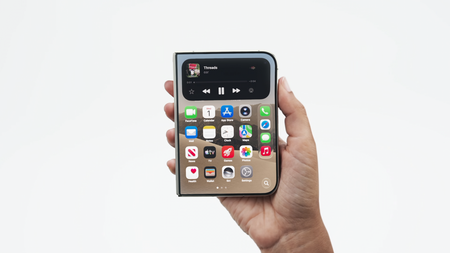
Following the demonstration of Apple’s multitasking capabilities, the focus shifts to Siri AI. The user asks Siri which performer their acquaintance Adam mentioned. Siri locates the message and provides the musician’s name, after which it receives the next command and plays the song.
In this scene, Apple demonstrates the capabilities of artificial intelligence through a simple scenario. Instead of listing features, the viewer sees Siri independently find information in a text thread and immediately help move on to the next action. Everything is explained in just a few seconds.
Visual contrast.
A foldable screen can raise concerns about usability, especially because of the crease and potential surface imperfections. Apple addresses these worries through 3D visualization, revealing the display’s internal structure and showing how numerous delicate layers connect into a unified whole.
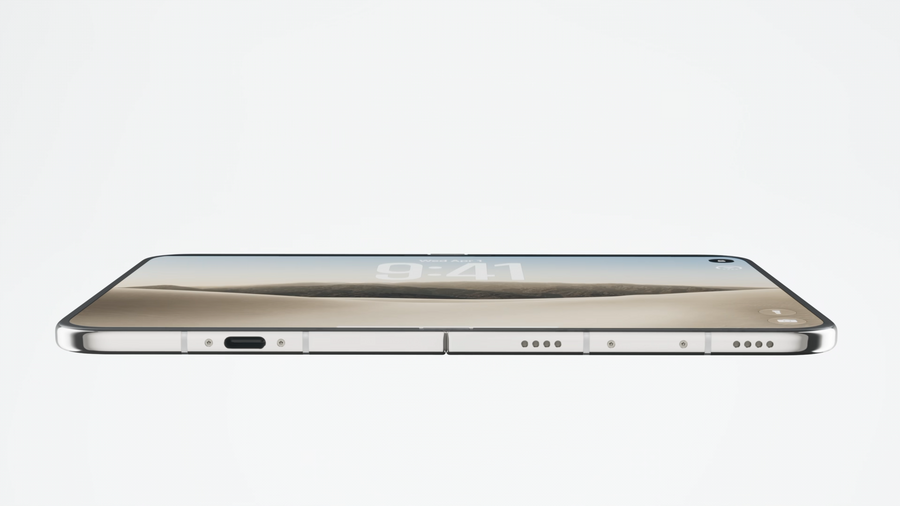

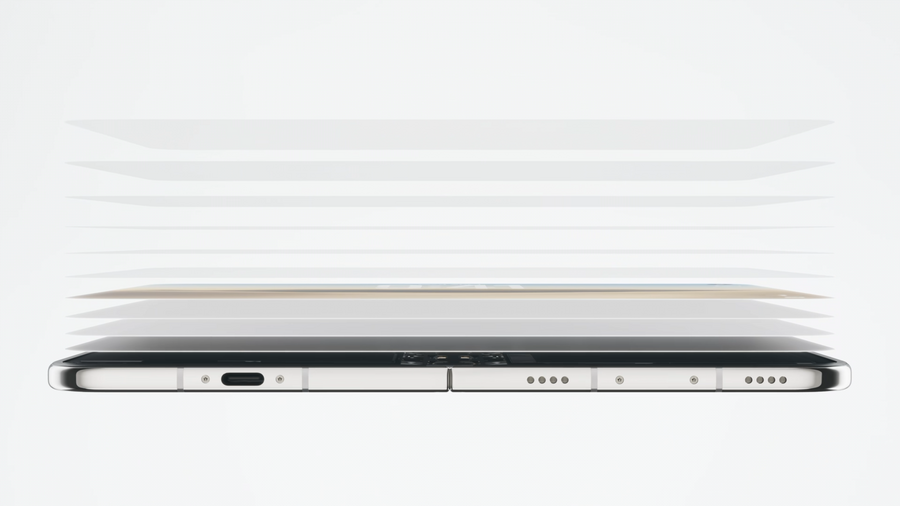
Rather than simply claiming screen smoothness and glare reduction, the company makes the technology visually understandable. The fluid motion and precise connection of elements create a sense of engineering thoughtfulness. Although this animation does not prove the actual durability of the display, it helps make the advertising promise more convincing.
Building Trust.
For a foldable smartphone, the reliability of the mechanism is of particular importance. A buyer might doubt how convenient and durable a device will be that must be constantly opened and closed. Therefore, Apple pays special attention to the hinge, even though most users will never see its internal workings.



Mentioning over a hundred components and precisely calculated folding force primarily builds trust. The company endeavors to demonstrate that a simple movement is backed by significant engineering work, and that a complex design does not equate to unreliability.