Navigator:
- Concept
Concept
Simulating photorealistic fur and hair is one of the most complex challenges in creating visual effects for film, because hair and fur are not static textures. They are a physical system composed of millions of fine structures that must interact with light, create effects of scattering and specular highlights, adhere to gravity, react to moisture, and look natural next to the actor. This is precisely why the evolution of technology in this field has proceeded not only through refining polygon mesh density and developing shaders, but also through writing complex algorithms that govern the behavior of every strand of hair on a character’s body, capable of imitating undercoat and downy texture.
The main challenge for VFX artists is that the human eye is highly sensitive to unnatural hair movement. If a digital creature’s fur doesn’t clump under rain, get covered in snow, or move too uniformly, the viewer instantly perceives the artificiality, and the character falls into the «uncanny valley.» Unlike skin, where key parameters involve static detail—such as pores, wrinkles, and subsurface scattering—the focus for fur and hair is precisely on dynamics and physical accuracy.
The goal is to trace the evolution of hair and fur creation technologies in cinema—from wigs and imitation to fully procedural algorithms. The research question is: what visual parameters of hair and fur allow the audience to perceive them as «alive» and physically authentic, and how do these parameters transform depending on the technology applied?
With technological advancements, the approach to creating hair has evolved: from manual rigging and shader creation to systems with hair guides and controllers for managing dynamics. Modern cinema more frequently utilizes procedural algorithms, which generate individual hair strands across a surface based on density map and curve data. This method allows for the creation of complex hairstyles and the simulation of moisture, curls, dry ends, and animal fur.
This research is based on interviews with VFX supervisors, technical papers from the SIGGRAPH conference, and articles from the Cinefex journal. Additional sources include VFX breakdowns and materials from the studios DNEG and Sony Pictures Imageworks. This approach not only allows for an in-depth study of the technical intricacies of the work but also enables an analysis of how pipeline changes within studios have impacted simulation fidelity. It should be noted that the studios do not employ a single workflow, as different tasks require bespoke configurations. This is precisely why VFX artists and technical artists resort to building their own custom systems—systems that are based on a common underlying technology but possess their own specific solver and rendering setups.
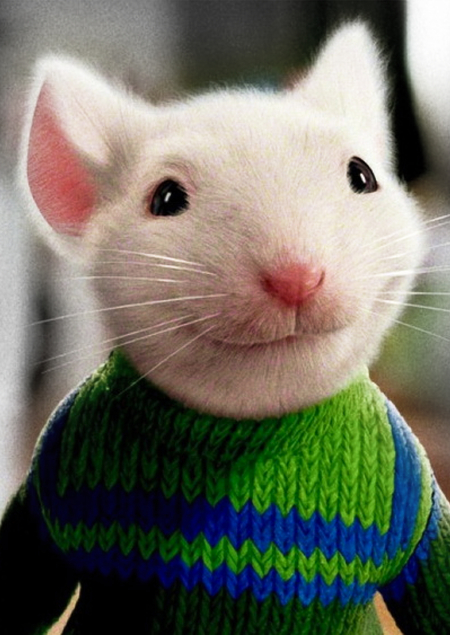
«Stuart-Little»: simulation of wet fur and shaders.
4