Introduction
Starbucks is one of the world’s largest coffeehouse chains, founded in 1971 in Seattle, USA. The company operates thousands of stores globally and has become a recognizable lifestyle brand rather than simply a coffee retailer.

Pumpkin Spice Latte, Starbucks
The brand primarily targets students, young professionals, and urban consumers who value convenience, lifestyle, and personalized experiences.
Starbucks positions itself as a «third place» between home and work—a welcoming environment where people can relax, socialize, study, or work. The brand emphasizes premium coffee, personalized customer experience, and a sense of community.

Starbucks customers
Communication channels
Social Media
Starbucks uses Instagram primarily for visual storytelling and lifestyle marketing. The platform reinforces the brand’s «third place» narrative by presenting coffee consumption as part of a comfortable and socially connected lifestyle.
On TikTok, Starbucks focuses on audience engagement and trend participation. Short-form videos help the brand reach younger consumers while maintaining a friendly and approachable image.
Facebook is used to communicate company news, local events, and promotional campaigns. The platform helps Starbucks maintain relationships with local communities and existing customers.
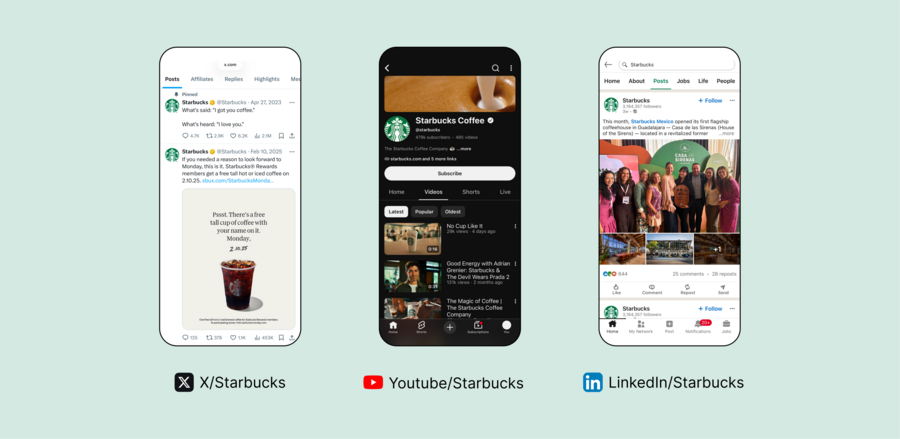
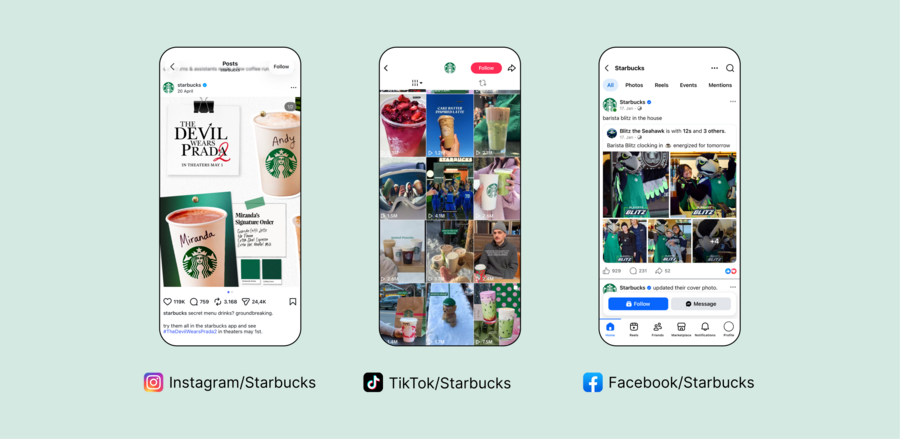
Starbucks social media channels
Starbucks uses X for real-time communication and customer support. The platform enables direct interaction with stakeholders and facilitates quick responses to customer concerns.
YouTube allows Starbucks to share long-form content that communicates brand values, sustainability efforts, and corporate storytelling.
LinkedIn serves as a platform for corporate communication, employer branding, and stakeholder relations. Starbucks uses it to communicate its organizational values and business initiatives.
PR Strategies
According to Relationship Management Theory, successful public relations is based on trust, commitment, satisfaction, and mutual benefit. Starbucks strengthens these relationships through personalized communication and customer engagement.
Starbucks focuses on creating long-term relationships with customers rather than simply promoting products.
— Starbucks Rewards loyalty program — Personalized offers through the mobile app — Community events and local initiatives — Customer service interactions on social media
Fully Functioning Society Theory argues that organizations should contribute to public discussion and societal well-being. Starbucks communicates its environmental and social commitments to inform and engage stakeholders.
Starbucks uses communication to address social and environmental issues.
— Reusable cup campaigns — Ethical coffee sourcing initiatives — Diversity and inclusion campaigns — Sustainability reports
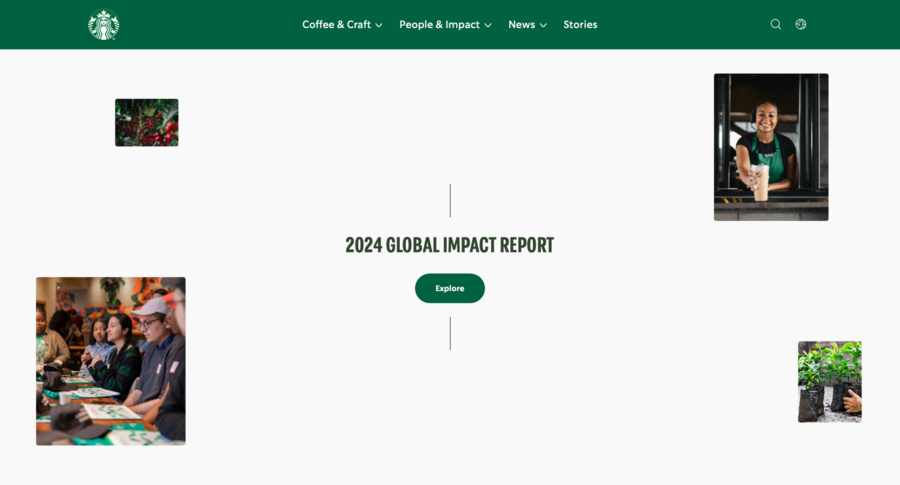
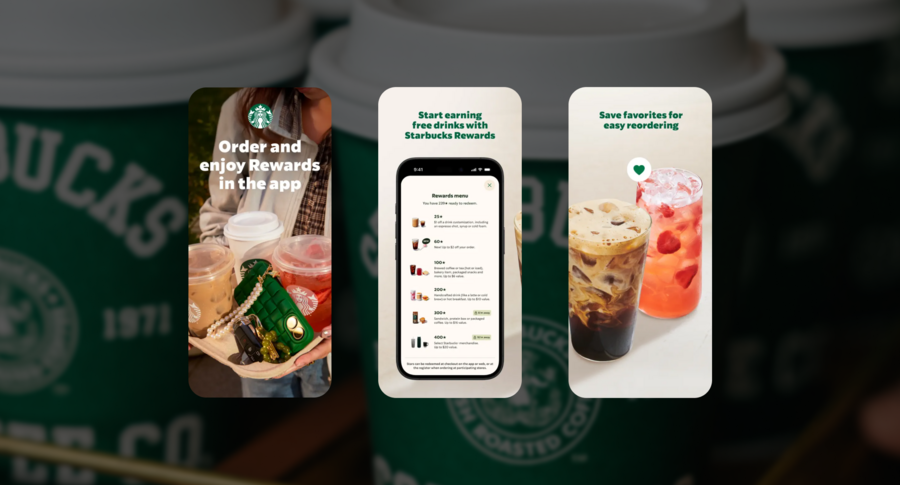
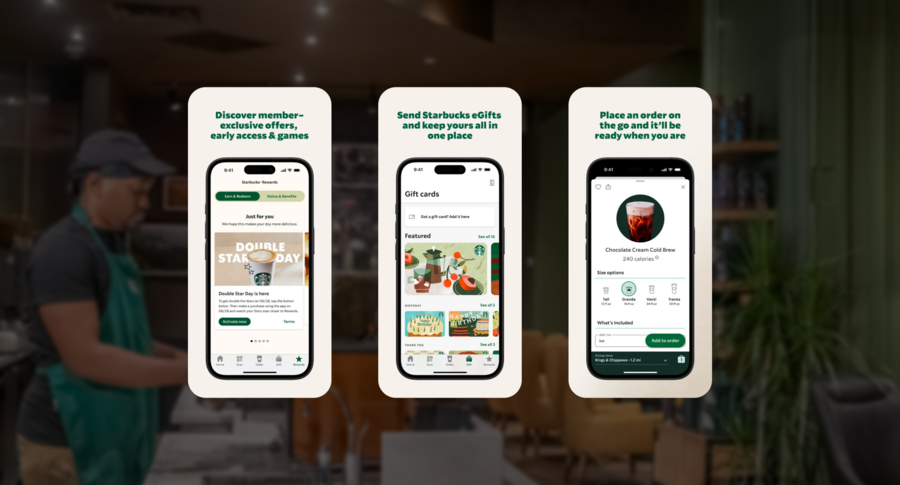


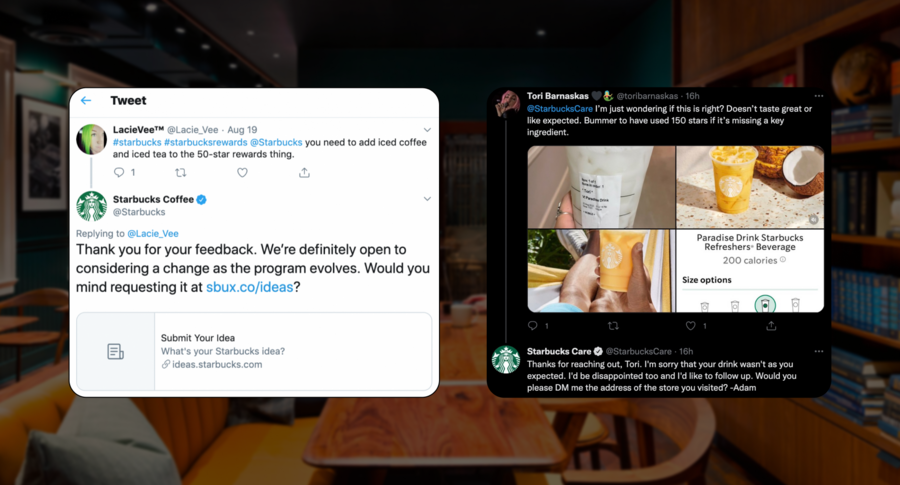
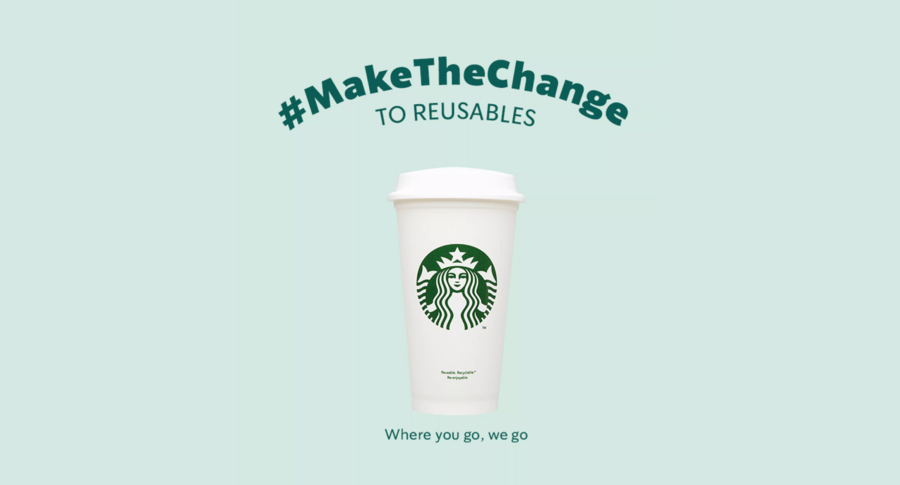
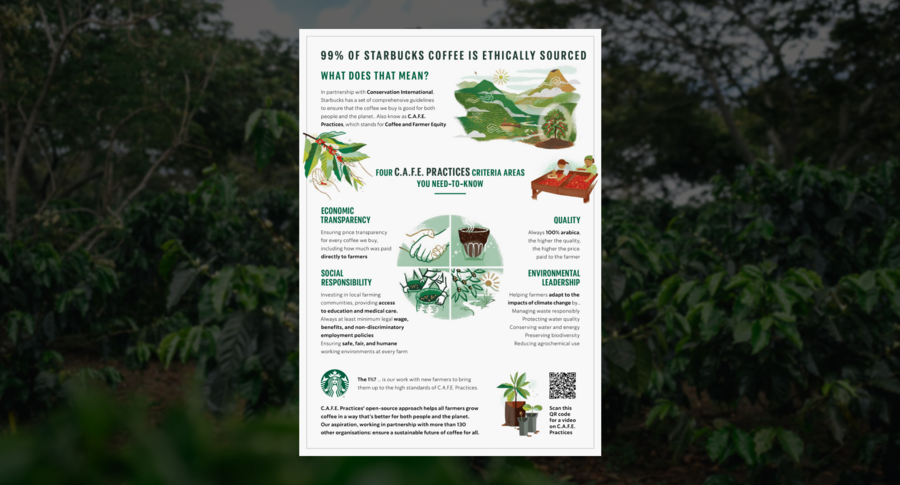
Examples of Starbucks PR initiatives
Narrative Paradigm

To analyze Starbucks’ communication strategy, this project applies Walter Fisher’s Narrative Paradigm theory (1984). The theory explains communication as a process of creating meaning through stories. According to Fisher, people evaluate messages not only through logic, but also through their connection with personal experience, values and beliefs.
Why Narrative Paradigm fits Starbucks Starbucks is a brand built not only around a product, but around a story. Although the company sells coffee, its communication focuses on comfort, everyday rituals, personal identity and belonging. The brand transforms coffee from a functional product into a meaningful experience.
Starbucks Draws the Holidays Together in the New Campaign
Two principles of a successful narrative Walter Fisher describes two main characteristics of an effective narrative:
Narrative coherence The story should be consistent. Different elements of communication must support the same idea.
Narrative fidelity The story should feel meaningful and authentic for the audience. People accept narratives that reflect their own values and experiences.
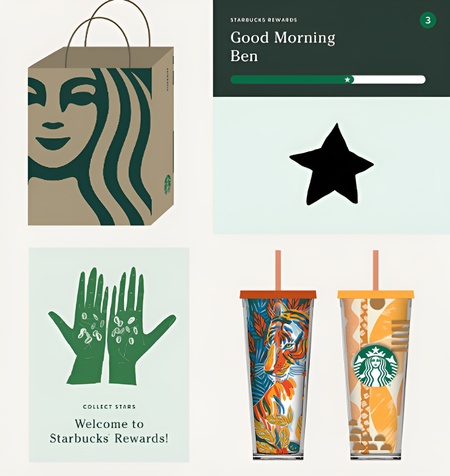
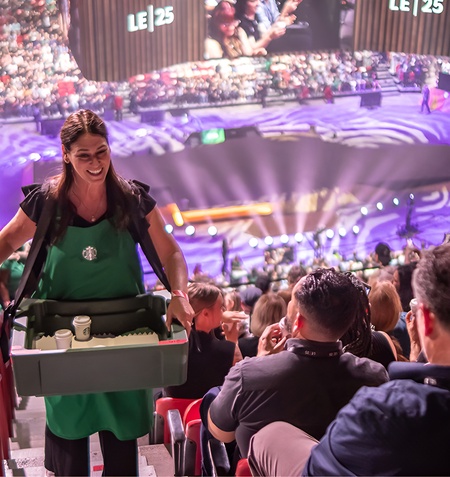
Starbucks' style guide reveals subtle brand refresh, Starbucks Leadership Experience 2025 Event
Starbucks as a brand narrative The main Starbucks narrative is:
«A third place between home and work.»
The cafe becomes more than a place for buying coffee. It becomes a place for meetings, work, relaxation and personal routines.
Through this narrative, Starbucks creates a feeling of belonging.
Starbucks Became an Office Space for Remote Workers

From product to experience Starbucks technically sells coffee. However, its communication is built around something larger:
— atmosphere — personal experience — social connection — lifestyle
The coffee becomes a symbol of a certain way of living.
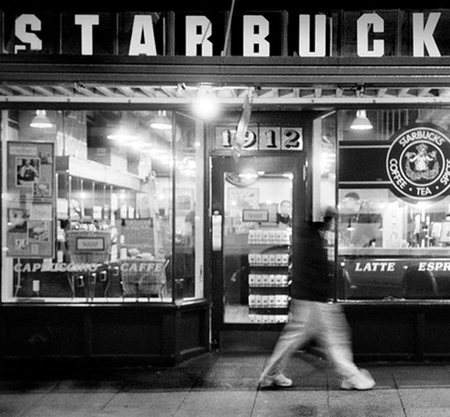
How the Starbucks narrative works The communication mechanism can be described as:
— Brand values — Story creation — Visual and physical experience — Emotional connection — Consumer identity — Brand loyalty
Every element strengthens the same central narrative.
Personalization and cultural rituals Small communication practices create personal and cultural narratives. Writing a customer’s name on a cup creates individual recognition: the product becomes «My coffee». Seasonal products, such as Pumpkin Spice Latte, create repeated cultural moments connected with memories, traditions and emotions.


Starbucks, Names On Starbucks Cups

Limitations and evaluation Starbucks’ narrative remains effective because its communication is consistent across different platforms: stores, packaging, advertising and digital services.
However, the brand also faces a contradiction: it communicates community and authenticity while being a global corporation.
The future challenge is maintaining emotional connection while continuing international growth.
Elaboration Likelihood Model (ELM)

The Elaboration Likelihood Model (Richard E. Petty & John T. Cacioppo, 1986) suggests that people process persuasive communication through two different routes:
Central route — when consumers carefully evaluate information and arguments before making a decision.
Peripheral route — when consumers rely on visual cues, emotions, aesthetics, social proof, or other mental shortcuts rather than detailed information.
Starbucks provides a particularly interesting case because its communication strategy consistently combines both routes. The brand simultaneously presents rational information about coffee, ingredients, sourcing, and rewards programs while building a highly emotional and aesthetic universe around its products.
Central route: rational persuasion


Pumpkin Spice Latte
When consumers are highly involved in coffee culture or actively considering a purchase, Starbucks provides detailed information that supports systematic processing, for example, product development stories: long-form content explaining how products are created.
Instead of simply advertising the Pumpkin spice latte, Starbucks publishes an article «Pumpkin Spice Latte» [2] on their official website, which explains:
— when and where it was created, while also emphasizing the involvement of a dedicated team of professionals in a specialized research and development environment («Early in 2003, a small team gathered in the „Liquid Lab, ” a secure research and development space that’s a cross between a chef’s kitchen and a scientist’s playground at the Starbucks Support Center.“ [2]),
— how the beverage was developed („Exploring ideas for an autumn-inspired espresso beverage, they sampled a forkful of pumpkin pie followed by a sip of hot espresso to tease out which pie flavors best complemented the coffee. They were off to a good start.“ [2]),
— which ingredients were selected („They spent the next three months prototyping the beverage, settling on a recipe that used pumpkin spice sauce with cinnamon, clove and nutmeg — handcrafted with espresso and steamed milk — and finished with whipped cream and a dash of pumpkin pie topping.“ [2]),
— how the recipe was tested („We tested the drink in 100 stores, and in a week, we knew we had a winner.“ [2]),
This communication encourages deeper cognitive processing. Consumers are not only exposed to the visual image of the product but also to information about craftsmanship and authenticity. From an ELM perspective, Starbucks provides strong arguments that can persuade consumers through the central route.