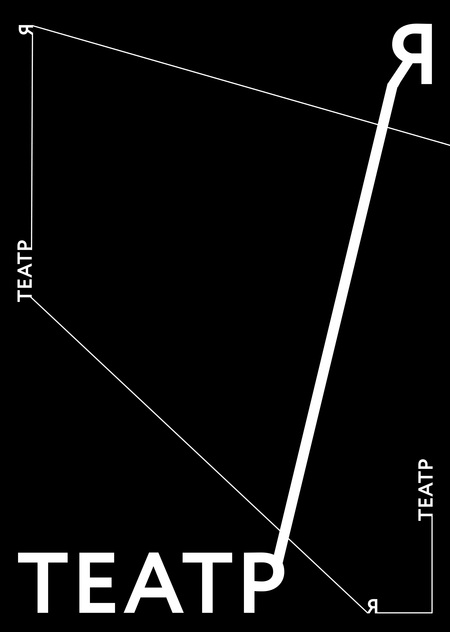
COMMUNICATION THEORY IN THE FIELD OF DESIGN
Design is a medium of meaning-creation, operating within intricate cultural, social, and psychological fields. Communication theory provides the significant framework to understand these systems not as the production of isolated objects or performances, but as sophisticated, context-dependent communicative acts. This perspective is crucial for branding, that works as flexible organism, adapting to different audiences and situations rather then rigid visual system.
In design, process of communicating is visible in how images, typography, motion, composition, and performative gestures become symbolic systems. Every visual tool creates space for interpretation of message. The audience brings their own experience, background and becomes an active participant in decoding.
Communication theory also highlights that all acts of communication take place within structures: economic, ideological, and technological. Design and contemporary art do not exist outside these frameworks, but actively negotiate them. Critical approaches to communication draw attention to how power relations, dominant discourses, and symbolic hierarchies affect what can be seen or said. Designers and artists shape their vision and language by becoming aware of these discourses and with reflexion question narratives and norms with their work.
In this sense, communication theory does more than explain how messages function.It allows branding to operate as a cultural practice rather than a promotional one, where visual and verbal choices articulate values, relationships, and attitudes toward the world.
To sum up, communication theory reveals the design of a cultural institution as a complex process of social interaction. It equips us to be strategists, semioticians, community-builders, and critical thinkers, transforming our practice from mere production into a deliberate engagement with how meaning, truth, and connection are generated in society.
PRESENTATION FOR A GENERAL AUDIENCE

I — THEATRE. Space for personal experience.
We believe in the voice of stories that deserves to be told and heard. Our craft is pivoted in autofiction: a method where reality and imagination interconnect. Performers are authors and narrators, who explore themselves and invite you into dialogue with them and yourself.
Every performance is an act of trust and designed reflection.

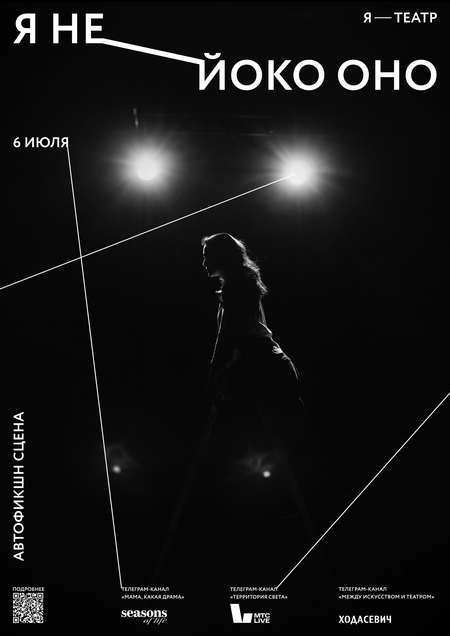
We create a safe space for vulnerability. Our stage is a point of connection not a pedestal.
In I — THEATRE language of human experience is spoken — search, trauma, catharsis. Personal «I» is connected with the public «We».
Who is it for?
For audiences seeking not entertainment, but reflection, dialogue, and depth. For those who value courage, intellect, and honesty in art.
PRESENTATION FOR A PROFESSIONAL AUDIENCE
I — THEATRE is a case study in applied communication theory, translating the niche concept of documentary autofiction into a cohesive socio-cultural brand. Our goal is to occupy the position of «Critical Emotional Resonance», targeting an audience that seeks in culture not escapism, but a tool for reflection and community-building.
For authors and actors our theatre creates opportunities for self-discovery and a way to speak truth.
We reject glamorous and decorative in favor of minimalism and a semiotically charged simple element—the line. This semiotic system signifies connection, path, communication channel.
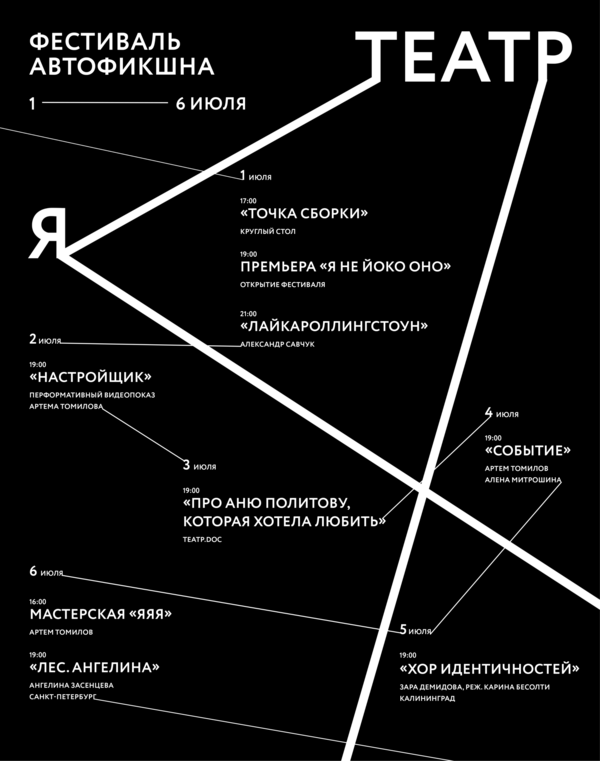
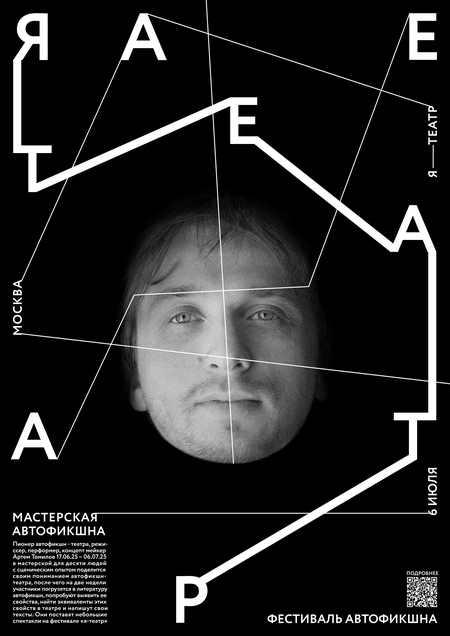
The line is an elusive thought, a connection between stage and auditorium, between actors and people. It is a sign of process.
Minimalism in design is not merely an aesthetic but a direct signifier of our independence, honesty, and focus on content. It is a semiotic opposition to the institutional theatre.
Poster, booklet, website, social media are not disparate channels but a unified semantic field. The line runs through everything, creating a portable, recognizable space of meaning that the audience carries with them.


HOW THEORY INFORMED THE STRATEGY: THEORETICAL FOUNDATIONS AND PRACTICAL APPLICATION
On a functional level, communication theories become direct strategic tools. Politeness Theory informs our tone, balancing respect for the audience’s autonomy (negative face) with the desire for connection and shared values (positive face).
Our strategy also relies on Dialogic Theory & Relationship Management: we build relationships with our audience, where the value is mutual trust and co-participation, not a ticket transaction. I — THEATRE is a partner in dialogue.
In addition, some choices can be observed from Structuration Theory & Critical Theory. We work with limitations deliberately. Economic constraints, institutional independence, and small-scale production are not obstacles to overcome, but conditions that shape our artistic language. These structures become part of the message itself.
Drawing from Carey’s Ritual Model, we view I — THEATRE not as a one-way transmission of stories, but as a space that creates and sustains a community through shared experience. Symbolic Convergence Theory (SCT) further illustrates how the powerful, personal narratives of autofiction can forge communal bonds and a shared worldview among an audience. Furthermore, every aesthetic choice functions within semiotic systems; the line in our visual identity is not just a graphic element but a signifier of connection, voice, and neural pathways, deriving its meaning from the cultural codes of vulnerability and dialogue
Course materials: «Communication Theory: Bridging Academia and Practice». Smart LMS HSE.
Carey, J. W. Communication as Culture. Revised Edition. Routledge, 2008.
Craig, R. T. «Communication Theory as a Field.» Communication Theory, vol. 9, no. 2, 1999, pp. 119–161.
Habermas, J. The Structural Transformation of the Public Sphere: An Inquiry into a Category of Bourgeois Society. MIT Press, 1991.