«Museums are simply the world’s most luxurious warehouses for stolen goods.»
00 / Introduction & Manifesto 01 / The Museum as an Institution of Knowledge 02 / The Mechanics of Appropriation: How Objects Were Taken 03 / Case Studies: Colonial Collections Under the Microscope 04 / Rewriting Meaning: How the Display Alters Context 05 / Institutional Critique: The Fred Wilson Paradigm 06 / Radical Reclamation: New Curatorial Practices & The Future 07 / Conclusion & Systemic Takeaways
Concept
Whenever I walk into a traditional museum, I get a very specific, slightly uncomfortable feeling. The ceilings are high, the walls are clean and white, and cultural objects are placed inside glass cases like sacred artifacts. For a long time, I accepted this as the «normal» way to present art. But if you look closer, you realize this visual language is not neutral—it is carefully constructed.
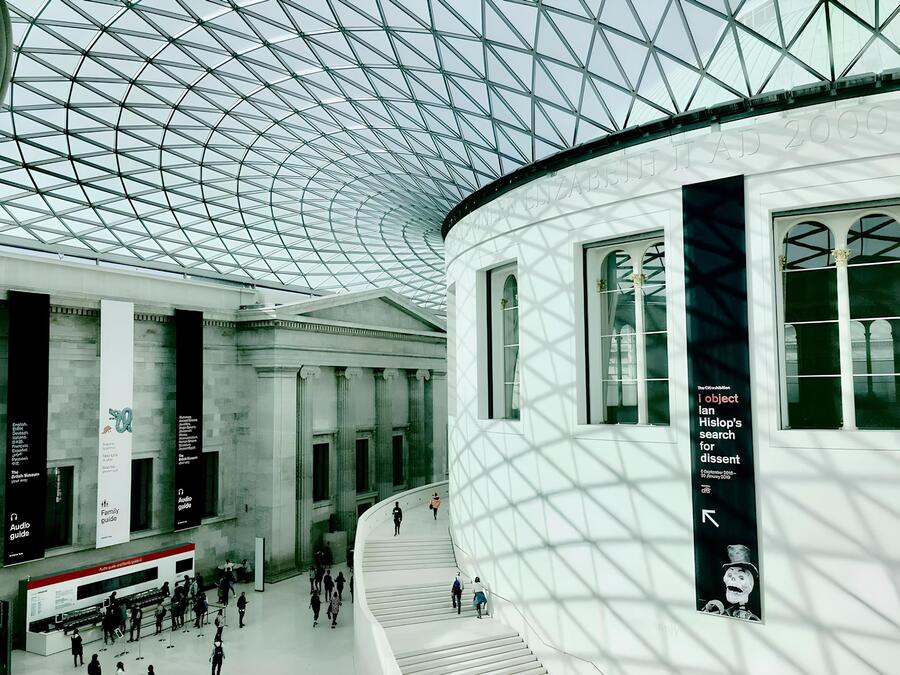
The Great Court Architecture, British Museum // Queen Elizabeth II Great Court, London, 2024
It is a spatial system that shapes how we view history through a particular and biased perspective, often described in theory as the «colonial gaze.» If we want to change how we understand history and culture, we must also rethink the physical and visual structure of museum spaces.
Minimalist Pedestal Display, Contemporary Art Gallery // «The White Cube Layout,» Architectural Space, 2024
01/ The Museum as an Institution of Knowledge
19th-Century Institutional Library, Archival Reference // «The Architecture of Knowledge», Spatial Concept, 2024
Modern museums evolved from earlier forms, such as the Cabinets of Curiosities in Europe during the 18th and 19th centuries. Over time, these institutions positioned themselves as authorities on global culture. Collecting, sorting, and displaying objects from around the world was not a neutral act—it visually reinforced ideas of imperial control and ownership.
Cabinet of Curiosities Engraving, Ferrante Imperato // «Dell’Historia Naturale, ” Naples, 1599
Museums didn’t just collect objects. They established rigid, Eurocentric systems of time and value, positioning Western art at the apex of cultural development while often relegating non-Western cultures to a nebulous and oversimplified «primitive» past.
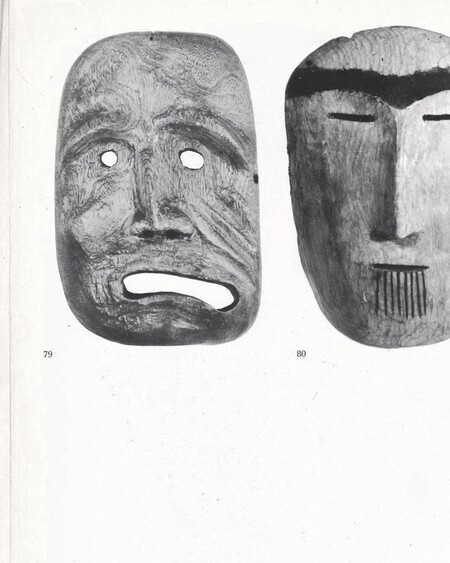
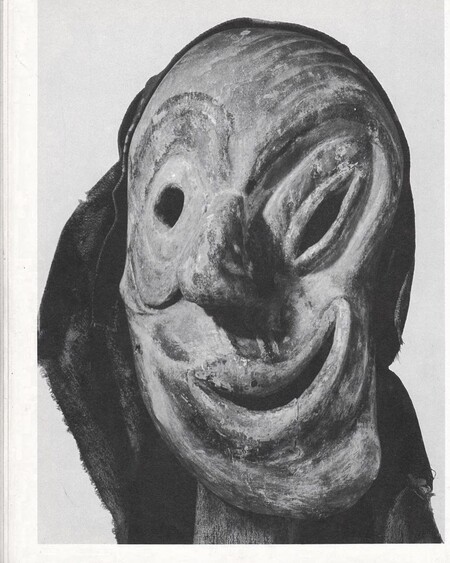
Ethnographic Masks, Andreas Lommel // «Masks: Their Meaning and Function, ” 1972
When you place two masks side-by-side on a flat white page, you instantly negate their original purpose. These objects were not originally intended for silent observation under museum lighting—they were part of movement, ritual, sound, and community. By presenting them in a flat, comparative layout, the display reduces them to isolated visual objects, stripping them of their original context. In a way, it treats them like specimens pinned for study, rather than living cultural forms.
Late 19th-Century Iñupiat Masks, Sheldon Jackson Museum
The neoclassical architecture of early public museums was not merely an aesthetic choice. Large staircases, monumental columns, and high ceilings were designed to guide visitor behavior. These spatial decisions cultivate a sense of smallness and distance, positioning the visitor as passive and intellectually subordinate within the space.
Great monuments are erected like dikes, opposing the logic and majesty of authority against all disruptive elements. It is in the form of the cathedral or palace that the State speaks to the multitudes and imposes silence upon them.
Museum labels and text panels often reinforce this authority. By using neutral, anonymous, third-person language, the institution removes visible signs of authorship and bias. This creates the impression that the information presented is objective and universally true, even though it is always shaped by institutional perspective.
In many cases, labels simplify or generalize origins. Instead of naming specific cultural or regional contexts, they might list information such as «Maker: unknown» or reduce complex geographies to broad categories like «West Africa» or «Oceania.» This kind of labeling flattens difference and removes historical specificity.
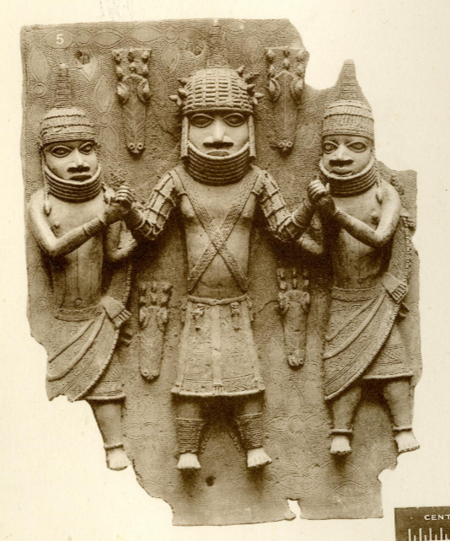
Brass Plaque Depicting a Dignitary 16th — 17th Century
Edo People Benin City, Nigeria
Acquired during the 1897 British military expedition.
In many traditional museum displays, European masterpieces are given spacious galleries, controlled lighting, and careful framing, while indigenous artifacts are often placed in dense, crowded glass cases. This difference in presentation changes how objects are perceived. Sacred and spiritual objects, in particular, can be reduced to the status of «specimens”—stripped of their original meaning and treated as if they belong to an evolutionary timeline rather than a living culture.
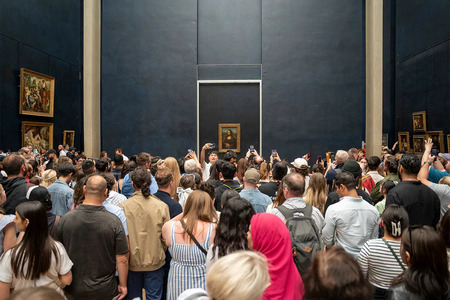
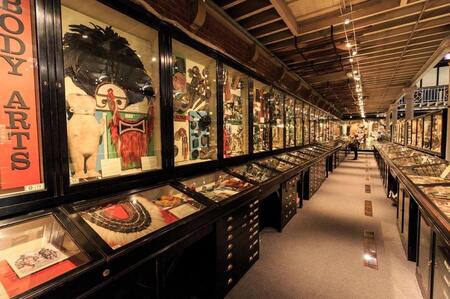
Louvre museum gallery interior painting versus Pitt Rivers museum crowded cases
Within this system, European artworks are typically presented through the lenses of aesthetic value, authorship, and individual artistic genius. In contrast, artistic production from other parts of the world is often categorized as craft or ethnographic material, rather than being recognized as fine art in the same vein. This creates a distinct imbalance in how cultural value is assigned.
Overall, the traditional museum is not a neutral space for cultural appreciation. It operates as a spatial and visual system that reinforces historical hierarchies established during the colonial era.
02/ The Mechanics of Appropriation.
Cavalry Maneuvers, Camp de Châlons, Gustave Le Gray // «The Architecture of Imperial Order,» 1857
Most colonial artifacts did not arrive in Europe through peaceful trade. Instead, they were acquired during military campaigns, expeditions, and colonial occupations. In this context, objects often functioned as trophies of conquest, physically marking territorial and cultural domination.
Engraving of the Battle of Naseby, 1645
In the 19th century, European botanical, anthropological, and geographical expeditions frequently operated alongside military operations. While territories were being mapped and documented, cultural objects were also being collected and removed from their places of origin. These processes were intimately connected rather than disparate scientific activities.
Even when objects were documented as «purchased, ” these transactions were rarely equitable. Sacred or royal items were often acquired amid significant power imbalances—sometimes for very low prices and under conditions shaped by coercion or threat.
Once these objects reached Europe, detailed information about their origins was frequently minimized or omitted. The names of specific artists, rulers, or communities were often excluded from records and replaced with broad regional labels. This practice effectively erased provenance, disconnecting objects from their original social and cultural contexts.
The colonial museum, as conceived in the second half of the nineteenth century, was a weapon, a method, and a device used to legitimize, extend, and naturalize new extremes of violence.
When a museum uses the term «contested histories, ” it is nine times out of ten a euphemism for glossing over the fact that these objects were stolen in deeply violent circumstances, or taken as part of looting after conflict.
Auction houses in London, Paris, and Berlin quickly financialized these looted goods, transforming sacred ancestral relics into luxury commodities for private collectors and state museums.
Visual collections were built upon systemic displacement. The clean and «beautiful» presentation of museum displays often conceals this history. What remains unseen is the violence and unequal power that made these collections possible in the first place.