Navigator
- Disco Concept
- The Formation of Disco: From Club Culture to Mass Music
- 1979: The Crisis and the Declaring of Disco’s Death
- San Francisco: Hi-NRG and the Continuation of Disco in the Independent Music Industry
- New York: Paradise Garage and the Development of Post-Disco
- Chicago: The Genesis of House Music Influenced by Disco
- Europe: Italo Disco and the International Evolution of Post-Disco
- Disco’s Return to Popular Music
- Conclusion
Concept
Disco is often perceived as a musical genre that peaked in the 1970s and effectively ended in 1979. Its symbolic «death» was marked by Disco Demolition Night—an event in Chicago where disco records were destroyed. However, its exit from the American mainstream did not mean the end of its evolution. Why did a genre declared obsolete continue to influence dance music in subsequent decades?
Disco coalesced within the club culture of New York, drawing from soul, funk, R&B, and Latin American musical traditions. During the 1970s, the genre moved beyond the club scene and became part of mass culture. Commercialization, market saturation with similar recordings, and shifts in audience attitudes fueled criticism of disco. Moreover, the anti-disco movement was tied to more than just musical preferences; researchers note that it contained racial and homophobic prejudices. Therefore, Disco Demolition Night is viewed as a symbol of a broader crisis, rather than the sole cause of the genre’s decline.
The primary focus is on what happened to disco after 1979. Through examples such as San Francisco’s Hi-NRG, the New York club scene, Chicago house, and European Italo disco, one can trace how its musical characteristics were preserved and transformed into new styles. These scenes are not seen as direct copies of disco; each developed within its own context and interacted with other musical traditions. Comparing them allows for an investigation into shifts in rhythm, instrumentation, electronic production, and the role of the DJ.
The research material consists of musical recordings from various periods, albums and singles, information on artists and producers, and the history of clubs and independent labels. Album covers, photographs of musicians and DJs, club shots, flyers, and press publications help reconstruct the context and are matched with specific musical examples. Recordings are selected based on the degree to which they allow tracing the continuity or changes in sound. The study is structured from the origins and heyday of disco to the crisis of the late 1970s, followed by post-disco scenes and the reintroduction of disco elements into popular music. It concludes with a comparison of compositions from different decades regarding rhythm, instrumentation, and arrangement. The foundation of the textual sources comprises academic works by Tim Lawrence, Alice Eccles, Peter Shapiro, Gillian Frank, and Louis Nibur. Their findings are compared with music press, archives, and interviews; participants’ recollections are examined as testimonies requiring verification. The central question of the work is: how did disco maintain its influence on dance music after losing popularity in the American mainstream? The hypothesis is that after 1979, disco did not disappear but rather changed its form and place of existence—its musical and club practices continued to evolve in new scenes and were later reinterpreted by popular music.
1. Disc Formation: From Club Culture to Popular Music
Disco emerged from the American club culture of the early 1970s. Initially, the word «disco» denoted not so much an independent musical genre as music played by DJs in disco clubs and at private parties. Gradually, a recognizable style formed from various currents of dance music, founded on a rhythmic section, a pronounced bassline, and a combination of instrumental and vocal arrangements. Music historian Tim Lawrence points out in his article «Disco» for Encyclopedia of Popular Music of the World that early disco absorbed elements of funk, gospel, jazz, and soul. He emphasizes the crucial role of DJs, producers, and sound engineers, who incrementally altered the structure of dance music through mixing and studio production. Thus, disco developed not only through the artistry of performers but also through new methods of creating and reproducing musical recordings.
This characteristic is important to consider when analyzing early disco compositions. For example, in MFSB’s Love Is the Message (1973), one can trace the distinctive combination of orchestral parts, bass, drums, and a repeating rhythmic pattern.
In Donna Summer’s later track, «I Feel Love» (1977)—produced by Giorgio Moroder and Pete Bellott—the electronic synthesizer sequence plays a crucial role. Comparing these works reveals that significant changes were occurring within disco itself: the genre did not possess a single, unchanging sound.
Donna Summer in the studio with disco producer Giorgio Moroder.
American historian Alice Ekols sheds light on another facet of disco history in her book, Hot Stuff: Disco and the Remaking of American Culture (2010). She challenges the notion of disco as a superficial 1970s entertainment. In her view, the genre was intertwined with broader shifts in American culture, particularly the civil rights movements for African Americans, the liberation of women, and the rights of other minorities. Ekols also highlights that clubs became spaces where people could express their individual identities and find communities of like-minded individuals.
A similar research perspective can be found in the work of historian Steve Waxman, who, in his review of Ecoles for the Journal of American History (2011), places it among studies that revise the traditional view of disco and reveal its cultural significance. This is important because it allows the genre to be examined not just from the perspective of the music industry, but also as part of social change. Simultaneously, the mass popularity of disco gradually altered its standing. After the release of the film Saturday Night Fever (1977) and the success of its soundtrack, the genre gained wide traction beyond the club scene. Major record labels began releasing more dance music, and disco elements permeated the work of artists who previously operated in other genres.
Lawrence notes that the commercial peak of disco occurred in 1978. He attributes the subsequent decline to a combination of overproduction, an economic downturn, and a societal reaction to the culture associated with the genre. Consequently, by the late 1970s, disco found itself in a contradictory position: it had simultaneously become a mass-market musical product and the target of increasingly active criticism.
1979: The causes of the disco crisis and its death sentence
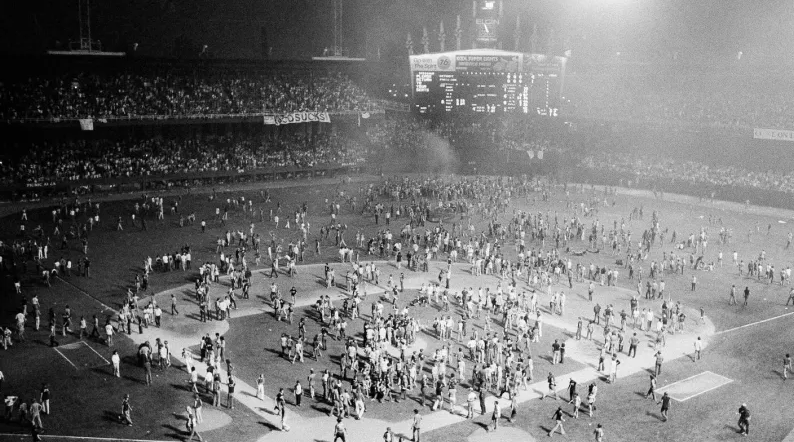
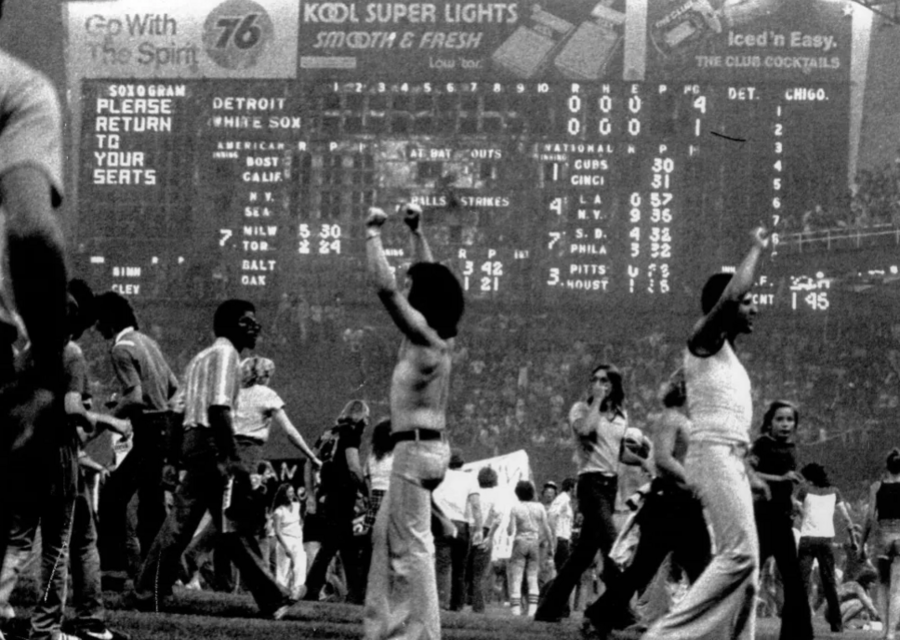
By the late 1970s, disco had become the subject of widespread public criticism. One of the most prominent expressions of this disdain was the «Disco Sucks» campaign, which gained significant traction in the American music scene. The central event of the anti-disco movement was Disco Demolition Night, organized on July 12, 1979, at Comiskey Park Stadium in Chicago. Radio personality Steve Dahl spearheaded the action, inviting attendees to bring disco records to be destroyed during a baseball game. The planned promotional event spiraled into mass unrest, resulting in the cancellation of the second game.
Disco Demolition Night
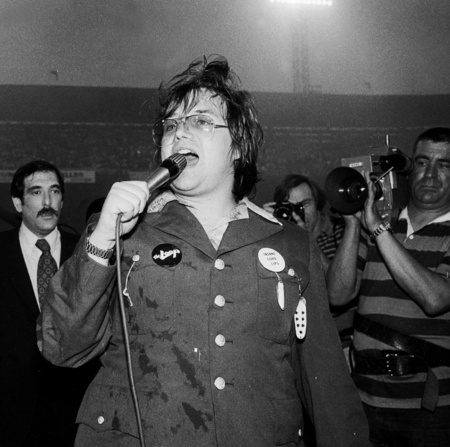
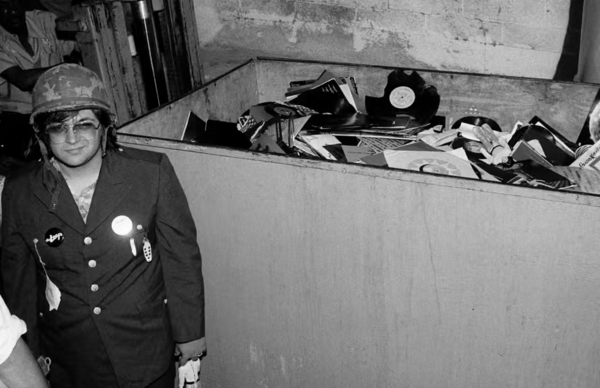
Steve Dale, on the right—near a trash bin full of vinyl records from Disco Demolition Night