Palatial Complexes of the Ancient World. Similarities and Differences. Assyria, Babylon, Egypt, Crete.
Navigation.
Concept Part 1. Assyrian Palace Complexes Part 2. Babylonian Palace Complexes Part 3. Egyptian Palace Complexes Part 4. Cretan Palace Complexes Part 5. Comparison of Palace Complexes Conclusion Bibliography Image Sources
Concept
In my visual research, I intend to examine the palace complexes of each ancient kingdom—Assyria, Babylon, Egypt, and Crete—individually. In each section, I will endeavor to explore the interior, exterior, and functional content, as well as the architecture and unique characteristics of each complex, using specific examples where internet access permits. Palace complexes reflect the totality of the state orders, societal experiences, and cultural codes of the peoples and civilizations of those eras. It is hypothesized that as proto-architectural structures evolved into architecture as we know it, temple-palaces emerged as a distinct type of structure. Their appearance coincides with the genesis of the earliest state systems in history. The temple-palace served as the ritual dwelling of a living deity while simultaneously encompassing all the core functions of state governance. Such temples served as concentrations of power, integrating numerous functions: religious (for conducting vital rituals), the preservation and transmission of knowledge (astronomical, mathematical, engineering), land ownership, and the control of production. The distribution of these produced goods constituted a crucial and fundamental function of the social order.
Part 1. Assyrian Palace Complexes
Assyrian architecture primarily bears traces of Hurrian-Malayan influence (in the mid-2nd millennium BCE, Assyria was politically dependent on the Hurrian state of Mitanni), alongside the influence of Southern Mesopotamia, a culture that played a crucial role in shaping Assyrian art.
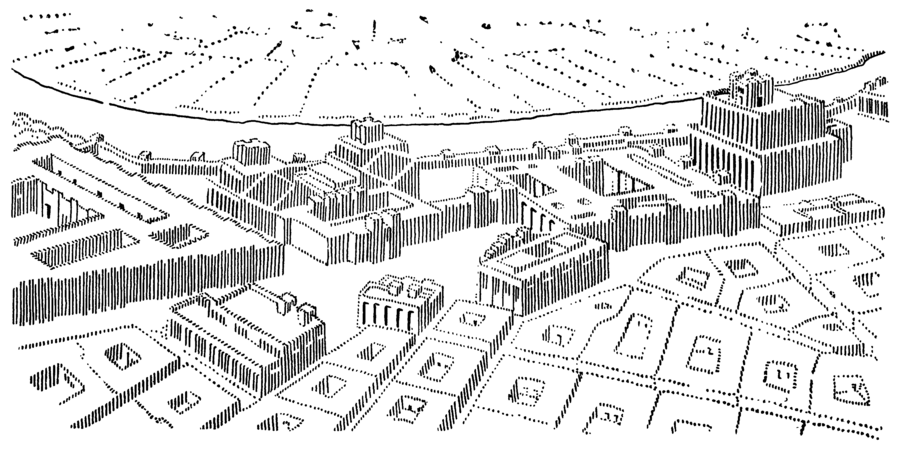
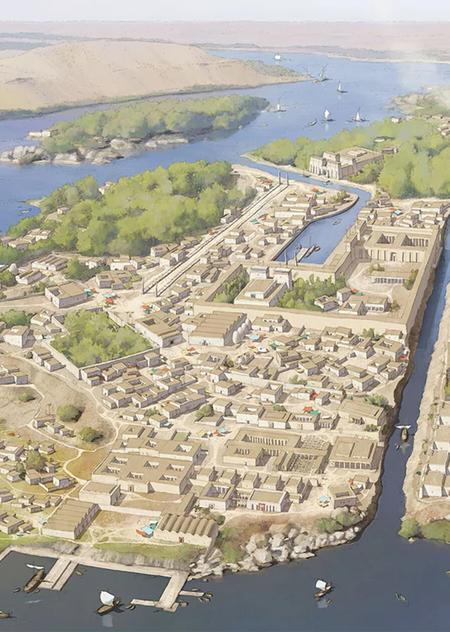
Assur. Northern part of the city, 8th–7th centuries BCE (reconstruction)
Residential buildings were constructed from adobe bricks, featuring flat roofs; they bore little resemblance to the homes of Dvurechye. The ziggurat played a vital role in temple architecture.
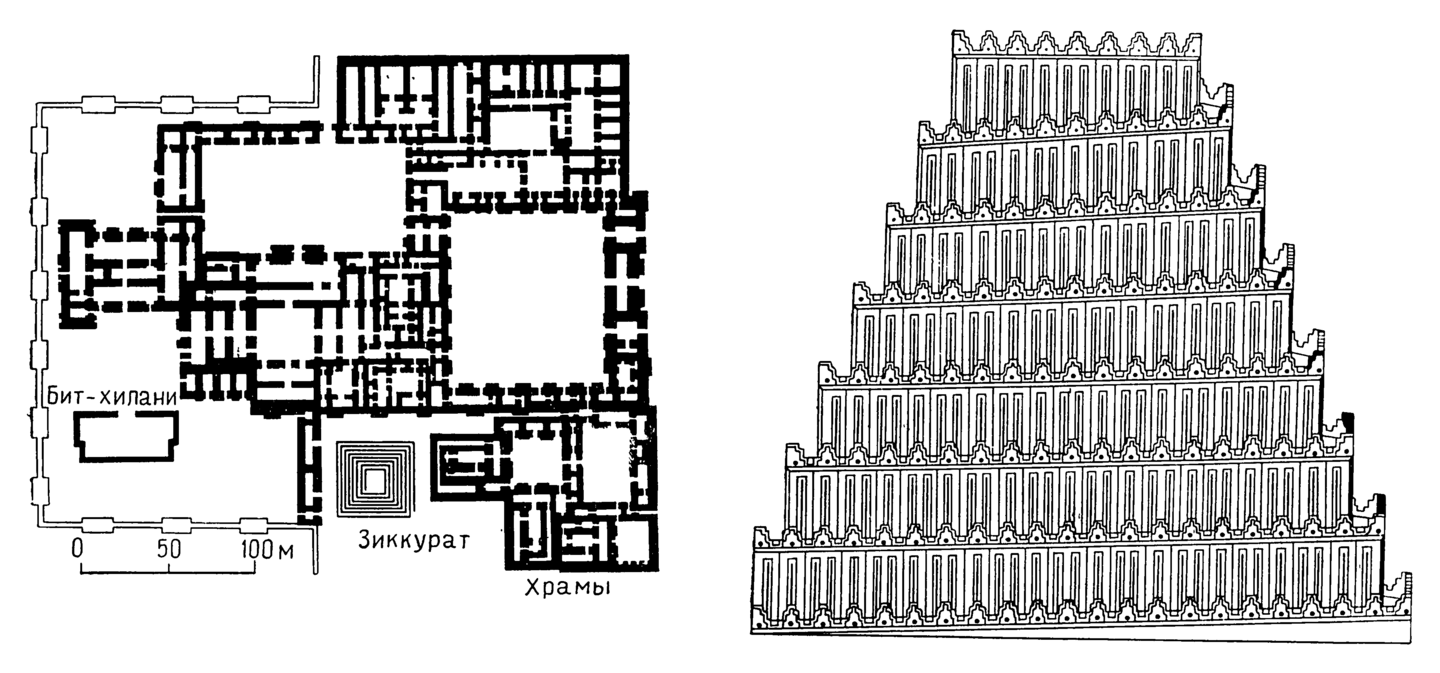
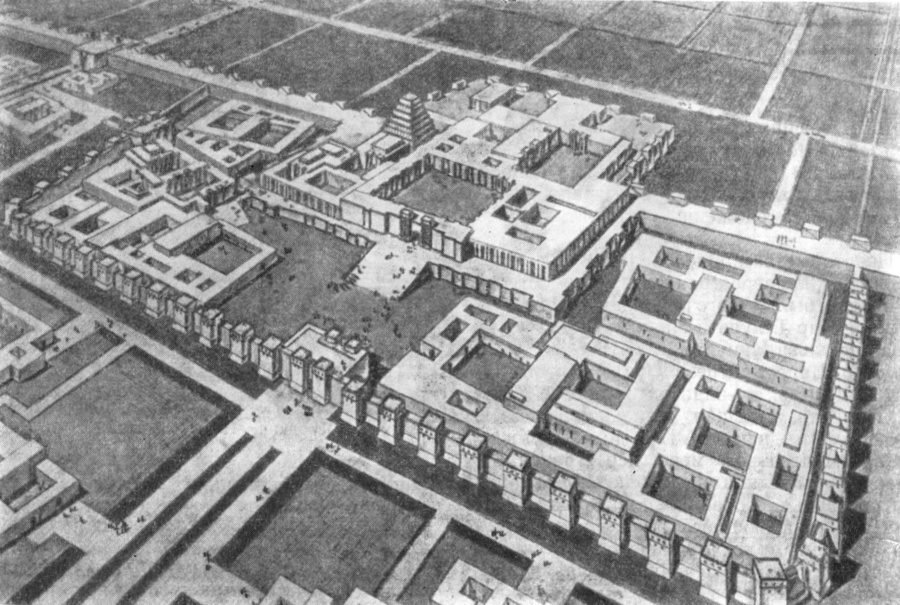
Dur-Sharrukin. Citadel
Comparative Table
Musatov, A. A. The Origin of Architecture: Dwelling and Palace in Early State Systems / A. A. Musatov // Housing Construction. — 2012. — No. 8. — pp. 5–9. — URL: https://cyberleninka.ru/article/n/proishozhdenie-arhitektury-zhilische-i-dvorets-v-pervyh-gosudarstvennyh-sistemah?ysclid=mw0hzy494f824050344 (accessed: 11/16/2026).
Architecture of the Countries of Mesopotamia and the Two Rivers / V. K. Afanasyeva, I. M. Dyakonov. — Text: Electronic // General History of Architecture: in 12 volumes / edited by O. Kh. Khalpakhchyan [et al.]. — Vol. 1. — 2nd ed., revised and supplemented. — Leningrad; Moscow: Publishing House for Construction Literature, 1970. — pp. 196–222. — URL: https://tehne.com/event/arhivsyachina/arhitektura-stran-dvurechya-i-mesopotamii (accessed: 11/16/2026).
You