«The Aesthetics of the Grotesque: Horror as a Language of Self-Expression»
INDEX
- Concept
- Chapter 1. Camp—A New Wave of Dandyism in the Age of Mass Culture.
- Chapter 2. The Body as Object.
- Chapter 3. How Horror Became an Aesthetic.
- Conclusion
- Bibliography
- Image Sources
CONCEPT
Contemporary culture no longer perceives the grotesque through the lens of negative emotion. Thanks to an altered principle of artistic perception, horror and all its artificial, deformed, and frightening elements become part of an individual’s self-identity, their aesthetic, and their language of self-expression.
In my research, I will attempt to analyze the shifts in the perception of beauty solely from a conventional viewpoint and understand how contemporary visual culture and horror aesthetics have influenced this.
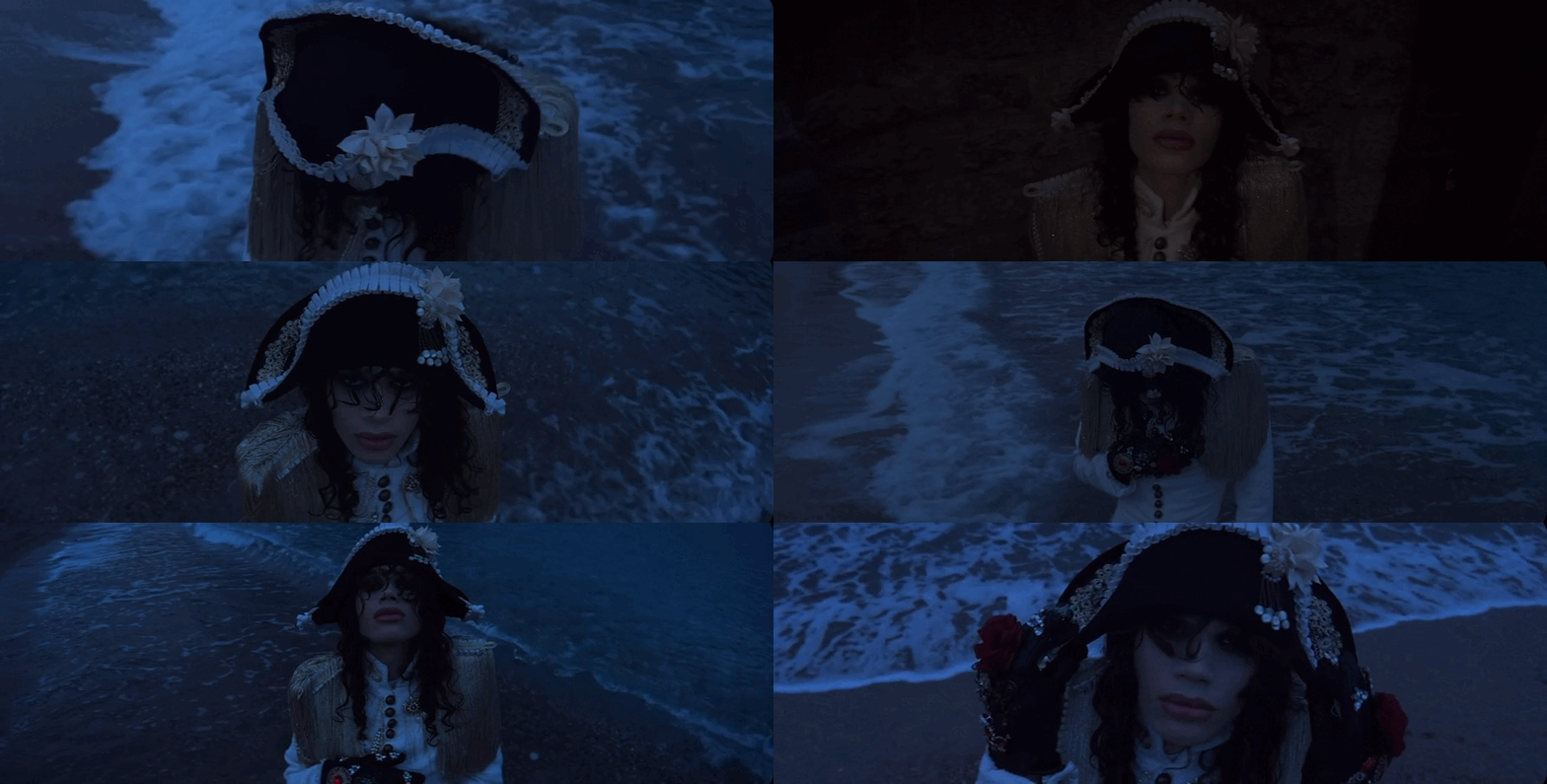
deathmarried — example visual identity
For a long time, society divided art into beautiful and ugly. A clear opposition between the aesthetic and the repulsive was traced. However, in modern society, the boundaries of aesthetic perception are blurring, and what was once simply a horror genre is becoming a form of visual self-expression for people.
These visual codes have become frequently utilized in the fashion industry. After all, the aesthetic of the grotesque, terrifying, and uncanny is inherently provocative, which facilitates its perception as a language of individual identity.
Nick Knight Celebrates ‘McQueen’ for AnOther Magazine, SS 2015
My visual approach is based on an analysis of art by various authors, characterized by a strong aestheticization of the anxious and horrifying image. The primary focus is on fashion photography and fashion imagery, particularly designers such as Alexander McQueen and Rick Owens, whose style strongly reflects this aesthetic, as well as paintings and sculptures with a disturbing visual presence.
For the theoretical foundation of my visual research, I focused on Susan Sontag’s text, «Notes on 'Camp, '» in which the author analyzes the changing mode of artistic perception through sensation. Her concept of camp is a specific way of looking at things—the essence of the phenomenon lies in loving the artificial and the unnatural. Through the prism of her idea, the grotesque ceases to be the opposite of the beautiful and becomes a new form of visual aesthetics. An additional theoretical source was Julia Kristeva’s text, «Powers of Horror,» which introduces the notion of the abject—something terrifying yet simultaneously alluring. Through her concept, I can trace why contemporary visual culture has increasingly turned to images that break the standard boundaries of the human body.
MAISON MARTIN MARGIELA
The central question of this research is: why is contemporary culture beginning to transform objects that previously evoked revulsion into an aesthetic language? And at what point did horror become a part of human identity?
The research hypothesis explores how a person begins to perceive the uncanny as aesthetically appealing, and how they use this perception as a means of expressing their self-identity.
Chapter 1. Camp — A New Wave of Dandyism in the Age of Mass Culture.
«Camp» originated from the French verb se camper, meaning «to behave too affectedly.» As this term entered mainstream culture, it became a cultural phenomenon.
The essence of the camp lies in its love for the unnatural, the artificial, and the exaggerated.
Returning to Susan Sontag’s idea—which identified a specific phrasing of the word «camp”—as a distinct sensitivity to everything theatrical, grotesque, and exaggerated. We understand that camp is not a style, but a perspective where the emotional impact is more important than a „beautiful picture.“
Rick Owens x Moncler 2026
The camp sought to aestheticize what was considered vulgar, disgusting, or excessive. This idea is particularly noticeable in the temporary fashion scene. For example, Rick Owens intentionally challenges traditional beauty standards, gathering a community of people who blend gothic aesthetics and reimagine ugliness in a new form.
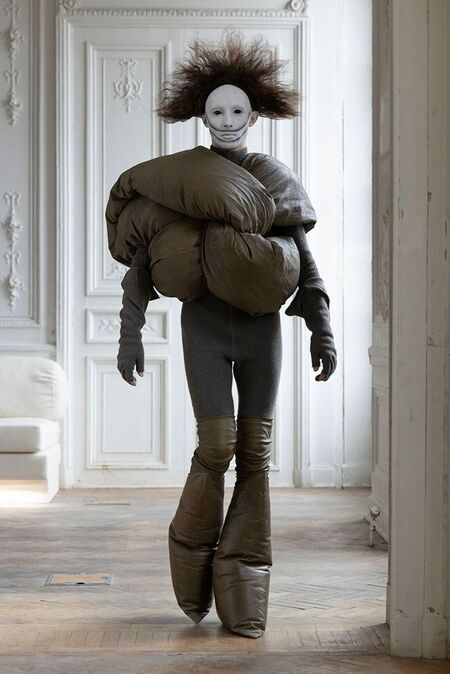
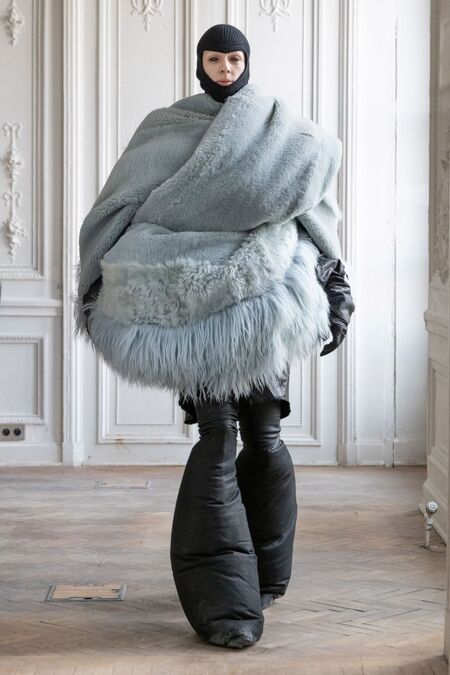
Rick Owens Fall 2024
Chapter 2. The Body as Object.
The human body is a critically important subject for contemporary aesthetics rooted in horror. It is increasingly depicted as deformed or artificial. In modern fashion, art, and photography, bodily transformation is employed as an entire visual language. The body becomes an object, and the artist is free to create form and plasticity based on their ideas, which are often aimed at consciously evoking viewer anxiety or attraction.
Berlinde De Bruyckere, Luca Giordano, «We Are All Flesh, ” 2009
In this topic, it is crucial to analyze Julia Kristeva’s text «Powers of Horror,» where she introduces the concept of the «abject"—as something that violates the familiar boundaries of human identity and bodily anatomy. Yet, despite this, anxiety in this context becomes a source of aesthetic impact.
candy stores (2025)
Patricia Piccinini, «Long-Awaited,» 2008
Contemporary culture prominently features images where the artist examines the body in its unnatural, inhuman form. Such ideas can startle the viewer, but they maintain attention through their duality. The body is perceived as a space for experimentation—a stage for possible visual transformation.
Francis Bacon, «Three Studies for Figures at the Base of a Crucifixion,» 1944
True art has the power to unsettle us