Estrangement as Sacred Unknowing
Introduction
The notion of estrangement was born within a historical context where perceiving history meant refusing all original meanings in pursuit of a deeper truth. But I choose to bring this term into the realm of art. In my interpretation, estrangement means the total non‑necessity of meaning in art, a deliberate rejection of concept in favor of the beauty of pure perception. Estrangement is not inviting people to build their own interpretations of a work, instead, it proposes to embrace and feel the art’s mystique without expecting answers to questions that can’t even be formed. From the unknown events that occur behind the scenes emerges beauty and an aftertaste directed toward living the moment, through physical and intuitive experience. It also brings up the sensation of something so familiar that it becomes strange, just like saying the same word over and over until the sound itself starts to erode its meaning. In this day and age of digital overload, implicit knowledge, forbidden knowledge, and the delusion of knowing without knowing, which is dominated by propaganda and advertising, this practice seems more than relevant. In this context, estrangement becomes conscious unknowing — not knowing in order to preserve a genuine meaning that does not need to be discovered or defined, but simply felt, experienced, lived. Below I present examples from sound, literature, painting, cinema works through which I attempt to convey the beauty of estrangement and the acceptance of enigma.
Pierre Schaeffer — Étude aux chemins de fer (1948)
In this piece, Schaeffer presents everyday ambient sound as material for close listening. Auditory perception provides the clearest illustration of consciousness, as hearing remains active even during sleep, and environmental acoustics influence both physical and psychological states. By elevating the ordinary rumble of a train to the status of a work of attentive listening, the listener is drawn into awareness and transported into the present moment. This visceral experience forms the basis of sound‑scaping. In this work, something deeply familiar becomes strange and uncanny, and that shift plants a seed of meditation. This process requires us to depend on sensation, to submit to auditory input, and, perhaps over time, to hone our ability to perceive the world and recognize the subtle ways soundscapes affect our internal state.
The Zone: Roadside Picnic — Arkady and Boris Strugatsky

Stalker — Andrey Tarkovsky
A vivid exemplar of estrangement is the mythos of the ‘Zone’, first conjured in the novel ‘Roadside Picnic’ by the Strugatsky brothers, later reimagined in Tarkovsky’s film ‘Stalker’, and eventually reinterpreted in the video game S.T.A.L.K.E.R. In this fictional universe, extraterrestrial visitation is said to have given rise to the Zone, though its truths are never spelled out, and its logic remains deliberately opaque. Rather than plot, I emphasize the atmosphere. The Zone is established before the events occur, functioning as an undercurrent that generates more queries than resolutions. As we follow the narrative and the characters plunge deeper into its chtonic layers, that uncertainty does not resolve but accumulates, and gradually becomes sacred. The anomalies stay unexplained. The Zone swallows logic and time, turning reality into a vortex. It fences itself off from the ordinary world, breathing with strangeness not of this realm, teasing the human mind with riddles it intentionally refuses to solve. That refusal and that conscious boundary against explanation is what gives the Zone its teeth and claws, its haunting wildness. This encapsulates estrangement: a domain that transforms the known into the arcane, obligating us to exist within the unknown.
Mark Rothko — Late Black on Black (1964–1967)
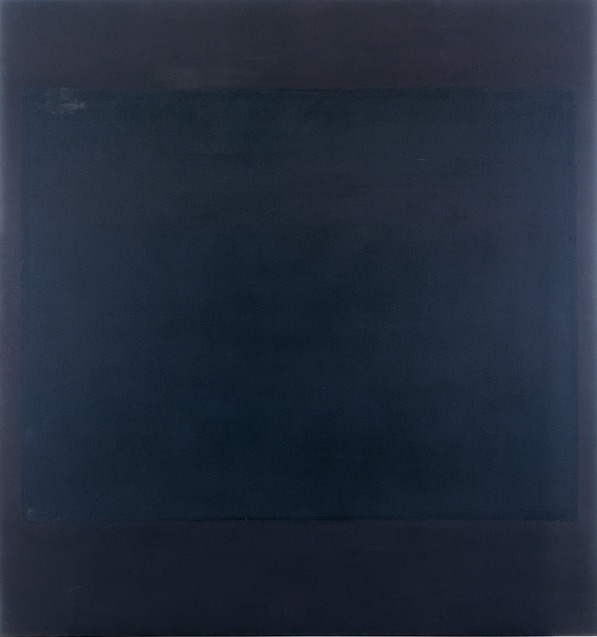
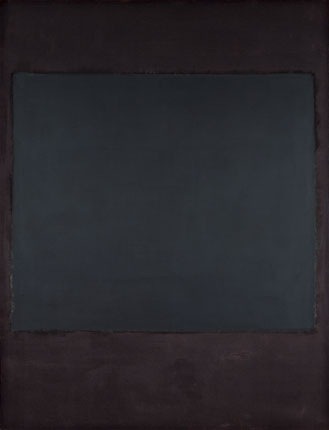
Mark Rothko, The Black Form Paintings, 1964
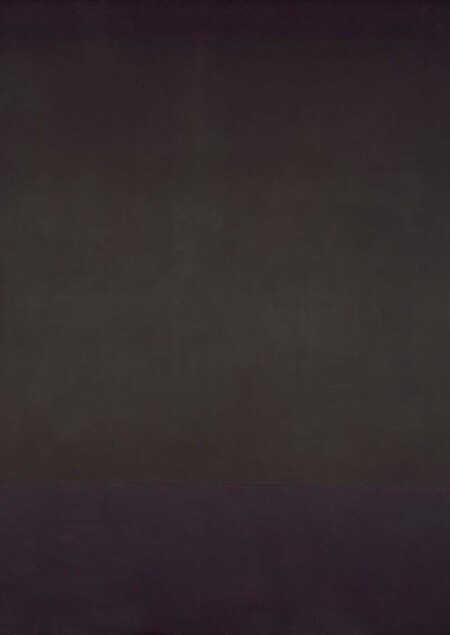
In these later works, Rothko embeds the intention of pure experience and meditation into pigment and canvas. His paintings become nothing more than they are — surfaces of color that evoke an immediate, bodily, instinctive perception, stripped of familiar forms or symbols. This mode of creation evokes what feels like a telepathic dialogue between viewer and canvas through color, through texture, through silent vibration. The response each viewer has lives in their memory, in their sensations — entirely subjective, intensely personal, and untranslatable. That private sensation is the work itself. It is beautiful precisely because it resists description and because it refuses to yield meaning. It is the estrangement made into color.
John Cage — 4′33″
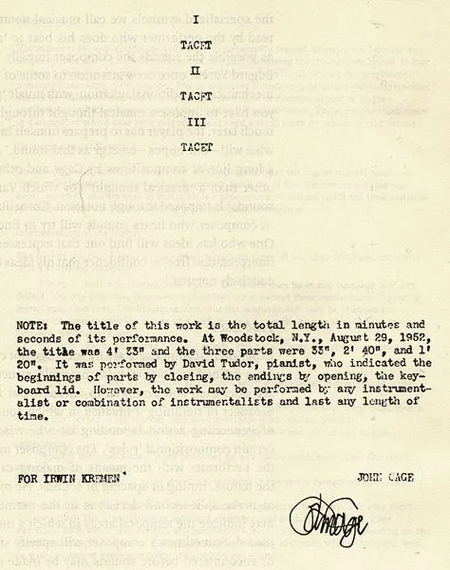
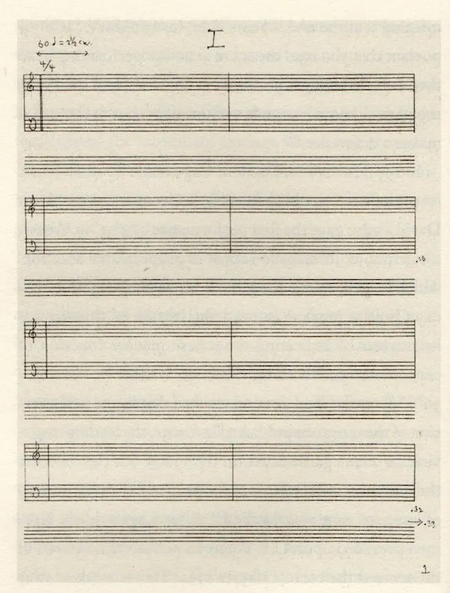
This performance enacts a form of meditation grounded in estrangement. Cage constructs the piece from the unanticipated, unrepeatable sounds produced by the audience, rendering the work inherently impossible to reproduce in identical form. By withdrawing from conventional musical structure and dismissing prefabricated forms, 4'33» opens a space for direct, unmediated experience. In a cultural environment where artistic works are saturated with meaning and overburdened by interpretation, Cage releases the listener from the compulsion to decipher hidden intent. Instead, the piece redirects attention toward the raw perception of the present moment and the acoustic texture of the environment. In this sense, 4'33» functions as a bodily practice of estrangement: it compels the listener to feel rather than articulate the immediacy, presence, and irreducible singularity of each moment.
David Lynch — Twin Peaks
Twin Peaks is a work constructed on mystery, mystique, and a form of dialogue with the viewer that operates almost below consciousness, registered physically through music, sound, editing, and cinematography. Across the series, and indeed throughout the universe he builds, David Lynch places the viewer in a state of trans-meditative suspension. Questions proliferate, and the desire for answers intensifies, yet no answers are meant to arrive. More than that, within the logic of the series, the very act of resolving enigmas is framed as a kind of cosmic violation. The beauty of Twin Peaks emerges from this intentional indeterminacy, from subtle cues that appear poised to disclose meaning but never do, from its elongated, hypnotic pacing. All of this is sensed bodily, even while it plays against the surface of familiar drama and intrigue.
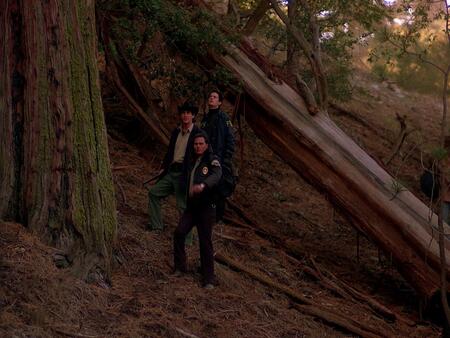

The music pulls the viewer into a space that is both mesmerizing and terrifying: it shifts in tone, yet remains strangely uniform, as though guiding us gradually into the forest’s interior. The series cultivates a distinctive estrangement from ordinary reality, one that hovers closer to the logic of dreams or delirium, all while carrying an undertone of the divine. At a certain point, the viewer yields to this madness and lets themselves be swept into its vortex. Out of this unknowing, beauty takes shape, out of this strangeness emerges a felt experience that extends far beyond narrative progression. Echoing the atmosphere of the Zone, the Black Lodge is perceived not only visually but internally. Its darkness suggests a realm where anything might occur, a space of radical freedom that exists only in shadow, as long as no gaze fixes upon it and no light reveals its contours.
Conclusion
Estrangement, in the sense I propose, becomes a bodily practice placing the mind and senses in a state of open listening. It means turning away from conventional meaning, from deciphering, from over-interpretation and instead surrendering to the inexplicable beauty of presence. Through sound, through color, through narrative veils and empty frames, art can become a vessel for mystery, rather than for explanation. It can bypass the intellect and reach us in our nerves, in our breath, in that quiver before comprehension. This kind of art does not need to be understood. It needs to be felt and it lingers in memory and in the heart on a deep, almost imperceptible frequency.