I. Concept
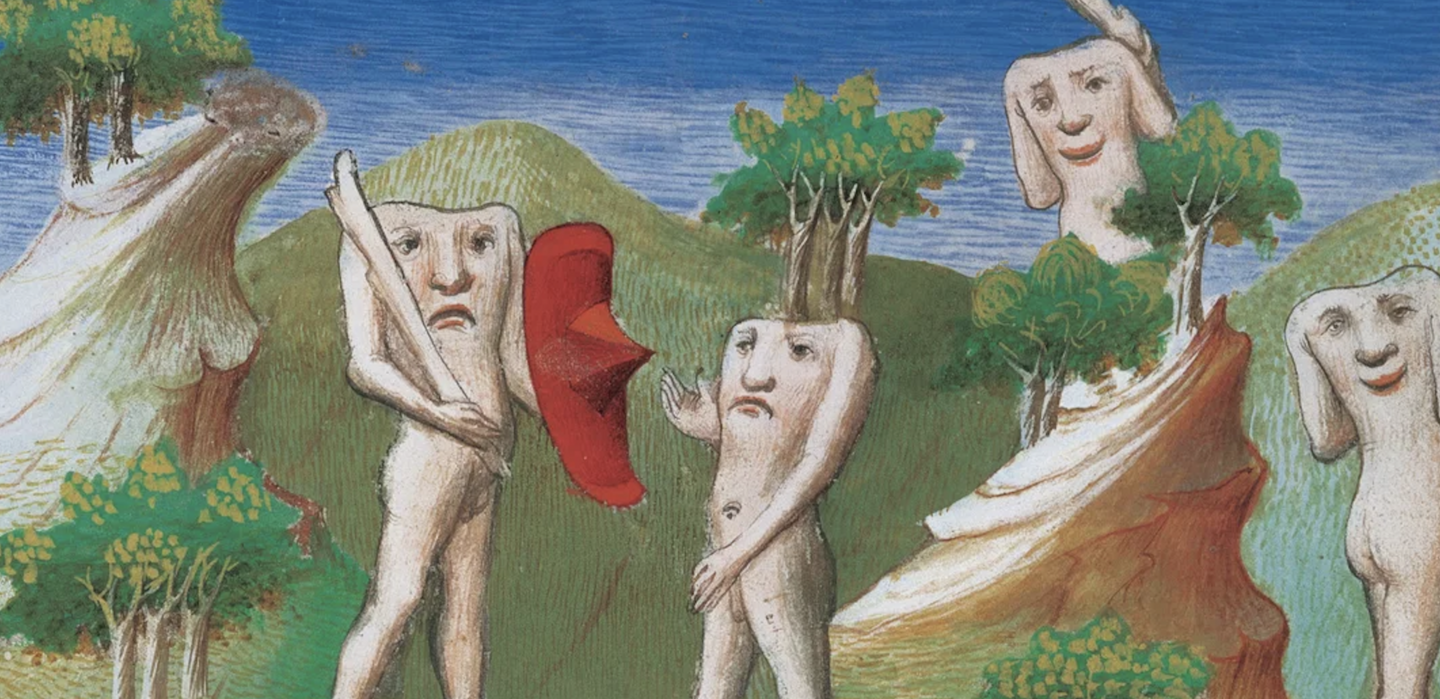
Medieval art is rich with unusual creatures: headless humans, animals with human faces, hybrids of several animals, and other fantastic characters. Grotesque representation of medieval creatures is an artistic principle based on disrupting conventional notions of form and order. It is characterized by the combination of incongruous elements, exaggeration, deformation, transforming one creature into another, and blending human, animal, and fantastical traits, along with humorous and absurd narratives.
The grotesque was actively used in sculpture and painting, in bestiaries; it appeared alongside serious religious texts and adorned cathedrals. Despite its eccentricity and absurdity, these images reflect the medieval person’s conception of the world.
But if medieval culture, as we know it, was structured around the concept of a divine order, why did its visual representation so often depict creatures that disrupted that order? Is there a deeper meaning embedded in this «oddity»?
This is where the interest in the subject lies—the paradox: medieval art often merges deeply religious narratives with images that appear bizarre and absurd.Of course, grotesque figures frequently carried a religious and moralizing context: ugly or comical creatures were used to mock societal vices and depict sins. Furthermore, medieval people lacked modern understandings of geography, biology, and the structure of the world, meaning tales of distant lands, unusual peoples, and unknown animals could be perceived as entirely possible. This is how strange creatures came into being.However, it is crucial not to deny humanity’s need for humor and fantasy!Thus, the grotesque in medieval art was not solely reducible to depicting evil or issuing a moral warning. It represents a system of beliefs held by the medieval individual, whose worldview was not always solely dictated by faith. By breaking the established boundaries between human, animal, and fantastical beings, it simultaneously allowed for engagement with religious notions of order while creating space for humor and imagination.
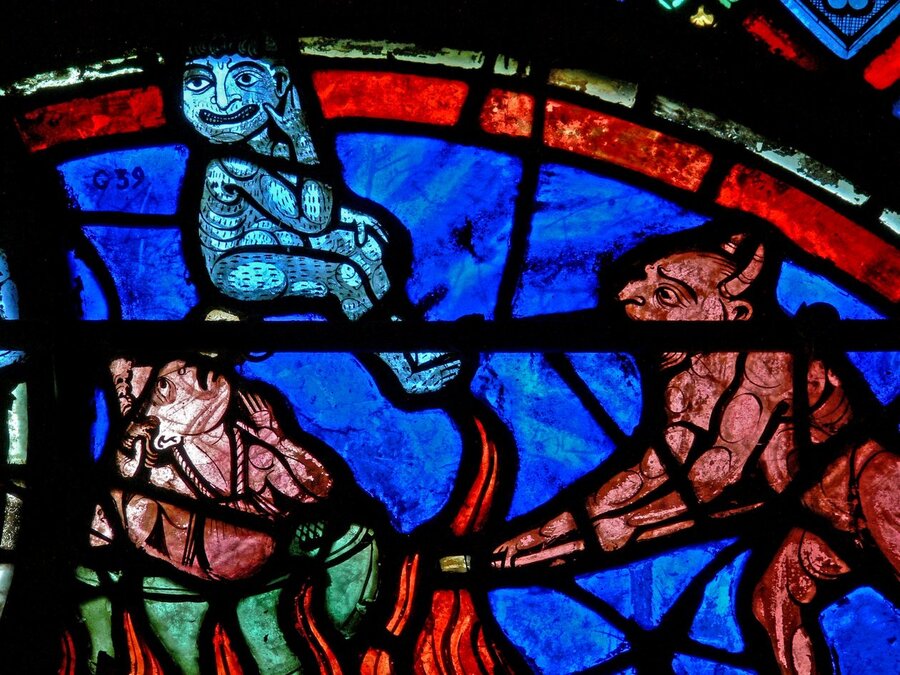
Fragments of the «Last Judgment» stained glass, St. Stephen’s Cathedral, c. 1205–1215, France
Materials were selected based on the principle of contextual diversity; the study examines encyclopedic manuscripts, legends, marginalia, bestiaries, sculpture and decorative arts, misericords (small wooden consoles attached to church seats), and stained glass.
The primary organizing principle for this section is the diversity of mediums. The visual material is divided into several groups: depictions of fantastic creatures in manuscripts, legends, and encyclopedias (representing how these images manifested in medieval consciousness—the concept of the strange and the unknown, for example, in legends about barbarians and other peoples described in medieval sources), marginalia, sculptural representations, and architectural decoration.
This division allows us to trace how the concept of the extraordinary existed in various forms.
II. Grotesque Figures in the Mind of the Medieval Person
Here, I want to draw attention to the archetypes in the public consciousness of that era—things that might be called rumors, legends, or misunderstandings of the world order. For the medieval person, the boundary between the real and the marvelous was not clear: due to a lack of scientific knowledge, conceptions of nature and the world’s structure were formed from ancient texts, religious teachings, travelers' accounts, and hearsay. Therefore, fantastic creatures and tales of distant lands could be perceived as entirely plausible parts of reality.
Secrets of Natural History
Around 1485, French miniaturist Robert de Castel created illustrations for the manuscript «Secrets of Natural History.» It is a French translation of an encyclopedic work by Pierre Bernouier. The unique quality of this piece is how the real geographical information, travelers' accounts, ancient sources, and legends are blended in the author’s depiction. The book describes distant lands, unusual customs of peoples, mythical creatures, and natural phenomena that seem completely unrealistic and nonsensical to a modern person. Such texts were intended to both entertain and enlighten.
Robert Tester, «Secrets of Natural History, ” circa 1480–1485, France
Traponi, p. 60v: «Solinus says that among the descendants of Traponi grow the largest snails in the world, which move so fast that it is a miracle, and the people of the country hunt and chase them while we hunt wild animals. And the residents of the region live by their flesh. And the snails are so large that the men and women of the country live inside them, and they have no other homes or dwellings.»
Robert Tester, «Secrets of Natural History,» c. 1480–1485, France
Robert Testar, «Secrets of Natural History, ” c. 1480–1485, France
Upper Egypt, pg. 16v: In the foreground, Saint Anthony confronts a monster—half-man, half-horse—while in the background, he encounters a small savage, «shaggy and naked, with nostrils almost entirely turned inside-out, a horned forehead, and goat-like legs.»
Lower Egypt, pg. 15v: «Various beasts said to live near the Nile—such as crocodiles, hippos, lions, leopards, panthers, basilisks, tigers, dragons, snakes, vipers, and Catoplyes—that can kill any animal with a mere glance. Fortunately, this last creature is so lazy and complacent that it can barely lift its head.»
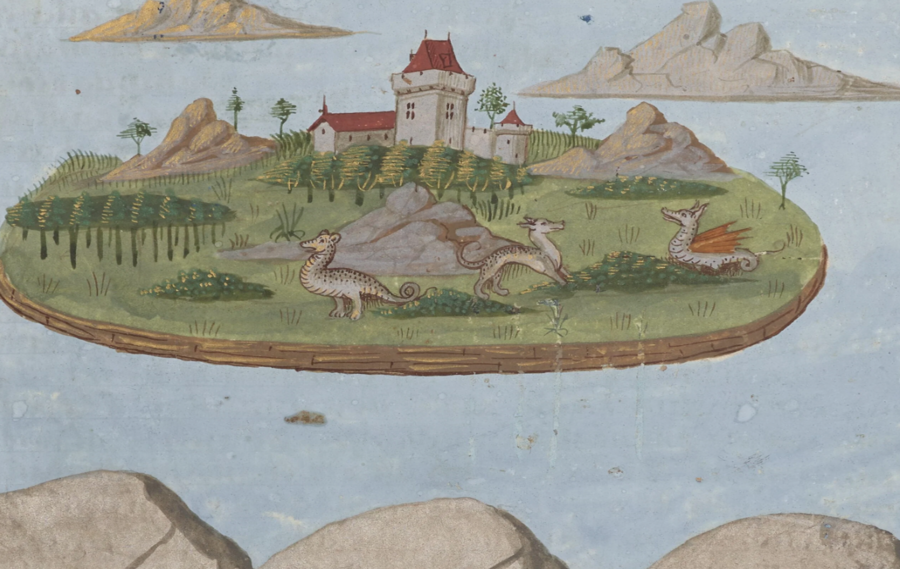
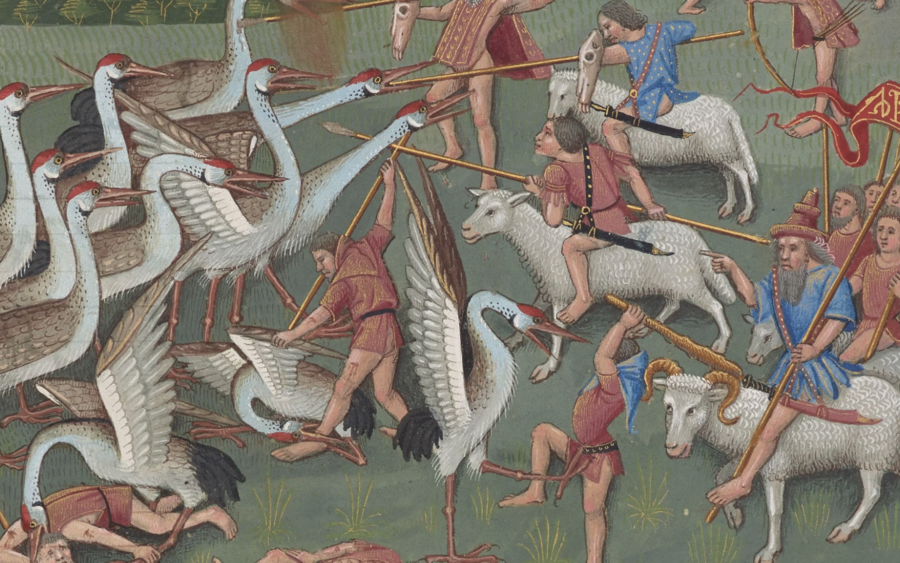
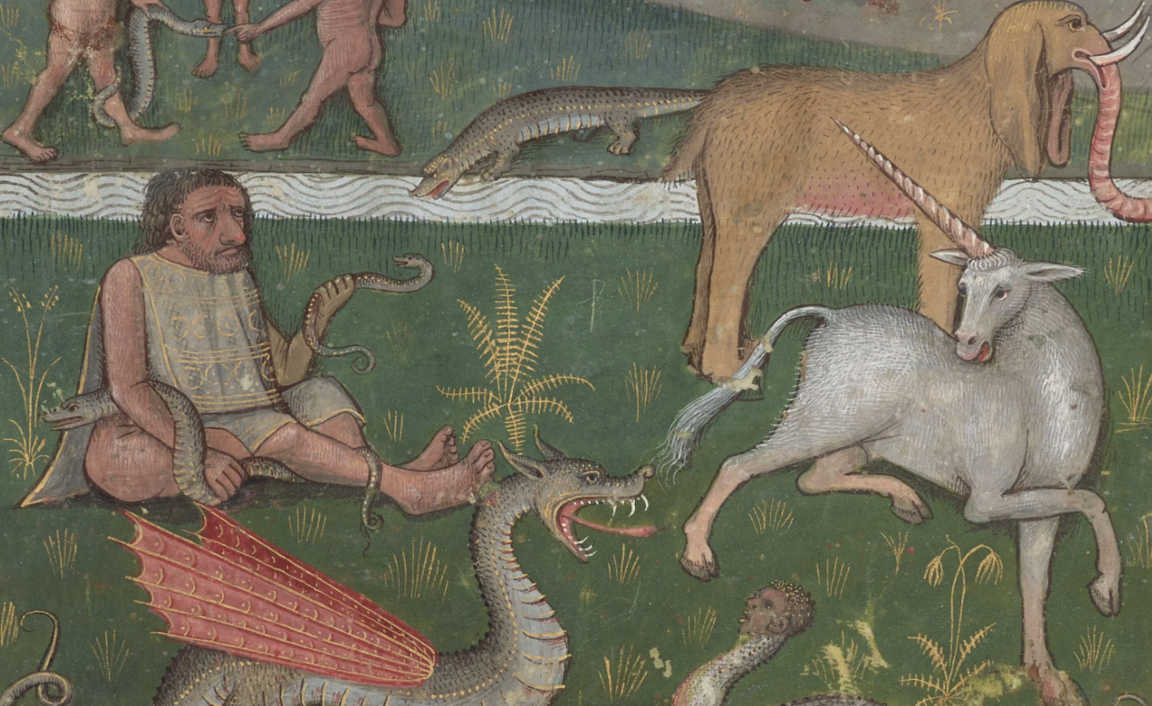
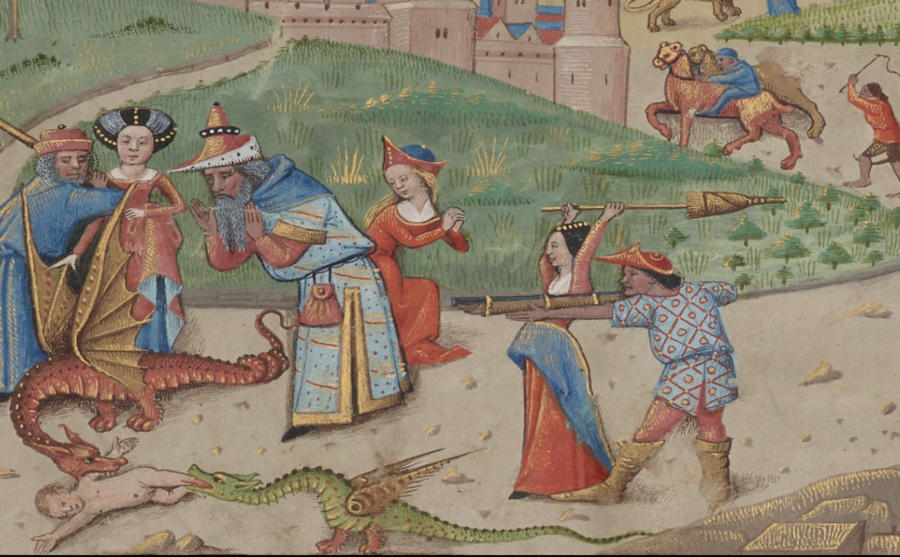
Robert Tester, «Secrets of Natural History, ” c. 1480–1485, France. Depicted: Judea, Ethiopia, Africa, China.
Robert Tester, «Secrets of Natural History, ” c. 1480–1485, France
Provence, folio 49r: «In the city of Arles, before the time of the Incarnation of our Lord Jesus Christ, there was a custom both marvelous and very odious. Every year, on the first day of May, they purchased three small children with the funds of the community, whom they killed and whose bodies they offered to their idols. They then scattered all the blood that flowed from these three little children and threw it on the heads of the townspeople. They said that the innocent blood was cast upon them for the salvation of the people. They made this sacrifice long ago in a place called The Rock, located in the city’s suburb between two very tall stone columns.»
The manuscript «Wondrous Stories» by the French writer Pierre Boastyou, created for Elizabeth I—something between a bestiary and a scientific treatise on congenital defects—still describes wonders, monsters, and unusual phenomena.
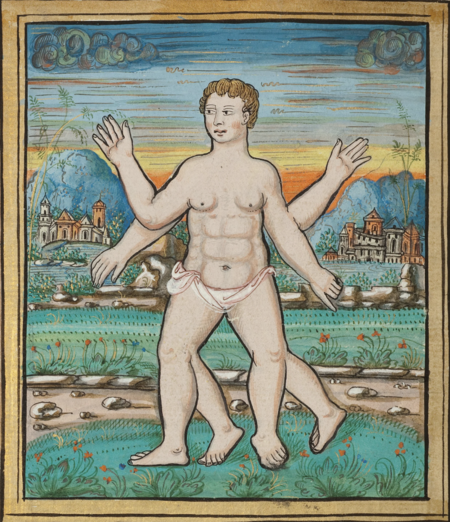
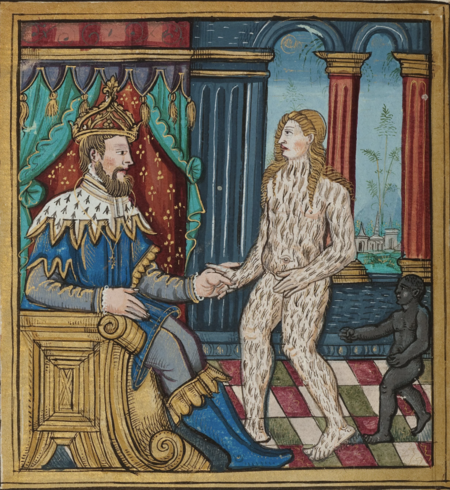
«Wondrous Stories, ” Pierre Beausteau, 1559, a boy with four arms and legs—a person with congenital defects, a woman covered in fur
In innate defects, the author (much like religion during that period) blames women who alter or engage in sexual activity during menstruation. There was also a belief that a woman’s thoughts and emotions during conception or pregnancy directly influenced the fetus’s appearance. For example, a woman covered in hair was supposedly the result of her mother looking at a statue of St. John in an animal hide during conception.
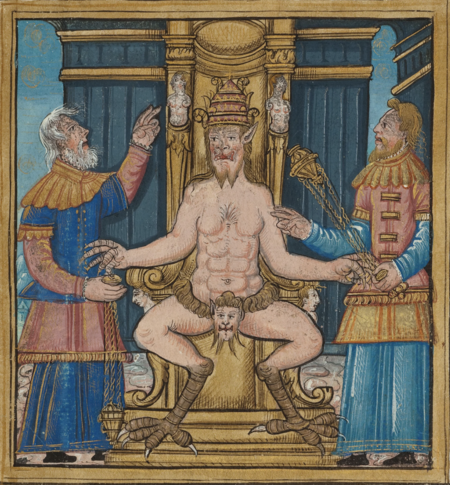
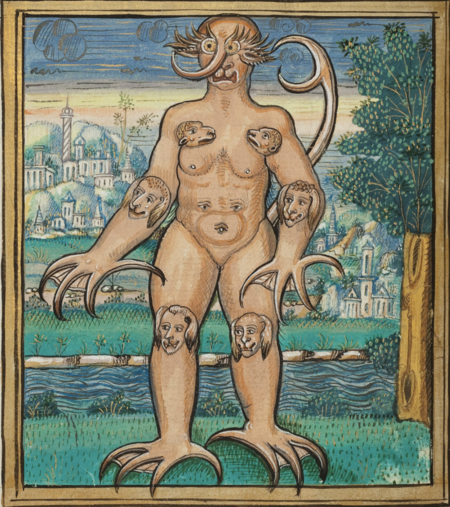
«Amazing Stories, ” Pierre Boastieu, 1559, Satan and the Kraków Monster
Boastiu describes Satan, Belzebul, in his manuscript, who, according to the account, tricked the inhabitants of India into treating him as a deity. Boastiu quotes a merchant who traveled to Calicut and saw certain Hindu temples depicting the Hindu god Bhrigu: the Europeans misinterpreted that people’s religion, and thus Venzevul came into being.
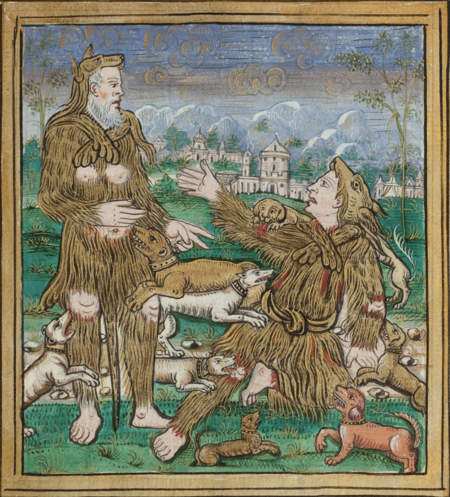
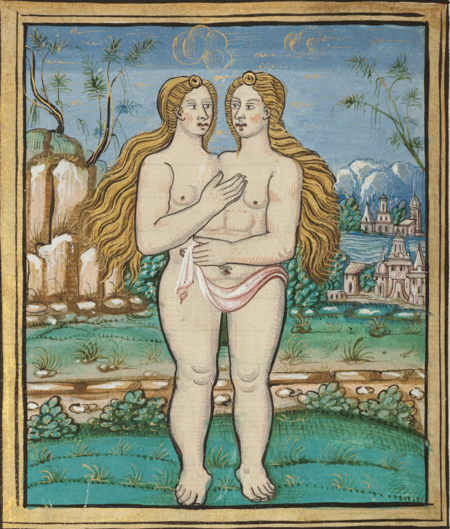
«Amazing Stories, ” Pierre Boastieu, 1559
Blêmmy—a people without heads, whose eyes, nose, and mouth were situated directly on their chest.
«Journeys of Sir John Mandeville,» c. 1500–1599, France
The earliest written references to such creatures can be found in ancient authors like Herodotus and Pliny the Elder; the image subsequently transitioned into medieval manuscripts. Interestingly, the name «blemmies» is connected to a real ancient people who lived in the Eastern Desert of Egypt and Sudan. However, exactly how this name came to signify headless people is unknown. Perhaps errors in transmitting travelers' accounts played a role, which we encountered in the previous section.During the Age of Discovery, similar creatures appeared in tales of the New World, even as geographical knowledge expanded considerably—the ancient legend persisted.Blemmies are a vivid example of how a lack of knowledge in medieval society shapes a false perception of the world, particularly its uncharted territories.
III. Drolleries, Marginalia