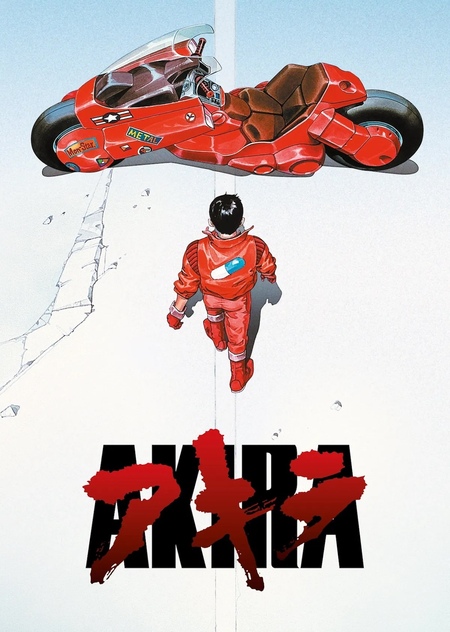
The History of the Problematic Transformation of Manga Classics into Anime Classics
In March 1991, Monthly Film Bulletin published an interview with Katsuhiro Otomo—shortly after he finished the manga Akira. By that point, the story, which he had originally planned to complete in about a year, had grown to 1,318 pages. Furthermore, Otomo had had to pause work on the manga for a year and a half to produce its feature film adaptation.
Years later, he admitted that starting the film before finishing the manga was «one of the worst ideas imaginable.» The story proved too vast and intricate to simply adapt to the screen. Therefore, Akira had to be effectively reimagined. The producers had initially planned for a roughly one-hour film, but while working on the storyboards, Otomo realized that wasn’t enough. They had to cut the plot, remove characters, and abandon entire narrative threads. As a result, the film and the manga became two distinct versions of the same story—similar, but quite divergent.
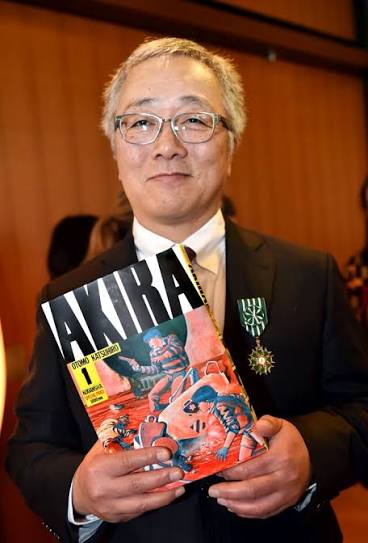
One of the major debates centered on the presence of Akira himself. In the manga, he plays a much more prominent role, and a portion of the team felt the film would lose its meaning without him. Otomo maintained the opposite view: he was more interested in keeping Akira almost invisible, transforming him into something like an absent center of the narrative.A similar situation occurred with the ending. Otomo had long conceived of the story of Kaneda and Tetsuo concluding by returning to their childhood and their first meeting at the orphanage. He used this very idea in the film. Since the ending was already set for the movie, the manga had to devise a different conclusion.
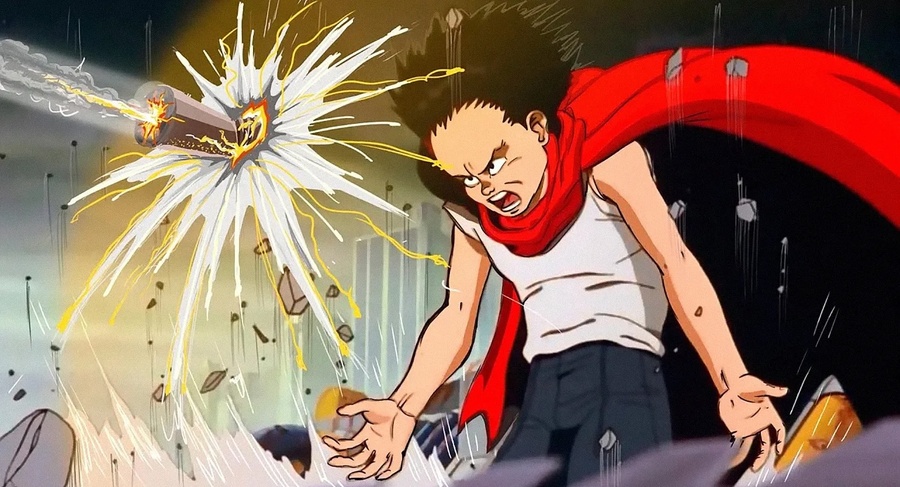
However, Otomo regretted not just the plot cuts. One of the themes that particularly interested him—satire on new religions—did not make it into the film. While the manga features the cult of Akira led by Lady Miyako, she only appears ephemerally in the movie.
Otomo explained that he has long been fascinated by the phenomenon of new religious movements in Japan. He found it curious how easily a new religion can emerge there and how rapidly a unique system of beliefs can form around its founder. For him, this element of Akira was not simply a fantastic conceit, but an observation of very real Japanese society.
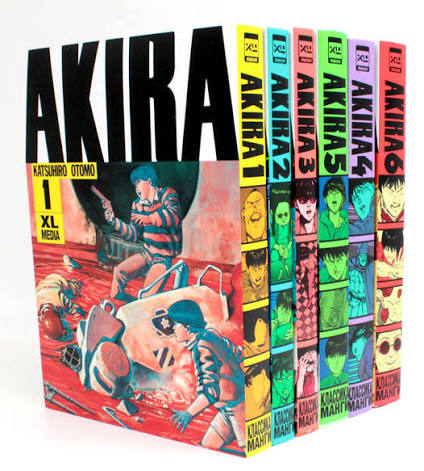
Why «Akira» is a seminal manga
«Akira» by Katsuhiro Otomo is one of the defining manga of the 20th century—a work that profoundly influenced how Japanese comics and animation were perceived outside of Japan. The manga ran from 1982 to 1990 and ultimately expanded to over 2,000 pages.
The story is set in Neo-Tokyo, a sprawling metropolis rebuilt after the mysterious destruction of the old city. On the surface, it appears to be a tale about teenagers, experiments with psychic abilities, and state control. However, Otomo gradually transforms it into a massive science fiction epic exploring power, technology, religion, and the fear of the future.
The visual language of «Akira» proved especially significant. Otomo rendered the city, its transportation, the widespread destruction, and the massive scenes with incredible detail, creating a palpable sense of a world that exists independently of its characters. For Western audiences, the manga became a crucial gateway into Japanese popular culture—and the 1988 feature film elevated «Akira» into an international cultural phenomenon.
Yet, the film is only one part of a much larger narrative. It was released before the manga’s conclusion, and therefore differs significantly from it. This is precisely what Otomo discussed in an interview: making the film forced him to essentially reinvent his own story.
Another topic that Otomo discussed surprisingly often was women. He considered it perfectly natural that Kei appeared smarter and more composed than Kaneda. In Otomo’s view, Kaneda was primarily lazy—and that is why Otomo could easily understand him: he considered himself a rather lazy person as well.
Nevertheless, Kei’s strength resonated with him as entirely realistic. Otomo grew up in Miyagi Prefecture, where there was a long-standing tradition of female fortune tellers connected to shamanism. Perhaps this influenced his perception of female characters.
He believed that Japanese culture severely undervalues the power of women. In manga, they are often depicted as submissive victims, but Otomo saw this not as a reflection of reality, but rather as a masculine fantasy. In his view, the paradox is that the authors of these characters themselves understand how powerful women are—yet they transform them into «dolls.»
Otomo was regularly criticized for his depiction of women: his heroines were deemed insufficiently sexy. But he had no intention of changing this approach. He felt that the Japanese manga industry was overly dependent on commercial rules. The artist becomes a brand, and the audience expects recognizability and consistency above all else from that brand.
With «Akira» Otomo attempted to disrupt this system at the production level as well. Back in the early 1980s, while working on an animated film for Haruki Kadokawa, he met Japanese animators and constantly heard complaints about the working conditions from them. They cited the lack of competent producers as the main issue.
Otomo decided that if he ever made a feature-length animated film himself, he would become its producer. This is exactly what happened with «Akira.» He consciously wanted to give the animators the chance to do the best work they were capable of.

What did Otomo do after «Akira»?
After «Akira,» Otomo did not release new works at the same pace or scale. He engaged in illustration, design, and short manga; he wrote screenplays and gradually shifted focus to cinema.In 1995, he became one of the creators of the animated anthology «Memories of Tomorrow,» and in 2004, he released his second feature-length animated film, «Stymbee.» Sixteen years passed between his two major animated features. Later, he directed the video game «Musy the Expert» (2006) and participated in the anthology «Fragile World» (2013).In 2019, Otomo announced a new feature-length project, *Orbital Era*, which is set to take place on a space colony. There is no release date for the film yet.Ultimately, «Akira» remains his masterpiece—Otomo never seemed particularly intent on replicating his own success.The film turned out to be a long and extremely expensive production. But Otomo believed it was worth it: many artists had the opportunity to push the limits of their abilities. Although, he joked, it didn’t lead to a flood of new work offers.
Otomo maintained a somewhat detached view of Japanese independent cinema, not seeing manga and young film as parts of the same culture. Several independent directors adapted his stories simply because they loved them. Otomo even had his own joint project with director Gakuryu Ishii—the film Tokyo Paradise. However, the script was never finished.
Otomo hoped they would eventually get around to it.