Navigation:
I. Introduction
II. London 1851
III. Paris 1889
IV. Paris 1925
V. Comparison of Three Exhibitions
VI. Conclusion and Hypothesis Testing
I. Introduction
World Exhibitions of the 19th—Early 20th Centuries were not merely venues for showcasing machines, materials, and household items. They shaped visitors’ perceptions of modernity, beauty, and technological progress. Therefore, the history of design is connected not only to the evolution of objects themselves but also to how they were presented to the public.
The focus of my research is on the methods of exhibiting objects at three international expositions: in London in 1851, in Paris in 1889, and at the International Exhibition of Modern Decorative and Industrial Arts in Paris in 1925.
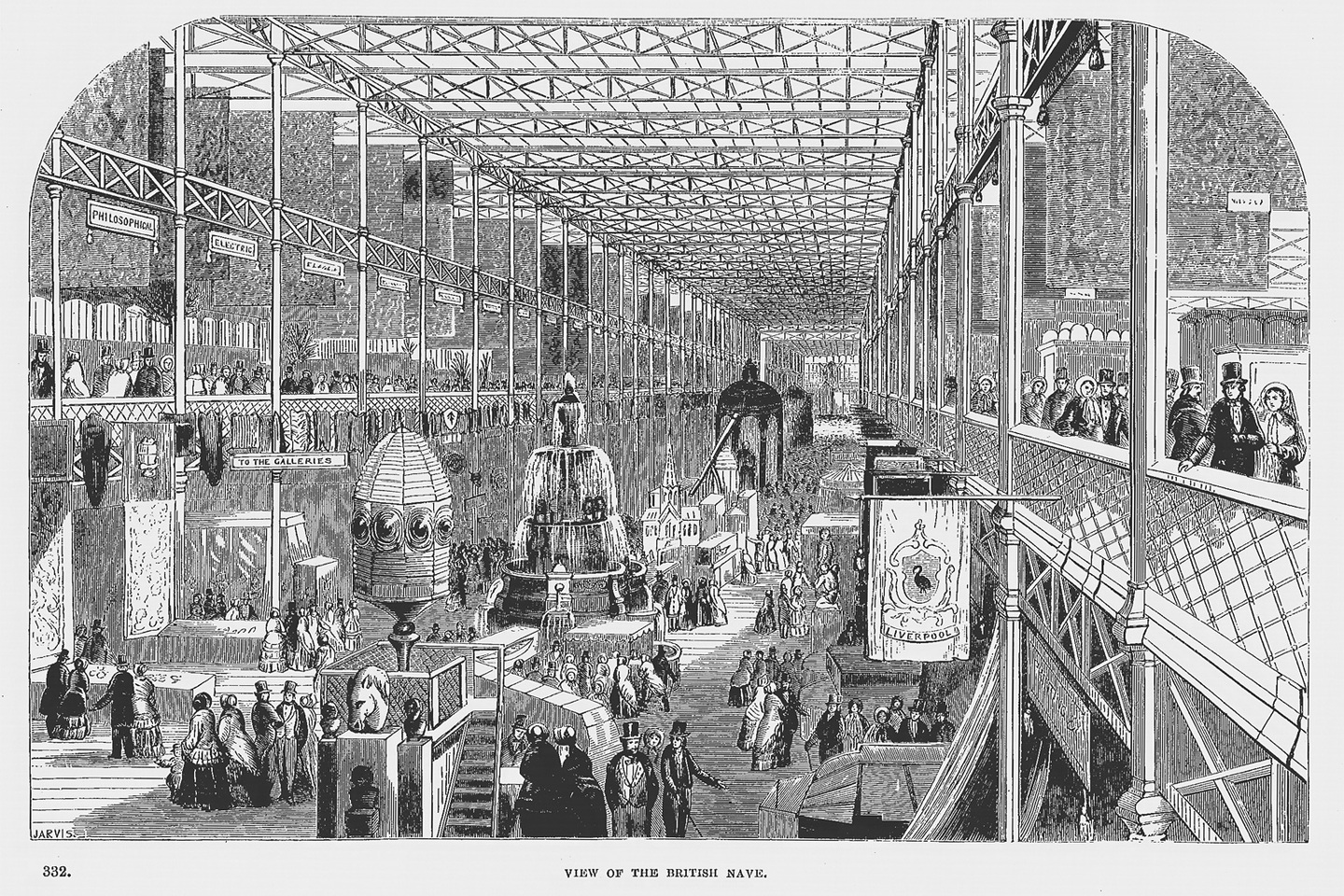
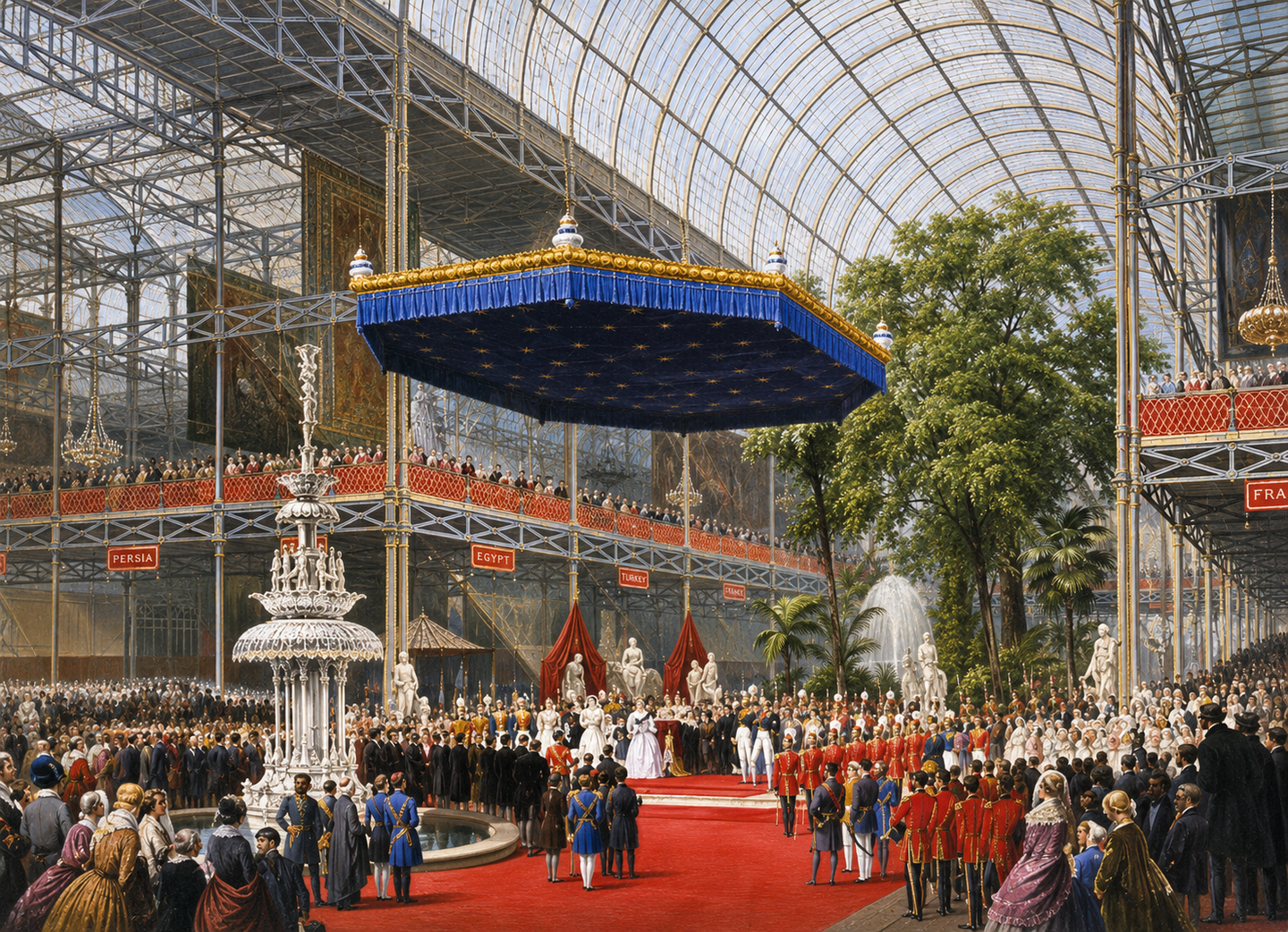
Interior of the Crystal Palace, London, 1851.
The 1851 London Exhibition — the first World’s Fair brought together industrial machinery, raw materials, household goods, and decorative art in the Crystal Palace. Its example allows for the exploration of how thousands of exhibits were classified, how space was organized, and how individual pieces were highlighted among the multitude of others.
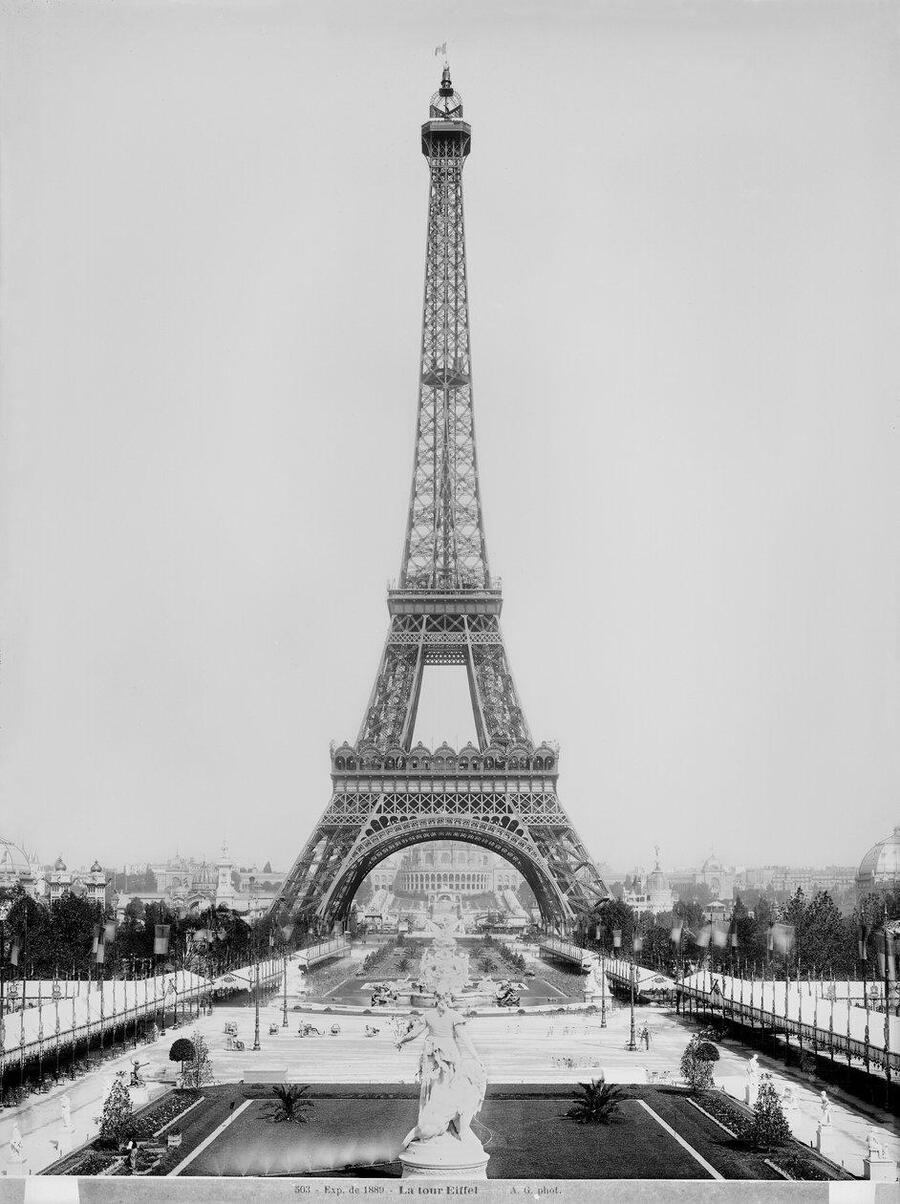
At the 1889 Paris Exposition, the exhibition served as a massive demonstration of technological progress. The Eiffel Tower, the Machine Gallery, and the operational equipment showcased engineering achievements not only through the devices themselves but also through the architecture, scale, and spectacle. This allows for an examination of how technical objects were transformed into part of the exhibition spectacle.
Paris Exhibition of 1925 — unlike the two previous exhibitions, this exposition was specialized and dedicated to modern decorative and industrial arts. Complete interiors, integrating furniture, lighting, textiles, and decorative objects, played a particularly prominent role here. Concurrently, various design approaches were showcased—ranging from opulent Art Deco to functionalism.
My working hypothesis is that over the period under review, the exhibition display gained increasing significance as an independent tool for presenting design. The architecture, arrangement, and combination of objects helped not only to demonstrate their properties but also to create a specific image of technological progress, artistic mastery, and modern life.
Research Objective — to determine how the methods of organizing and presenting exhibits at selected exhibitions portrayed industrial objects and shaped diverse models of their perception.
II. London 1851
(систематизация промышленности)
In 1851, the Great Exhibition of Industrial Works of All Nations took place in London. More than 100,000 exhibits were displayed in the massive Crystal Palace, constructed of iron and glass.
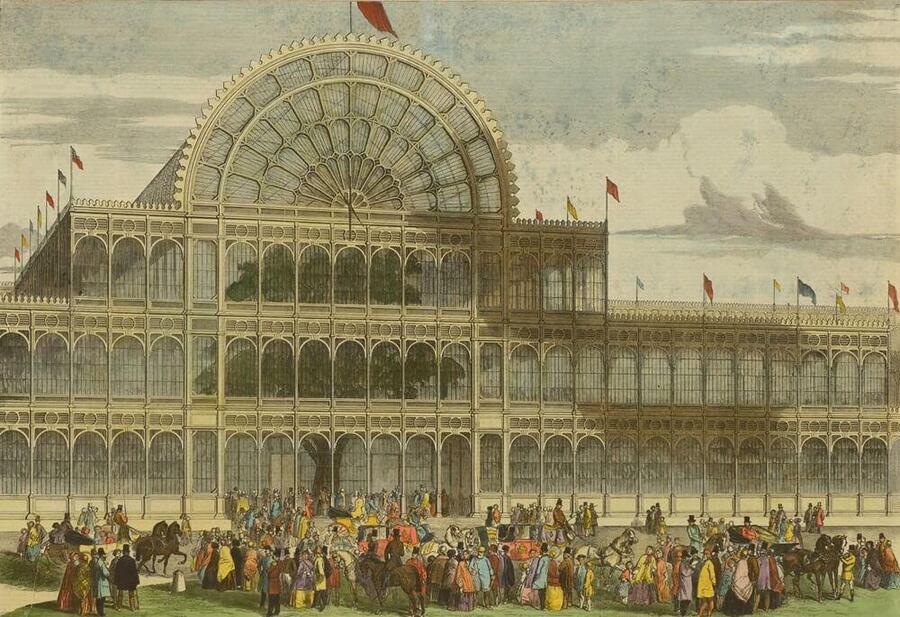
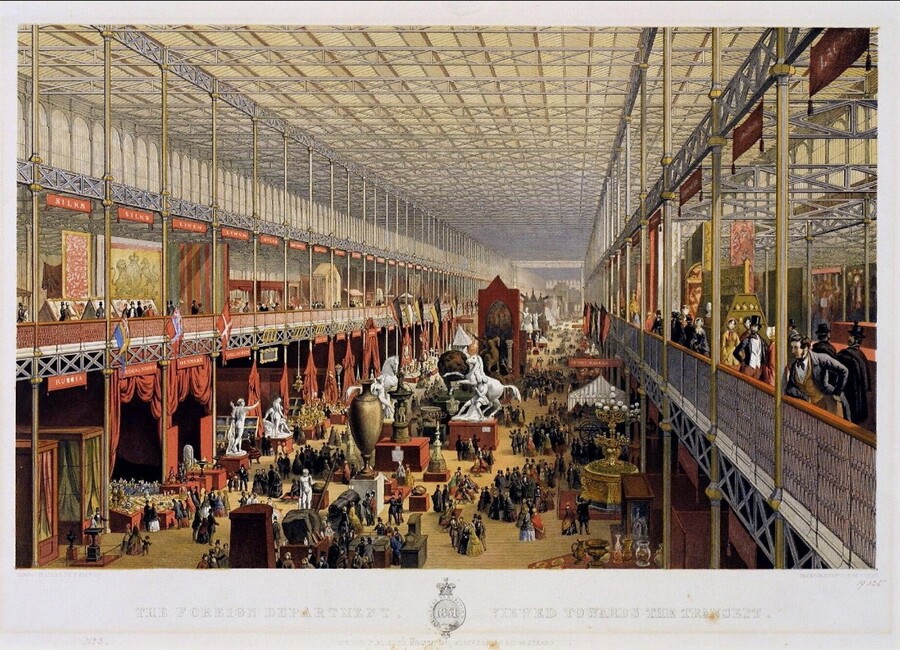
Crystal Palace, London, 1851. // William Simpson, after J. Macneven’s drawing. «Foreign Department, View Toward the Transept, ” 1851.
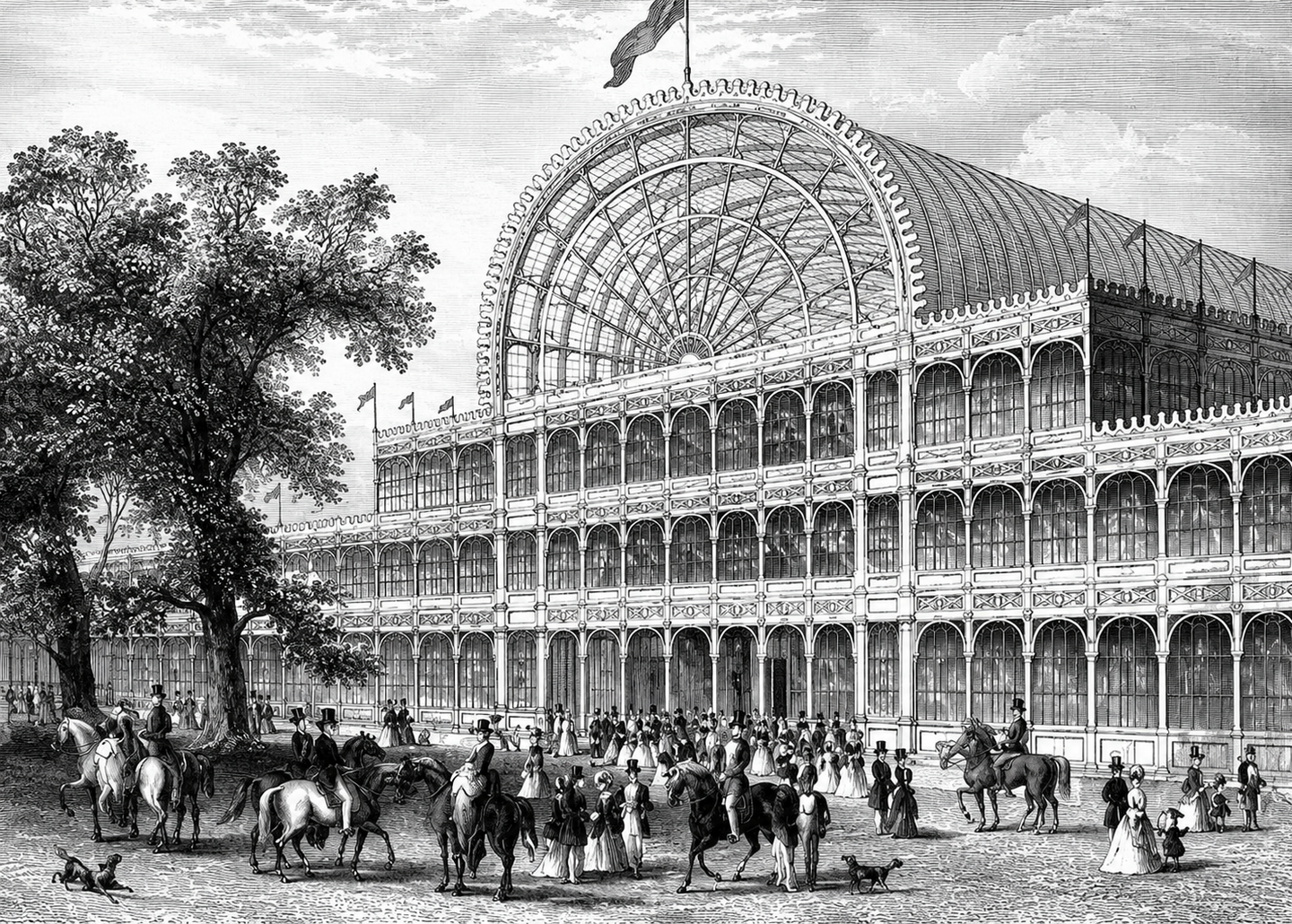
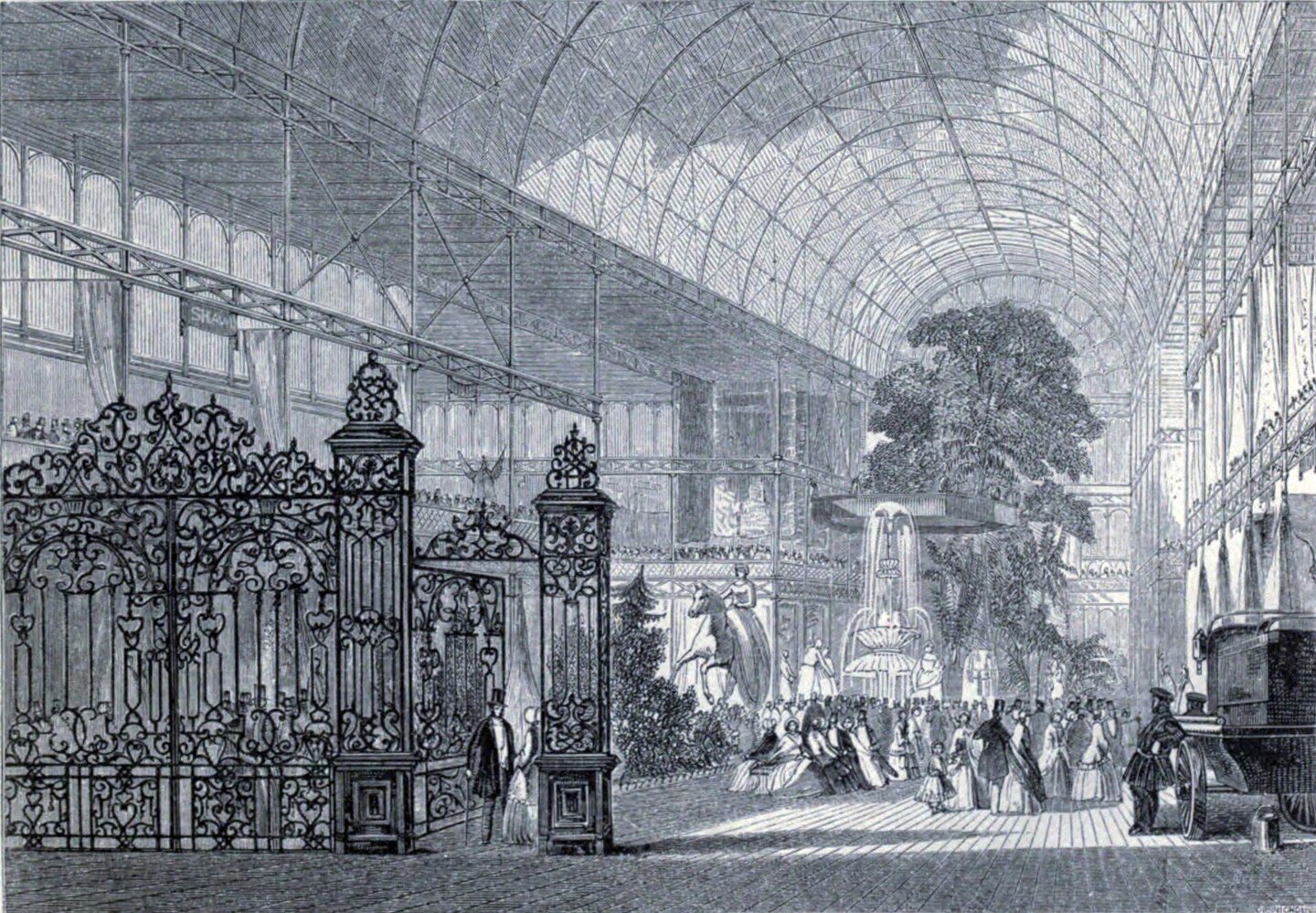
Exhibition Pavilions // Life-Size Trees in the Crystal Palace // Main Entrance to the Crystal Palace
Louis Hag, «Machine Hall at the Great Exhibition, ” circa 1851–1852.
From raw materials to works of art: what was featured in the exhibition?
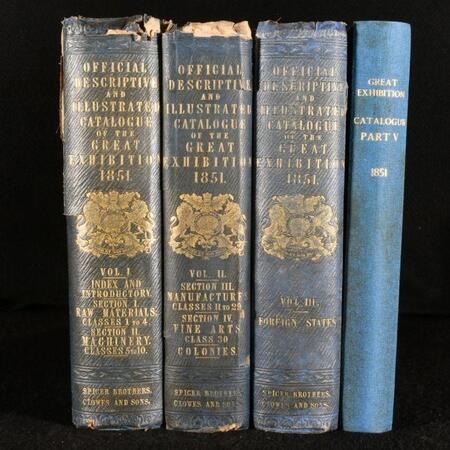
To organize this variety, a classification system using four main sections was employed: raw materials, machinery and mechanical inventions, industrial products, and fine arts.
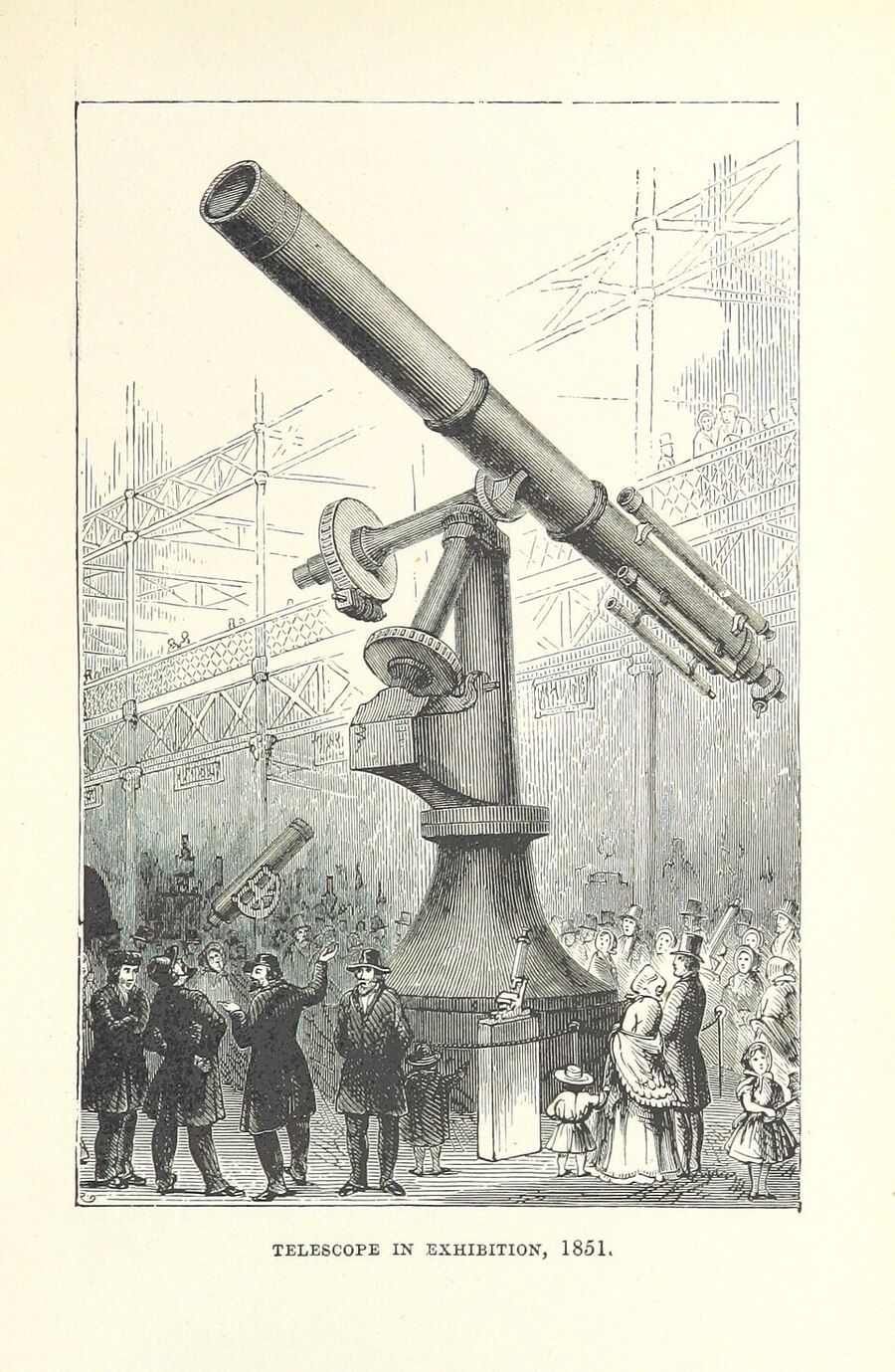
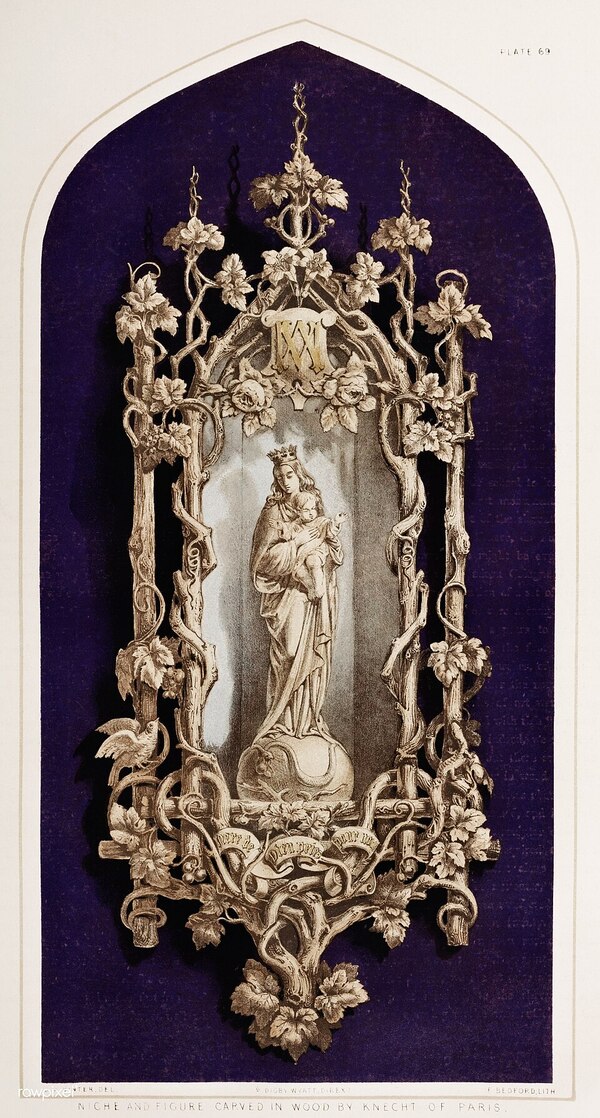
Telescope Exhibition of 1851 // Madonna and Child. Wood, carving
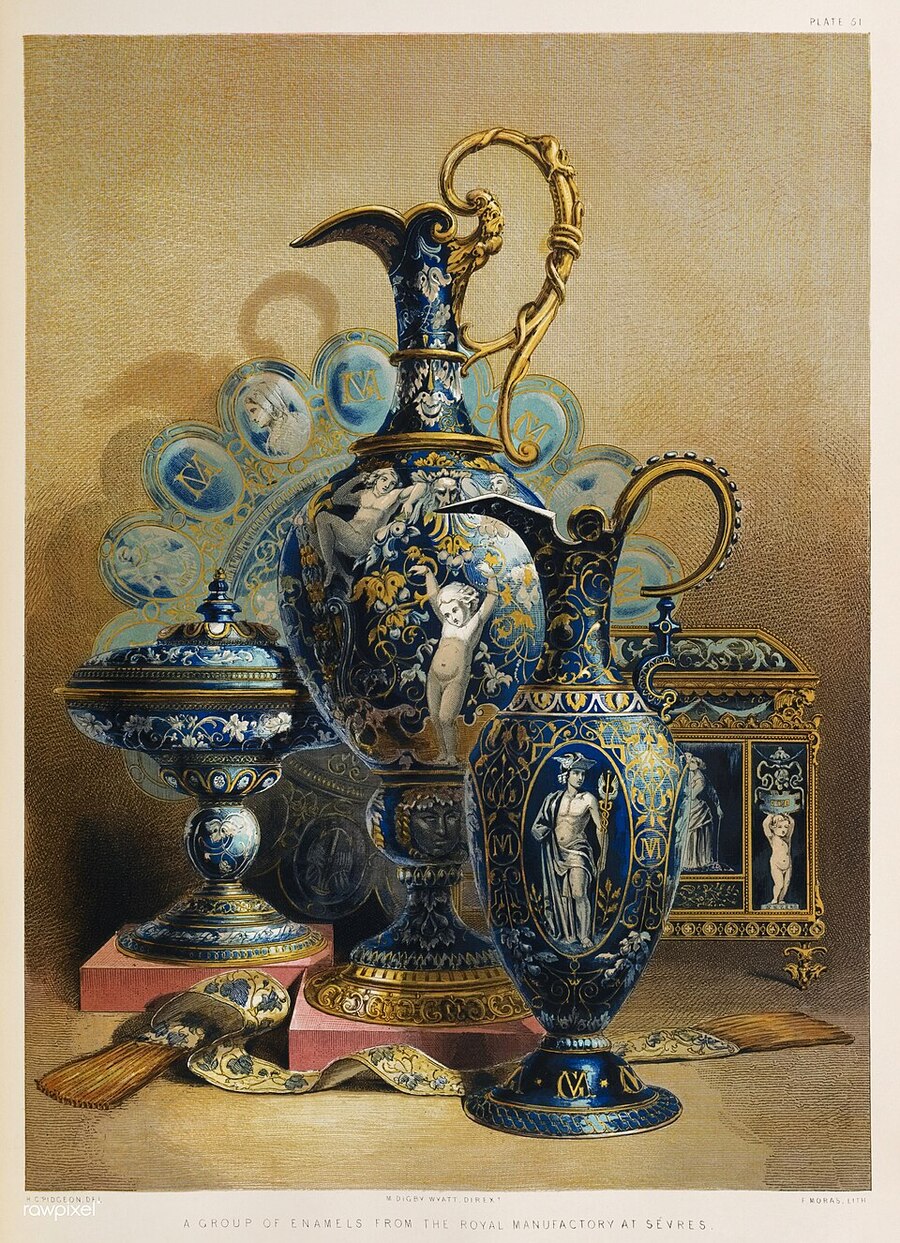
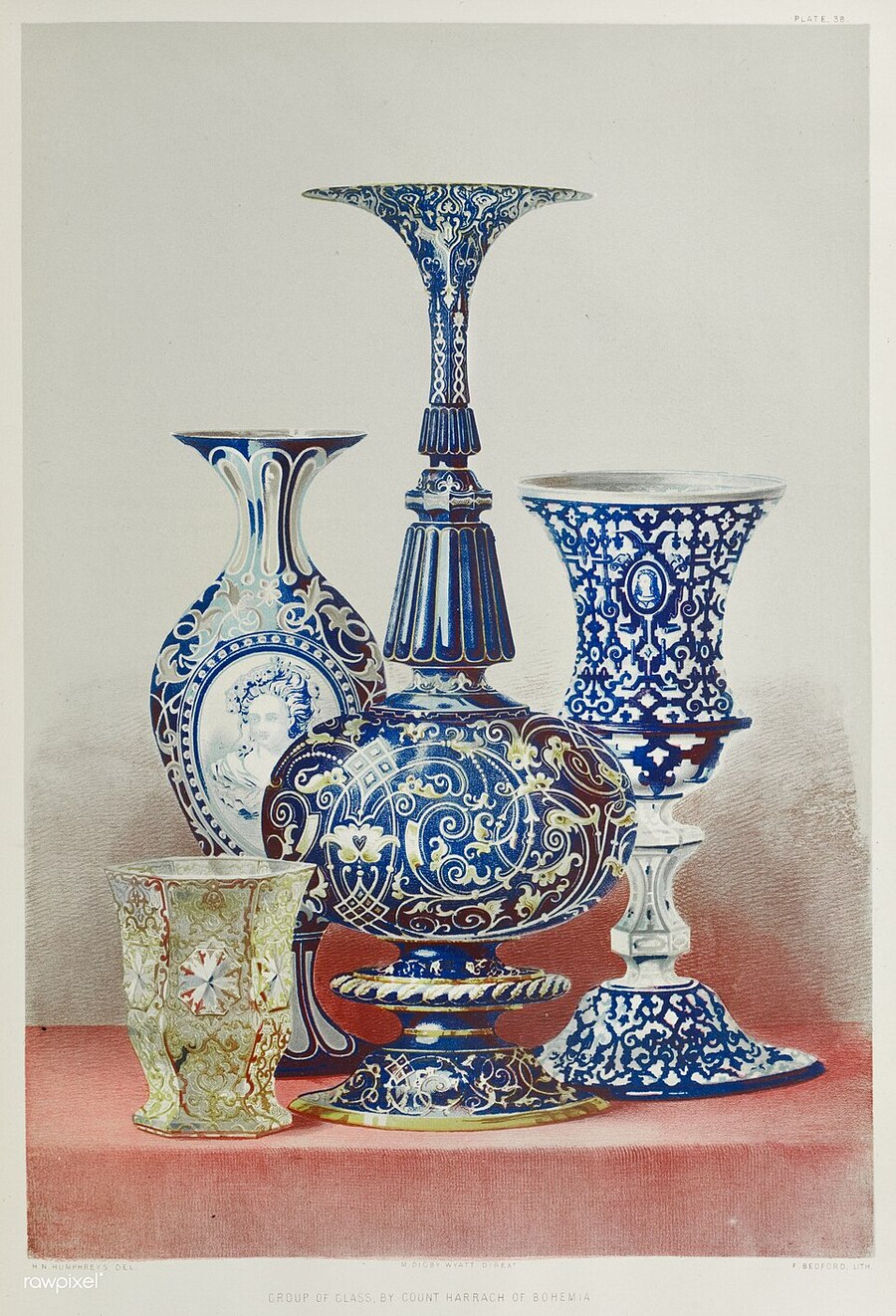
Manufactory Wares from Sevr. Metal, Enamel, Painting // Glassware
This system allowed the exhibition to be viewed not merely as a collection of unusual objects, but as a distinct portrait of industrial production—from raw material to the finished, artistically rendered object.
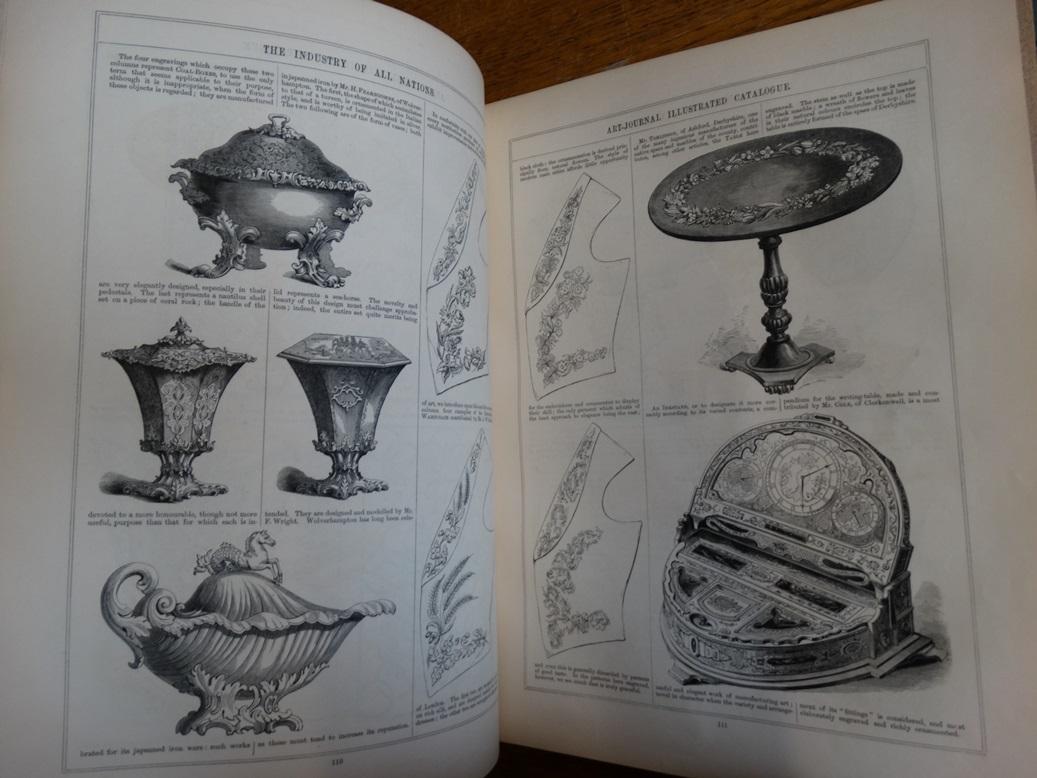
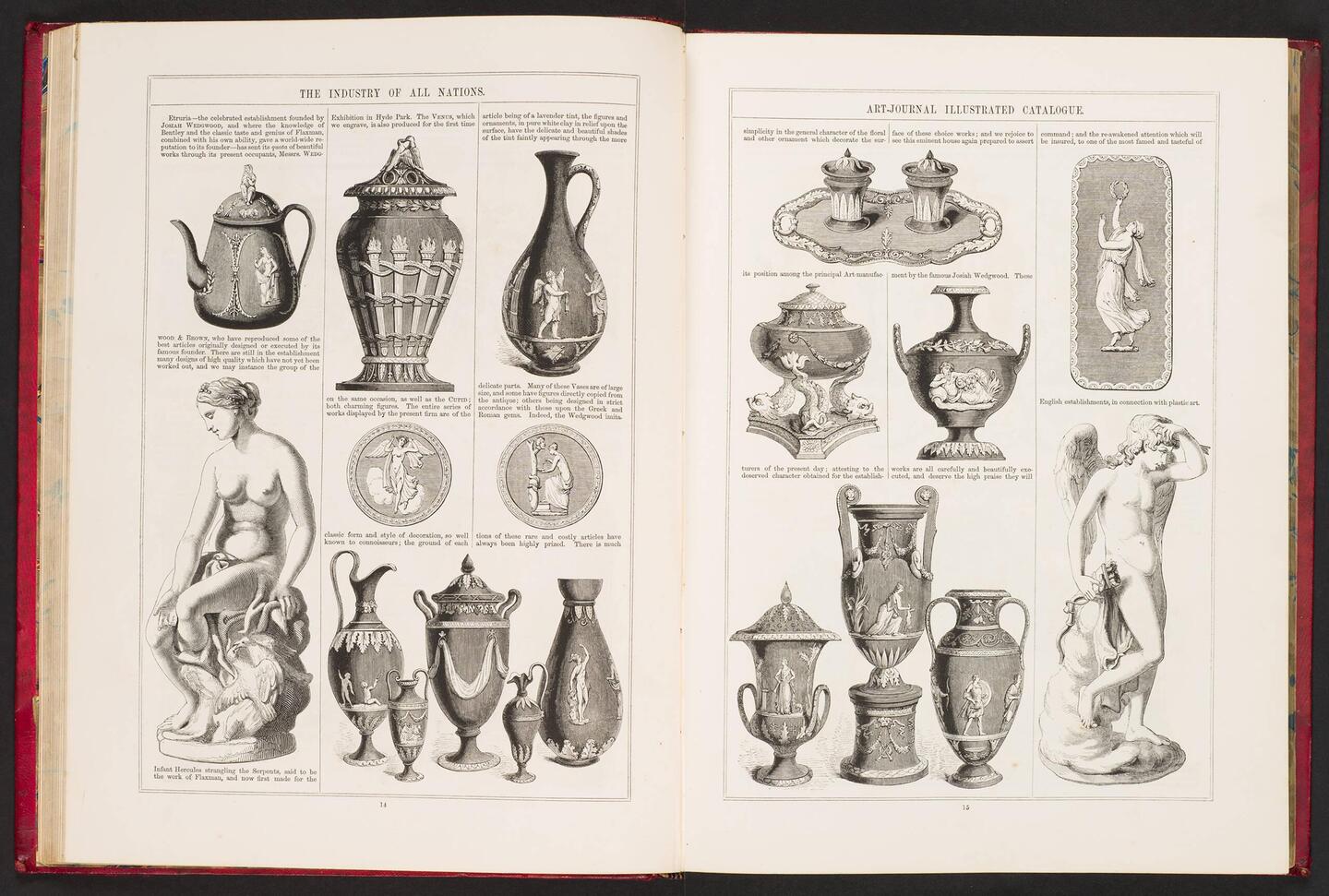
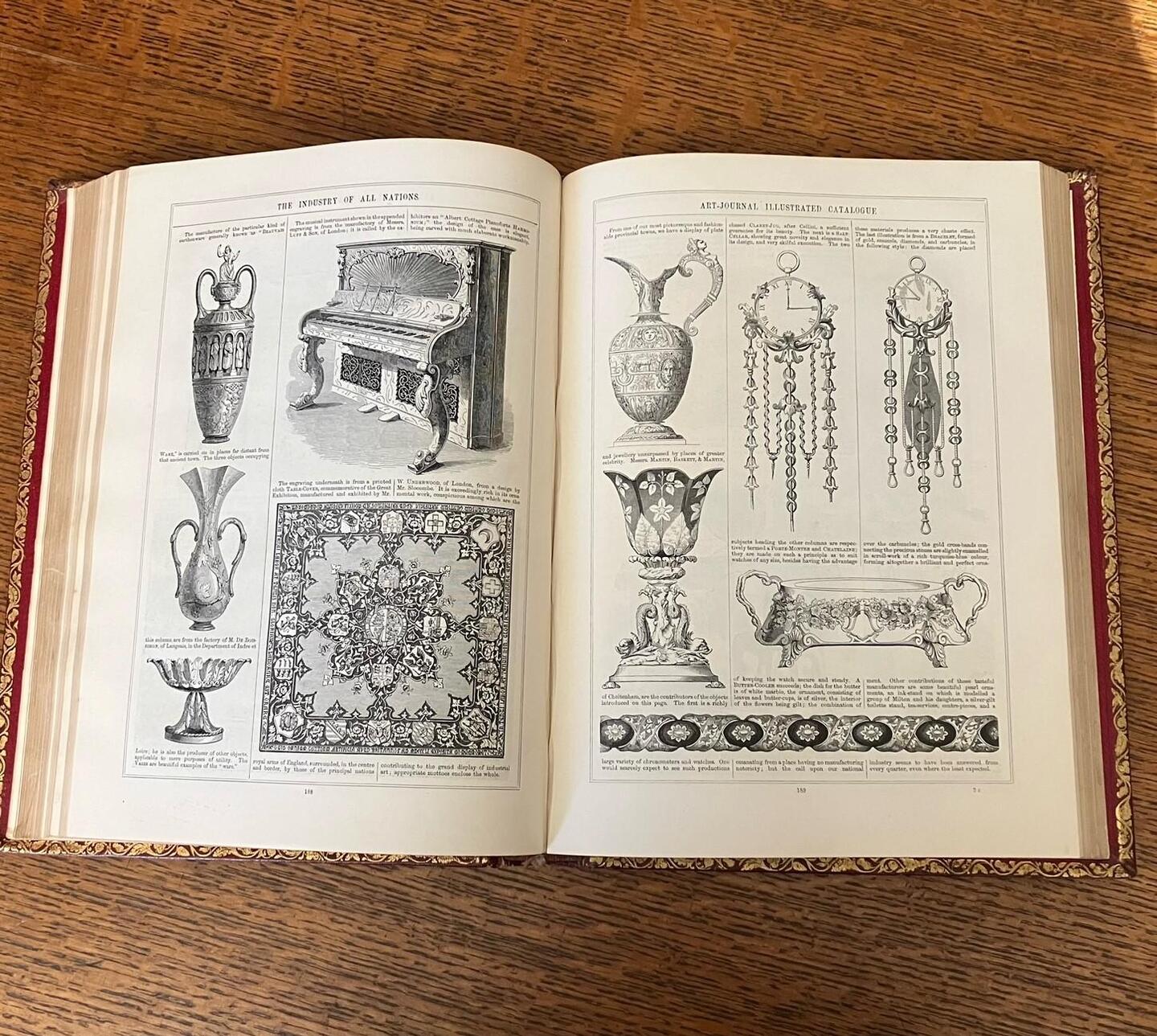
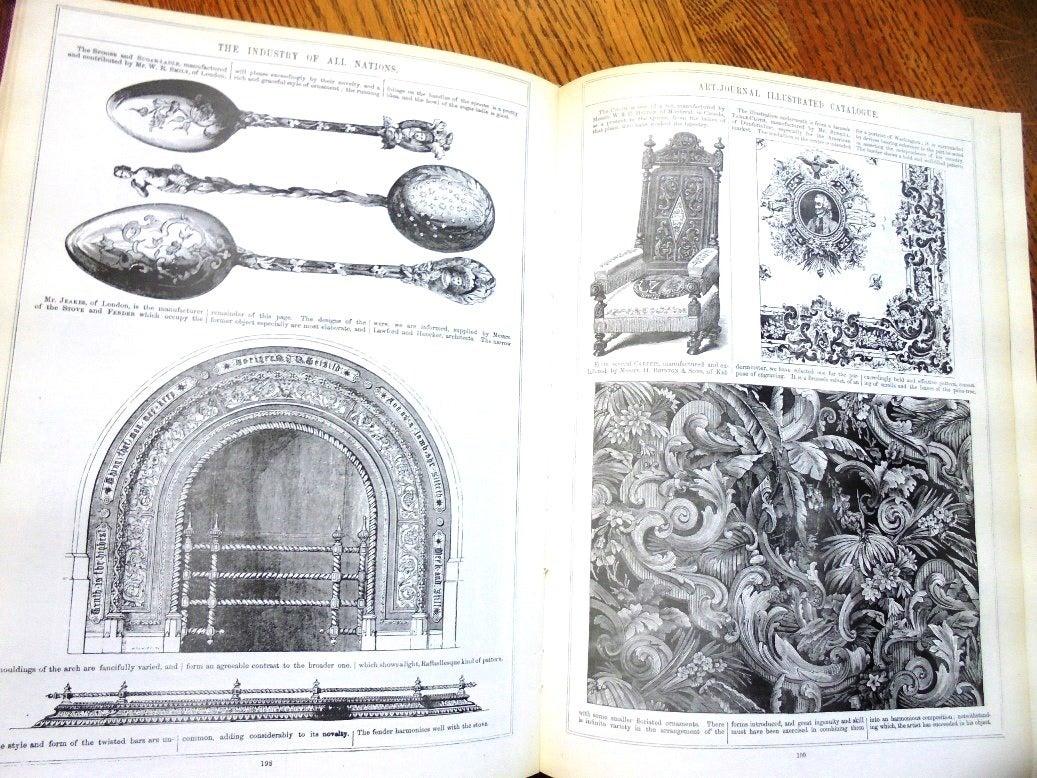
Spreads featuring exhibit items (Engravings of ceramic ware with descriptions. / Vases, clocks, ornamental elements. / Tableware, metal constructions, and decorative objects. / An example of how the engravings conveyed form and ornamentation.)
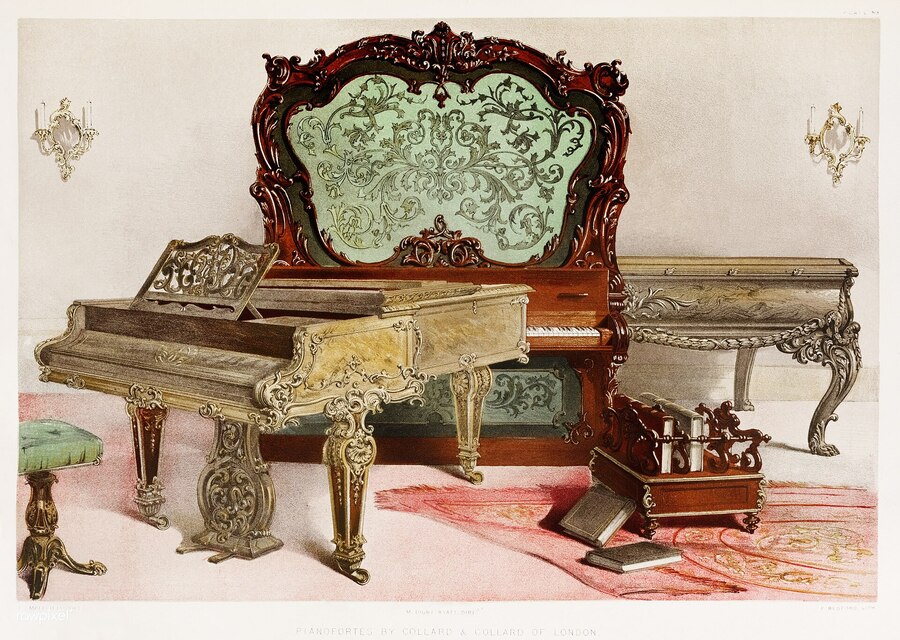
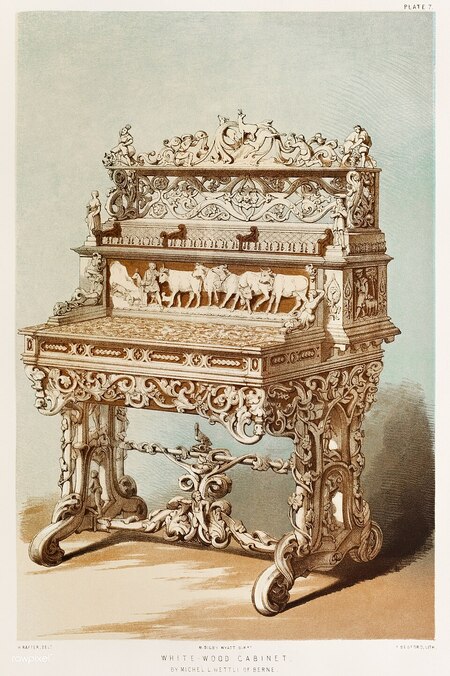
Musical Instruments // Studio
Machines in Action: A Demonstration of Industrial Progress
At the Crystal Palace, a special department of operational mechanisms was organized, allowing visitors to familiarize themselves with industrial equipment not only by its appearance.
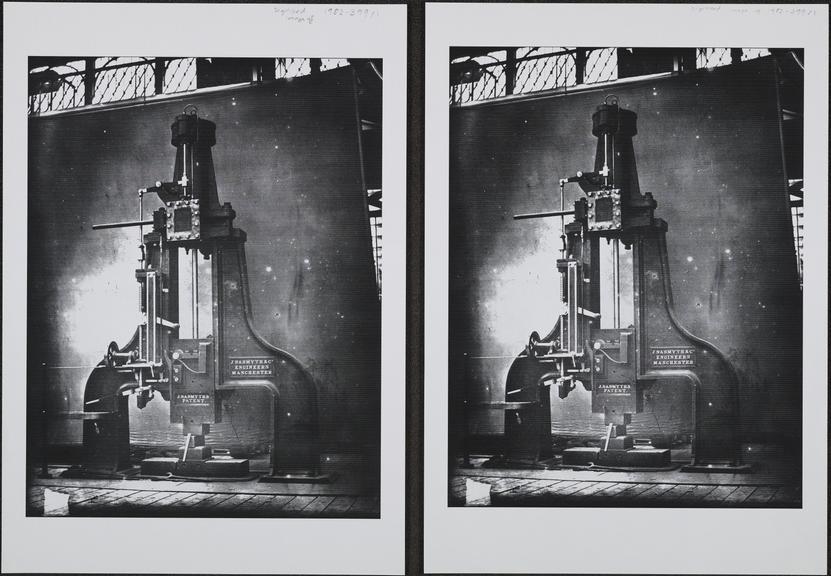
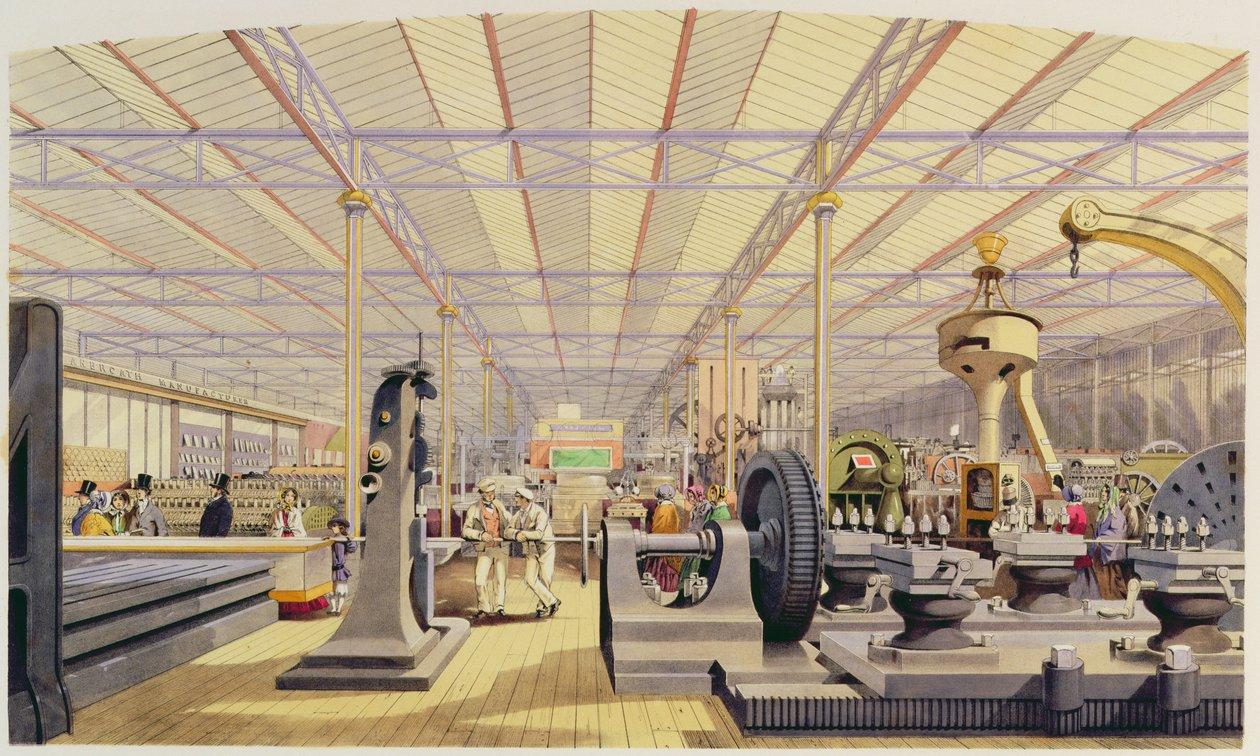
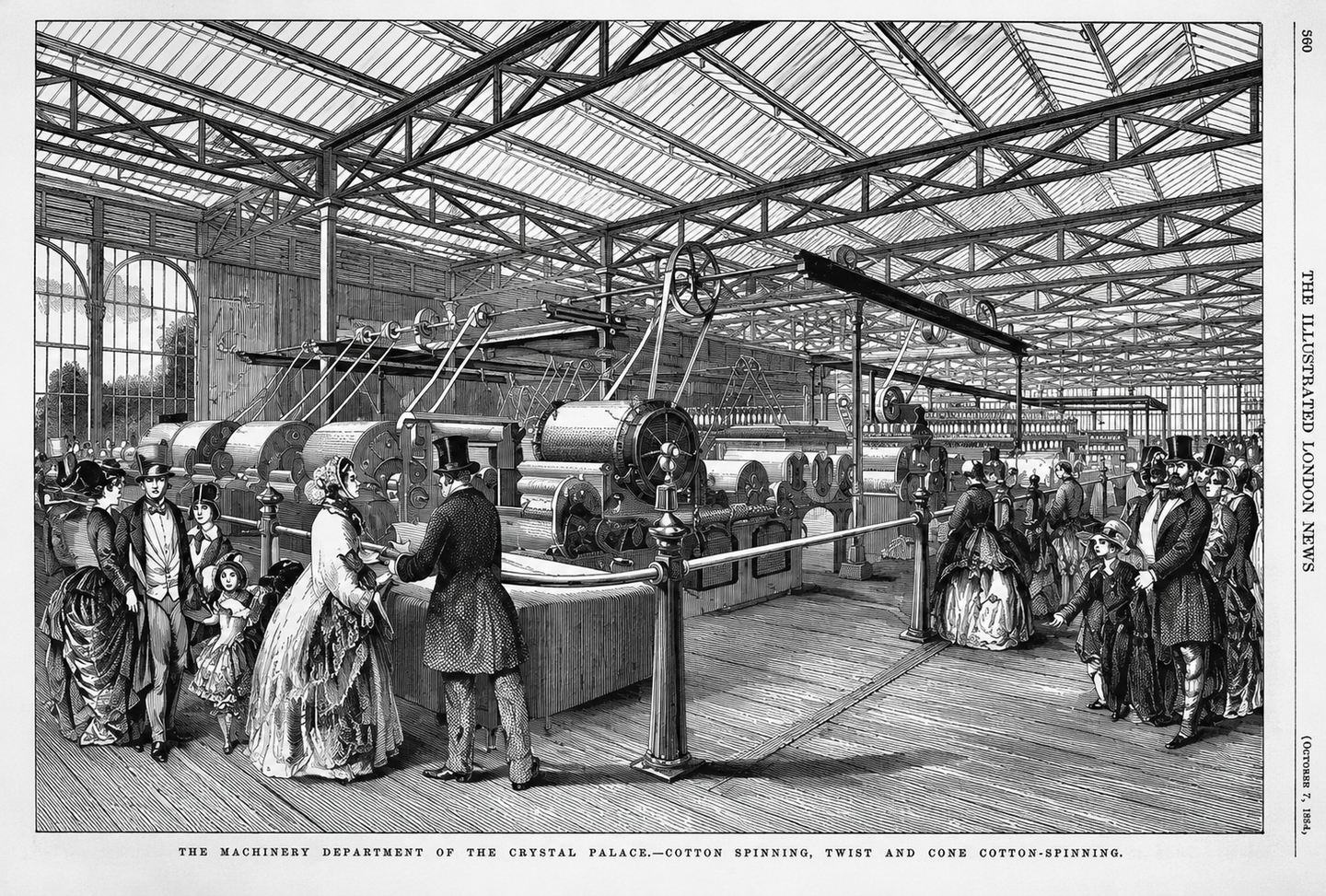
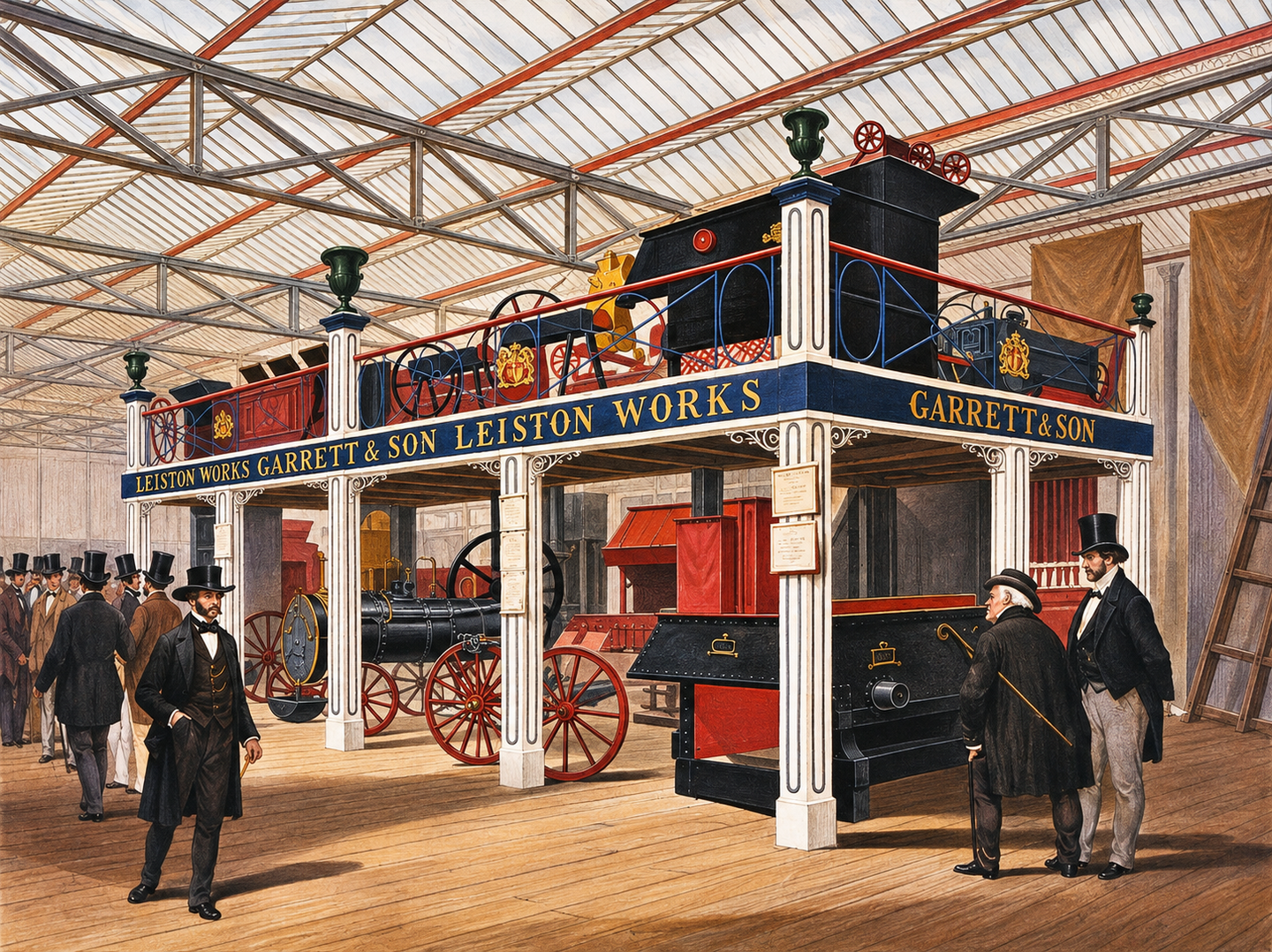
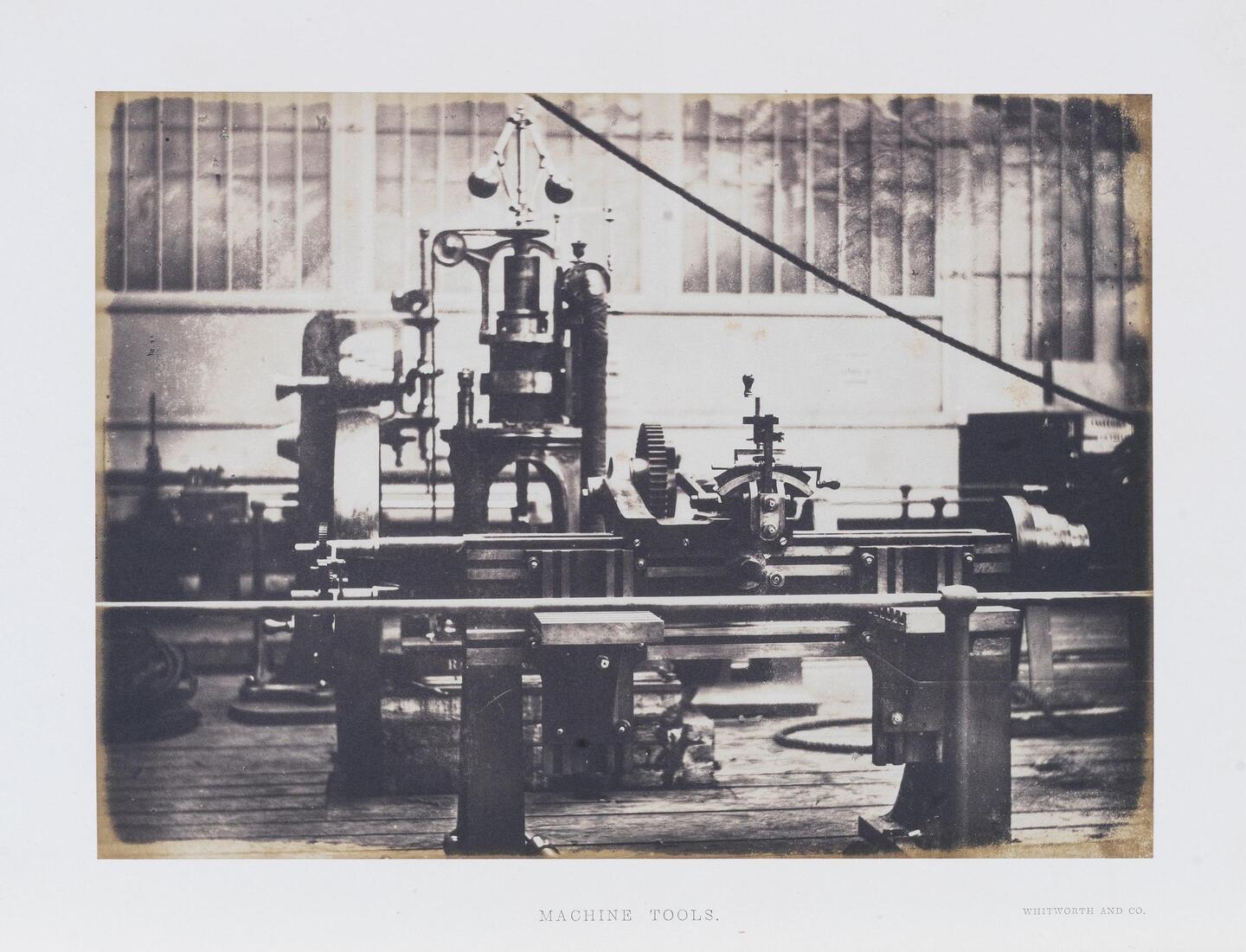
«Machines at the Great Exhibition of 1851.» // «Mechanical Department of the Crystal Palace. Hibbert, Platt & Co., ” 1851. // „Agricultural Department of the Great Exhibition, ” 1851. Color lithograph, published by Lloyd Brothers. // Claude-Marie Ferrier. „Whitworth & Co. Machinery, ” 1851. Collotype. // „James Nesmith’s Steam Hammer.“
How was the exhibition space organized?
Despite the detailed classification, organizing thousands of exhibits within a single space proved challenging. The Crystal Palace was divided into two main sections: the west featured Great Britain and its colonies, and the east showcased foreign nations.
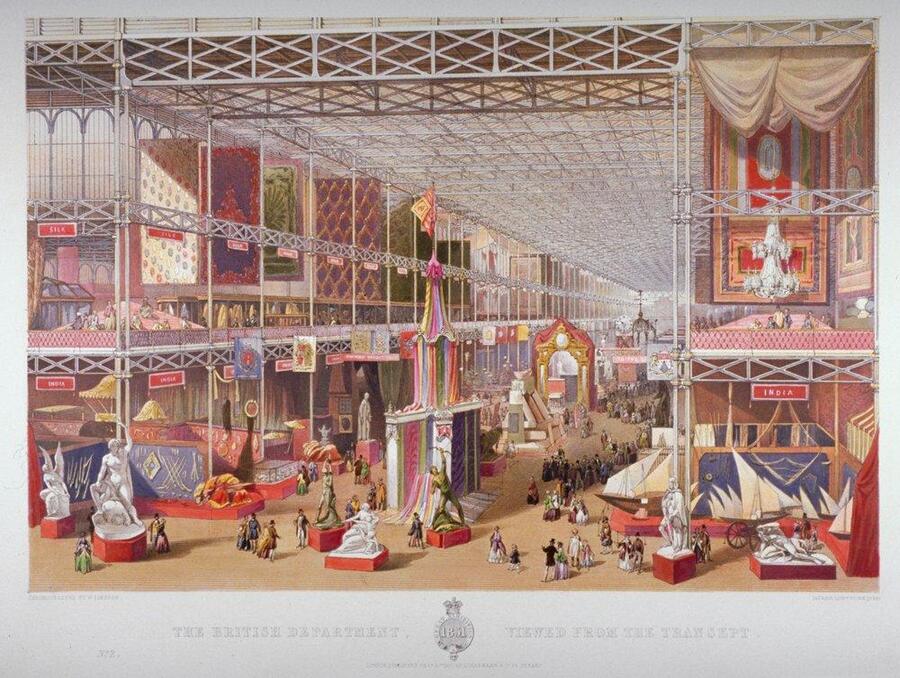
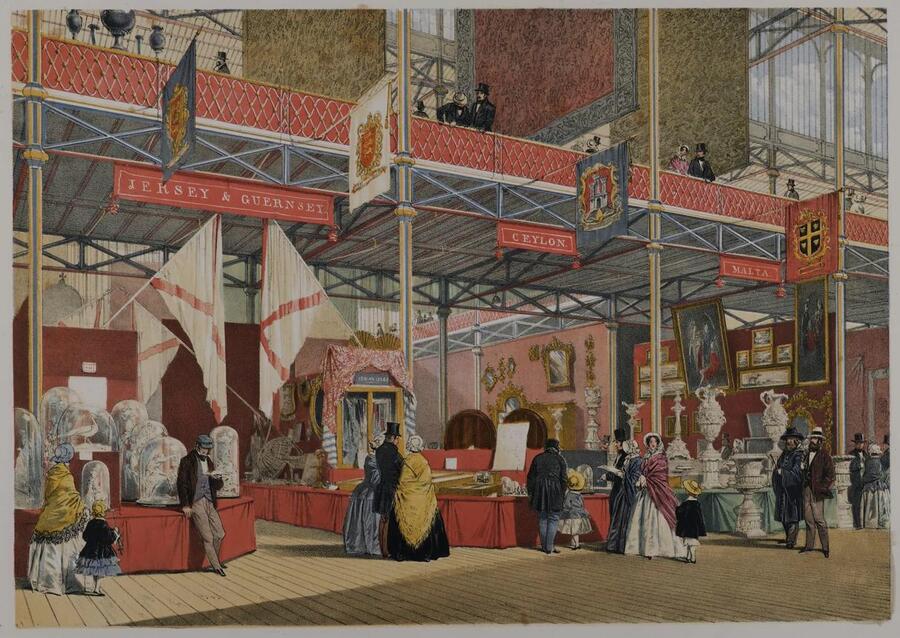
British Department // National Departments
How did you make your subject stand out among thousands of others?