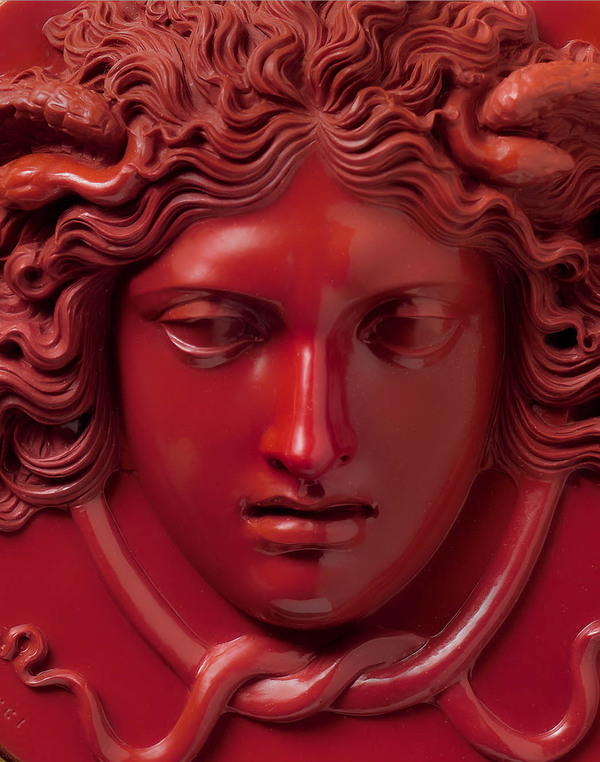
Medusa Gorgon is one of the most recognizable figures in ancient mythology, whose artistic depiction has changed repeatedly throughout the centuries—from a terrifying creature with grotesque features to a beautiful and tragic heroine. The image of the Gorgon reflects the transformation of perceptions regarding the female figure, beauty, and fear. This study traces the evolution of Medusa in art from ancient Greece through the 19th century, focusing on the changes in her appearance, expressiveness, and perception by the viewer.
1. The Face of Fear: The Archaic Gorgon
In early Greek art, Medusa the Gorgon is not presented as a beautiful woman, but as a being existing on the border between human and monstrous. Her face is characterized by pronounced expressiveness: enormous eyes, a wide-open mouth, a protruding tongue, sharp teeth, and sometimes a beard. These features intentionally violate conceptions of a harmonious human form.
Gorgon does not conceal her face. She addresses the viewer directly, transforming the gaze into the primary medium of impact.
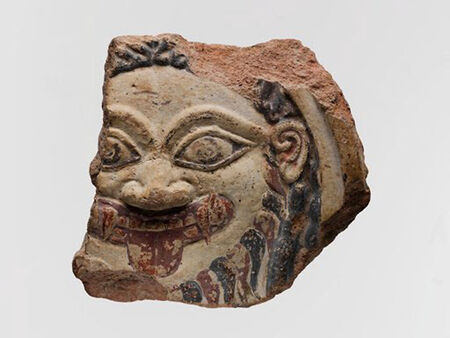
The directness of the image holds particular significance. Unlike most characters in archaic art, the Gorgon often looks directly at the viewer. Her gaze is impossible to evade—the image seems to establish an immediate connection with the observer. This is not simply a portrait of a mythological being, but a visual embodiment of threat, known as the gorgoneion.
However, the intimidating appearance of the Gorgon held not only a frightening but also a protective significance. Her image was placed on temples, everyday objects, weapons, and shields. It was believed that the depiction of a dangerous creature was capable of warding off other dangers. Thus, the Gorgon developed a dual function: it simultaneously embodied threat and served as protection against it.
In archaic art, the Medusa was not yet perceived as a tragic heroine. Her image is built around the power of the gaze, her unusual appearance, and her ability to evoke fear. These qualities define the initial stages of the Gorgon’s visual history.
2. From Monster to Human: An Early Classical Archetype
3. Beauty and Horror: The Hellenistic and Roman Image
4. The Revival of Ancient Myth in European Art
5. The Ancient Image as Ideal: Classicism and the 19th Century