Navigator1. Research Concept 2. Massive Attack: The Aesthetics of Anxiety 3. The Bunker: Architecture of Isolation 4. Curatorial Concept 5. Conclusion 6. Bibliography 7. Image Sources
Research Concept
Relevance of the Topic: In contemporary art, music is increasingly moving beyond the traditional concert stage, interacting with architecture, light, and visual media. Space becomes not merely a place for performance, but a tool for shaping the viewer’s experience. This research is relevant within the context of developing immersive artistic practices and reinterpreting historical spaces. Using Massive Attack and a military bunker as examples, we examine how the interaction of sound and architecture can create new ways of emotionally perceiving music.Research Concept: The core idea of this study is the transformation of defensive architecture into architecture of anxiety. A military bunker was originally created to ensure safety; however, its confinement, massive concrete structures, and isolation from the outside world can evoke opposite sensations—tension, vulnerability, and anxiety. This duality forms the foundation of the curatorial concept. The music of Massive Attack, built on heavy bass, repetitive rhythms, and contrast, is transposed into the bunker space, where the architecture amplifies its emotional expressiveness. The proposed performance is structured as a unified audiovisual experience: sound, light, concrete structures, and the movement of the audience combine into a spatial composition. The main idea is to demonstrate how a space designed to protect a person from external threats can be transformed into an artistic space for experiencing internal anxiety.
Research Objective: To investigate the relationship between music and architecture as means of emotional impact and to develop a curatorial concept for a Massive Attack performance within the space of a military bunker.
Research Tasks:
- To study the musical and visual aesthetics of Massive Attack.
- To examine the architectural features of military bunkers and their influence on spatial perception.
- To identify common expressive principles shared by Massive Attack’s music and the bunker’s architecture.
- To develop a curatorial concept that unites music and space into a singular artistic statement.
Research Question: How can the architecture of enclosed spaces enhance the emotional impact of music?
Hypothesis: The music of Massive Attack and the architecture of military bunkers can be perceived through similar expressive characteristics—repetition, contrast, enclosure, and tension. Their convergence within a curatorial project will amplify an atmosphere of unease, transforming a musical performance into a spatial art experience.
Massive Attack: The Aesthetics of Anxiety
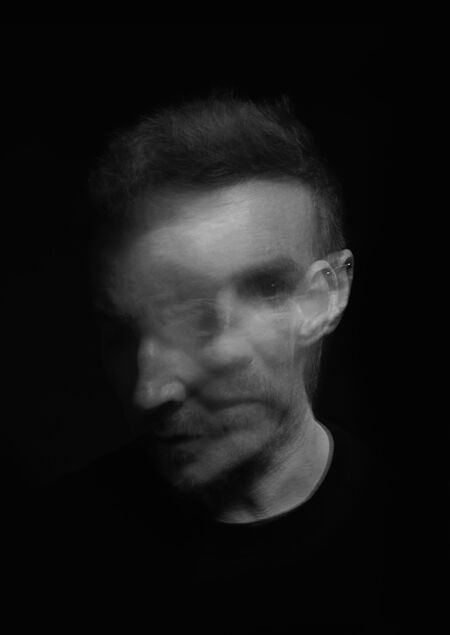
— Brief history of the group and musical context.Massive Attack is a British group formed in Bristol in 1988. Their work developed at the intersection of hip-hop, dub, soul, and electronic music, becoming one of the defining phenomena of trip-hop.Unlike traditional dance electronic music, the music of Massive Attack often builds upon a feeling of tension and uncertainty. Slow rhythms, deep basslines, and the combination of various vocal styles create a unique emotional atmosphere. This aesthetic reflects the mood of the modern city, where the everyday coexists with anxiety, alienation, and a sense of instability.
— Sonic Characteristics using the album Mezzanine as an example.The album Mezzanine (1998) holds a special place in the band’s discography. Its atmosphere is built upon deep basslines, slowed rhythms, recurring musical motifs, and contrasts between the vocals and instrumental sound.
In Angel’s composition, tension builds gradually: a recurring bass line is augmented by new instrumental layers, and the sound becomes increasingly dense. This structure is reminiscent of movement through space, where each subsequent phase intensifies the emotional tension. This principle of gradual accretion becomes the foundation for the future curatorial decision.
— Group visual language: album covers, music videos, concert staging.
The visual aesthetic of Massive Attack is deeply intertwined with the character of their music. The Mezzanine cover, created using a photograph of a black beetle, is built on the contrast between a dark, organic object and a bright background. The image evokes associations with something alien and unfamiliar, underscoring the feeling of unease characteristic of the album.
Massive Attack’s music videos and live performances also evoke darkened imagery, distortions, high-contrast lighting, and textual messages.
Bunker: The Architecture of Isolation
— History and purpose of bunkers.Military bunkers became widely prevalent in the 20th century, especially during World War II and the Cold War. They were constructed to protect people, military equipment, and strategically vital assets from external threats. Their architecture was primarily dictated by practical requirements: structural integrity, safety, and the ability to function autonomously.An example of defensive architecture is the Anhalter Bunker in Berlin, built in 1942. This massive reinforced concrete structure was used as an air-raid shelter and has survived to the present day. Today, a historical museum is housed within it. Such structures are interesting not only as monuments of military history but also as examples of architecture where functionality completely dictates the exterior appearance and spatial organization.
— Architectural characteristics: concrete, enclosure, lack of light.Bunker architecture is characterized by massiveness, a minimal presence of decorative elements, and pronounced functionality. Reinforced concrete walls, heavy doors, narrow passageways, and repetitive spaces create a severe geometric structure. In underground structures, the absence of natural light makes the space particularly dependent on artificial light sources.These features establish a distinctive visual language built on repetition, contrast, and spatial limitation. The sequence of identical corridors forms an architectural rhythm; the concrete surfaces emphasize the structure’s heaviness, and the abrupt transitions between light and darkness alter the perception of scale. In an artistic context, the functional architecture of a bunker can be perceived as an image of isolation and hidden threat.
As a historical example, one might consider the Anhalter Bunker in Berlin, constructed in 1942 as an air-raid shelter. (BRIEFLY TELL ABOUT A SPECIFIC BUNKER)
— Visual and emotional perception of underground space.The perception of architecture depends not only on its external appearance but also on the physical conditions in which a person is located. The absence of windows, restricted pathways, low ceilings, and artificial lighting can amplify the feeling of confinement. In such spaces, a person receives less visual information about the outside world, which under certain circumstances can cause tension and disorientation.Acoustics plays a particularly important role. Hard concrete surfaces reflect sound waves, creating reverberation and altering the character of the sound. Thus, a bunker can affect the viewer simultaneously through the visual, spatial, and acoustic environment.
Curatorial Concept
— The Interplay of Music and Space
Repeating musical rhythms find visual analogies in sequences of identical corridors and concrete structures. The contrasts between subdued and intense sounds correspond to transitions between darkness and stark artificial lighting.
The principle of gradual tension build-up becomes particularly important. In Massive Attack’s music, this is demonstrated through the addition of new sonic layers, while in architecture, it can be expressed through a sequence of spaces that differ in scale and lighting. Uniting these elements allows for the creation of an artistic experience where the development of the musical composition is intrinsically linked to the shifting perception of the surrounding environment.
— How space can alter the perception of music.This project proposes a hypothetical Massive Attack performance held in an underground bunker, whose architectural inspiration draws from 20th-century defensive structures. The core idea is to reimagine a space originally designed for security as a site for the artistic experience of anxiety. The architecture ceases to be merely the backdrop for the concert; it becomes an integral part of its artistic structure.The performance begins with the audience moving through a network of narrow, darkened corridors. As they approach the main chamber, the sound and lighting gradually intensify. The concert space retains an industrial character—concrete walls, exposed structures, and minimal stage design. Light strips, textual projections, and high-contrast imagery interact with the music, emphasizing its rhythmic structure.
— Why the performance must take place specifically in the bunker.The audience enters the performance area through a system of narrow, dimly lit corridors. The main space is immersed in semi-darkness. The music is accompanied by minimalist lighting effects, text projections, and sharp contrasts of light and shadow.
— What connects the aesthetics of Massive Attack and bunker architecture.Comparing the aesthetics of Massive Attack and bunker architecture reveals several shared principles of perception.Repetitive musical rhythms find visual correspondence in the alternation of concrete structures and hallways. The contrasts between dense sound and silence are analogous to the transitions between darkness and harsh artificial light.
— How the space, lighting, and viewer interaction will be organized.The scenography does not conceal the bunker’s architecture but rather accentuates its unique features. Concrete surfaces become screens, corridors define the viewer’s path, and the sound system creates a sense of the music’s physical presence.
Final visualization of the performance.Example: during the composition «Angel,» a gradually building bass is accompanied by the sequential illumination of narrow light strips along the concrete walls. As the composition develops, the space visually expands, intensifying the feeling of impending threat.(THIS PARAGRAPH WILL CONTAIN AN AI IMAGE INSTEAD OF TEXT)
Conclusion