Categories
Concept1. The History of Monster High 2. Frankie Stein 3. Draculaura 4. Clawdeen Wolf 5. Lagoona Blue 6. Cleo de Nile 7. Conclusion 8. Bibliography 9. Image Sources
Concept
Interest in this topic stems from the contrast between the original nature of monsters and their embodiment in Monster High. In classic horror films, unusual body proportions, skin lesions, and animalistic features are used to create an unsettling or repellent impression. In doll design, similar elements become part of an appealing aesthetic.
The study focuses on Monster High characters whose appearances reflect connections to classic monstrous figures from literature and cinema. Five first-generation characters are examined: Frankie Stein, Draculaura, Clawdeen Wolf, Lagoona Blue, and Cleo de Nile. Each is associated with a specific creature type—a reanimated creation, a vampire, a werewolf, a sea monster, or a mummy. For comparison, cinematic archetypes from the films Frankenstein (1931), Dracula (1931), The Wolf Man (1941), Creature from the Black Lagoon (1954), and The Mummy (1932) are utilized.
When selecting visual material, the ability to examine and compare the figures in detail was a key consideration. For the cinematic archetypes, stills were chosen that clearly display the makeup details, body proportions, and characteristic traits of the monsters. For the dolls, images were used that allowed for the study of their appearance, clothing, and accessories. Among subsequent releases, preference was given to series that showed noticeable changes in hairstyles, costumes, and decorative details. This selection process allows one to trace which character traits remain consistent and which change depending on the collection’s styling.
The objective of this research is to identify the visual devices through which the figures of traditionally frightening creatures are reinterpreted in the Monster High doll design, and to trace how the balance between cute and monstrous traits shifts across different character interpretations.
The research is based on comparative visual analysis. First, the origin of each character and the characteristic features of their frightening prototype are reviewed. Next, the cinematic archetype is compared to the first Monster High doll to identify retained and altered details. Special attention is paid to the clothing, accessories, materials, and ornamentation that might reproduce the signs of the original monster. Subsequently, several releases of a single character are analyzed—this helps determine which features remain constant and which change based on the collection’s styling.
The sources used include original films, Mattel materials, and doll catalogs. These are used to verify series names, release dates, and character details. A list of textual sources and images is provided separately at the end of the long-read.
The key research question is: what characteristics of classic monsters are retained in the Monster High design, what visual alterations do they undergo, and what allows them to be perceived as attractive physical features?
The research hypothesis proposes that the methods of transforming frightening figures vary depending on the nature of the original monster. Some traits may be altered through body proportions and stylization, while others may be transferred to clothing, accessories, and decorative elements. It is suggested that these differences in the treatment of the original figures are what form the individual aesthetic of the characters, allowing them to maintain recognizability despite significant changes in appearance.
Monster High History
In 2010, Mattel introduced Monster High—a brand built around children of famous monsters from literature, mythology, and film. The line’s creator and designer, Garrett Sander, merged monstrous imagery with teenage fashion. This created a world where vampires, werewolves, and animated creatures attend school, choose outfits, and navigate relatable adolescent experiences.
The concept behind Monster High revolves around embracing individuality. Mattel representative Pantel explained the original concept using the monster metaphor: every person has unique traits that can sometimes lead to feelings of insecurity. In the brand’s stories, this idea found literal embodiment. The appearance of the school’s students immediately reveals their unusual origins, but it is these differences that help each character develop their own distinct personality.
The first short animated episodes of Monster High, which premiered in 2010, are set in a school for the children of famous monsters. Its students make friends, fall in love, argue, and search for ways to express themselves. The animated series portrays monsters in familiar teenage circumstances: supernatural appearances coexist alongside school lessons, parties, and everyday social interaction. Later, the characters' stories continued in animated films and special episodes.
Monster High animated series
In the summer of 2010, the first Monster High dolls were released. Their appearance was notably different from traditional fashion dolls: elongated body proportions, large heads, expressive makeup, and vibrant outfits were combined with fangs, skin seams, animal ears, and other monstrous features. Each doll possessed its own distinct personality and style, which reflected its origin and physical characteristics.
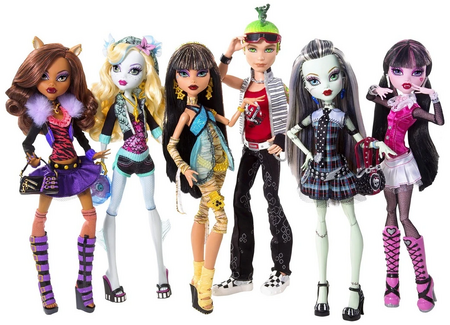
The visual aesthetic of the dolls merged Gothic motifs, elements of horror culture, and early 2010s teen fashion. Skulls, bats, spiderwebs, bones, and other traditionally frightening symbols became integrated into the clothing, accessories, and character design. Monstrous features took on a decorative significance while still maintaining a link to classical monster imagery. It was this combination—familiar frightening elements juxtaposed with charming appearances—that forged the distinctive aesthetic of Monster High.
Frank Stein
Frank Stein in an animated series
Frankenstein references the creature from Mary Shelley’s novel Frankenstein; or, The Modern Prometheus (1818). Victor Frankenstein creates a living being from dead matter, hoping to embody the idea of the perfect human. However, the creature’s appearance fills him with horror. Shelley describes a yellowish skin through which muscles and veins are visible, watery eyes, and black lips. Even individual features, intended to be beautiful, combine to form an unsettling and repulsive image.
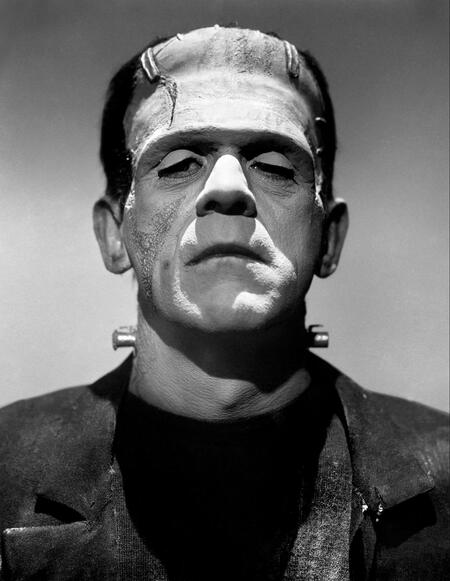
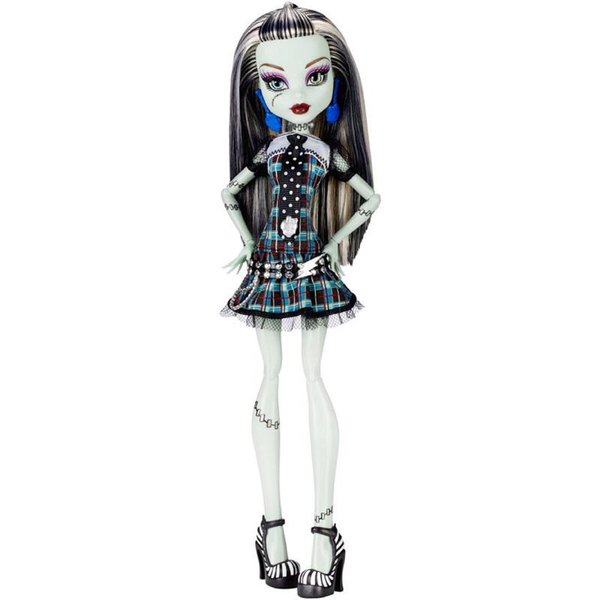
Boris Karloff as the Frankenstein monster. Frankenstein, dir. James Whale, 1931. Mattel. Frankie Stein doll, Monster High series, 2010.
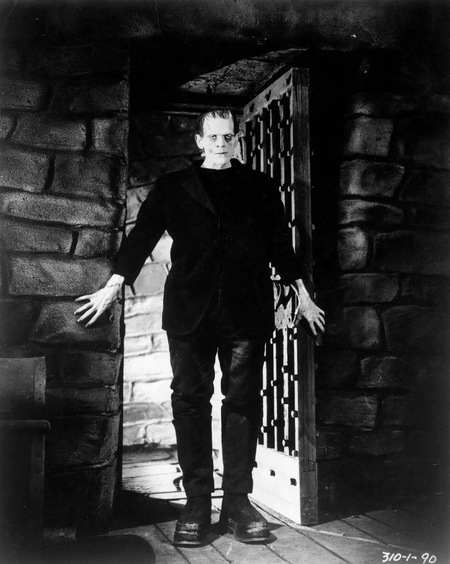
In James Whale’s film Frankenstein (1931), the monster portrayed by Boris Karloff acquired an appearance that has become particularly recognizable in popular culture. Makeup artist Jack Pierce created a flattened top of the head, heavy eyelids, prominent scars, and metallic elements around the neck. These details convey the history of a body assembled and animated artificially. The massive silhouette and immobile facial expression amplify the character’s sense of otherness.
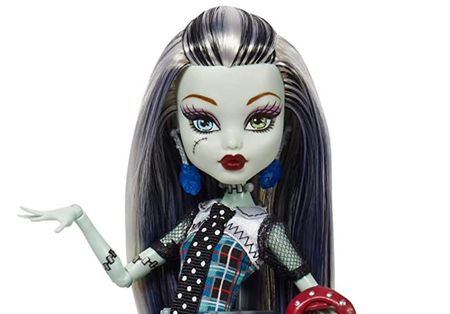
Frankie Stein inherits features from this cinematic archetype: greenish skin, seams, and metallic details around her neck. At the same time, the structure of her figure aligns with the aesthetic of a fashionable doll—long legs, a slender waist, large eyes, and delicate facial features. The difference is particularly noticeable when comparing them directly: the signs of an artificially constructed body remain, but the overall silhouette and facial expression make Frankie look like an ordinary student from the Monster High world.
Seams play a distinct role in this reinterpretation. On the body of the cinematic monster, they evoke surgical intervention and the joining of separate parts. For Frankie, these same lines appear thin, even, and graphic. They are visible on the cheek, arms, and legs, becoming part of the puppet’s surface design. The viewer still recognizes the character’s origin, even though the seams themselves no longer strongly suggest bodily trauma.
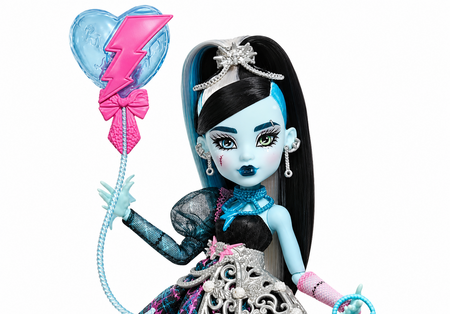
Frankie Stein, Monster High x Barbie series (2025), Skultimate Roller Maze (2012), Ghoul’s Alive! (2012), I Love Fashion (I Heart Fashion, 2012).
The four dolls presented illustrate how fluidly Frankie’s style evolves from one release to the next. Her hair can be styled in a voluminous updo, cut into a bob, or left down; her athletic wear alternates with a plaid skirt, and her vibrant makeup gives way to a more subtle look. Nevertheless, the black-and-white streaks, cool skin tone, and seam lines connect the different versions into one recognizable character. These details allow one to distinguish Frankie even when her clothing and color accents change.
The comparison to Frankenstein’s monster illustrates how perception heavily relies on the proportions and nature of an image. In the 1931 film, the artificially assembled body is emphasized by its heavy silhouette and tense facial expressions. While Frankie retains traces of her origins, her lively facial expression and teen style elicit a completely different reaction. Using her as an example, monstrosity becomes a facet of the individuality that the character openly displays.
Draculaura
Draculaura in the animated series
Dracula is associated with the image of Count Dracula from Bram Stoker’s novel, Dracula (1897). The literary vampire merges human appearance with the traits of a dangerous supernatural being. Stoker describes his unusual pallor, sharp teeth, thick eyebrows, and long nails. These details create a sense of hidden threat: beneath the Count’s outward composure, a predatory nature is discernible.
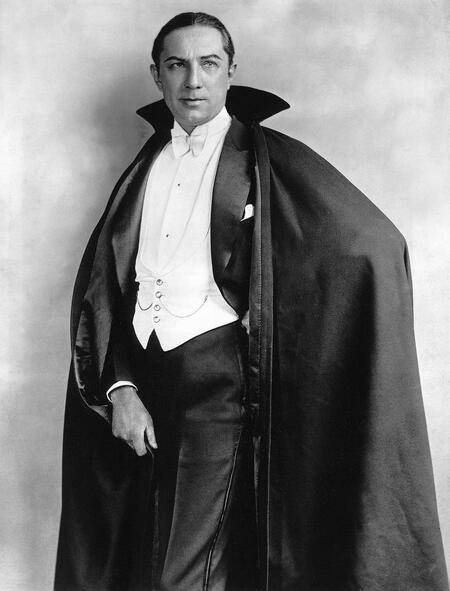
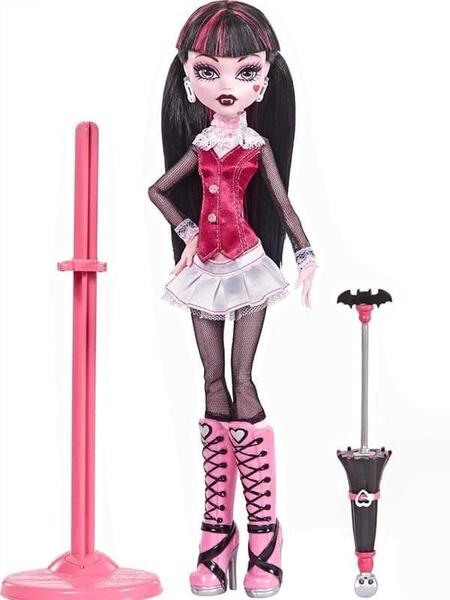
Bella Lugosi as Count Dracula. The film «Dracula,» directed by Tod Browning, 1931. Mattel. Draculaura Doll, the first Monster High line, 2010.
In Todd Browning’s film Dracula (1931), Bela Lugosi cemented the image of the aristocratic vampire in mass culture. His sharp suit, black cape with a high collar, slicked-back hair, and intense gaze make him recognizable even in a still frame. The threat in this portrayal is conveyed largely through his restrained facial expressions, posture, and dark attire. It is precisely with this elegant and somber interpretation of the vampire that it is interesting to compare Draculaura.
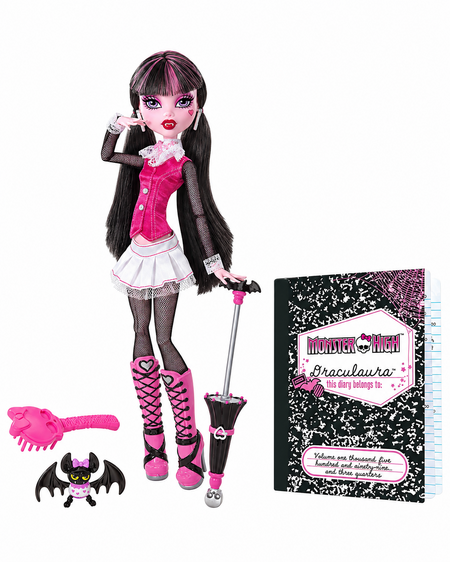
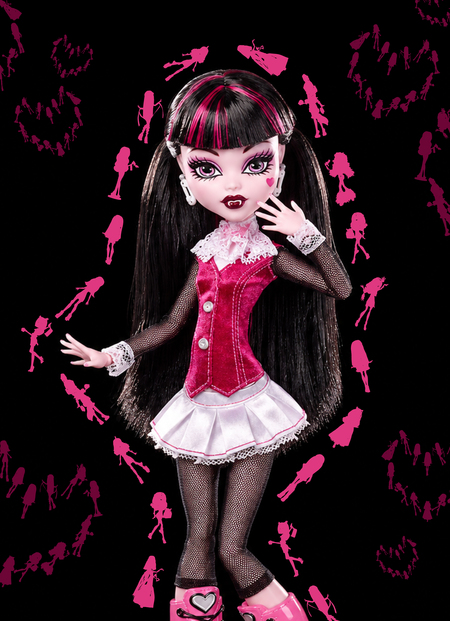
The first Draculaura from the Basic collection (2010) retains classic vampire traits: pale pink skin, pointed ears, and small fangs. However, large lilac eyes, long lashes, and a heart on her cheek lend her expression a soft and playful quality. Her black hair, highlighted with pink streaks, is styled into twin tails with a straight fringe. The doll is dressed in a pink vest with a lace collar, a white pleated skirt, sheer sleeves, and tights; this look is completed by tall, lacing pink boots. Even the accessories support the vampire theme in a miniature, decorative way: the umbrella handle is shaped like a bat, and Draculaura’s pet—Count Fabulous the bat—is adorned with pink details.
Draculaura, Sweet 1600 series (2011), Dead Tired (2011), Ghouls Rule (2012).
In three episodes, Draculaura appears in different looks. In Sweet 1600, a voluminous black and pink lace dress and an elegant hairstyle create a festive Gothic style. In Dead Tired, she appears in a pink polka-dot pajama set, taking on a more casual look. In Ghouls Rule, the vampire aesthetic is expressed particularly vividly: dark wings with a spiderweb pattern, voluminous curls, and a layered skirt evoke a masquerade costume. Across all episodes, the combination of black and pink is maintained, complemented by hearts, bows, and Gothic motifs. Even the large wings in Ghouls Rule are perceived as part of a festive outfit due to their bright colors and decorative detailing.