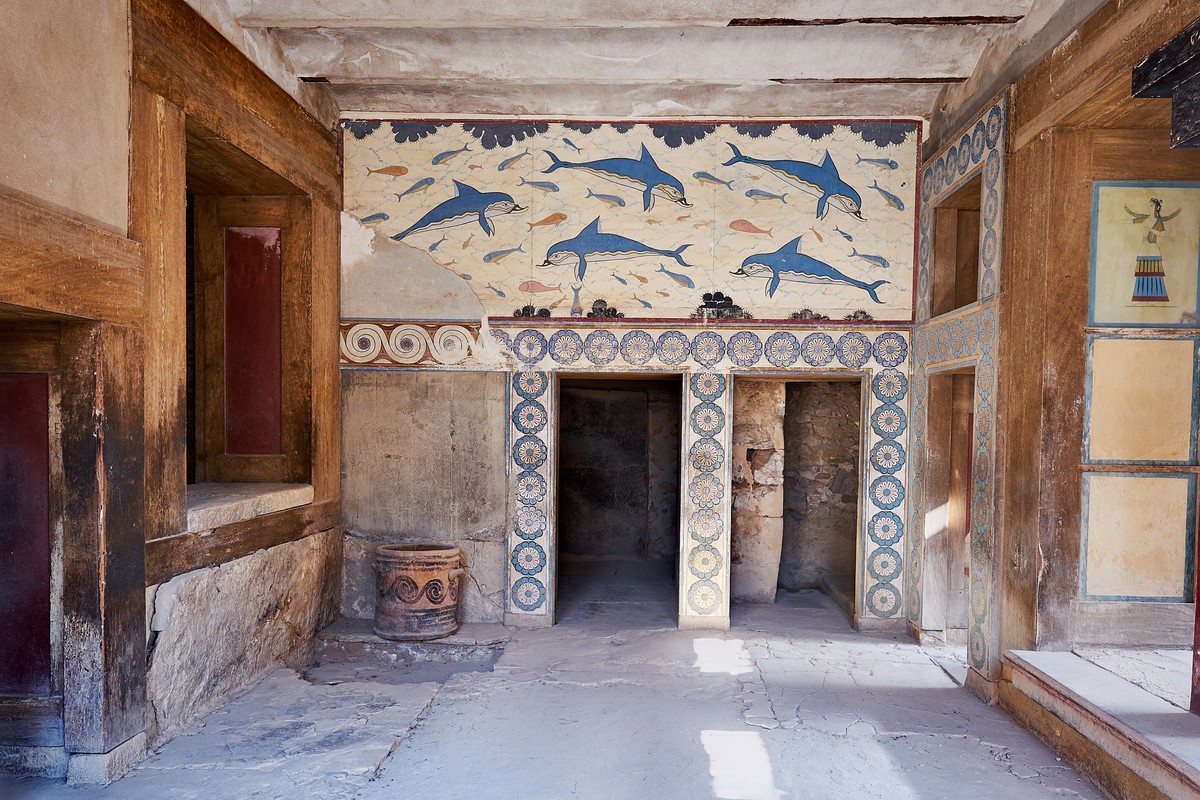
For the peoples who inhabited the shores of the Aegean Sea, it was never merely a stretch of water on a map. It connected the islands to the mainland, provided sustenance, facilitated trade, and shaped their worldview. It is no surprise that the sea became the primary source of imagery in art. Octopuses, dolphins, fish, and seashells appear on pottery, stone reliefs, and mosaic floors. However, a closer look reveals that these depictions changed significantly in tandem with how people understood nature, mythology, and their place in the world.
I. Concept and Topic Selection
The art of the Aegean region has always been shaped by its geographical and cultural context. The lives of ancient peoples were inextricably linked to the sea, and this inevitably reflected in their artistic culture. This is why marine fauna became a primary theme in the art of Crete, Miletus, and Ephesus, featuring depictions of octopuses, dolphins, and mythical creatures. However, the ancient masters did not merely copy nature: their understanding of the world is read through composition, material selection, and the character of the space. This transforms a common decorative motif into a philosophical statement. Furthermore, different eras interpreted the marine element in distinct ways, and in my opinion, it is particularly fascinating to observe the similarities and differences in monuments on this theme across various cultures—from Cretan vases to Late Antique mosaics.
Navigation
book
Source