Concept
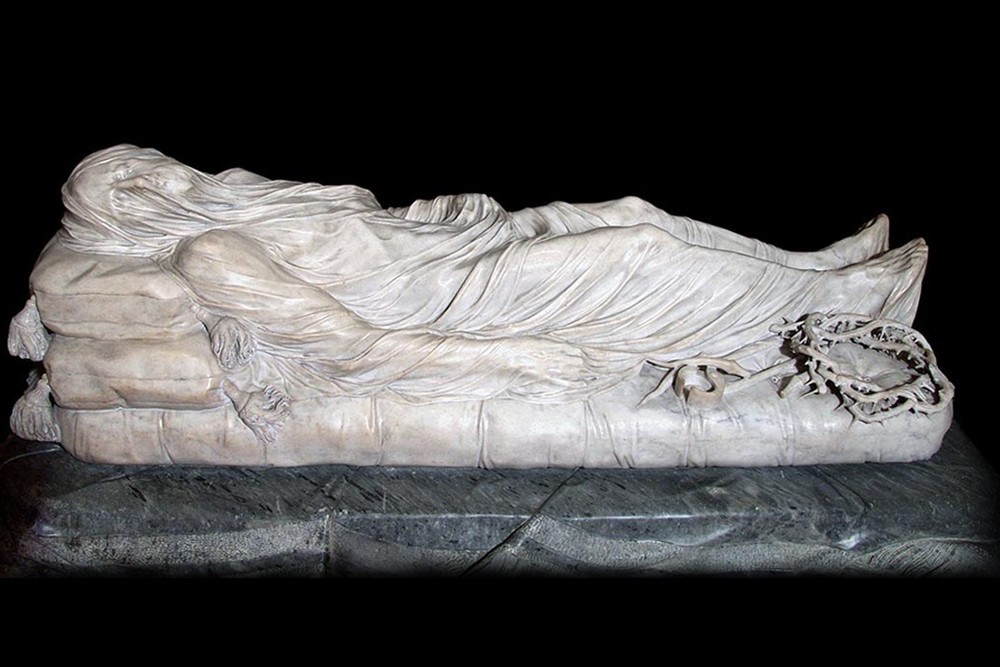
From the earliest times, humans have contemplated what death is and what awaits us afterward. These perceptions have changed from century to century and have been reflected in funerary culture, particularly in tomb sculpture. Although my research covers only a small period—the late Middle Ages and the early Renaissance—effigies (English: effigy tomb) trace their roots back to ancient Egypt and Etruscan art. I chose this specific period because a dramatic and fascinating shift occurred at that time: tomb sculpture transitioned from depicting tranquility and repentance to depicting decaying, desiccated bodies. The study of funerary sculpture culture is compelling today because this topic has remained relatively under-researched. Furthermore, it reveals how people contemplated life, death, and their legacy, making it relevant at any time. To begin, we must clarify the terminology and understand the various meanings and types. Currently, there are no clear boundaries between these terms. I propose the following distinctions for our study. An effigy (Latin: effigies — image, literal depiction) is a representation of the deceased on their monument, whether it is a mosaic, a bas-relief, or a statue. A Gisant (from French Gisant — lying down/reclining) is a type of sculpted effigy that emerged around the 11th–12th centuries, depicting the deceased in a peaceful, submissive state, most often with hands in prayer, which symbolizes hope for resurrection. A Transi (from French transi — stiffened) is also a type of sculpted effigy that appeared by the late 14th century, depicting the deceased at a stage of decomposition. Later, a type of effigy emerged that combines the Gisant and Transi forms.
The research topic involves an analysis of the transition in late Medieval funerary sculpture from Byzantine penitence to Transi decay. The study focuses on identifying the differences between these two types of effigies and seeking potential reasons for such a sharp shift.
Panofsky, E. Tomb Sculpture: Four Lectures on Its Changing Aspects from Ancient Egypt to Bernini. NY: H.N. Abrams, 1964.
King, P. M. Contexts of the Cadaver Tomb in Fifteenth-Century England. York: University of York. Centre of Medieval Studies, 1987.