The goal of media
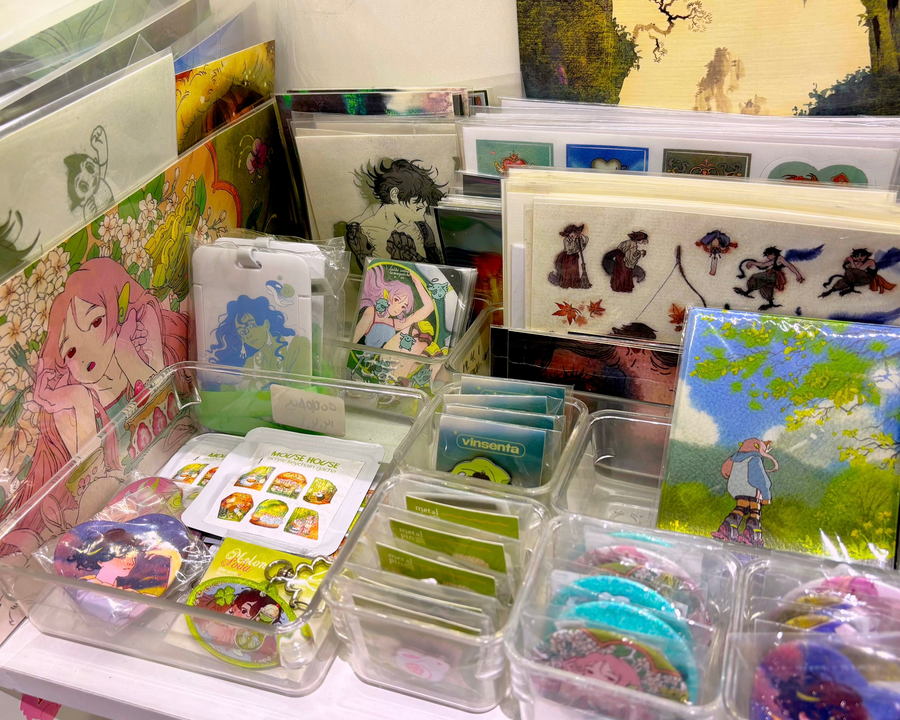
We support artists who create original merchandise by sharing helpful advice, lists of events, and providing them with a platform to sell their goods. Our channel aims to be a resource for artists just entering the market. We show real-world examples—analyzing others' merchandise maps and storefronts, sharing experiences from artists with high sales, posting schedules for art markets and fairs, compiling a database of vetted printing houses and suppliers, and discussing how to build a personal brand that immediately captures attention.The core idea is to demonstrate how this works in practice—through the lives, mistakes, and solutions of specific individuals—so that an artist can visualize it for themselves and successfully sell their first batch without undue anxiety.
Future Media Themes
Sector: creative industries, sales, product design
Niche Topic: «Community Hub for Merch Artists.» We unite three pillars:
Showcase: Selling original merchandise.
Academy: Helpful advice on promotion and production.
Community: Memes, discussions, and event announcements.
Competitors
Direct Competitors:Name — FISH: anonymous merchandise sellers. Platform — Telegram. Concept and mechanics — publishing questions from subscribers, creating a discussion forum. Occasionally, paid advertising for others' merchandise. Strength — large audience, brand recognition. Our differentiator — the presence of educational content curated by our team.Name — BIRD: merchandise announcements. Platform — Telegram. Concept and mechanics — publishing announcements about selling merchandise. Strength — open platform, free posting. Our differentiator — we don’t just feature sales advertising.There are relatively few direct competitors in this segment; not many artists have media channels focused exclusively on merchandise, and not just on sales. The topic is in demand, and our advantage lies in the diversity of related content.
Indirect Competitors:Name — Phantom Shelf. Platform — website, retail chain. Idea and mechanics — selling original merchandise in a physical setting. Strength — brand recognition, high customer traffic. Our differentiator — We are not just a store; we offer more than just sales.Name — ART INSIDE. Platform — Telegram, mobile application. Idea and mechanics — publishing news about the creative scene, memes. Strength — large audience. Our differentiator — We focus on more than just news and conflicts.Indirect competitors concentrate on sales in a store format and in a news format, while we offer educational materials, live discussions, and events in addition to that.
Similarities with competitors: they are all connected to the modern creative industry, publishing advertisements and somehow assisting artists with sales or audience building.What is rare: useful and educational materials, event lists, and workshops.What we avoid: constant advertising, unverified sources, and irrelevant posts.
Distribution Channel
Primary Channel: Telegram. It is ideal and familiar for the community. It allows for in-depth discussions in comments, bot usage, hosting polls and interactive events, and navigation via tags.Auxiliary Channels: VK: For attracting a cold audience through targeted advertising and resharing event announcements. Telegram Bot: For processing orders, gathering applications for drop participation, and conducting surveys. YouTube Shorts / Reels / TikTok: For visualizing the merch creation process, publishing insightful tips, and sharing event teasers.
Target Audience
Media Type — B2C. We work directly with artists. Segments are structured based on where a person is in the sales journey and what their experience level is—what is preventing them from moving forward.Segment — Just starting to sell. Need — To understand the entire process: how much printing costs, what price to set, and where to find initial buyers. What the media offers — analyses of others’ examples, basic guides on cost and presentation, and support from those who have already been through it.Segment — Selling, but inconsistently. Need — To break out of the «feast or famine» cycle and find a steady audience. What is provided — advice on personal branding, analysis of errors in new release announcements, discussions with other artists who have achieved stability.Segment — Afraid to start. Need — To overcome the fear of «this isn’t good enough» and «nothing will work out.» What is provided — uplifting memes, stories of artists with similar doubts, and a safe environment for questions without judgment.Segment — Experienced, looking for community and inspiration. Need — To be among peers, to see that others are also creating and selling, and not to feel isolated. What is provided — listings of art markets, discussions, voting on prints, a feature for collaborations, and a sense of belonging.
Characters
Katya, 23, an illustrator from Kazan—is just starting to sellShe has been drawing for a long time, but has only tried to sell a couple of times: she printed keychains for herself and friends, but felt embarrassed to charge for them. Now she wants to create her first real drop but doesn’t understand printing costs, how to set a price, where to find buyers, or how to avoid losing money. She is afraid of spending money on a print run that will just sit there as dead stock. She doesn’t need motivation; she needs specifics: how to calculate cost price, which print shop to choose, and how to package a shipment. She also needs examples from other artists who have gone through this process without going broke.
Mark, 27, a designer from Moscow—sales are inconsistent.He works at an agency during the day and draws in the evenings. His first drop sold out in a week; the second sold three pieces; the third sold nothing. He doesn’t understand why: his designs seem no worse, and he makes announcements, but his reach has dropped. At markets, he notices that some stands are empty by lunchtime, while he still has half of his inventory left by evening. Tired of the unpredictability, he wants to learn how to build a stable flow rather than living from batch to batch. He needs analysis of others' mistakes in announcements, advice on personal branding, and people who have managed to establish a system for selling small merchandise.
Sonya, 21, a student from St. Petersburg—afraid to startShe draws a lot; her style is recognizable, but the idea of selling brings on panic. She feels that commerce will kill creativity, that her postcards and stickers aren’t good enough, and that if someone pays and ends up dissatisfied, it will be a disaster. Yet, she secretly dreams of having her own spot at a market or on a shelf, and she really wants people to put her stickers on their laptops. What she needs isn’t so much instructions as permission—to see other artists who were also afraid but tried, and nothing terrible happened. And an atmosphere where she can ask a «stupid» question without judgment.
Dima, 30, an artist from Yekaterinburg—experienced, looking for a communityHe has been selling his original merch for two years and has a decent audience, but it has stopped growing. He feels stuck: the same faces in the comments, the same buyers. He attends markets, but the vendor fees are too high, or the audience isn’t his target demographic. He wants to reach the next level—collaborations, major fairs, maybe wholesale orders for shops—but he doesn’t know how to move forward. What he needs isn’t just a network, but a fresh perspective, people who have already navigated this stage, and the feeling that he isn’t the only one struggling in this mire.
JBTD
Four main scenarios are described above that drive people to our media.When I’m just starting out and want to print my first batch—stickers, pins, postcards—I need to understand the cost and how much to charge, because I’m afraid of investing money and being left with a box of unsolds.When I’m already selling, but customers come in waves, I need to figure out what influences demand and find a way to make sales consistent rather than relying on random luck.When I’m afraid to even try because my work seems inadequate, I need to see that others have had doubts too and still succeeded, so I can gather the courage to take the first step.When I’ve been selling for a while and feel stuck, I need to connect with people who are doing the same things—to find collaborations, learn about markets, and keep my passion for my work alive.
Unique Selling Proposition
Formulation: «A Telegram channel where art meets wardrobe, and artists meet like-minded peers. We don’t just sell merch—we build a community where every creator receives support, knowledge, and access to the major events of the art scene.»Competitive Advantage:Functional: It is a platform for merchandise sales + an educational hub + an event aggregator.Substantive: We provide comprehensive support. It’s not just, «here is your storefront,» but «here is your storefront, marketing tips, a list of markets, and a chat for discussion.»Emotional: The «Our Own» brand identity. This is not an anonymous store. It is a club where the buyer feels like a patron, and the artist feels like a star and a part of a large family.