Nomination: 2. The City of PALEKH
Replanting — secondary sowing
Palekh holds two parallel layers of memory concerning linen.
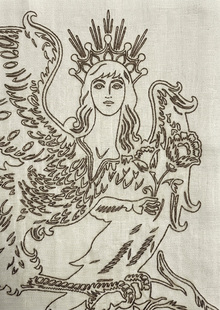
The first layer is pre-industrial: line embroidery, the Kuban pattern, linen fabric as the foundation of everyday and ritual culture. The Kuban—a diamond with a dot in the center—literally signified a sown field, fertility, and the living cycle of the earth.
The second layer is Soviet: the linen mill in Palekh as industrial processing of linen; linen as raw material, as a production unit.
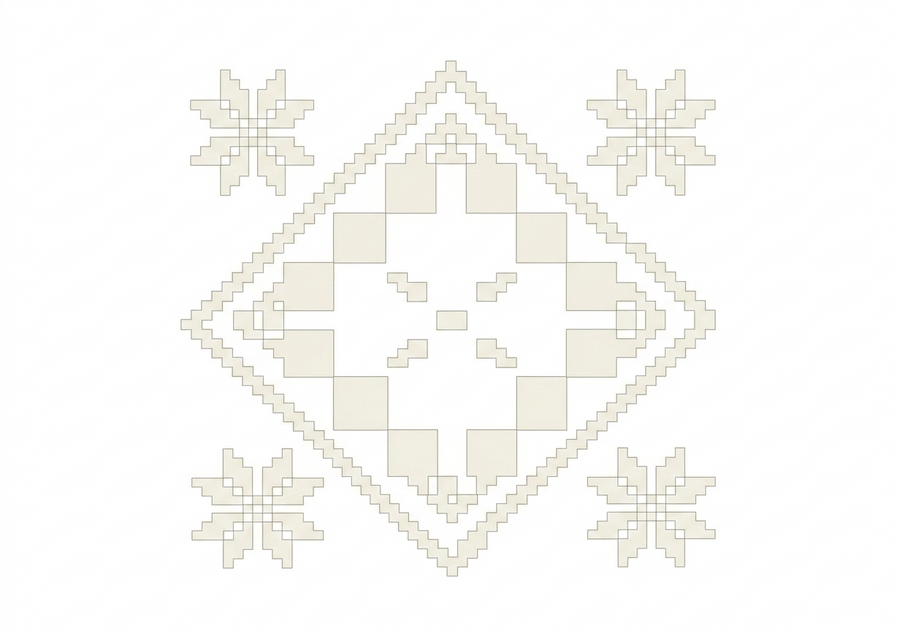
sketch
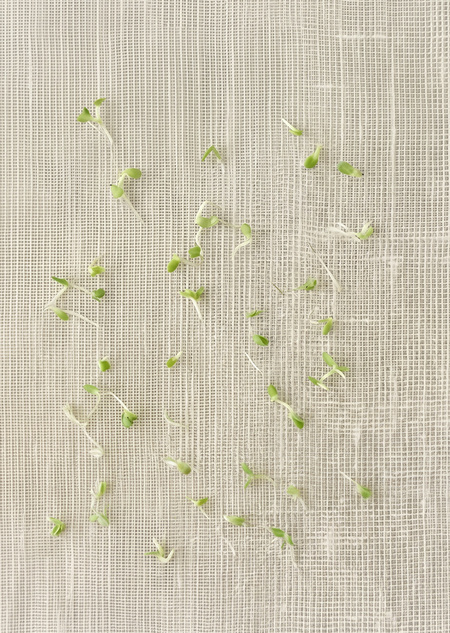
Today, the Linen Mill transformed into a cultural venue. However, the Palekh ornament exists as a distant, museum-historical artifact, having lost its connection to contemporary life. This interactive object revitalizes traditional linear embroidery patterns through changes in scale and material transformation. The playful interactivity, which involves linen sprouting, references the context of Soviet industrial history and literally brings the Kuban region to life through viewer interaction in the present day.
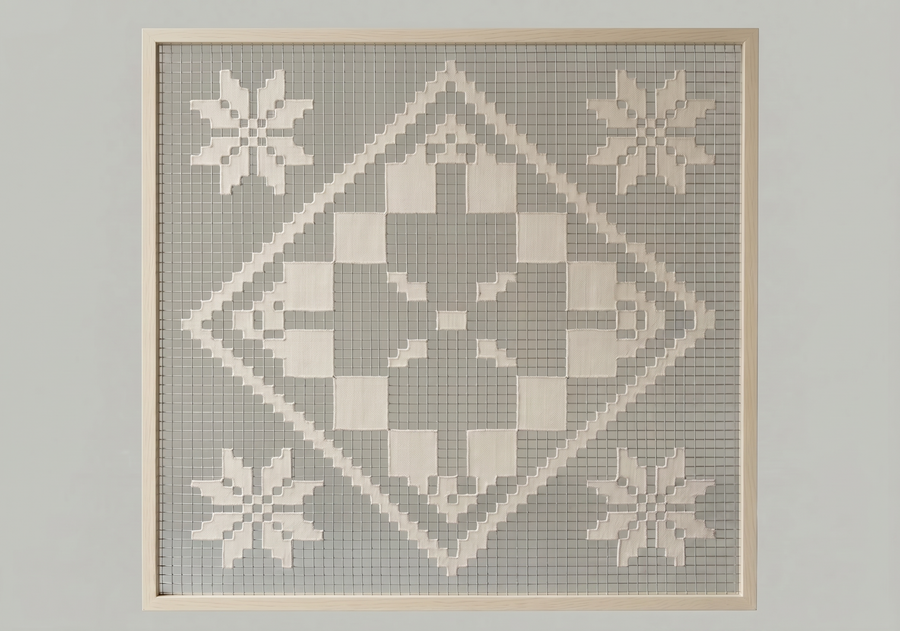
5 ft x 5 ft
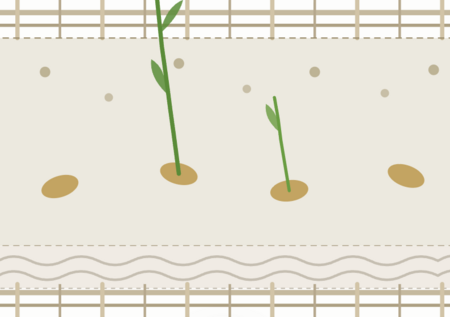
— Front woven fragment of the ornament — Peat tablet/coconut substrate with flax seeds — Cotton batting — Front woven fragment of the ornament
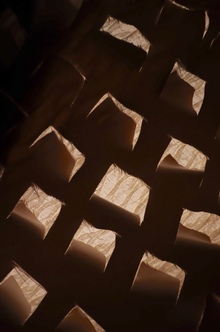
Construction1. The front fabric fragment of the ornament (linen burlap) is sewn onto the construction grid, which is attached to a 1.5 by 1.5-meter wooden frame. 2. The grid is laid flat on the surface, and linseed seeds (15–20 seeds per grid square) are poured onto the fabric fragments on the back. 3. A softened peat tablet (1 cm thick) / coconut substrate is spread over the seeds; then, cotton wool is placed on top to retain moisture. 4. An identical rear fabric fragment of the ornament (linen burlap) is sewn onto the back.
Flax seeds (living, pre-industrial) sprout through flax burlap (processed, industrial) in the form of an ornament (memory, regional culture).