Concept
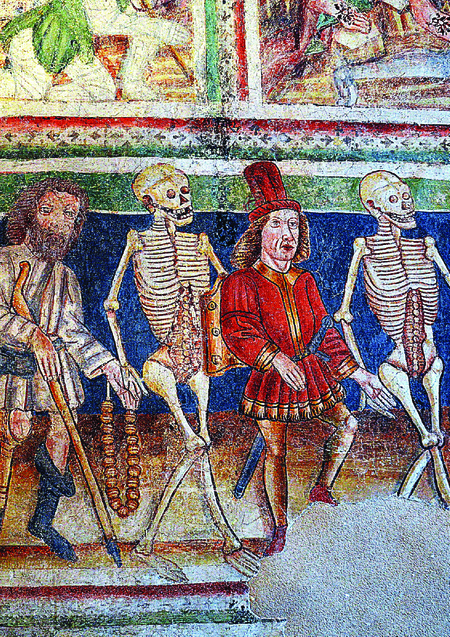
This visual study focuses on the theme of the Dance of Death in 14th–15th century European fresco painting. The central focus is an unusual medieval motif where Death is depicted as skeletons and corpses leading people of different ages and social classes in a collective dance.The core idea of this research is to examine the Dance of Death as an artistic embodiment of the notion of inevitable human fate. Kings, clergy, merchants, and common citizens, despite differences in status and wealth, become participants in a single procession. Death unites them, dissolving the conventional boundaries between social groups.The study analyzes four fresco cycles from France, Croatia, and Slovenia. By comparing these works, I aim to trace how artists in different regions interpreted the same motif, what imagery and compositional solutions they utilized, and how they conveyed the interaction between the living and the dead.Particular attention is given to the visual language of the works: the construction of the composition, the movement of the figures, the gestures, the characters' attire, the color palettes, and the details that help reveal the meaning of the images.Ultimately, this research aims to investigate how medieval artists transformed the theme of death into a poignant artistic statement about the equality of all people in the face of the inevitable, through the motif of the collective dance.