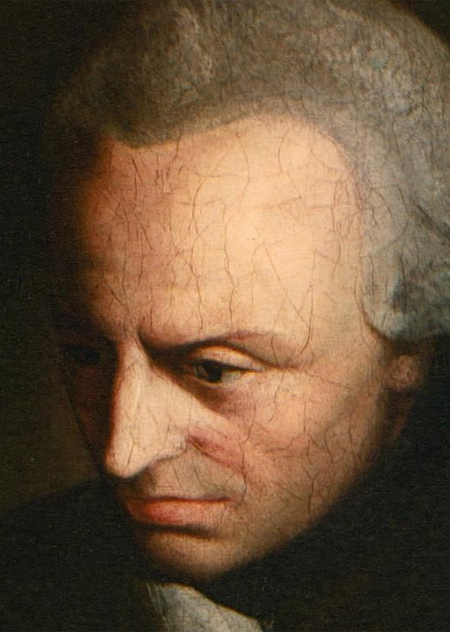
«Only that which, even with perfect knowledge, is not immediately attainable by skill, belongs to art”—Immanuel Kant
Categories
- The Concept of Representational and Non-Representational Art
- Analogy with Kant’s Theory of Art
- The Influence of Genius
- Two Paths: Pleasure and Profit
- Conclusion
To begin, let’s examine the concepts of representational and non-representational art in painting.
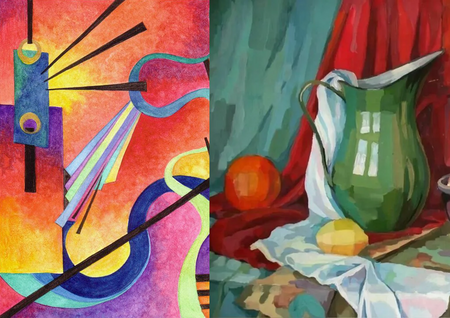
In painting, we observe the most vivid surge and examples of how authorship splits into representational and non-representational directions. What do they entail?
Painting Subjects include:
Realism
Impressionism
Expressionism
Socialist Realism
For illustration:
Realism
— This is an artistic movement that arose from a desire to portray reality objectively and truthfully. Its goal was not to beautify the world, but to honestly and deeply comprehend life.
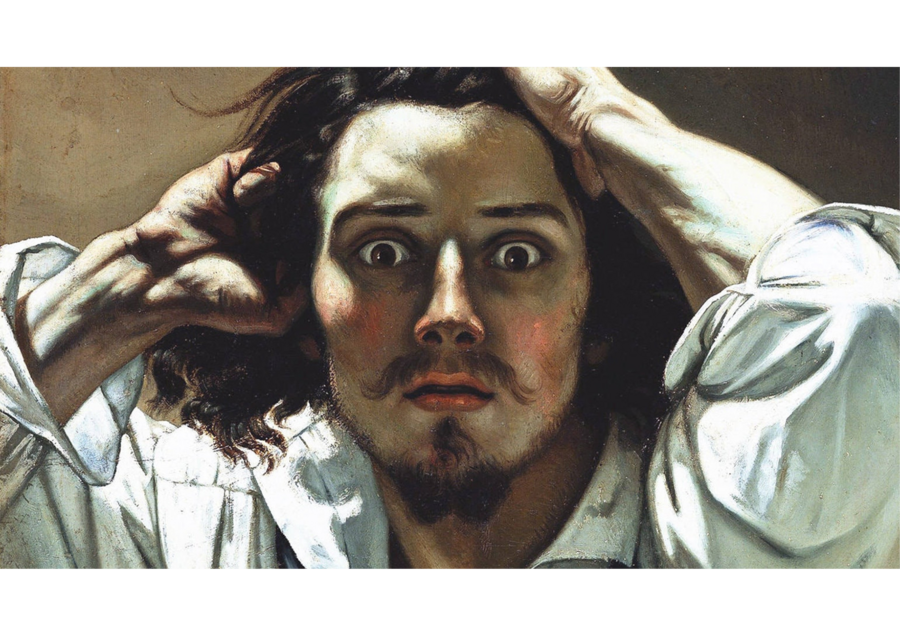
Kurbe. Despair
Social Realism
— this was an artistic method whose essence was to educate people in the spirit of socialist ideals through art, glorify the nation’s achievements, and create an image of the ideal society.
Deyneka. Defense of Sevastopol
Non-objective art in painting is: Abstraction
— This is an area of painting that consciously rejects the imitation of reality. Instead of depicting people, nature, or events, abstract artists work with forms, lines, colors, and color combinations, striving to express emotions, ideas, and inner states through abstract elements.
Kandinsky. Composition IV
There are also borderline directions, such as: Cubism Fauvism Futurism Surrealism
For illustration:
Cubism
— This is an avant-garde movement in painting that radically transformed the perception of form, space, and the essence of art itself. Cubist artists abandoned traditional imitation of nature, choosing instead to represent the subject world through geometric forms and multiple viewpoints.
Juan Gris. Still Life with a Guitar
Fauvism
— this is an avant-garde movement in painting that originated in France. Its essence lies in a radical rejection of the traditional principle of the time: color as a tool for accurately depicting reality. The Fauvists made color the primary expressive medium to convey emotions, rather than to copy the surrounding world.
Henri Matisse. Joy of Life
Thus, in theory, we can explain the concrete and abstract subjects as follows:
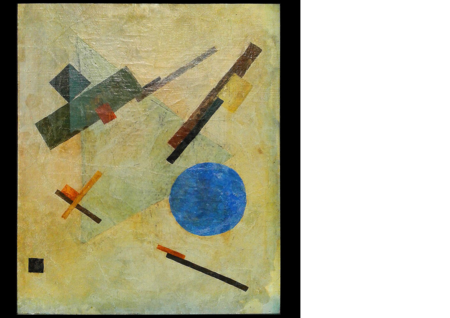
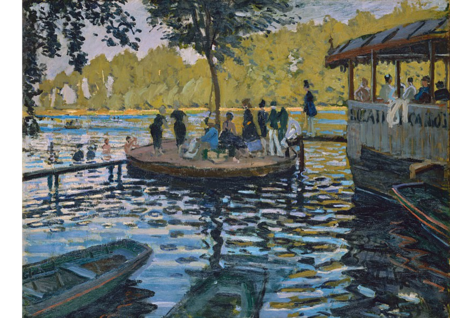
Malevich «Suprematist Composition 1» and Monet «La Grenouillere»
Representational painting involves depicting real, concrete objects and things from the surrounding world: flowers, fruits, human figures, landscape elements, and much more. This is the opposite of non-representational (abstract) art, which is constructed solely through the play of color, shape, and line, without claiming recognizability. The core idea is that the artist aims to portray a subject we recognize—whose essence is clear to us upon viewing.
Non-representational painting is the flip side. This movement involves artists completely rejecting the depiction of real objects, narratives, or subjects typical of traditional art. Instead, the focus centers on formal elements: color, line, shape, plane, and abstract configurations. The relationships between these elements—their proportion, rhythm, and interaction—become the foundation of the composition’s expression.
We’ve covered that! Now, let’s move on to the theory of Immanuel Kant—which I want to discuss—and which, in my view, combines interestingly with the previous topic through one non-secret detail.
In his book, «Critique of Judgment, ” Kant states:
If art intended to apprehend an object of knowledge performs only the actions necessary to make it actual, then it is mechanical art; but if its immediate purpose is to evoke a feeling of pleasure, it is called aesthetic art. It may be either pleasurable or refined art. In the first case, the art’s goal is for pleasure to accompany perceptions merely as sensations; in the second case—for it to accompany perceptions as modes of cognition.
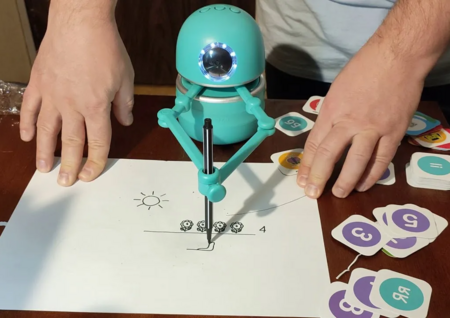
«Mechanical Art» in Kant is an art form built upon rules, which can be studied and replicated. It stands in opposition to «beautiful art, ” where genius operates and the rules cannot simply be memorized or explained through words. „Mechanical“ refers to the mode of production: if art can be reduced to a set of rules that can be taught, it is mechanical.
For instance, icons fall into this category of art. They are painted according to specific iconographic originals from their traditional styles. In other words, they follow a specialized guide to iconography, which compiles examples of how faces, drapery, and other elements on an icon should appear. This dictates all the details of the canonical images and events depicted on the icons.