Navigation
- Research Concept and Hypothesis
- Visual Analysis — From zoot suit to oversized aesthetics; — Typography, color theory, and collage in album cover design — Two «Great Days» — Iconographic motif
- Conclusion and Findings
- Bibliography of Sources
- Bibliography of Imagery
Research Concept and Hypothesis
This study examines the continuity of visual codes between jazz and hip-hop culture. Although hip-hop is often perceived in popular consciousness and discourse as a phenomenon arising from a cultural rupture—a radical revitalization of African American musical expression that broke from the preceding jazz tradition—the current body of scholarly work in cultural studies, semiotics, design history, and visual anthropology allows for a fundamentally different thesis. The central research question guiding this work is formulated as follows: how was the visual code of jazz—understood as a set of iconographic, compositional, typographic, coloristic, and corporeal conventions (fashion, gestures, staging)—not merely quoted, but deeply absorbed, processed, and integrated into the visual identity of hip-hop, thereby ensuring cultural continuity between two pivotal African American musical formations of the 20th century?
The relevance of this question stems from both the growing interest among researchers in the interdisciplinary connections between music and visual culture (Williams 2013; Fleetwood 2011; Broome & Munson 2020) and the need to move beyond a narrowly musicological approach, which limits discussions of jazz’s «influence» on hip-hop to the analysis of sampling technology—the borrowing of audio fragments from jazz recordings and their incorporation into hip-hop compositions. The objective of this research is to demonstrate that sampling is not only a musical but also a visual practice: just as a producer «slices» a jazz groove on an MPC, a hip-hop designer and stylist «cuts» and reassembles the visual elements of jazz heritage to create new, hybrid images.
Hypothesis
Hip-hop does not merely borrow disparate visual elements from jazz culture—such as color palettes, typography, clothing, or compositional schemes—in a mode of external imitation or nostalgic stylization. Rather, it assimilates the very cultural logic of jazz aesthetics: the logic of bricolage and improvisational recombination, and reproduces it within new media, technological, and socioeconomic contexts. In other words, the visual world of hip-hop is not a negation of the visual world of jazz—it is its direct continuation, enacted through the mechanism of value transformation.
This hypothesis is supported by several theoretical foundations:
First, by the concept of «musical borrowing, ” developed by Justin Williams (Williams 2013). This concept is applicable not only to musical material but also to visual material. Williams convincingly argues that borrowing in hip-hop „occurs on multiple planes and within myriad dimensions.“ Let us attempt to apply this thesis to the visual realm.
Second, by Nicole Fleetwood’s theory of „black visuality“ (Fleetwood 2011), which examines how African American cultural practices construct alternative modes of seeing and representation that resist dominant (white) visual narratives. Fleetwood analyzes how „the public presentation and look“ become an instrument of „visual resignification”—the redefinition of symbols and social conditions of urban life. It is precisely this process of redefinition that we observe when moving from jazz to hip-hop.
Third, by a body of work that explores the connection between fashion, music, and identity in African American culture, particularly Alfonso McClendon’s study, „Fashion and Jazz: Dress, Identity and Subcultural Improvisation“ (McClendon 2015). This study offers the first systematic examination of how jazz fashion functioned as a mechanism for constructing identity and how the logic of „subcultural improvisation“ in clothing anticipated similar processes in hip-hop.
Object and Subject of Analysis
The objects of this research are visual artifacts significant to the cultures of jazz and hip-hop, examined within their historical trajectory (1940s–2000s). The subject is the specific mechanisms and forms of visual continuity: the borrowing and transformation of costume elements, typographic and color choices in cover design, compositional schemes in photography, as well as iconographic motifs.
The selection of these aspects for analysis is deliberate. Costume, album cover, and photographic portrait are three key media through which musical culture acquires a visual form and communicates with its audience. It is within these media that the continuity between jazz and hip-hop becomes most clearly evident.
Research Methodology and Significance
The methodological foundation of this work is semiotic analysis in the tradition of Roland Barthes, augmented by an iconographic method (tracing the migration of specific visual motifs) and elements of a comparative-historical approach. Each analyzed visual object will be «read» as a text possessing both denotative (literal imagery) and connotative (cultural meaning) levels. This perspective allows us to move beyond merely stating formal similarities; instead, it permits us to reconstruct the semantic transformations that visual elements undergo when shifting from one cultural environment to another.
This study addresses a gap at the intersection of musicology, visual culture studies, and fashion. Despite the vast amount of publications dedicated to jazz and hip-hop separately, research that examines the visual connection between these two cultures as an independent subject for systematic study remains scarce. Yet, it is precisely this visual layer that offers unique opportunities to understand the mechanisms through which the cultural memory of the African American community is transmitted from one generation to the next.
The practical value of this research lies in the fact that the developed analytical model can be applied to analyzing the continuity of visual codes in other musical genres and different subcultural formations. Furthermore, the gathered material and conclusions may be useful in developing coursework on visual culture and design history.
Visual Material Analysis
From Zoot Suit to Oversized Aesthetics
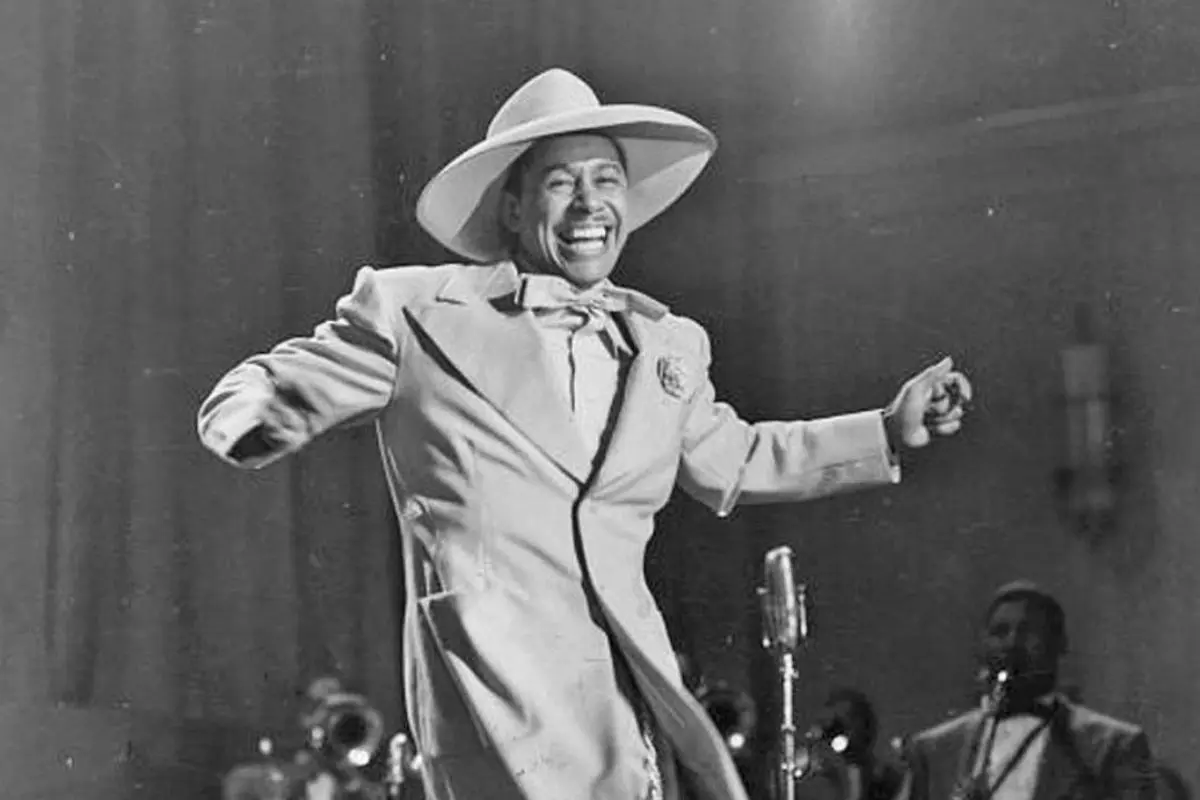
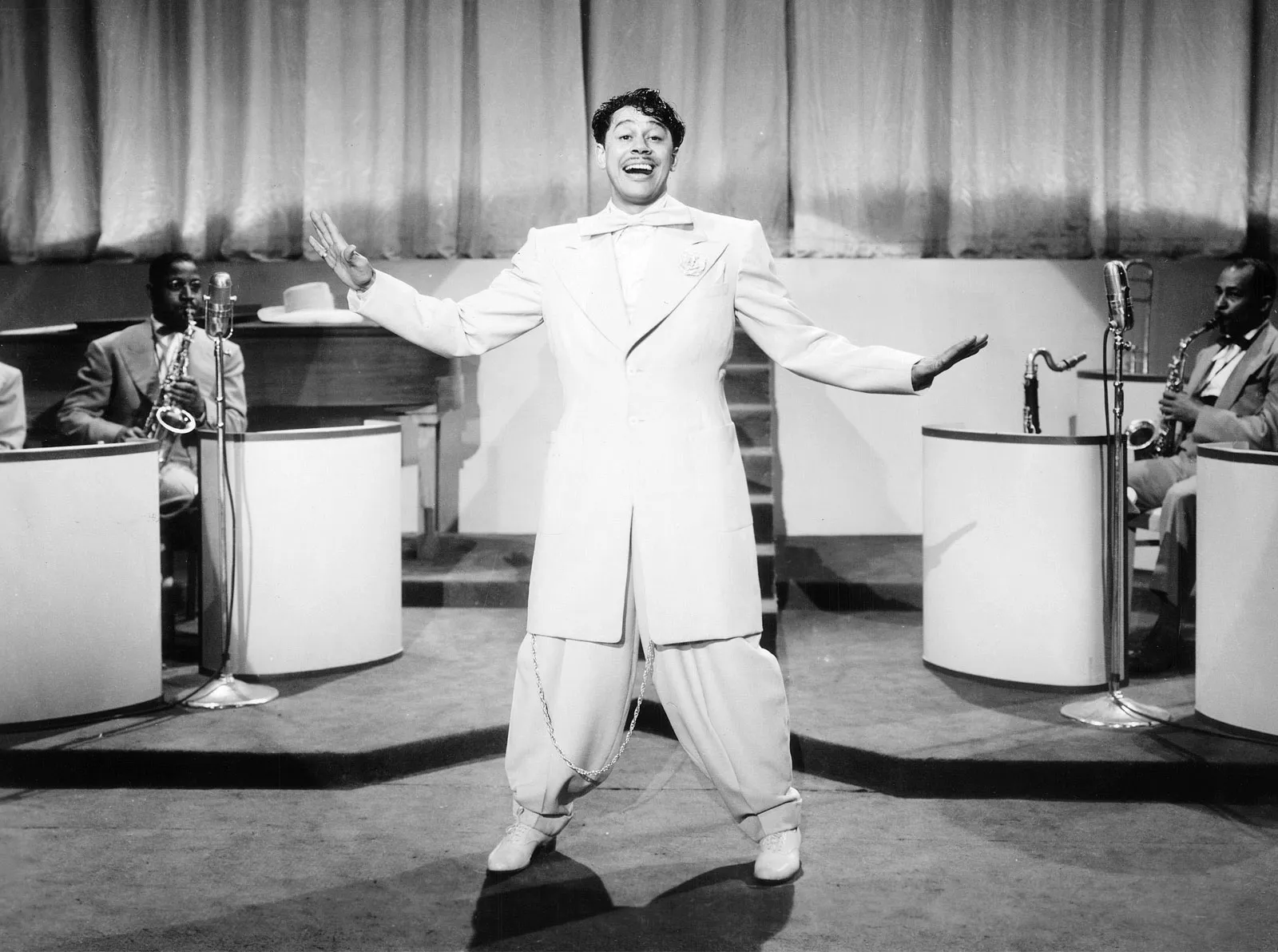
Dressed in a «Zoot Suit» style, the great jazz musician Cab Calloway was one of many Harlem musicians who wore these suits during his peak in the 1930s–1940s.
The first, and perhaps most striking, line of continuity connects the jazz suit of the 1940s—known as the zoot suit—with the oversized aesthetic of 1990s hip-hop. The zoot suit, which gained popularity among African American and Latino jazz musicians and their audiences in the early 1940s, was a deliberately exaggerated ensemble: «baggy blazer jackets with pants, bright colors, thick chalk stripes, floppy hats, and long chains.» Its defining visual characteristic was its intentionally excessive, «incorrect» silhouette—broad shoulders, voluminous trousers, a long coat—which challenged the aesthetics of the respectable white middle-class suit.
The original prototype of the «zoot suit» first appeared in 1930s African American comedy shows—a time when variety performances were separated into productions for white and colored audiences.
Later, jazzman Cab Calloway adopted the style, consistently appearing on stage in a pristine white zoot suit. Largely due to him, the suit evolved into a fashionable symbol among American minorities—and soon, a widespread fascination took hold with this seemingly impractical clothing.
The exact origin of the suit remains debated. Among the most well-known theories are:
- Clyde Duncan—an African American worker from Gainesville, Georgia, who, in 1940, commissioned a tailor to create a suit with a non-standard silhouette, inspired by the image of Rhett Butler from Gone With the Wind. This account was reported by the Men’s Apparel Reporter.
- Harold C. Fox—a Chicago tailor and big-band leader who claimed he invented the term «zoot suit» and popularized the cut among jazz musicians.
- There is also the theory that a similar silhouette spontaneously developed within African American communities in Harlem and spread through dance halls like the Savoy Ballroom.
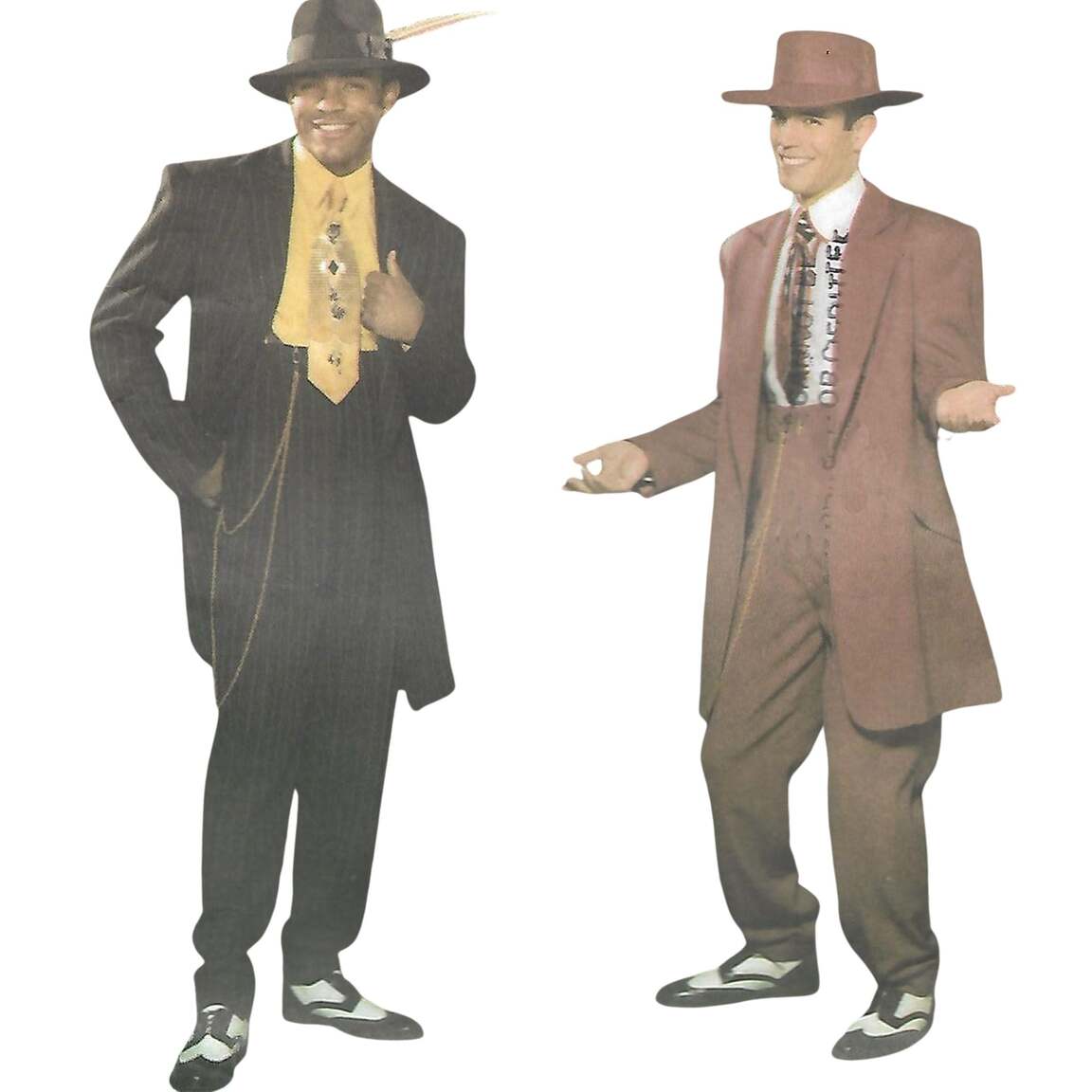
Men in various «Zoot suit» styles, 1930–1946
The cast of the musical «Zoot Suit,» featuring Edward James Olmosh as El Pachuca, at the world premiere in the Mark Taper Forum Theatre in 1978. (Jay Thompson / Center Theatre Group)
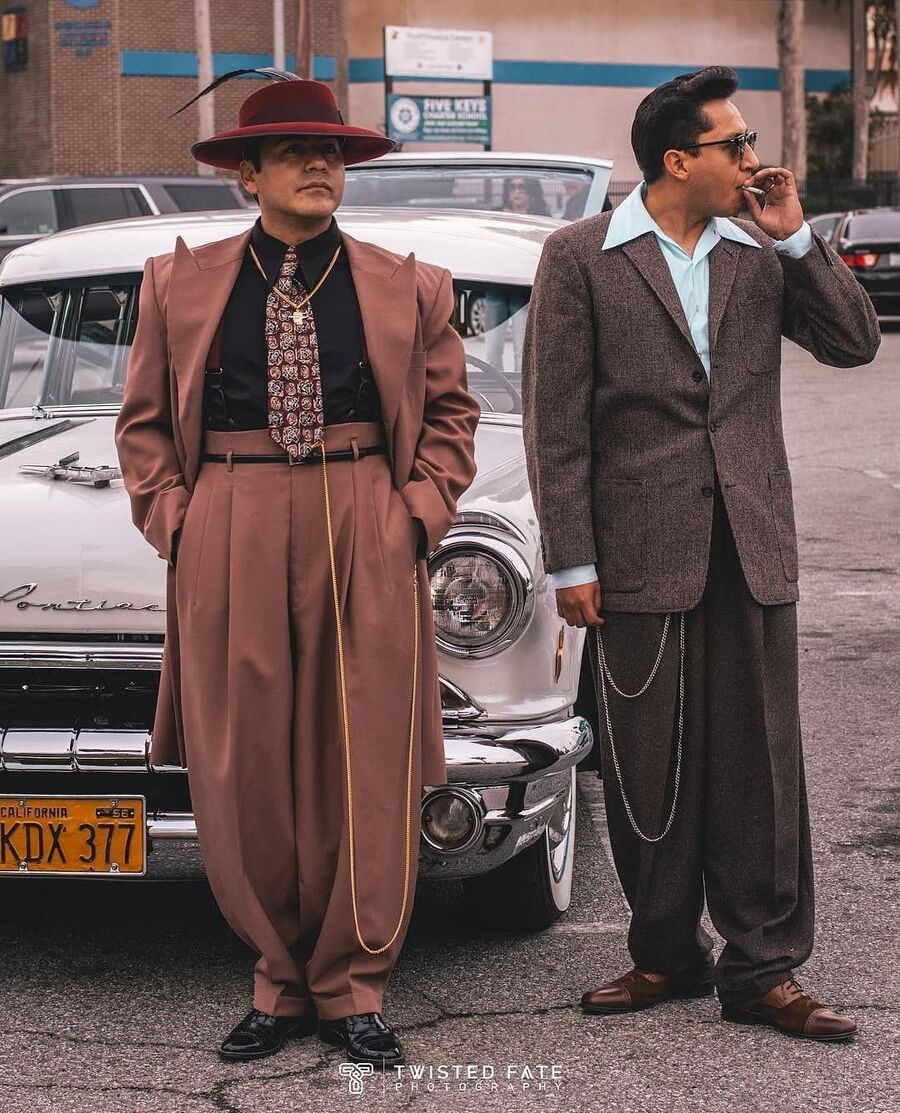
It is important to emphasize the socio-political subtext of the zoot suit. As historian Cathy Weiss notes in her monograph, «Zoot Suit: The Enigmatic Career of an Extreme Style, ” this suit functioned as a visual manifesto for marginalized communities: „Wearers of the Zoot suit were mainly Latinos and African-Americans, who wore them as a protest against oppression.“ The zoot suit was not merely a fashion trend—it was an act of visual resistance, a way to assert their visibility in a public space that sought to restrict that very visibility.
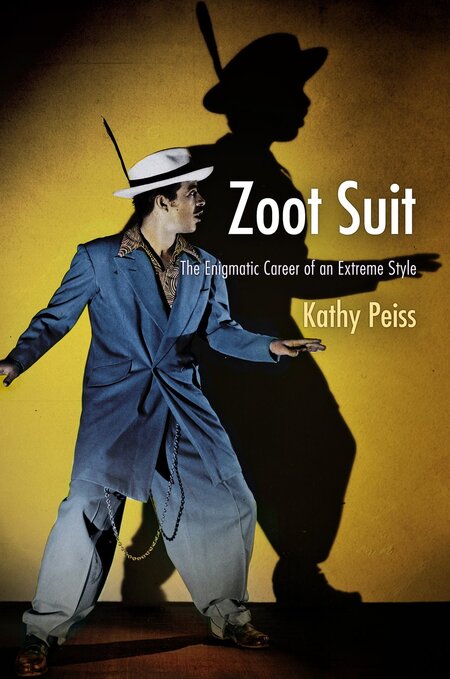
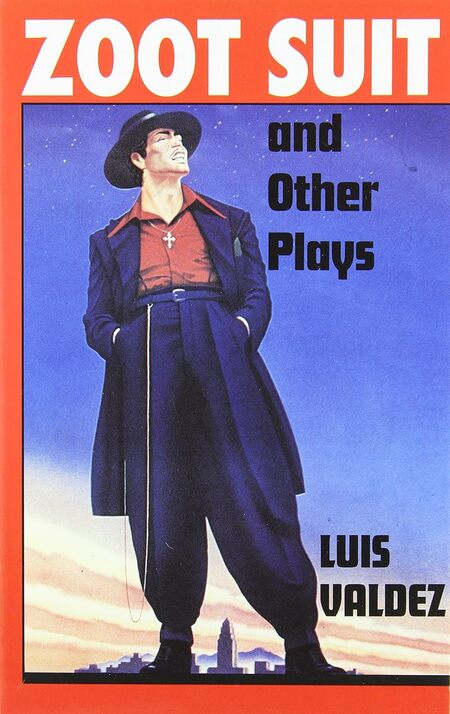
Image 1: Book cover by KATHY PEISS, Zoot Suit: The Enigmatic Career of an Extreme Style, 2011. Image 2: Cover of Zoot Suit and Other Plays—a collection of plays by Luis Valdez, 1992.
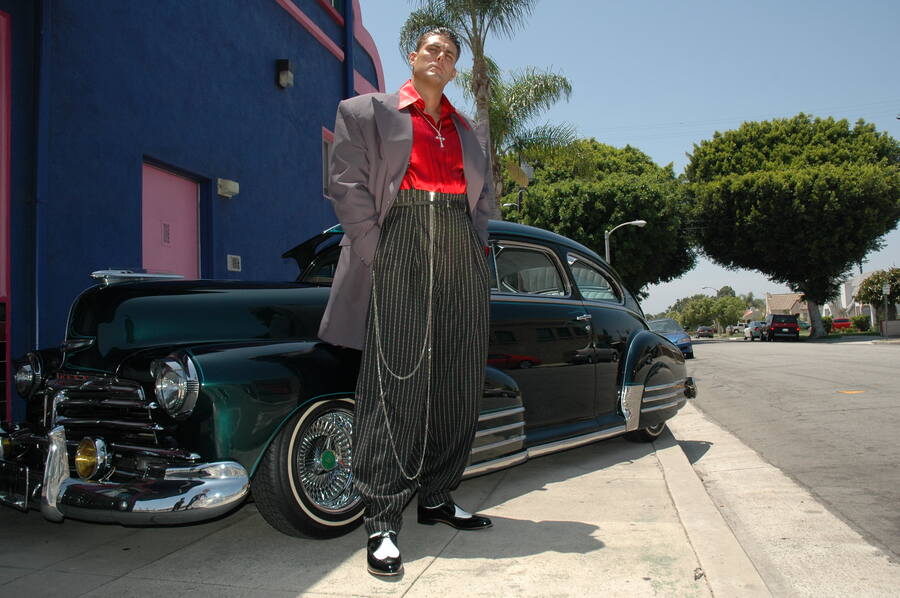
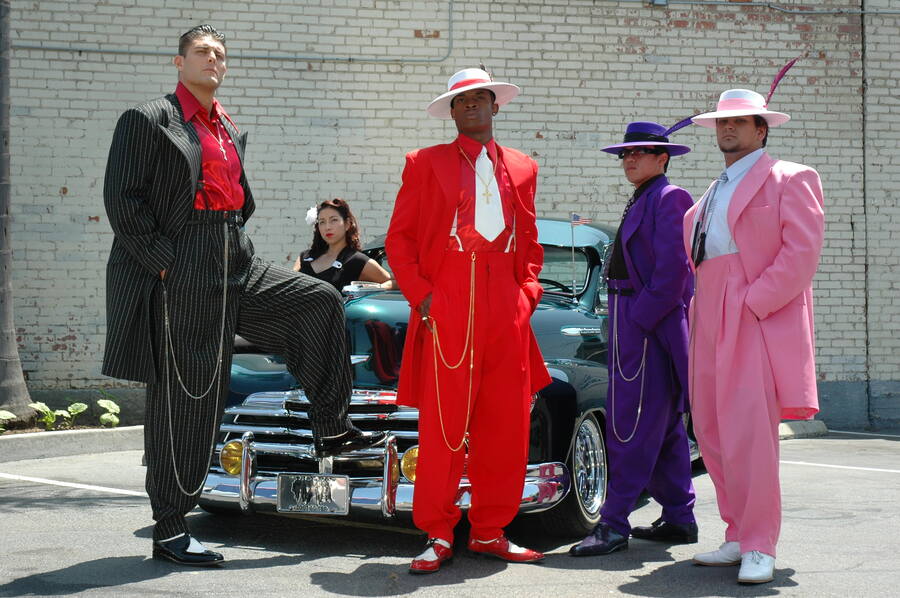
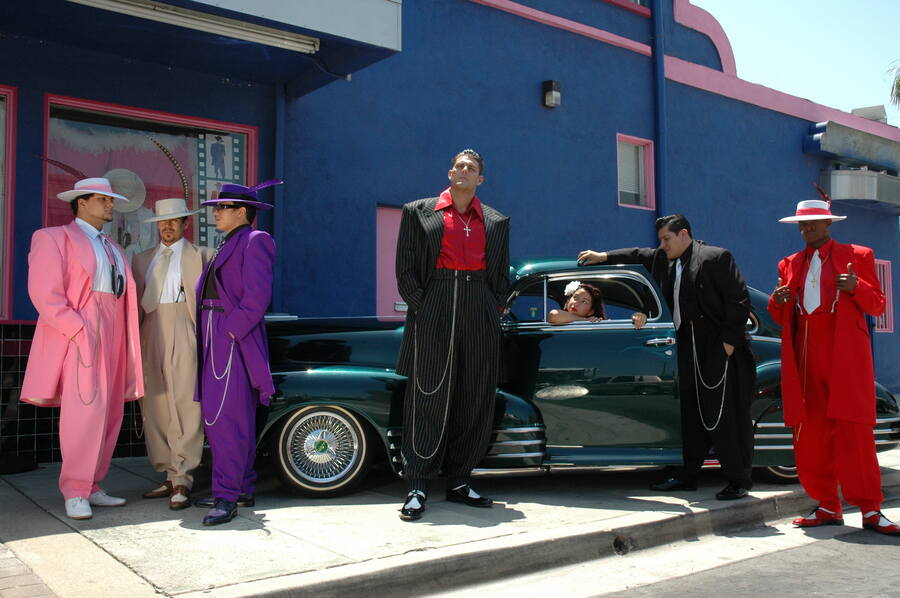
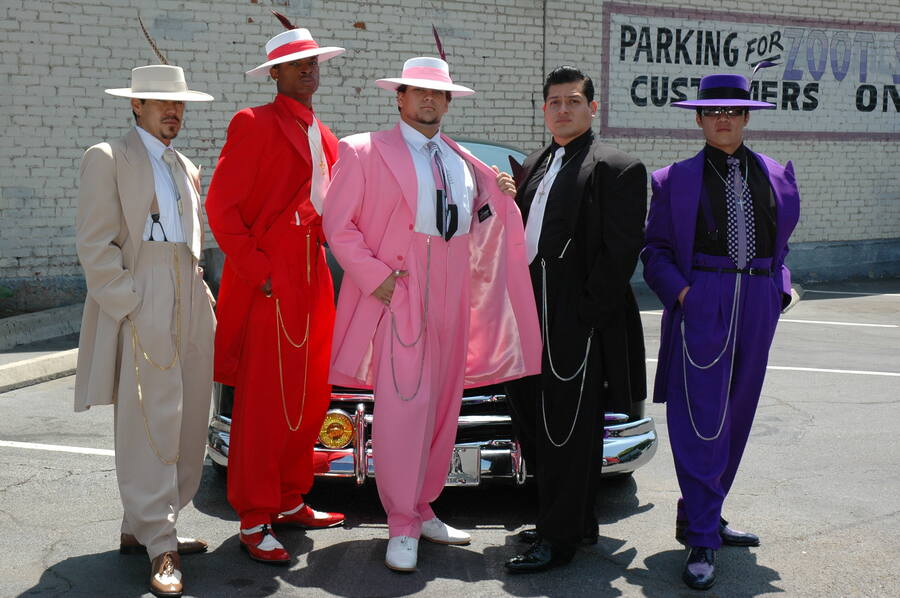
Zoot Suit El Pachuco Team. Modern photoshoot in costumes
Hip-hop of the 1990s reproduces this logic almost literally. Baggy jeans, oversized t-shirts and sweatshirts, massive gold chains—all of this is a direct visual echo of the «baggy blazer jackets» and «long chains» of the Jazz Age. Elements deliberately adopted by jazz musicians and their fans have been reborn in hip-hop, imbued with new meanings while retaining the basic semantics of protest against dominant standards of respectability and the assertion of their own alternative aesthetic norms.
As Alphonso MacClendon notes, «Fashion and Jazz is the first study to identify the behaviours, signs and meanings that defined this newly evolving subculture.» His research demonstrates that jazz fashion functioned as a semiotic system from the outset, wherein every element of attire was a sign readable within the community. Hip-hop, in turn, does not merely borrow specific garments—it inherits the very principle of treating clothing as a language through which the community speaks about itself.
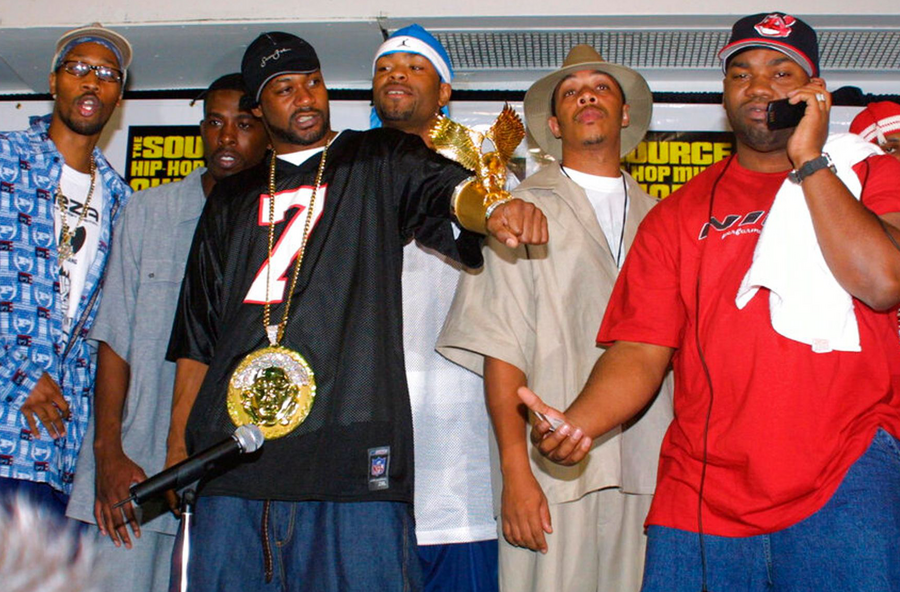
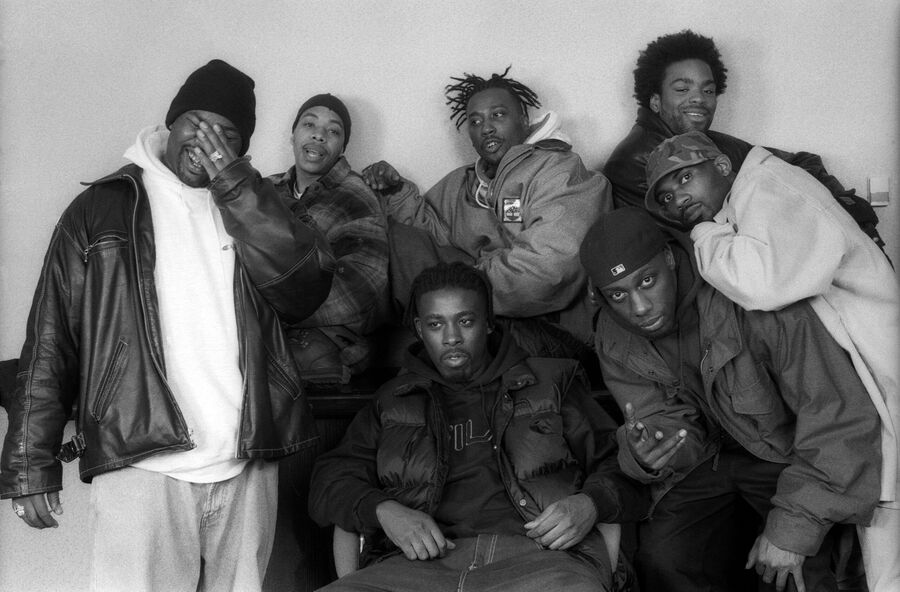
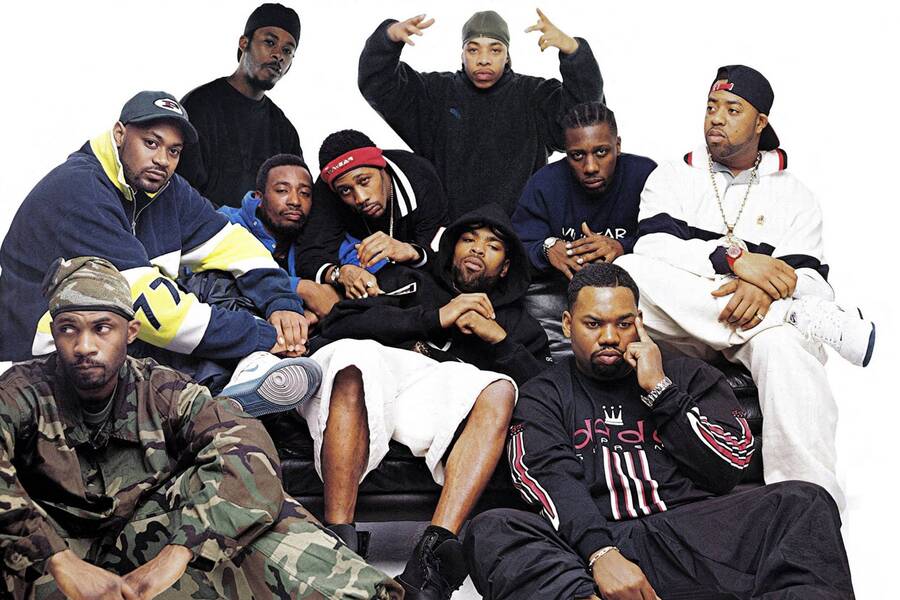
1990s hip-hop artists, whose styles allow us to trace the influence of the «Zoot suit» on the contemporary look. Photos of Wu-Tang Clan
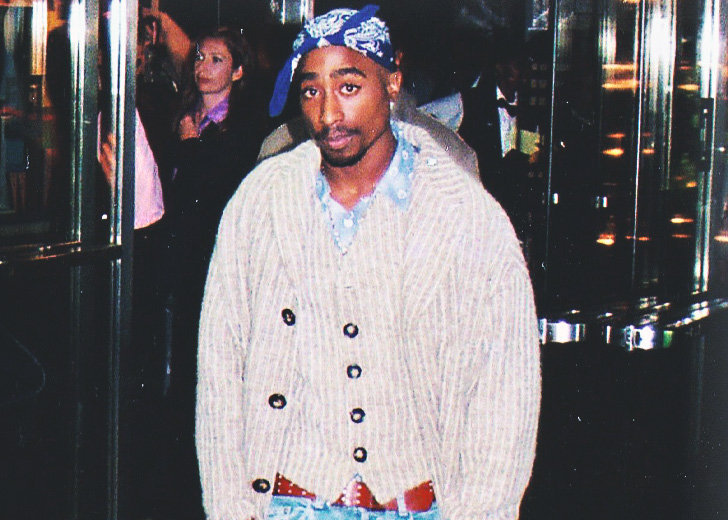
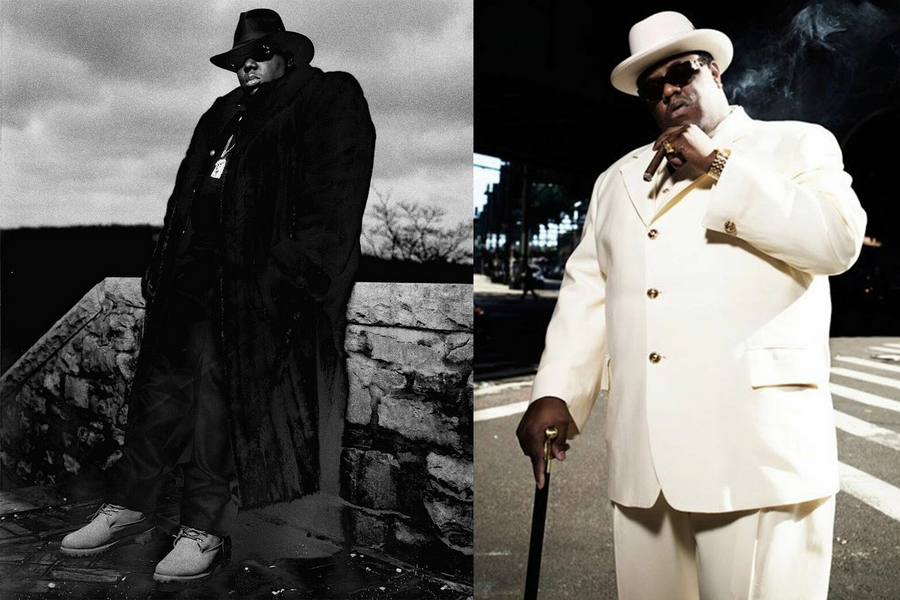
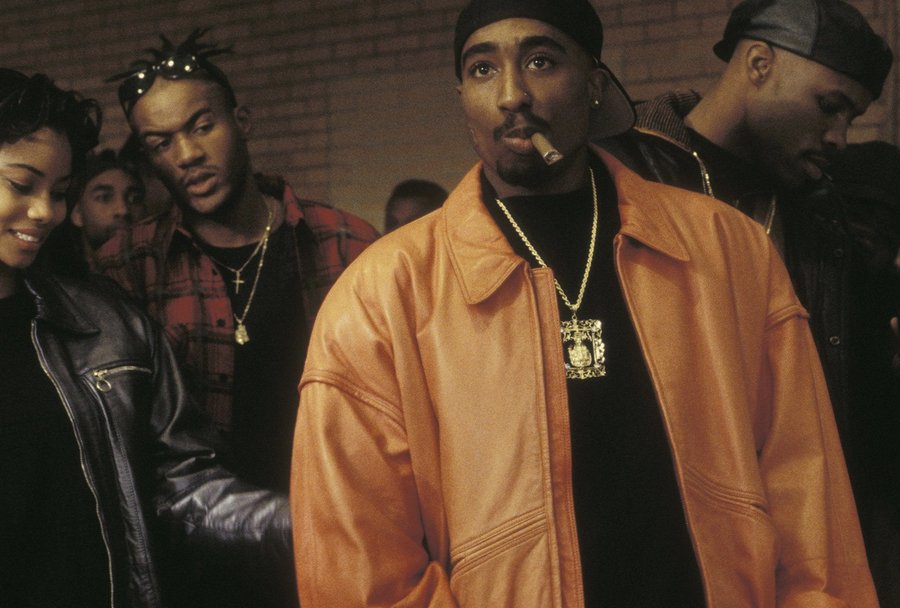
Hip-hop artists of the 1990s—in whose images we can trace the influence of the «Zoot suit» on modern style. Photographs of Notorious B.I.G., Tupac Shakur
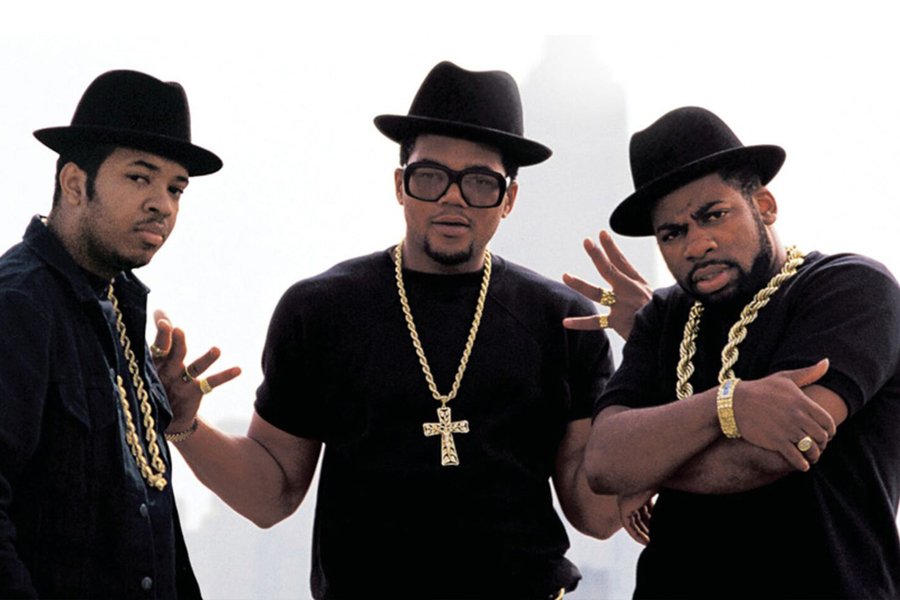
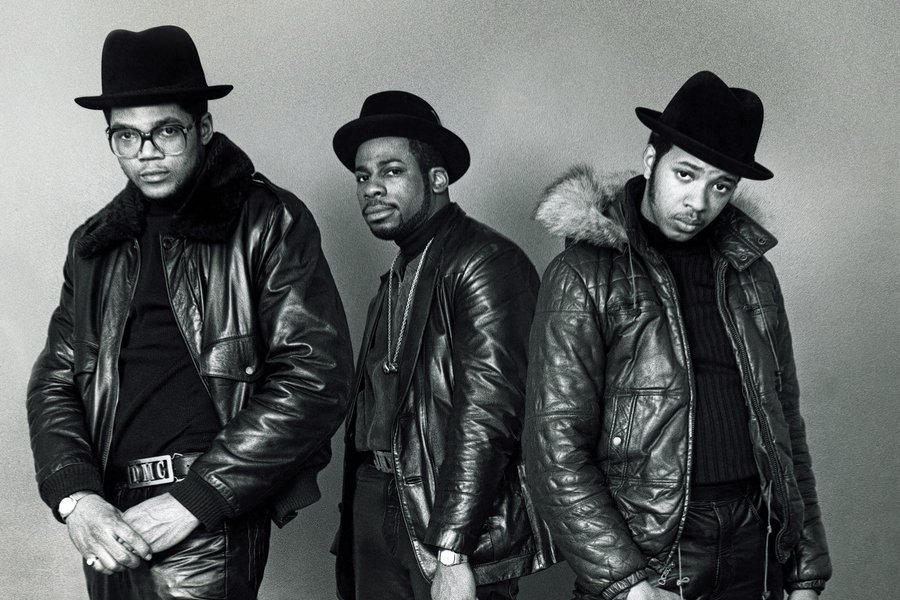
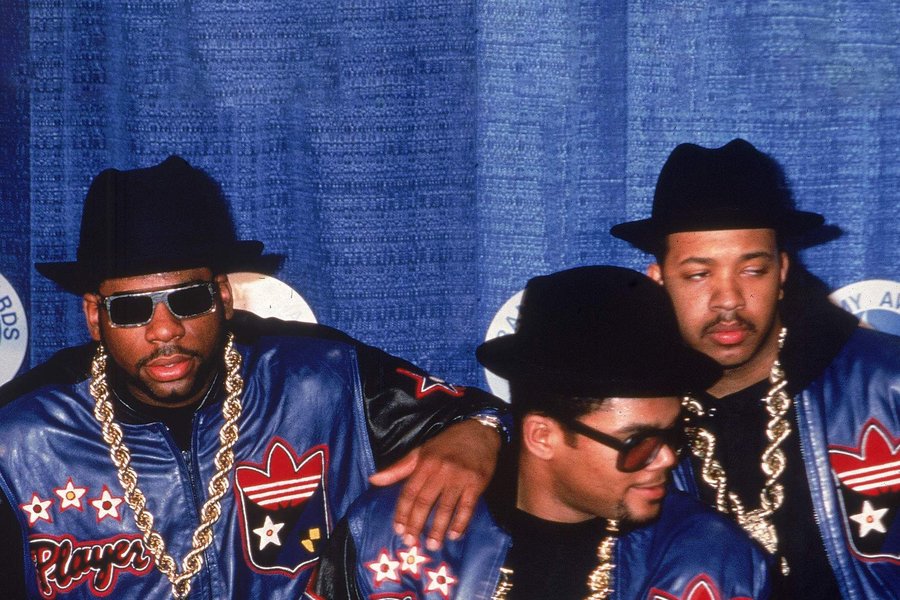
1990s hip-hop artists whose imagery shows the influence of the «Zoot suit» on contemporary style. Photos of the group Run-D.M.C.
The way hip-hop reinterpreted the «suit» tradition of jazz is particularly noteworthy. The jazz musician of the late 1950s—dressed in a formal suit—uses that suit as a visual argument for respectability, seriousness, and belonging to «high culture.» A hip-hop artist of the late 1990s, however, wears a tracksuit or oversized jeans—and this is also an argument, but one of a different kind: one supporting authenticity, a connection to the streets, and a rejection of assimilation into white respectability. The underlying principle of using clothing as a visual manifesto—even as the content of that manifesto has changed—remains constant. This, in itself, is continuity at the level of cultural logic.
Typography, Color Theory, and Collage in Album Cover Design
The second line of succession unfolds in the field of album cover design and is perhaps the most documented in scholarly literature.
The Legacy of Blue Note and Reid Miles
Reed Miles in the 1960s
A key figure for understanding this lineage is Reid Miles—a graphic designer who created between 400 and 500 covers for the jazz label Blue Note Records between 1956 and 1967. Miles, who began as an assistant to the label’s first art director, John Herman Sader, radically transformed the visual language of the jazz cover. He introduced principles of minimalist design, largely inspired by the Bauhaus: «a Bauhaus-influenced minimalist approach to graphic design.» His style is characterized by bold, often asymmetrical typography, the use of a limited color palette (one or two dominant hues plus black and white), toning of photographs, and creative work with photographic images provided by Francis Wolff.
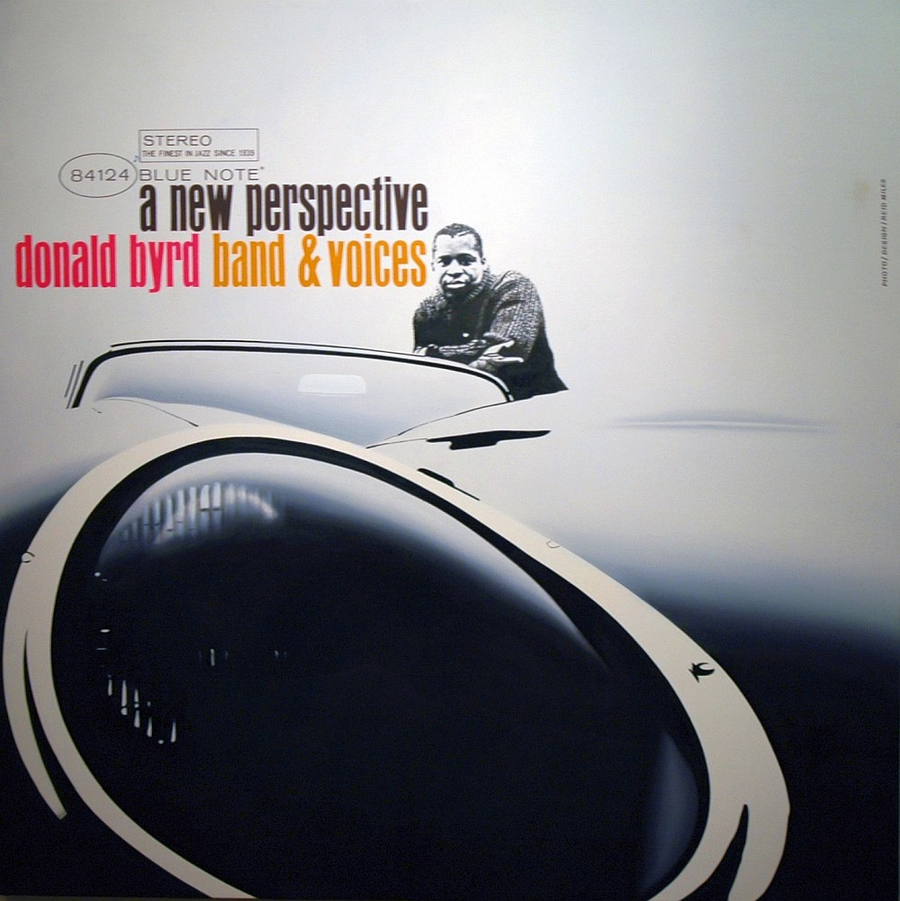
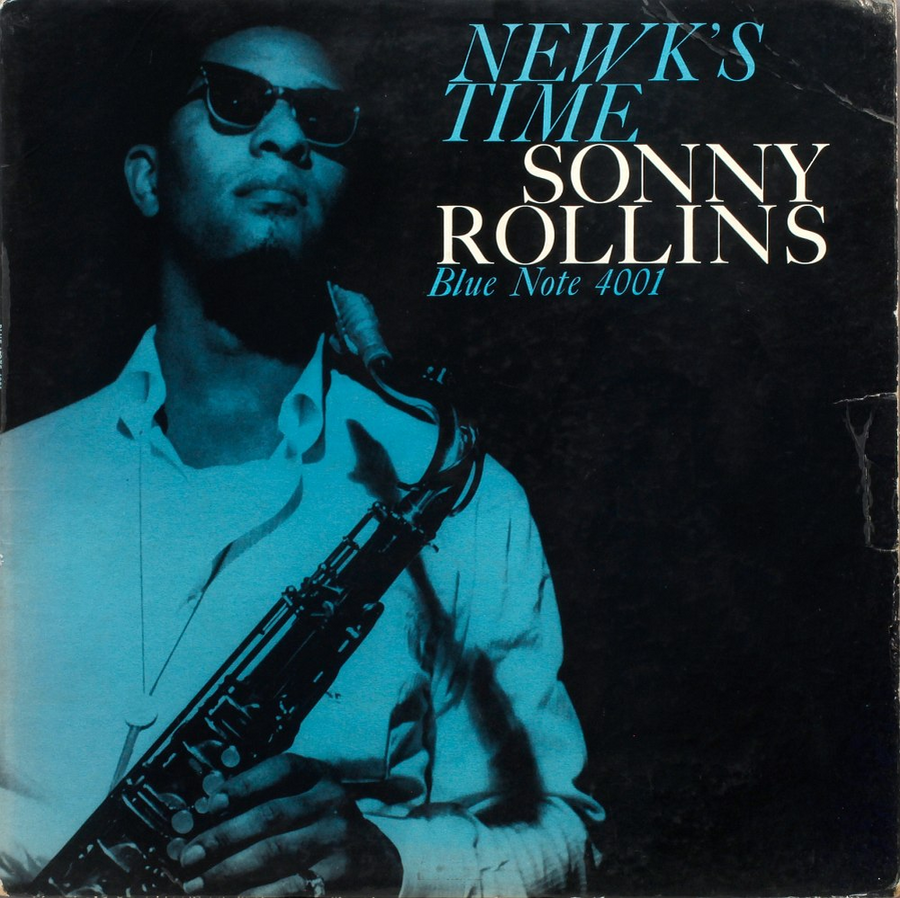
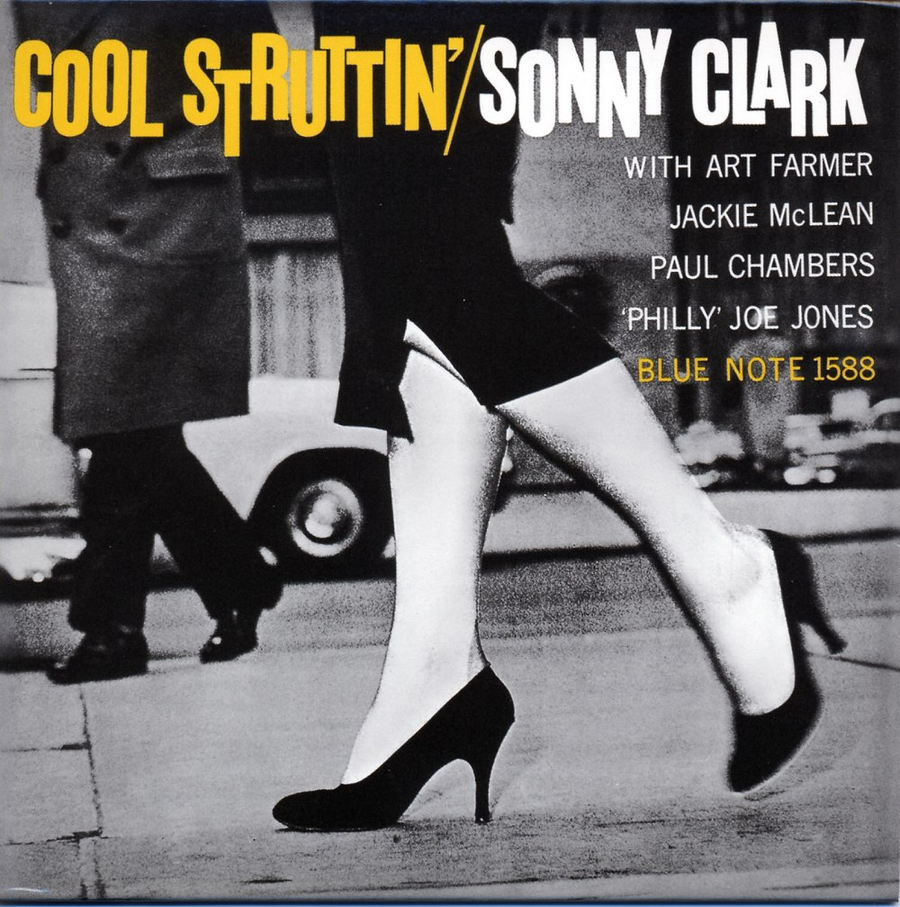
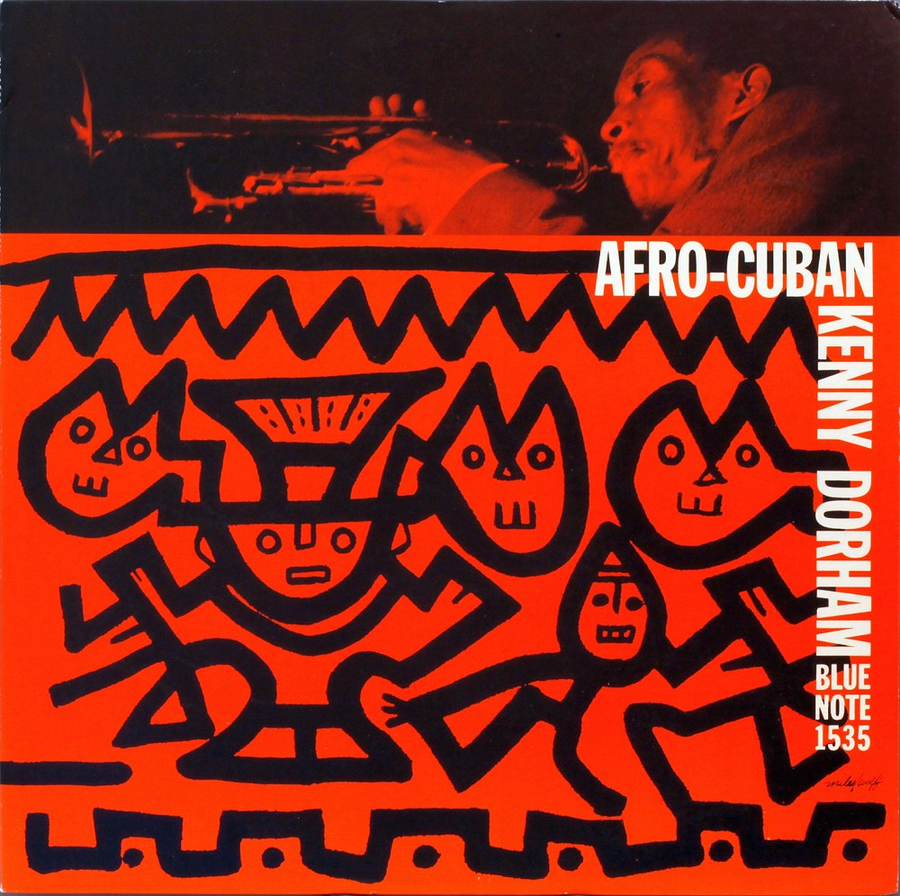
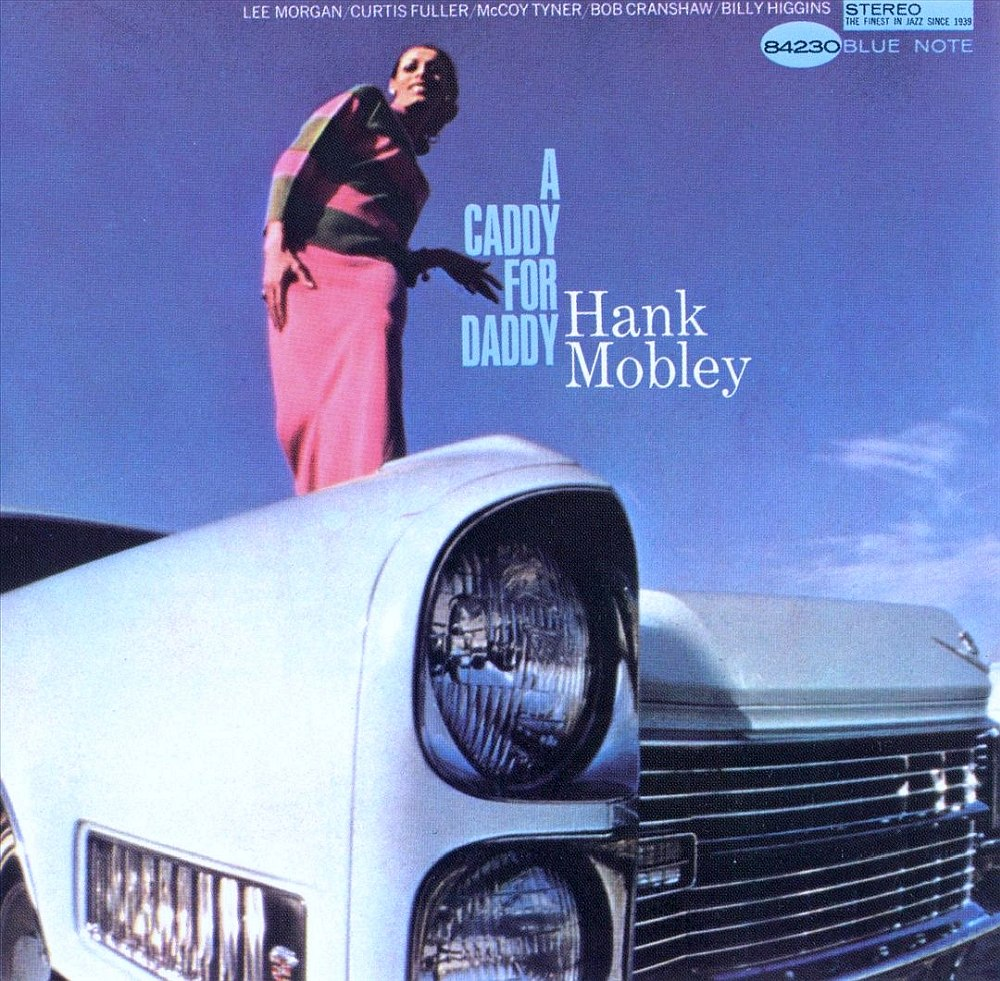
Sonny Rollins «Newk’s Time, ” 1958; Sonny Clark „Cool Struttin’, ” 1958; Kenny Dorham „Afro-Cuban, ” 1956; Hank Mobley „A Caddy for Daddy, ” 1963; Donald Byrd „A New Perspective, ” 1963