Topic Selection
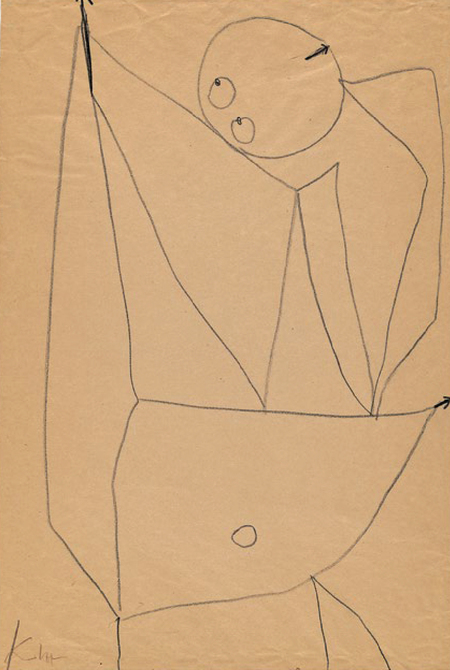
I like drawings where a person’s two arms are of unequal length, and the person following can be depicted as an almost exact repetition of the first figure. Sometimes I haven’t even figured out where the character’s shoulder is, but I already know that they are feeling shy. The moment of recognition resonates with me particularly in Paul Klee’s work. It seems that the figure is easy to draw, but if you shift one eye—it is already an entirely different person. I chose Klee because you can test this impression with his work. Some of his own childhood drawings have been preserved. It is known when he rediscovered them and how he included them in his catalog; there is testimony from someone who discussed his childhood creativity with him. Thus, I have three different materials: what young Paul created; what adult Klee decided to save; and what he created later, already understanding how deceptive the similarity between two drawings can be.
Paul Klee in dialogue with his own childhood drawings. I am drawn to his characters: sometimes a raised eyebrow is enough to give the face a mood. I want to understand the decisions behind this apparent simplicity.
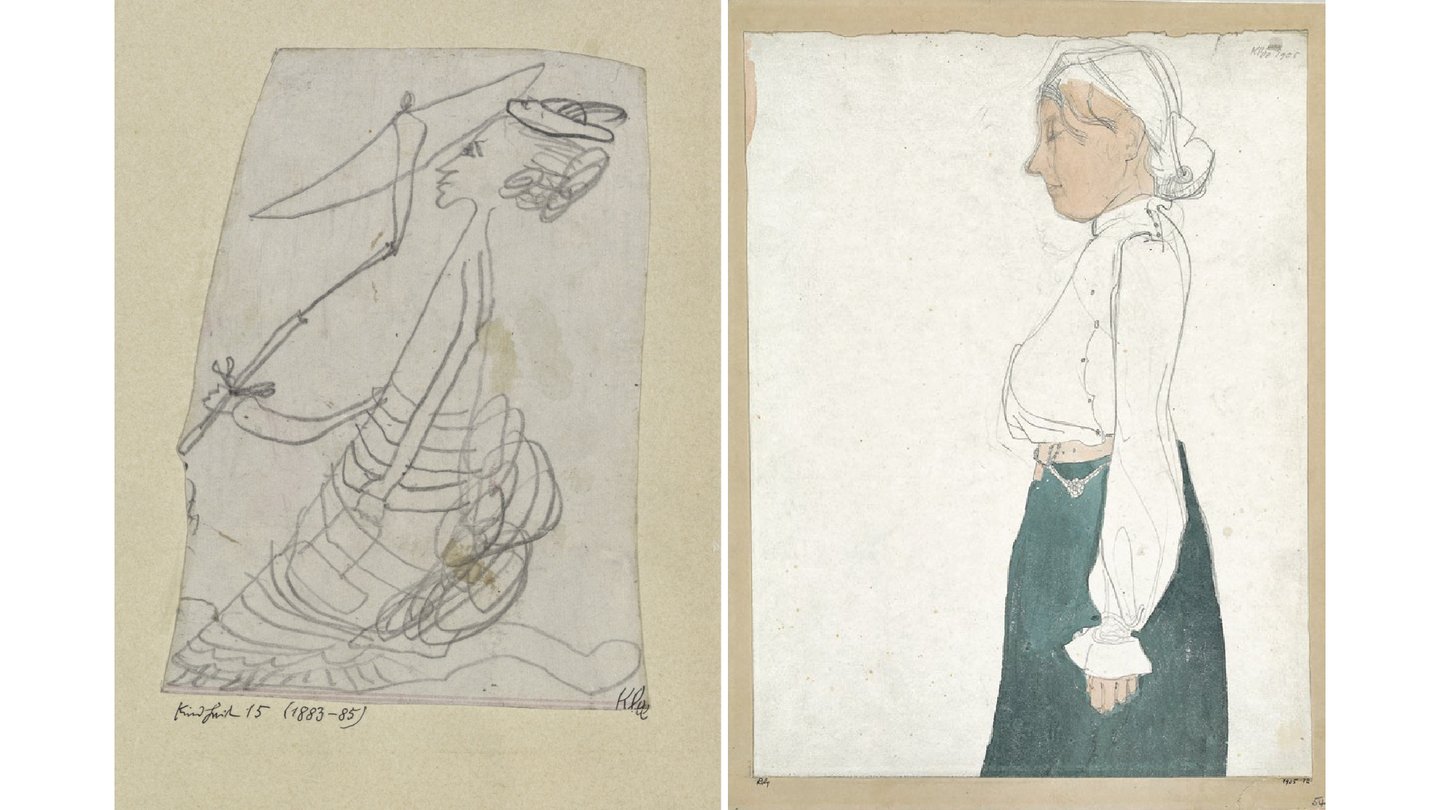
Lady with an Umbrella (1883–1885) / Lily (1905)
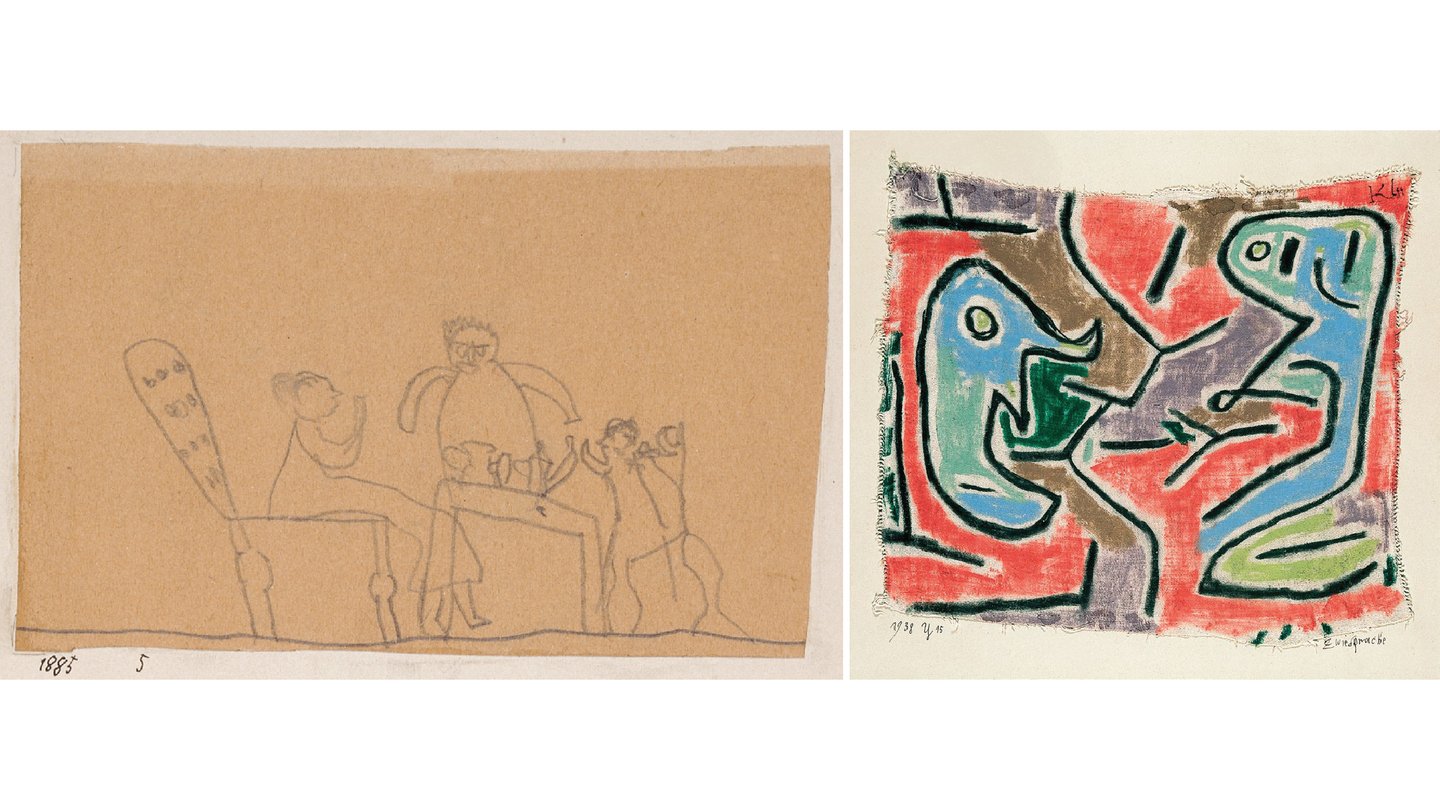
Family at the Table (1885) / Dialogue (1938)
Similar contours invite comparison. I acknowledge direct influence only where documents attest to it.
Why does the artist need childhood again?
Paul Klee was born in 1879 in Münchenbuchsee, near Bern, into a musical family. He played the violin and traveled to Munich to study fine arts. In an anatomical study in 1902, he meticulously dissected the shoulder muscles. The man who would later represent a limb with a single stroke understood its volume. After his studies, Klee returned to Bern. In 1902, he rediscovered his childhood drawings. These provided him with a possible starting point for a different approach to line work. In 1911, he began compiling his own catalog and placed some of these sheets at the beginning. The artist selected what he recognized as an independent pictorial solution. Later, in 1923, the children’s drawing, «Man, ? , chair, rabbit, ” was displayed in an exhibition alongside his more mature works.
To the Art School
Three children’s drawings on one card (1885)
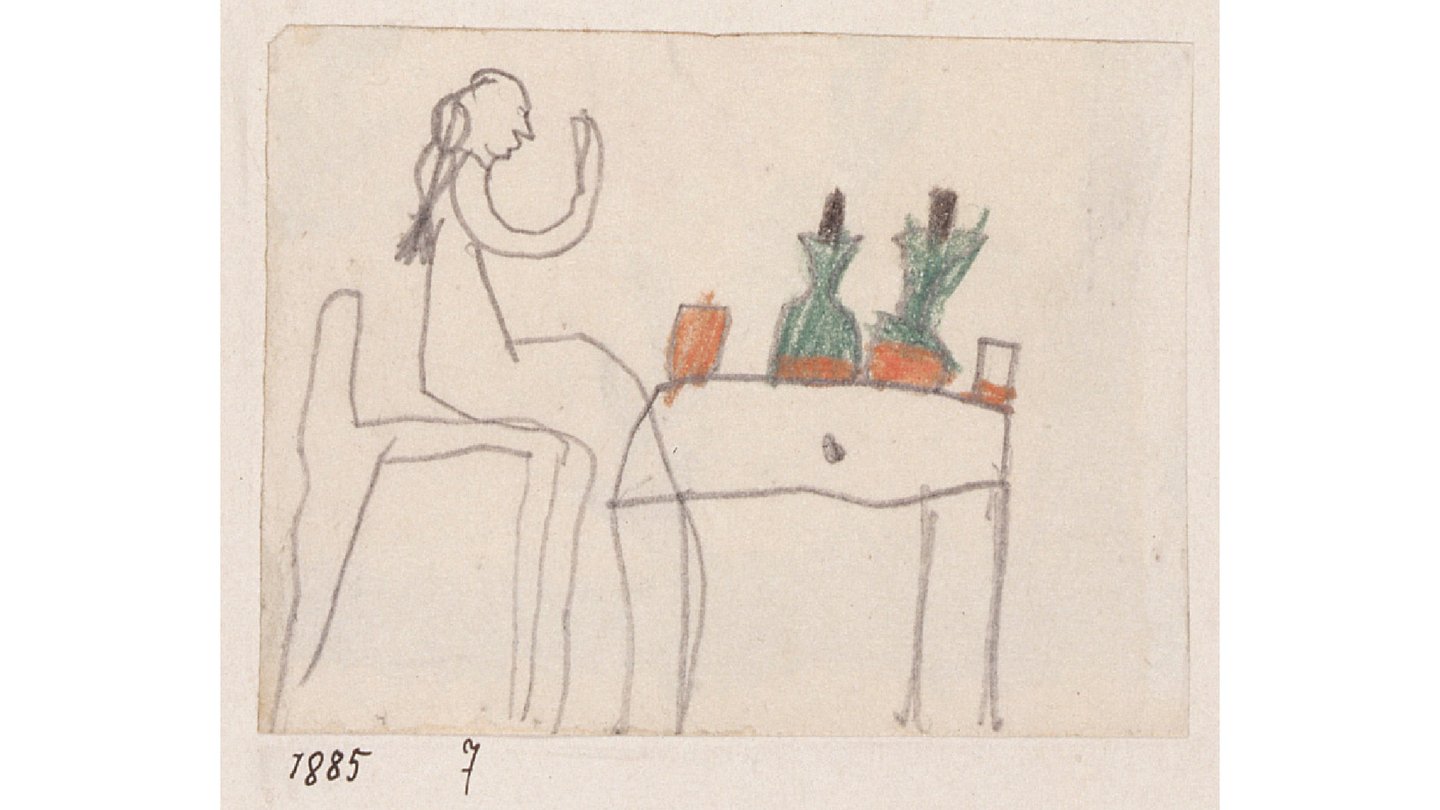
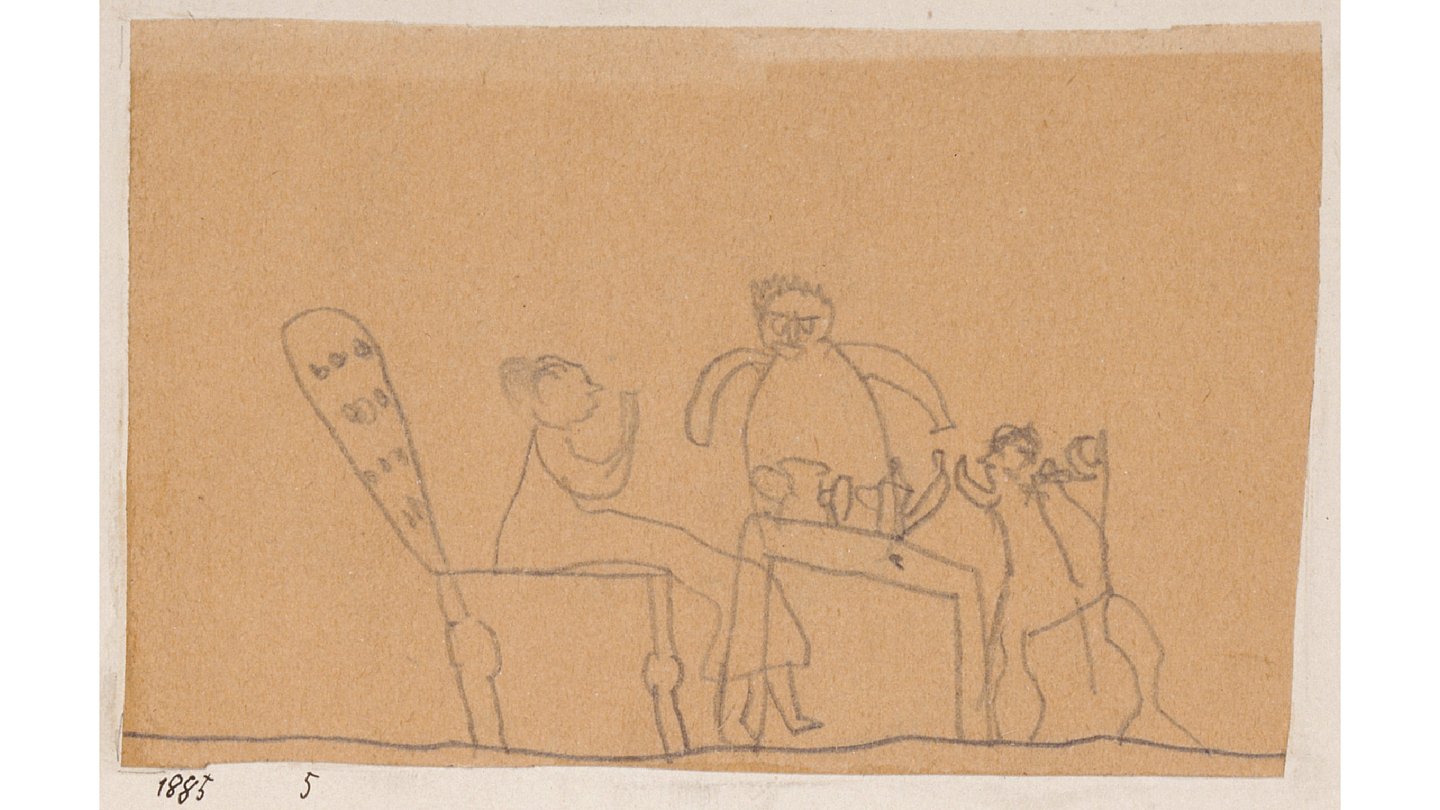
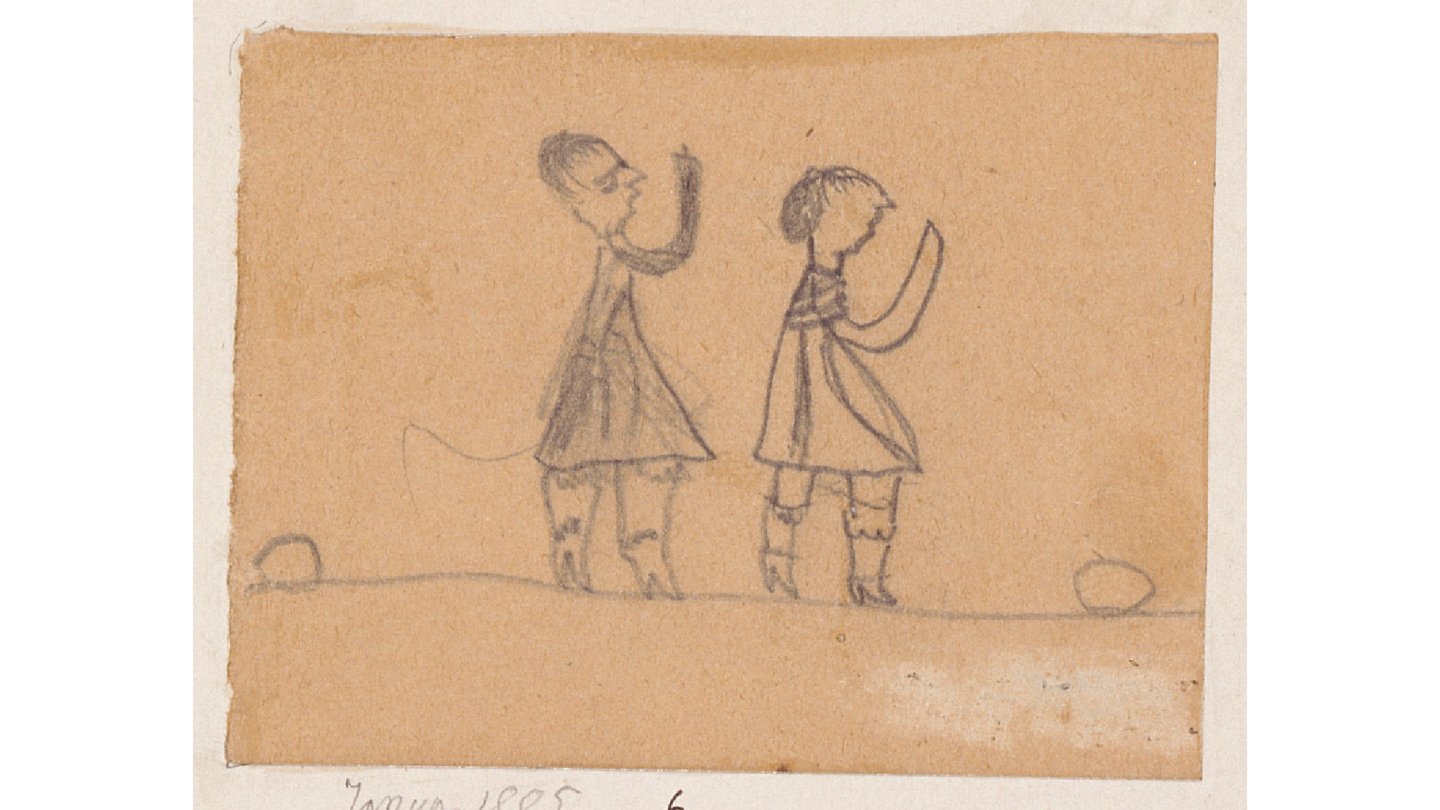
Family at the Table (1885)
Children in a Row (1885)
Lady at the Table with Red Wine (1885)
Two Christmas Trees (1884)
Lady in a Sailing Boat / Horse, Sleigh, Two Ladies (1884)
After the art school
Merligena (1893) / My Room (1896)
Life Studies (1899) / Shoulder Muscles (1902/03)
Old Phoenix (1905)
In 1906, Klee married the pianist Lili Stumpf, and in 1907, their son Felix was born. The artist was also interested in his son’s drawings.
Lili (1905) / Lili Kleez-Stumpf (c. 1906)
Sketch by Felix Klee (1908) / Child’s Portrait (1908)
Over time, realism began to bore and repel Klee. He felt it was pointless to simply copy nature when photography could already do that. Classical anatomy often froze the figure in a single pose. Simplified, «childlike» signs and lines allowed him to convey dynamism, rhythm, and the inner life of the subject.
The first theatrical puppets appeared in 1916. Character is visible in the silhouette and protruding ears. Eared Clown (reproduction) / Self-Portrait (reproduction)
What makes a face a face?
Senecio first looks at me, and only then do I begin to see the geometry in him. A sharp white brow, a different curve above the neighboring eye, the color division of the cheeks—just a few dissonances, and an expression appears on the face. The head also looks simple, but its volume is held by tonal transitions and a vertical axis.
Senecio (1922)
In «The Cat and the Bird, ” the circle and triangle resemble components that make it easy to draw animals. However, what happens between them is not at all obvious. The bird occupies a space on the cat’s forehead. Is it depicted in the same room as the cat? Is it actually smaller? These questions disappear as soon as you allow that the bird might be what the cat is thinking about.
Cat and Bird (1928)
In «Dialogue, ” the relationship is visible without objects and almost without bodies. The heads are turned toward each other, and a winding strip remains between them, across which the eye travels back and forth. This is the substantive result of the comparison: the similar task—to show the connection between two people—requires a different structure of drawing from the adult artist.
Dialogue (1938)
Broken Mask (1934) / Mr. Axel Hotel (1938)