Original size 1038x1525

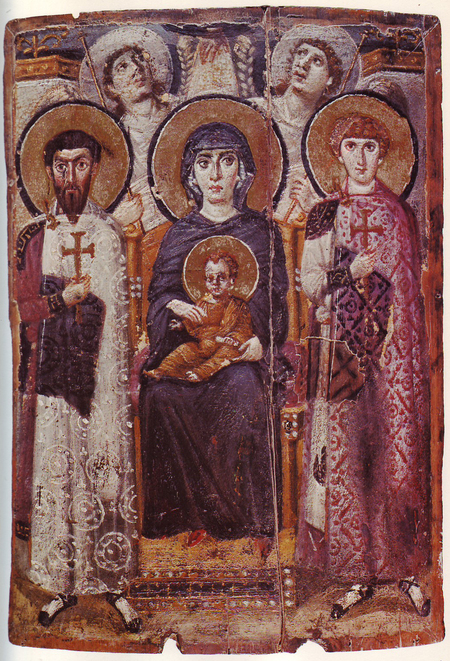
The symbolism of gestures and hand positions in early Byzantine iconography (6th–8th centuries)

This project is a student project at the School of Design or a research project at the School of Design. This project is not commercial and serves educational purposes
The project is taking part in the competition

«Magnificent Byzantine culture spread across vast territories—Anatolia, Syria, Palestine, Egypt, the Balkan Peninsula, Armenia, Ancient Rus', and this is not even an exhaustive list of locations”—wrote Lidov A.M. in his work on Sinai Byzantine Icons.

Early Byzantine icon painting originated in the 4th–7th centuries and marked the beginning of Christian panel painting. It was during this period that the characteristics of the iconographic language were established—features that later became characteristic of Orthodox art. Only a small number of early examples survive to this day, as many works were destroyed during the Iconoclast period.

Before beginning our research on gesture images in early Byzantine icons, let’s examine what an «icon» was and what functions it served during those periods (the 6th–8th centuries). We will explore the development of easel painting.

The symbolism of gestures and hand positions in early Byzantine iconography (6th–8th centuries)
Project created at 15.11.2026
designschool.am
designschool.am — цифровая экосистема, объединяющая профессиональное портфолио для дизайнеров — студентов, выпускников и сотрудников программы «Коммуникационный дизайн» (совместный проект Российско-Армянского Университета и Школы дизайна НИУ ВШЭ), образовательную онлайн-платформу, площадку, агрегирующую международные онлайн-конкурсы в креативных индустриях и другие профессиональные инструменты.... Show more
We use cookies to improve the operation of the website and to enhance its usability. More detailed information on the use of cookies can be fo...
Show more