состав.
Media exploring how materials dictate the quality, price, lifespan, and user experience of the objects around us.
We know the price of a thing. But do we understand what we are paying for?Product descriptions often feature phrases like «100% wool, ” „premium eco-leather, ” „solid wood, ” „veneering, ” „gilding, ” „high-quality alloy, ” or „cashmere blend.“ However, the ingredient listing itself rarely explains what those terms actually mean in real life.How durable is the material? How will it age? Is it suitable for a specific item? Is the higher cost justified? How should it be cared for—and what happens if you don’t care for it properly?Information exists, but today it is scattered across fabric reference guides, manufacturer recommendations, consumer media, sustainability projects, care manuals, and professional databases for designers.

the curriculum gathers these insights around an object and its life cycle.
composition. — consumer educational media that explains things through the materials they are made of.
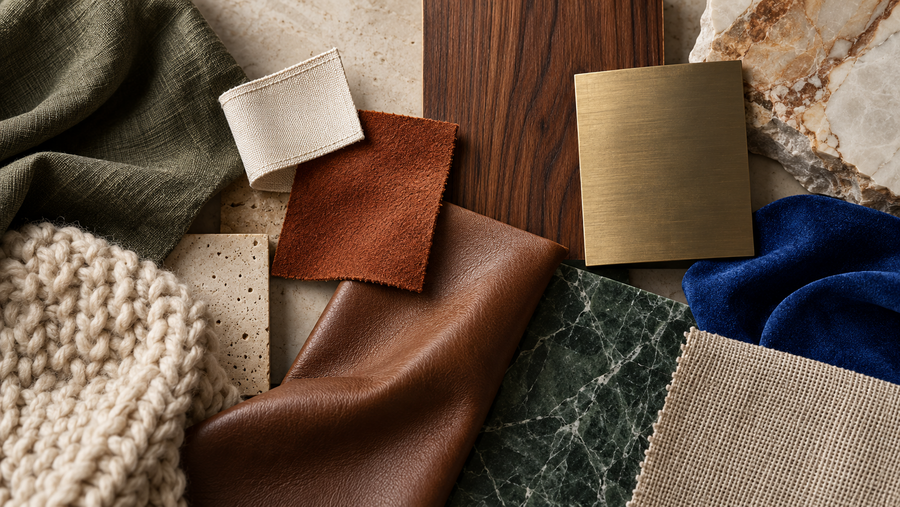
We don’t just tell you what wool, leather, wood, metal, or stone is. We are interested in what the choice of a specific material signifies for a person in real life: — how the object will feel and be used; — how long it will last; — what limitations the material has; — how it changes over time; — what care it requires; — and when a higher material cost is truly justified.
The purpose of media.
To integrate material literacy into conscious consumer choice.The project’s goal is to help individuals better understand the physical nature of the objects around them and apply this knowledge before, during, and after a purchase.The media should help the reader: understand exactly what they are buying; compare materials not on the basis of «good/bad, ” but on their suitability for a specific task; see the connection between material, quality, cost, and the object’s lifespan; understand the natural aging process of materials; properly care for the item and, whenever possible, extend its use. The value for the reader lies in eliminating the need to search piecemeal for information regarding the object’s composition, quality, care, and aging, and the ability to gain one cohesive view of its lifecycle through its material.
niche segment and narrow topic.
Segment Educational consumer/lifestyle media focused on product quality, mindful consumption, and everyday visual culture.Niche Topic Materials for apparel, footwear, accessories, jewelry, and interior design items: their properties, quality, cost, application, aging, care, and restoration.The project is not aiming to be an encyclopedia of all materials. We are primarily interested in the materials people encounter when selecting items for long-term personal use.The scope of media includes, for example: textiles and fibers; leather and its alternatives; wood and wood-based materials; metals and coatings; stone; glass and ceramics; jewelry and accessory materials.


editorial system.
Six core content streams
Material Study. We analyze one material: its origin, properties, strengths, limitations, and areas of application. Example: Cashmere: why softness doesn’t always equate to quality.Composition. We take a real material combination and explain why the components are joined in that specific way. Example: 70% wool, 30% polyamide—is this coat blend poor quality?Alternative Comparison. We compare alternatives not abstractly, but in relation to a specific task. Example: Solid wood or veneer: which is better for a dining table?Longevity/Aging. We examine the material not just when new, but over time. Example: Leather after five years: patina or damage?Value Proposition. We determine when a more expensive material genuinely justifies a higher product price. Example: Why might two linen shirts differ in price by a factor of ten?Durability & Care. Maintenance, usage, and restoration. Example: Why does silver tarnish, and what should be done about it?
The editorial system allows for the constant creation of content at the intersection of: material $\times$ object type $\times$ life situation.
For example, the same material—leather—can form the basis of completely different formats: leather for shoes, bags, furniture, tanning methods, care, restoration, and so on. Therefore, media is not limited to a set of basic encyclopedia articles, but can regularly return to one material from various angles.
competitive analysis.
Goal of the Analysis — to understand where users are already receiving information about the materials, quality, and durability of products, what problems existing projects solve, and what information needs remain unmet.
Analysis Criteria
- Positioning and Target Audience
- Content Themes and Scope
- Distribution Platforms
- Formats and Tools
- Visual Style
- Tone of Voice
- User Value and Takeaways for Our Project
Direct Competitors
Cromavo An independent portal dedicated to fashion, accessories, and jewelry. This project documents brand ownership, manufacturing origins, and the meaning of stated materials; every claim is accompanied by a verifiable source. A dedicated section focuses on materials: cotton, leather types, gold alloys, and certifications.
- Platforms: The core of the project is the website and a structured database.
- Formats: Reference guides, fact checks, brand portraits, tables, and the Evidence Score.
- Visuals: Restrained, investigative, and informational.
- Tone of Voice: Independent, evidentiary, and skeptical of unsubstantiated marketing claims.
- Strength: Transparency of sources and a high degree of trustworthiness.
- Key Insight: While Cromavo primarily explains what is claimed about an item and how verifiable that information is, our project goes further to examine what the material signifies for real-world use, aging, and care.
Tektiio A Russian reference guide to fabrics and garment care. This project explains composition, density, shrinkage, pilling, and care instructions; the catalog now includes dozens of individual materials.1. Platform: Primarily a website. 2. Formats: Reference articles, instructions, temperature charts, and label decoding. 3. Visuals: Functional, oriented toward quick answers. 4. Tone of voice: Simple, practical, without unnecessary introductions. 5. Strength: A very clear structure and specific recommendations. 6. Key Insight: Tektiio primarily operates within the textile category, especially excelling at post-purchase care. Our project starts earlier—with selection and quality assessment—and goes beyond just fabrics.
Fabric Guide A Russian-language informational portal covering the properties, production, usage, and care of fabrics. Unlike a simple reference guide, it actively connects materials to specific scenarios—for example, recommending fabric for bags, furniture, homes with children and pets, or bedding.1. Platform: Website and blog. 2. Formats: Short articles, comparisons, checklists, scenario-based recommendations. 3. Visuals: Functional, blog-style. 4. Tone of voice: Expert-practical, sometimes highly technical. 5. Key Strength: The site publicly displays material views; articles about denim, linen, bags, and other applied topics garner hundreds and thousands of views, which serves as indirect evidence of interest in the connection between the material and its real-world usage scenario. 6. Core Insight: What matters to people is not the abstractly «best material, ” but the best material for their specific lifestyle conditions.
Indirect Competitors
Good On You An international consumer media platform and rating system for fashion brands. The main focus is the impact of brands and materials on people, animals, and the environment. The project assesses thousands of brands and releases detailed material guides.1. Platforms: website, app, social media. 2. Formats: ratings, guides, collections, social cards. 3. Visuals: modern fashion/editorial. 4. Tone of voice: accessible, emotional, value-driven. 5. Strength: the ability to translate complex information into understandable consumer content. 6. Key insight: Good On You asks how closely a material aligns with ecological and ethical values. We ask how closely a material aligns with a specific item, lifestyle, and user expectations.
Roskachestvo A major Russian consumer project that helps evaluate product quality based on research, testing, and expertise. It also examines the actual composition of clothing and compliance with labeling.1. Platforms: website, Telegram, VK, and other social channels; the Telegram channel has over 40k subscribers. 2. Formats: research studies, ratings, guides, cards, videos, and recommendations. 3. Visuals: predominantly functional and informational. 4. Tone of voice: authoritative, yet accessible to the mass user. 5. Strength: evidential rigor, working with factual product characteristics, and verifying marketing claims. 6. Key Insight: for Roskachestvo, materials are just one element of product evaluation. For our project, the material is the primary media subject, and the visual component plays a significantly larger role.
RBC Style A lifestyle media outlet that describes itself as a «guide to daily life, ” blending practical instructions with stories about things, phenomena, and people. The project periodically releases content that mirrors our mechanics closely—for example, articles on how to choose cashmere, what determines its quality, and how to care for it.1. Platforms: website, Telegram, print, and thematic applications. 2. Formats: articles, interviews, guides, collections, visual stories. 3. Visuals: strong premium editorial. 4. Tone of voice: expert, intelligent, lifestyle. 5. Strength: the caliber of its art direction and its ability to discuss expert topics aesthetically. 6. Key Insight: For RBC Style, the material is one among many topics. In our project, the entire editorial system is built around the content itself.
Potential Competitors
Material Source A professional platform for architects, interior designers, and makers, dedicated entirely to materials and products. It covers wood, glass, ceramics, metal, textiles, coatings, recycled, and biomaterials.1. Channels: media, social channels, mailing lists, and physical Material Source Studios. 2. Formats: editorial content, interviews, projects, physical samples, and events. 3. Visuals: highly tactile, aesthetic, and high-end. 4. Tone of voice: professional and inspiring. 5. Strength: the idea that a material should be something one wants to literally «touch with their eyes.» 6. Key insight: Material Source speaks to professionals. We want to bring a comparable level of aesthetics to people without formal training.
MaterialDistrict A professional platform that blends editorial media with a vast materials database. Its mission is to help designers and architects find, understand, and apply new materials.1. Platforms: website, materials database, social media, events. 2. Formats: searchable database, news, research, projects. 3. Visuals: material-first, innovative, futuristic. 4. Tone of voice: professional, technological. 5. Strength: a sophisticated system for categorizing and searching materials. 6. Key insight: MaterialDistrict focuses on professional specification and innovation. Our user is often interested in understanding common materials—wool, silver, wood, leather—and how they behave in reality.
Skillbox Media — «Design» A Russian industry media outlet for specialists of various levels that produces guides, breakdowns, interviews, and educational materials. Articles appearing on Skillbox already overlap almost directly with our methodology: for example, material on textiles explains composition, properties, behavior in life, and emphasizes that the material must be chosen for a specific task.1. Platforms: Website, Telegram, VK. 2. Formats: Longreads, explainers, guides, tables, illustrations. 3. Visuals: Modern digital editorial. 4. Tone of voice: Educational, friendly. 5. Why a potential competitor: The project already has an audience and the capacity to produce similar content, but the materials currently represent only one of many topics covered by the larger design editorial team.
Competitive Analysis — Findings