Categories
1. Research Concept
2. Gesture as Language
3. The Scroll as Material Embodiment of Speech
4. The Art of Dialogue
5. Conclusion of the Study
6. Sources
1. Research Concept
concept
2. Gesture as Language
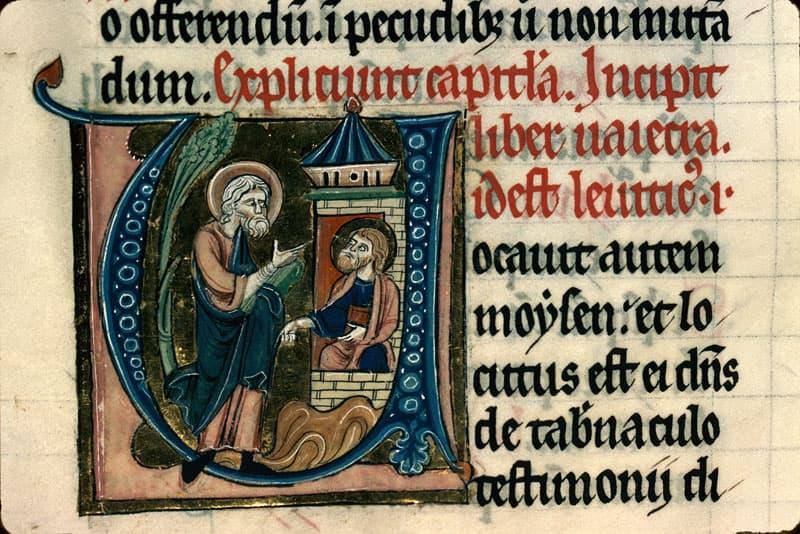
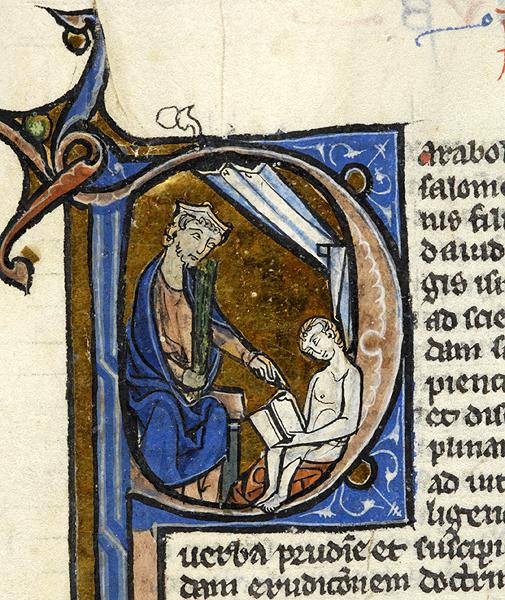
Conclusion
3. The Scroll as a Material Embodiment of Speech
A striking example of speech imagery on a scroll. The Archangel Gabriel depicted in the Gothic altarpiece is addressing the Virgin Mary, and the artist transfers his speech onto a long ribbon-banner: «Hail, Mary, full of grace, the Lord is with thee» (Luke 1:28). The figures continue their dialogue through gestures—the Angel points toward the Virgin, and Mary makes a receptive gesture—but the main emphasis is placed on the most vital words, those inscribed on the scroll.
«The Madman with Two Demons,» Master of the Psalter Ingeborg, 13th Century
In the book miniature, a madman surrounded by demons holds a scroll inscribed with «There is no God.» Although the hero speaks these words internally in the psalm, the artist materializes them to reveal the internal conflict of a seasoned mind. Thus, by visualizing the speech, the miniature transcends being a mere illustration to the text, becoming a standalone work about human sin.
Conclusion
4. The Art of Dialogue
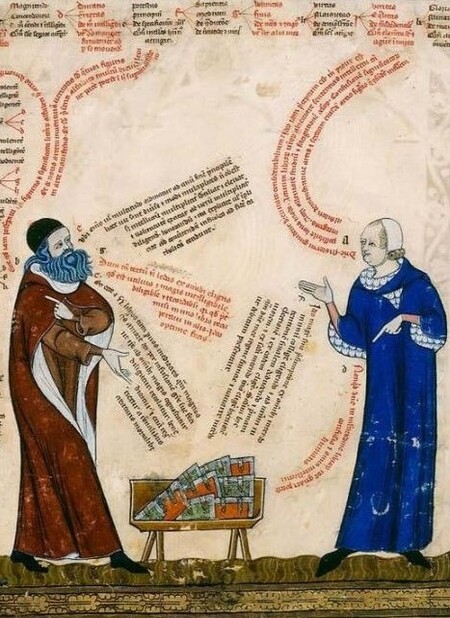
«Breviculum seu Electorium parvus, ” Thomas Le Meysse, c. 1321–1325
The illustration depicts a philosophical dialogue, the liveliness of which the author conveys precisely through the use of speech bubbles. The text fragments appear to burst from the characters themselves, helping us determine the sequence of lines and the nature of the conversation. It is reminiscent of text bubbles in modern comics. Examining the work from the perspective of gestures, it is particularly important to note that the characters are depicted as equal participants in the dialogue—meaning that in medieval illustrations, the «voice» belonged not only to figures associated with divine phenomena but also to ordinary people.
Conclusion
5. Research Conclusion
6. Sources