Concept
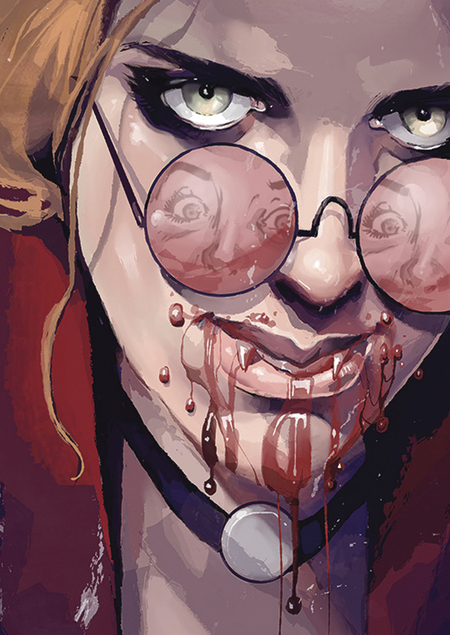
The vampire image has remained a significant part of visual culture for a long time. Initially tied to folklore about death and the supernatural, it has evolved over time into a distinct, recognizable artistic archetype, which has garnered numerous interpretations across literature, cinema, video games, and comics. Vampires can appear as aristocratic, immortal beings, monstrous figures, ordinary humanoid entities, or even as characters who struggle against the supernatural themselves. While the aristocratic portrayal is frequently seen in popular culture, the actual narrative and visual design of the character depends heavily on the setting. In a comic, unlike in literature, there are greater opportunities to visualize a character’s behavior and appearance.My visual study focuses on exploring the non-classical vampire archetype in comics. I selected this topic because the combination of the Gothic image with other settings is relatively uncommon. For instance, could we see a vampire depicted in sci-fi or cyberpunk? I chose four American comics: «Vampire Hunter D: Message from Mars» by Brandon Weston and Michael Brussard [1], «Vampire: The Masquerade — Winter’s Teeth» by Tim Sale, Tiny Howard, and other creators [2], «Mercy» by Mirka Andolfi [3], and «Redneck» by Donnie Kates and Lisandro Estériz [4].
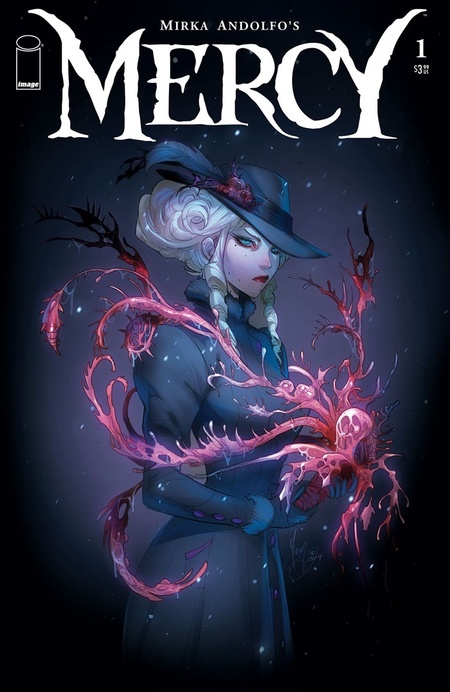
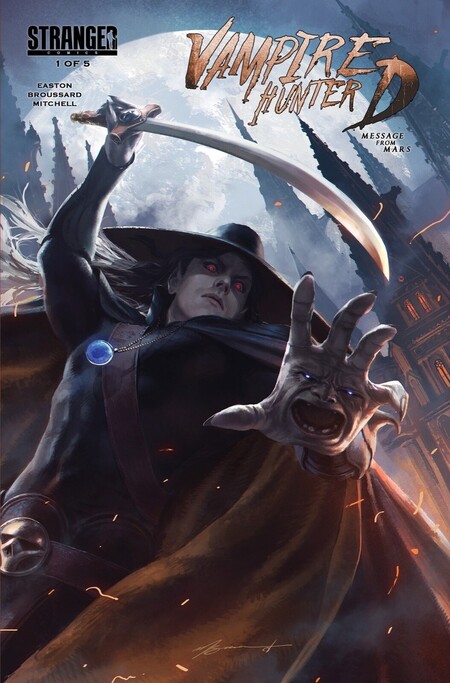
Cover art for the first issue of the «Mercy» comic by Mirka Anдольfo, 2020 — Cover art for the «Vampire Hunter D: Message from Mars» comic by Brandon Hinton and Michael Brussard, 2016.
In this study, I will analyze the general expressive devices artists use to create the image of the vampire and reveal the specifics of its existence across various settings. The focus of the research will be less on the plot and more on the visual solutions within the comic. Specifically, I want to examine the appearance, behavior, and variability of the characters within different worlds. The selection of these works is based on the diversity of the settings and the visual approaches to depicting vampires. In «Vampire Hunter D: Message from Mars, ” the vampire story is presented in a futuristic, Martian setting; „Winter’s Teeth“ portrays vampires in a modern noir context; „Mercy“ references Victorian Gothic aesthetics; and „Redneck“ depicts American provincial life. All works differ not only in setting but also in artistic style.
**Key Question: ** How differently are vampires depicted in American comics, and do they inherit traits from classic characters like Dracula?
**Hypothesis: ** There are likely indeed very similar stories or even adaptations among American comics, but over the history of the comic industry, someone has surely reinterpreted old clichés and placed the classic vampire in settings that, at first glance, are very distant from classical Gothicism.
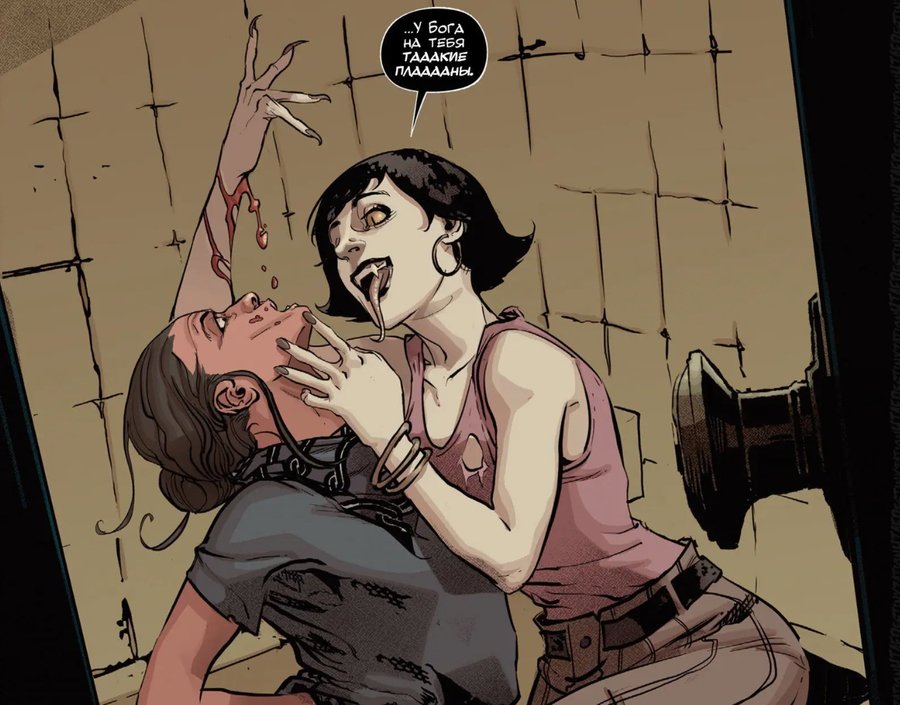
Excerpt from the comic «Vampire: The Masquerade — Winter’s Teeth,» by Tim Sale and Blake Howard, with Tiny Howard, 2020.
This study is divided into four main sections, with each section dedicated to a separate comic. Within each section, I will examine several aspects of the style:
Vampire Appearance: This covers anatomical features, facial characteristics, body proportions, clothing, and distinctive physical details. Special attention will be paid to the degree of resemblance the characters have to ordinary people, the use of grotesque elements, and visual cues that emphasize their vampirism.
Character Behavior and Posing: This involves methods of conveying character and emotional state through facial expressions, gestures, poses, movement, and interaction with other characters. Here, I will analyze how similarly or differently various artists depict vampire behavior.
Composition and Page Layout: This addresses the organization of space within individual panels and across the entire page, the choice of angles and shots, the contrast in object scale, and character placement.
Color Palette and Shading: This examines the characteristics of the color scheme, dominant hues, color contrasts, and accents. I will look at how light and shadow are used to build atmosphere, highlight characters, and differentiate the human from the supernatural.
In conclusion, I will attempt to determine the extent to which the portrayal of vampires in these four comics aligns with classical archetypes.
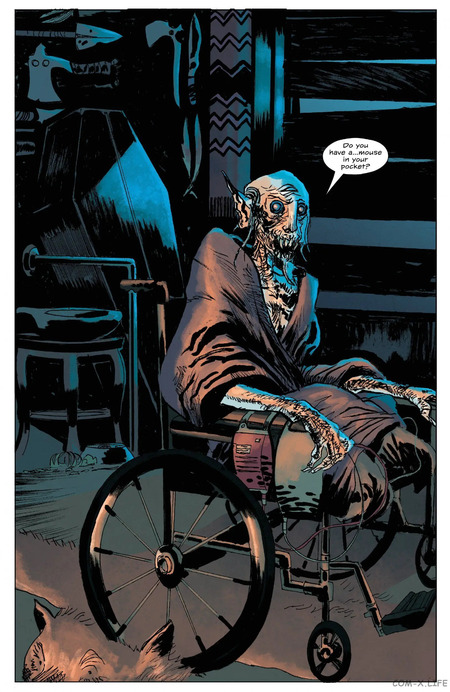
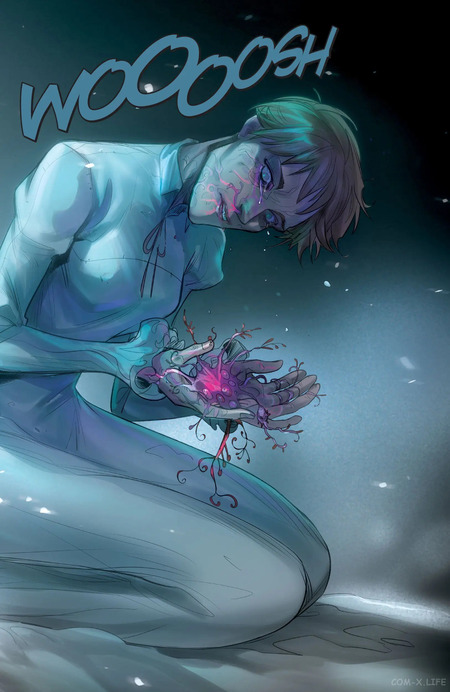
Excerpts from the comics «Redneck» by Donnie Kates, Lisandro Esterren, and Dee Canniff (2017) and «Mercy» by Mirka Andolfo (2020).
When writing this paper, I am incorporating supplementary sources—such as interviews with artists, materials detailing the creation history of the selected works, authorial commentary, and critical articles focusing on the American comic industry and vampire themes in popular culture. The original editions of the works under review will remain the primary visual material.
Vampire Hunter D: Message from Mars
Context and Characteristics of the Work
«Vampire Hunter D: Message from Mars» is a five-issue American series published by Stranger Comics in 2016. The action takes place on Mars across two different time periods. The story details the emergence of vampiric power on the planet following the nuclear catastrophe on Earth and chronicles the early stages of D’s journey as a vampire hunter.
Comic book excerpt from «Vampire Hunter D: Message from Mars» by Brandon Hinton and Michael Brussard, 2016.
The Appearance of Vampires
The comic blends the original story’s stylistic elements with adaptations tailored for a Western audience. In an interview, the creators explain that while they based D’s appearance on the original anime character, they aimed to make the character more fitting for the American comic format. As a result, the comic version of D has a broader physique and more pronounced masculine features. For developing his face, visual references were drawn from the young David Bowie and the actor Alain Delon [5]. Despite these changes, D retains the grace and aristocracy inherent to the classic vampire archetype. His body appears quite human-like, although it includes characteristic traits such as pointed ears, red eyes, and long vampire claws.
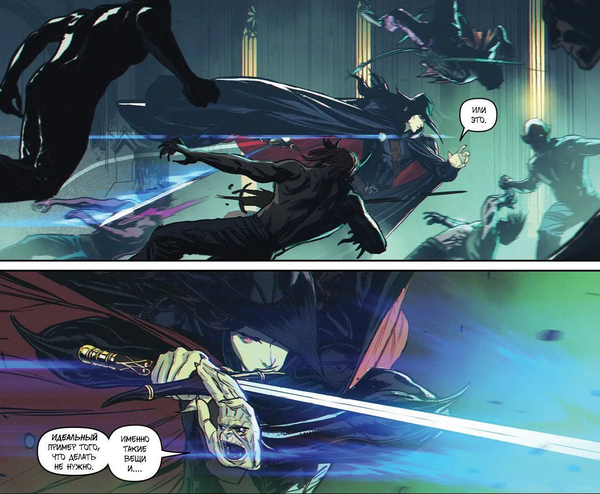
A panel from the comic «Vampire Hunter D: Message from Mars» by Brandon Weston and Michael Brussard, 2016.
However, in the comic, Dean is not a pureblood vampire. He is a half-breed, meaning a dhampir who possesses many visual vampire traits. In the comic, it is explained that Dean hunts true vampires and those like them.
Character Behavior and Plasticity
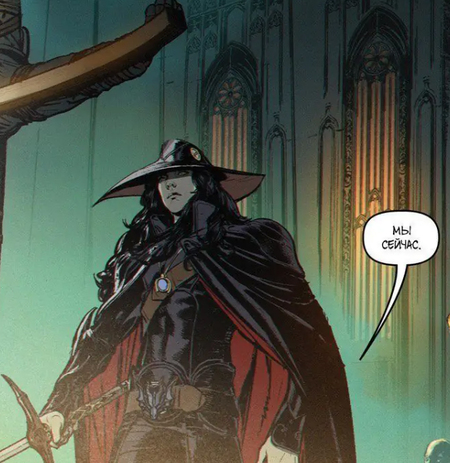
This piece utilizes many horizontal frames to convey impacts and motion. «Vampire Hunter D: Message from Mars» heavily employs techniques characteristic of superhero comics. D functions less as a traditional vampire designed to instill fear, and more as a lone hero confronting supernatural adversaries. His image closely resembles characters like Batman: a mysterious appearance, a face hidden beneath a hat, a long cloak, and a desire to be a protector or to stand against the «bad guys.» His vampire abilities are revealed through his physicality—D withstands heavy blows, moves with incredible speed, and uses a symbiote in his hand to absorb dark energy. Thus, the image of the classic vampire shifts, resembling a gothic superhero: he himself becomes the hunter, defending people from creatures like him.
A panel from the comic book «Vampire Hunter D: Message from Mars» by Brandon Weston and Michael Brussard, 2016.
A panel from the comic «Vampire Hunter D: Message from Mars» by Brandon Weston and Michael Brussard, 2016.
Composition and Page Layout
The composition and page layout of «Vampire Hunter D: Message from Mars» also show a clear influence from superhero comics and sci-fi. Fight scenes take up the majority of the narrative, emphasizing D’s vampiric powers. This visual narrative structure supports D’s image as a hunter-hero and aligns the comic with the superhero genre. Furthermore, D’s silent demeanor is reinforced by the minimal number of dialogue scenes.
A panel from the comic book «Vampire Hunter D: Message from Mars» by Brandon Hinton and Michael Brussard, 2016.
Color Palette and Chiaroscuro
Excerpt from the comic book «Vampire Hunter D: Message from Mars» by Brandon Weston and Michael Brussard, 2016.
The color palette combines warm and cool tones to create contrast between locations. The comic features many scenes set in space, which are predominantly orange because they depict Mars. Scenes involving gothic elements often utilize a colder, moodier palette. The contrast between light and shadow helps emphasize the drama, highlight the characters, and intensify the tension in fight sequences. The colors in the comic are largely vibrant; in this regard, «Vampire Hunter D: Message from Mars» can be compared to Marvel or DC comics. D himself stands out as a black silhouette accented by a red cape.
A panel from the comic book «Vampire Hunter D: Message from Mars» by Brandon Hinton and Michael Brussard, 2016.
Vampire: The Masquerade, Winter’s Teeth
Context and Characteristics of the Work
«Vampire: The Masquerade — Winter’s Teeth» is a ten-issue American series published by Vault Comics, released from 2020 to 2021. The comic is based on the eponymous tabletop role-playing game and is set in a universe where vampires secretly coexist among humans, adhering to the ancient law of the Masquerade, which forbids revealing their nature to mortals. The story follows Cecily Bane, an operative for the vampire organization Camarilla in the Minneapolis and St. Paul metro area. By taking under the guardianship of a young vampire, she becomes embroiled in a large-scale conspiracy that threatens the established order of vampire society [6].