
«Concave» (2024, directed by Edward Berger)
The film «Conclave, ” directed by Edward Berger, chronicles the election of a new Pope in the Vatican. The organization of this event is managed by Cardinal Lawrence, a man troubled by internal contradictions and turmoil regarding faith and his relationship with the Church as an institution. During the conclave, Lawrence becomes entangled in a web of intrigues and secrets that envelop the Catholic Church.The action of the film unfolds primarily inside the Vatican—within the spaces associated with religious authority and the procedure for electing the pontiff. The architecture, ceremonial vestments, color, light, and illumination shape an atmosphere of confinement and tension.
The film develops a unified visual language through its color palette, the architecture of enclosed spaces, religious symbolism, costumes, and shot composition. During this study, I examine and describe the visual techniques employed in the film, discerning the specific intent behind the choices made by the filmmaking team for each technique.
1. Color Palette
«Conclave» (2024, directed by Edward Berger)
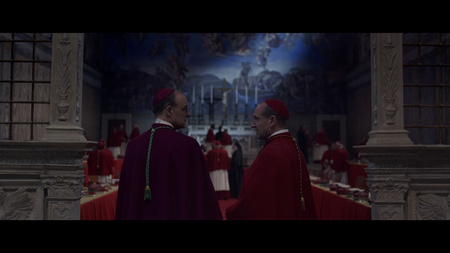
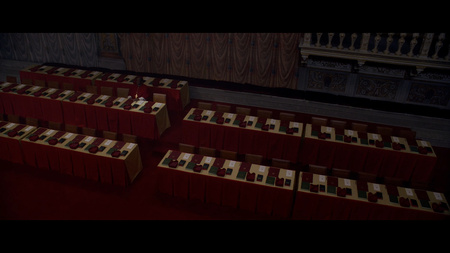
One of the most striking visual elements of «The Conclave» is the color organization of the space. Red plays a particularly significant role, primarily associated with the cardinals’ vestments. The red robes form a visually recognizable group of characters and emphasize their affiliation with the church hierarchy. Moreover, the color serves not only to denote status but also becomes a vital element of the frame’s composition.
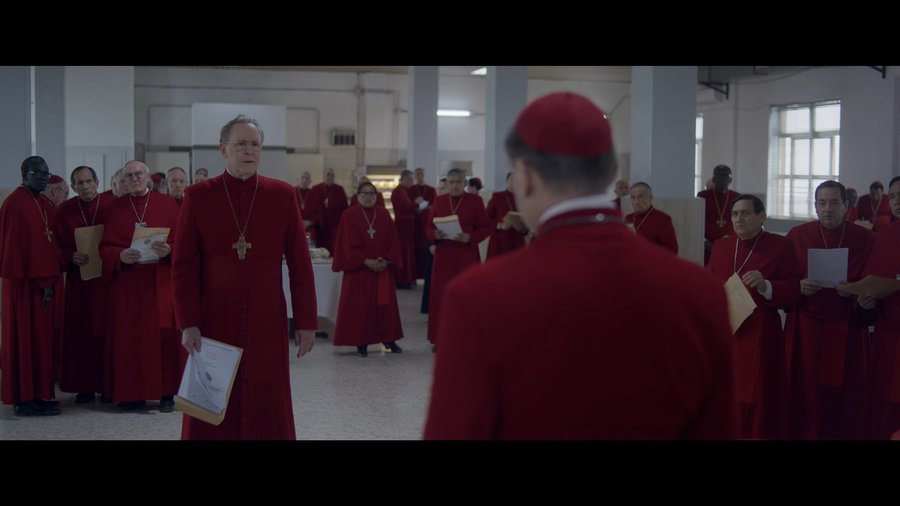
«The Conclave» (2024, directed by Edward Berger)
In Christian painting, blue and red were traditionally used to depict the Mother of God. Blue symbolized her purity and sanctity, while red—especially its darker shades—underscored Mary’s royal dignity and her unique place in the history of Christianity. Furthermore, the color red could represent martyrdom. [1]
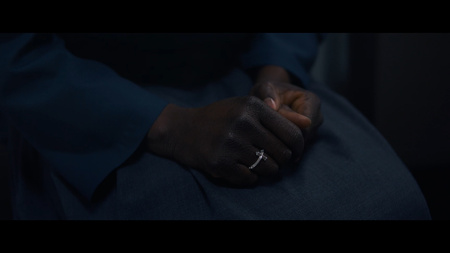
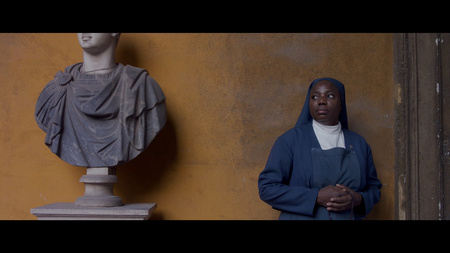
«Conclave» (2024, directed by Edward Berger)
Costume designer Lizzy Crystal paid close attention to the shade of red—she mentioned that the initial version of church red seemed too bright to her.Consequently, the team settled on a deeper, richer tone, drawing inspiration in part from the red fabrics depicted in Renaissance paintings. The costumes were custom-made for the film, and their color and texture were carefully tested to account for the specifics of cinematography. [2]

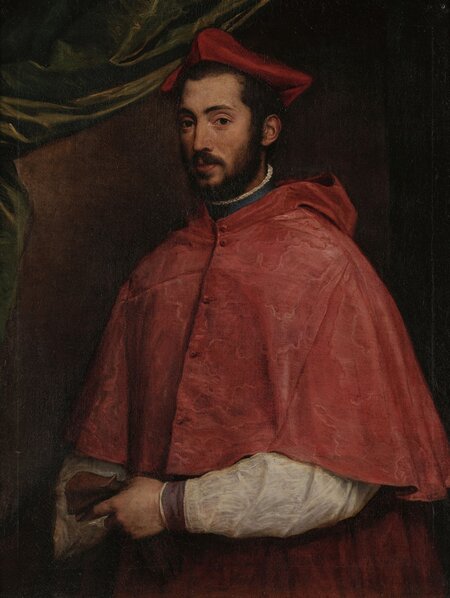
«Madonna and Child with Saint John and a Devotee» (1513, Titian) // «Portrait of Bishop Alessandro Farnese» (1545, Titian)
The contrast between red and cooler tones is especially noticeable when comparing the colors of the locations. Production designer Susie Davis noted that the team deliberately used the contrast between the warm reds and gold hues of the Sistine Chapel and the cooler, blueish tones of the cardinals' private quarters. This highlighted the difference between the solemnity of the church ritual and the everyday environment of the conclave participants. [3]
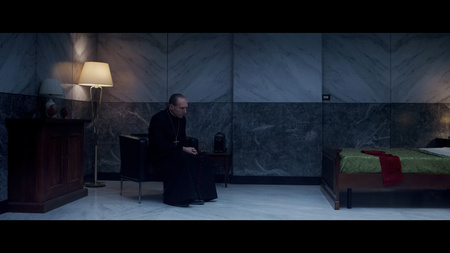
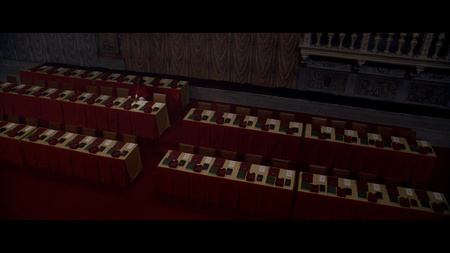
«Conclave» (2024, directed by Edward Berger)
2. Architecture
A confined space becomes the film’s most vital motif. The majority of the action takes place within Vatican quarters, where the cardinals are isolated from the outside world. In this context, the architecture does not merely define the setting; it directly influences the perception of the events unfolding.
Production designer Suzy Davis directly stated that Casa Santa Martha was envisioned as a kind of «luxurious prison.» To create this impression, the design utilized long, narrow corridors, dark corners, enclosed windows, and austere geometric forms. According to Davis, the space was intended to convey the feeling of a hermetically sealed environment from which it was impossible to easily escape or become distracted from what was happening. [3]
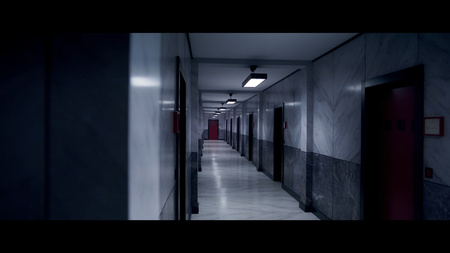
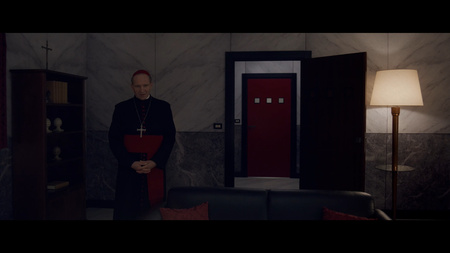
«Conclave» (2024, dir. Edward Berger)
2.1. Doors
The word «conclave, ” derived from Latin, translates to „a locked room.“ The locations emphasize this sense of confinement and spatial limitation by placing the film’s characters within „frames“ created by door openings.The vertical lines of the doorframes symbolize both the external pressure on the characters during scenes of conflict and the internal feeling of being cornered and isolated.
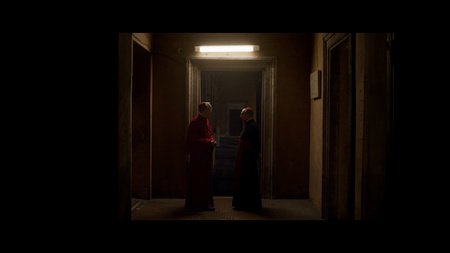
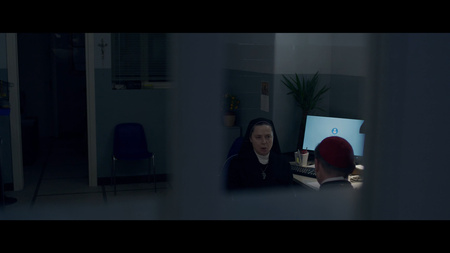
«Conclave» (2024, dir. Edward Berger)
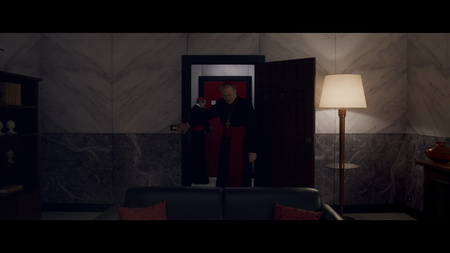
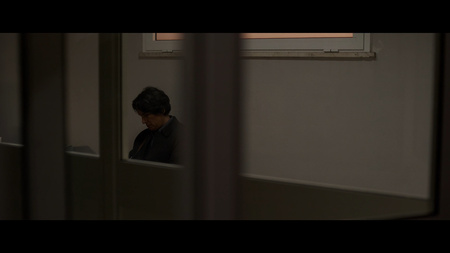
«Conclave» (2024, dir. Edward Berger)
2.2. Windows
Windows, conversely, symbolize escape, relief, and the resolution of a complex situation—and at the beginning of the film, all «solutions» are concealed by curtains and blinds.
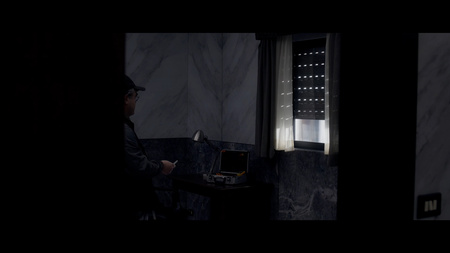
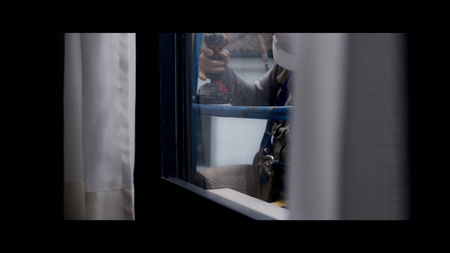
«Conclave» (2024, dir. Edward Berger)
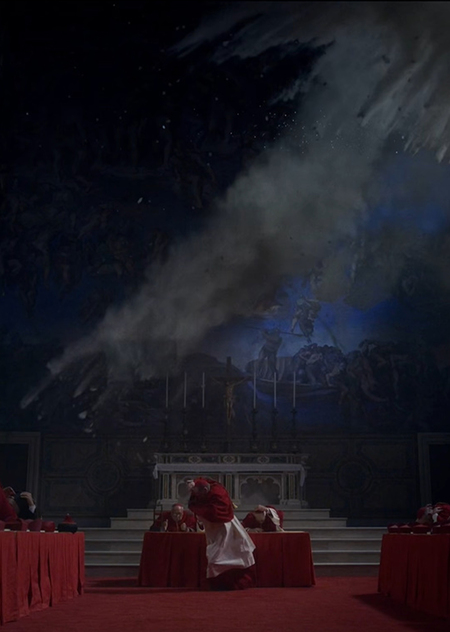
The window, shattered by an explosion at the moment Lawrence decides to vote for himself, gives him the clarity and understanding that such an action is wrong—and by later viewing the same window, he seems to fuel his resolve for a new course of action.
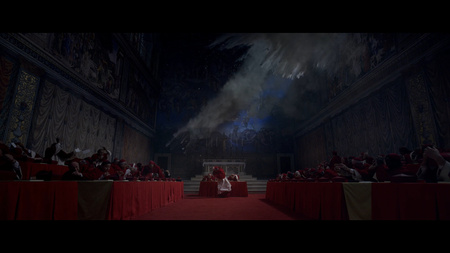
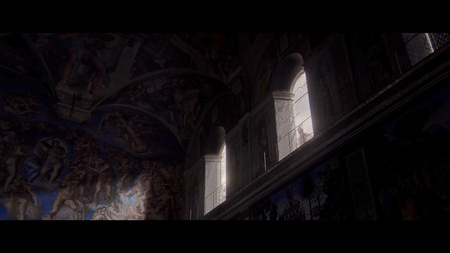
«Conclave» (2024, dir. Edward Berger)
In the film’s finale, the windows open—all decisions have been made, clarity is absolute, everything ends well, and nothing further troubles Lawrence.
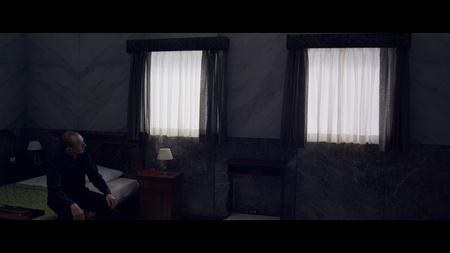
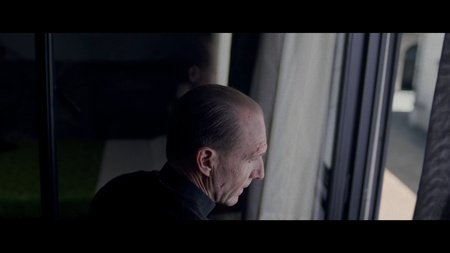
«Conclave» (2024, directed by Edward Berger)
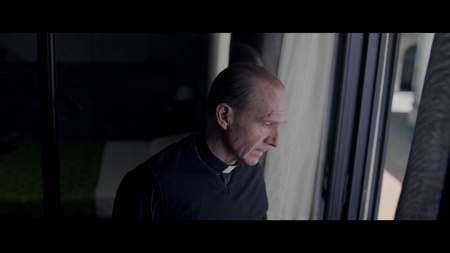
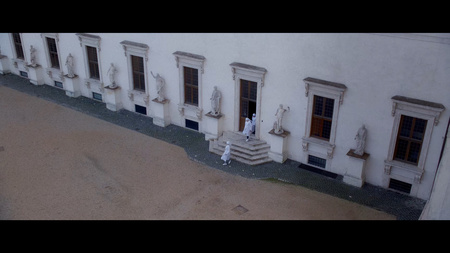
«Conclave» (2024, dir. Edward Berger)
3. Religious Symbolism