Introductory Montages in Zack Snyder Films
Navigation
- Concept
- Visual Narrative: — Time compression — Cause and effect — Protagonist and environment — Emotional highlights
- Conclusion
Concept
Research Topic — The Narrative Role of Opening Montages in Zac Snyder’s Films. The first few minutes of a film dictate how the viewer enters the main story and how they will perceive the characters. In Snyder’s work, the introduction to the world often occurs through a sequence of images that connect events from different years, highlight specific details, and set the emotional tone of the action.
The selection of the theme is tied to an interest in the director’s creative approach and how an image conveys a vast amount of information in a brief moment. In Snyder’s openings, a single gesture, object, or the character’s positioning within the frame can elucidate relationships between characters, indicate a loss endured, or depict shifts of an entire era. Crucially, the viewer must piece together the connections between the presented events themselves. This raises the question: how does the opening montage structure the backstory and guide the understanding of the subsequent narrative?
For this analysis, we selected «300 Spartans» (2007), «Guardians» (2009), «The Forbidden Procedure» (2011), and «Batman v Superman: Dawn of Justice» (2016). They share the feature of introductory sequences where the past is revealed through the montage of separate episodes. In «300 Spartans, ” this is the maturation of Leonidas; in the credits of „Guardians, ” it is the history of several generations of heroes; in „The Forbidden Procedure, ” it is the tragedy preceding the heroine’s commitment to a sanatorium; and in „Batman v Superman, ” it is Bruce’s memory of losing his parents, connected to a dream.
The research hypothesis is that Snyder’s opening montage develops into a relatively autonomous narrative that dictates the manner in which the main story is interpreted. Through the selection of events, their sequence, and the repetition of images, the director connects the past with the characters’ future actions. Furthermore, one opening might explain the structure of the world, while another might convey personal trauma or the character’s formation.
The study will revolve around cinematic techniques found across various films: time compression, editing transitions, recurring motifs, and connecting events with the character’s subjective perception. By mapping out sequences of shots, we can trace how the meaning of an image shifts depending on its surroundings. Slow motion, composition, music, and voiceover will be analyzed in relation to the specific information they emphasize.
The core of the work will be an analysis of films. Interviews with the director and materials about the creation of the prologues will help clarify the context of the chosen decisions and align the author’s explanations with how those decisions function within the narrative.
Visuals
Time Compression
Introductions connect events separated by years, offering a glimpse into the past before the main action begins. Time is organized in various ways: a character’s maturation can be shown through changes in age, the world’s history through recognizable occurrences, and a memory through a return to one painful moment.
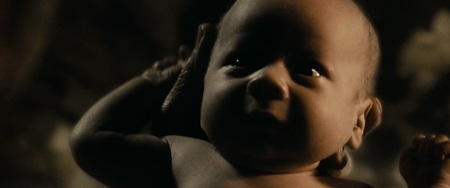
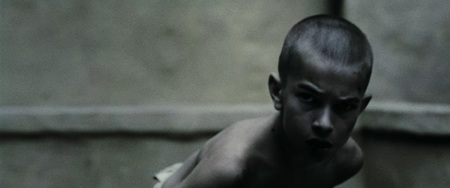
«300 Spartans,» Zack Snyder, 2007
In «300 Spartans,» the infant and the boy appear as different stages of the same hero. The years between these images are left unspoken. The central theme of the body’s ordeal remains: first, the adult assesses the child, and then he learns to endure pain and resist. The montage selects the stages of maturation that explain Leonidas’s future role.

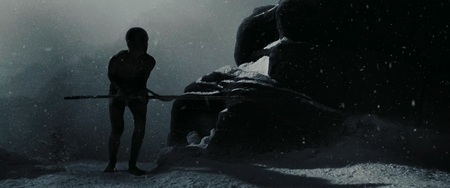
«300 Spartans, ” Zack Snyder, 2007
Separation from the mother and the solo ordeal in the snow belong to different stages of the curriculum. The protagonist’s everyday life does not need to be shown between these events; development is shaped by several threshold moments. The voiceover narration links these episodes, while the imagery illustrates how the character’s age, surroundings, and degree of independence change.
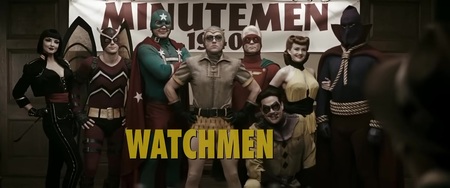
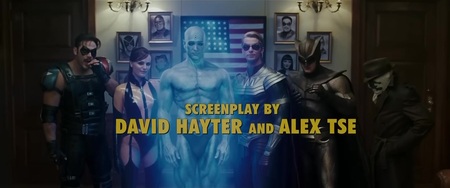
«Guardians, ” Zach Snyder, 2009
In «Keepers,» the transition between generations becomes apparent through two group compositions. While the posing in front of the camera remains consistent, the team’s composition, costumes, and setting shift. The similar framing allows the viewer to compare the characters as participants in one continuous narrative. The audience reads the passage of time through the changes within a familiar form.

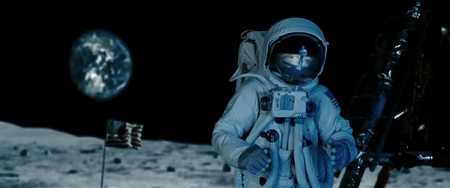
«Keepers, ” Zak Snyder, 2009
A newspaper headline about Japan’s surrender and the Moon landing denotes historical milestones. The introduction uses recognizable events as temporal anchors while simultaneously transforming the familiar picture of the past: in the lunar exploration, Doctor Manhattan is involved. Thus, the viewer gains insight into both the time period and the difference between this world and their own.
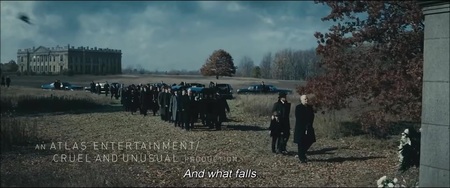
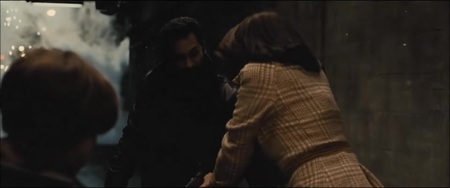
«Batman v Superman: Dawn of Justice,» Zack Snyder, 2016
The film begins by introducing Bruce’s past through a funeral, then traces back to the events that led to it. The presentation order deviates from chronology—consequence appears before cause. Consequently, the murder scene is experienced with the feeling of a known outcome. The editing frames the material as a reckoning with loss, rather than a placid biographical recounting.
Causal relationships
To grasp the entrance sequence, the viewer must connect the individual images. Sometimes this connection is established by the order of events; other times, it is dictated by a detail specifically highlighted for attention. This is particularly noticeable in «Forbidden Treatment, ” where the family conflict is revealed through objects, gestures, and reactions, without extended explanations of the happenings in the dialogue.


«Forbidden Technique, ” Zach Snyder, 2011
The inheritance is initially shown as an object, and then the camera zooms in on a specific passage of the document—the mention of two daughters. The viewer transitions from the overall view of the paper to the content that is significant to the narrative. This shift in scale allows the mother’s death to be connected to the question of inheritance. The object detail becomes part of the conflict’s explanation.
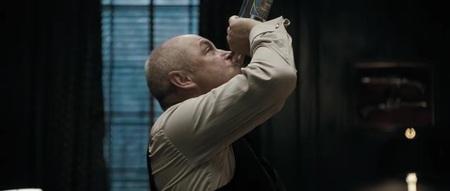
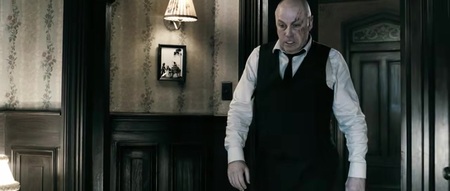
«Forbidden Technique, ” Zack Snyder, 2011
Following the will, the stepfather’s actions and his intrusion into the daughters’ space are shown. Placing these episodes adjacent allows the viewer to connect his behavior with the new family situation. Furthermore, this motive is not explicitly explained in a separate explanatory scene; the viewer must forge the connection between the document, the adult’s reaction, and the subsequent violence.
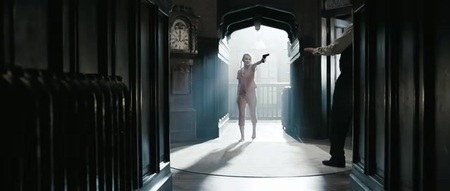
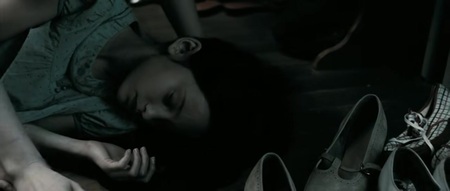
«Forbidden Technique, ” Zak Snyder, 2011