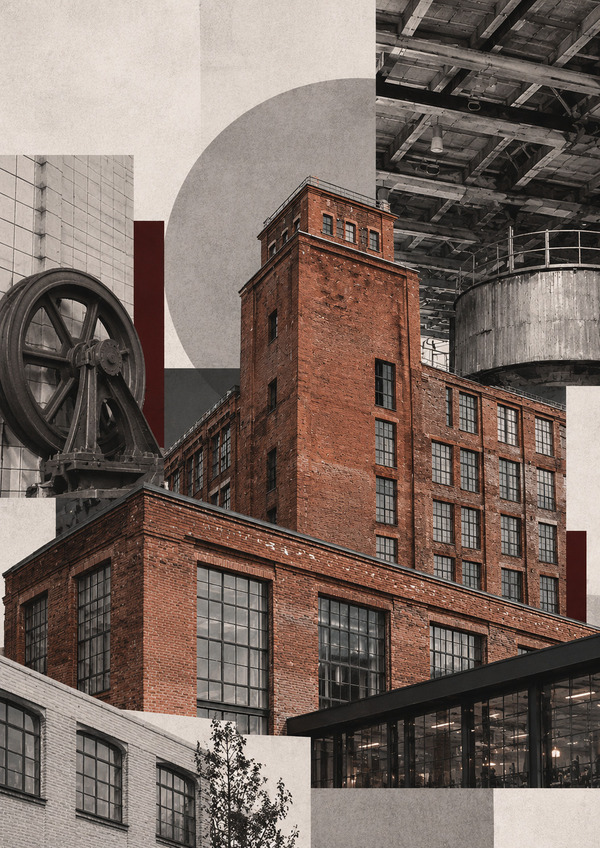
Abandoned buildings and industrial areas are frequently losing their original function and gaining new life, transforming into art spaces and cultural centers. This research examines how their visual appearance changes and how historical identity is preserved during reconstruction.
The urban environment is in constant flux. Buildings that once played a vital role in its development can, over time, become underutilized. However, even when an original function becomes irrelevant, it doesn’t necessarily mean the object’s value disappears. On the contrary, old industrial buildings—factories and plants—are increasingly being repurposed into new urban spaces. Their architecture, history, and distinct industrial character take on new significance, and their past becomes a source for creating contemporary urban environments.
The reimagining of these objects' functions is closely tied to the relationship with historical heritage. In reconstruction, architects seek a balance between preserving the building’s original appearance and adapting the space to modern needs. In some projects, the designers strive to maximally preserve the historical architecture, leaving old structures, brickwork, and other vestiges of previous use exposed. In other projects, they make more radical changes—in those cases, only isolated details or the exterior shell of the original building remains.
Meanwhile, industrial aesthetics in and of themselves become a part of modern visual culture. What was once perceived as a sign of decay and dereliction can now be utilized as a design device.
It is particularly interesting to see how such transformations influence the perception of a place. A derelict area, once associated with decay, can transform into a popular destination, gaining new cultural and social significance. Along with the change in function, the audience changes as well; these kinds of spaces primarily become popular with young people.Rethinking abandoned spaces prompts us to consider what elements are essential to preserve when revitalizing the urban environment—the architectural façade, the traces of the past, the original function, or the memory of the site itself.
Here is the categorization principle I have established:
01. Abandoned industrial buildings and their visual characteristics 02. Transforming derelict sites into contemporary spaces 03. Preserving historical character during renovation
The main objective of the research is to find the boundary between preserving a place’s historical identity and creating a new visual image where the past becomes integrated into modern urban life.
01. Abandoned industrial buildings and their visual characteristics
Factories, mills, power plants, and warehouses were crucial elements in the development of cities. They provided jobs, shaped the economies of districts, and influenced urban infrastructure. Back then, industrial buildings were vital components of the urban landscape, and now they are part of the city’s history and recognizable character.
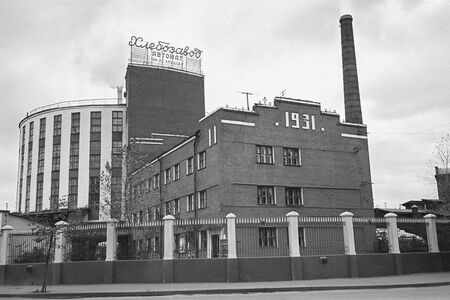
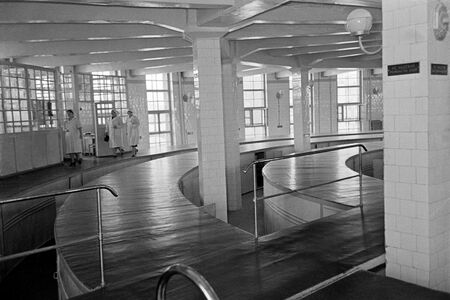
1. Automated Bakery No. 5 on Khodynskaya Street. Photo by S. Solarev, 1957. 2. Circular conveyor belt in the dough preparation shop of Automated Bakery No. 5 on Khodynskaya Street. Photo by B. Kolesnikov.
Because factories required a large workforce, housing, public buildings, shops, and hospitals were built near them. This created industrial districts where life was closely tied to the activity of the enterprises.The factory became the center of local life. People worked at the plant and lived nearby, spending their free time in factory clubs and parks. People worked together and formed social connections. Thus, industry influenced not only the city’s economy but also its planning, social structure, and the daily lives of its residents.
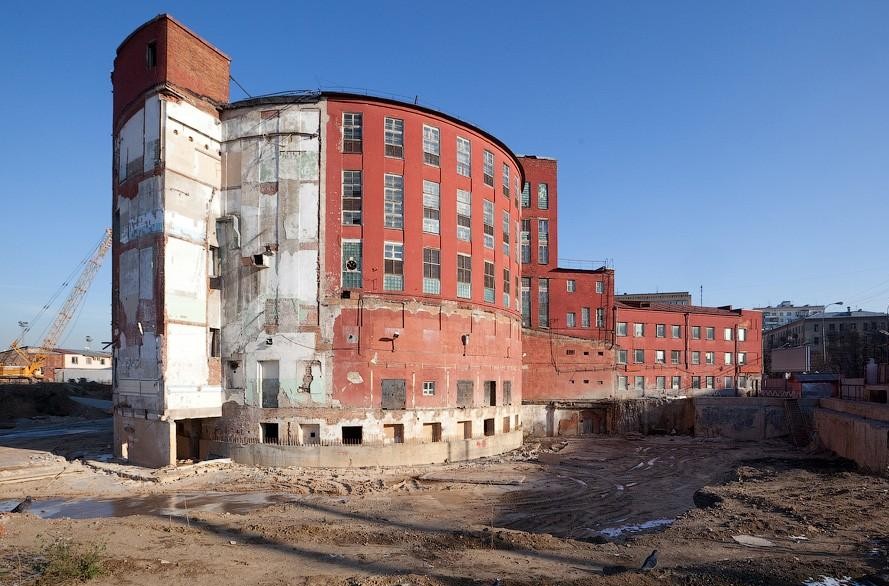
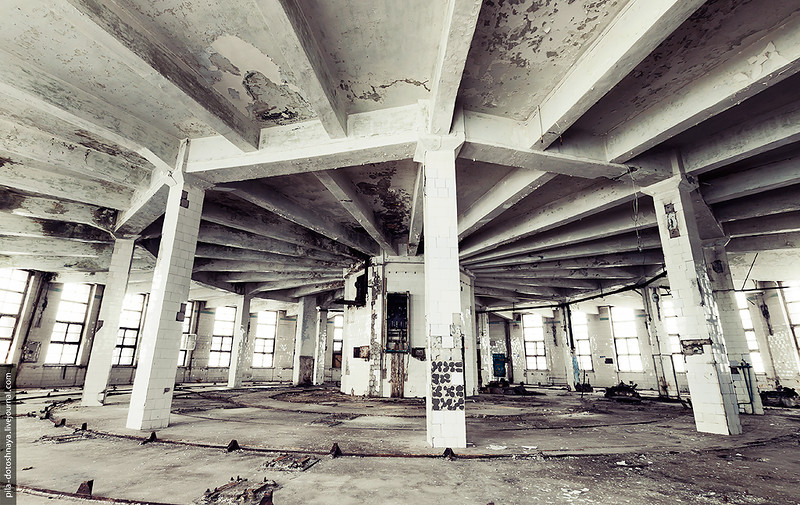
As technology advances, many enterprises have ceased to meet new production requirements. Some factories closed, while others relocated production outside the city. Some buildings became obsolete following shifts in the economic climate. Premises emptied, equipment was removed, and territories ceased to be maintained. Thus, once vital enterprises turned into abandoned spaces, even though their buildings and infrastructure remained standing.