Research Concept
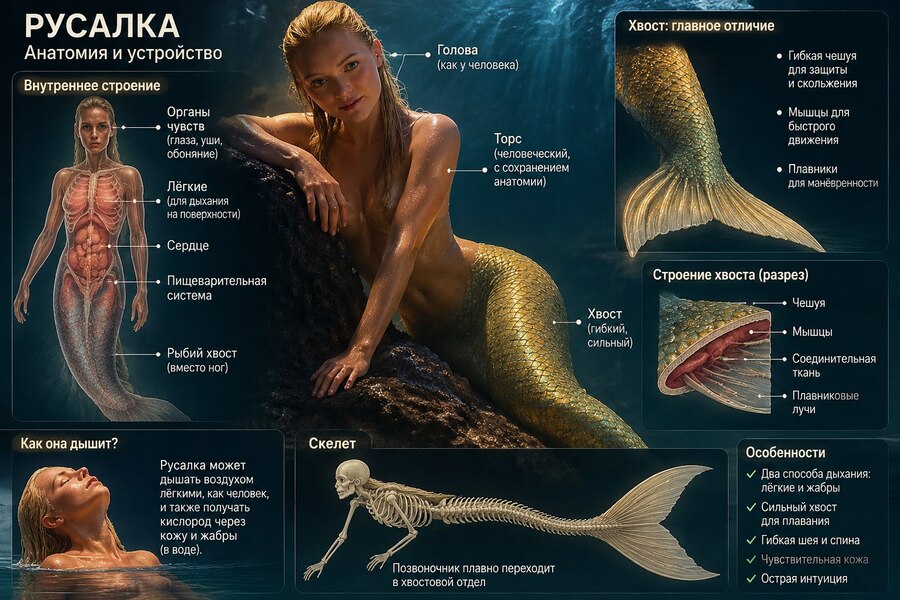
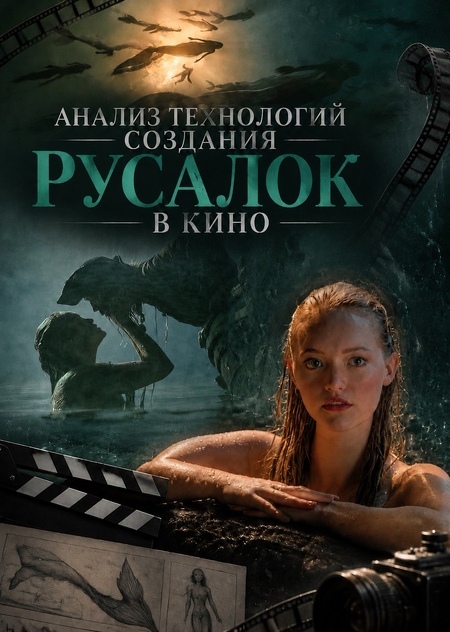
The choice of subject is driven by the fact that the mermaid is a rare VFX subject, existing for two decades at the intersection of practical effects and digital graphics. Unlike creatures entirely dependent on CGI (dragons, aliens), the mermaid requires retaining the human plasticity of the upper body while simultaneously featuring a believable, aquatic extension interacting with water. This liminal status allows for a study of shifting technological paradigms within a single object—from a handcrafted tail worn by an actress to a complete digital replacement of the body below the collarbones.
The material was based on six projects created between 2005 and 2023: the television series «H2O: Just Add Water» (2006), the films «Aquamarine» (2006), «Harry Potter and the Goblet of Fire» (2005), «Pirates of the Caribbean: On Stranger Tides» (2011), the series «The Siren» (2018), and «The Little Mermaid» (2023).
Projects are grouped by dominant technological approach, not by chronology—this allows us to see how fundamentally different solutions coexisted within a single time frame.
The core research question is: at what point and for what reasons is the digital replacement of the body displacing the physical substrate, and does this replacement signify a complete abandonment of physical technologies?
The hypothesis suggests that the shift to CGI in mermaid imagery is driven not only by advancements in computational power but also by a specific problem—the inability of practical methods to replicate continuous body deformation during swimming.
However, a complete replacement does not occur: digital pipelines retain a dependence on physical elements (motion references, hydrodynamic shoots, hybrid costumes with markers), making the history of the mermaid in VFX a story not of displacement, but of functional redistribution between the physical and digital.
The selection is dictated not by the popularity of the images, but by the availability of documented production data: supervisor interviews, studio breakdowns (ILM, Framestore, Pixomondo, Animal Logic), and industry publications (Animation World Network, Post Magazine, Befores & Afters).
Section 1. The Practical Tail as an Engineering Construct: «H2O» (2006) and «Aquamarine» (2006)
In the mid-2000s, creating a mermaid on screen was a practical effects challenge. The TV series «H2O: Just Add Water» utilized three types of tails: a close-fitting tail for swimming, a «soft» tail for static shots, and a rigid tail for stunts.
H2O: «Just Add Water» (2006): A Practical Trajectory as an Engineering Object
Promo still from the Australian television series «H2O: Just Add Water» (2006–2010) — [1]
The JMB FX Studio fabricated five tails: one custom tail for each of the three main actresses, one for the doubles, and one flexible tail for static scenes (such as when the tail hangs out of a bathtub). Manufacturing each set took about six months and began with a plaster cast of the actress’s body, from which the silicone base was molded; the scales were applied by hand. The finished product weighed 12–15 kg, reaching 40 kg when submerged in water. Inside the tail were leg straps and a zipper, which was concealed by additional scales and a material roll.
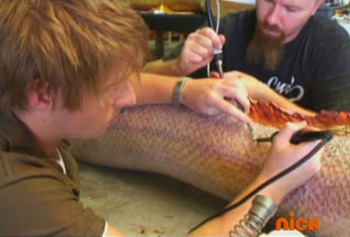
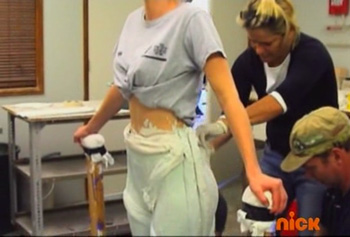
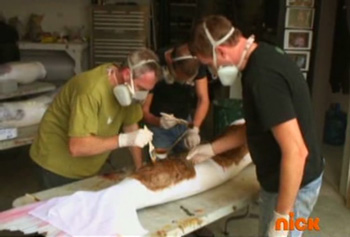
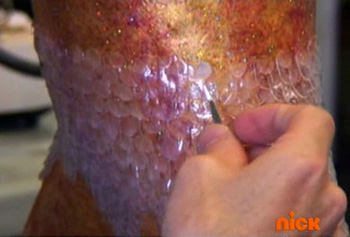
Australian Television Information Archive — [2]
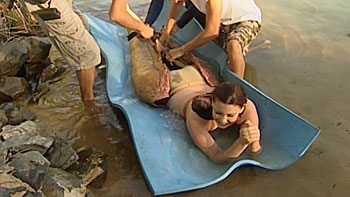
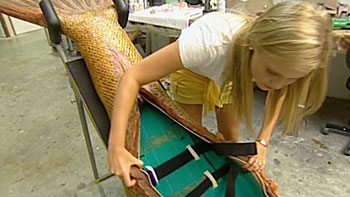
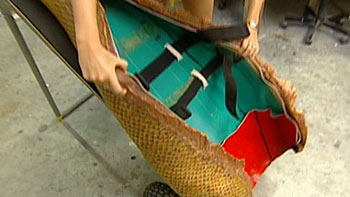
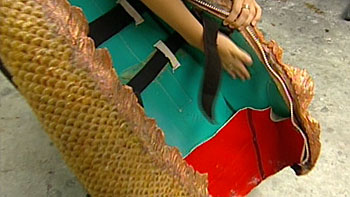
Australian Television Information Archive — [2]
The key engineering element was the foot pedal, integrated into the fin, which allowed the actress to control the position of the tail fin while swimming. The series utilized three types of tails: a tightly fitted tail for swimming, a «soft» tail for static shots, and a «rigid» tail for stunts. This functional division within a single practical approach already anticipates the logic of hybrid pipelines: different types of motion required different physical constructions.
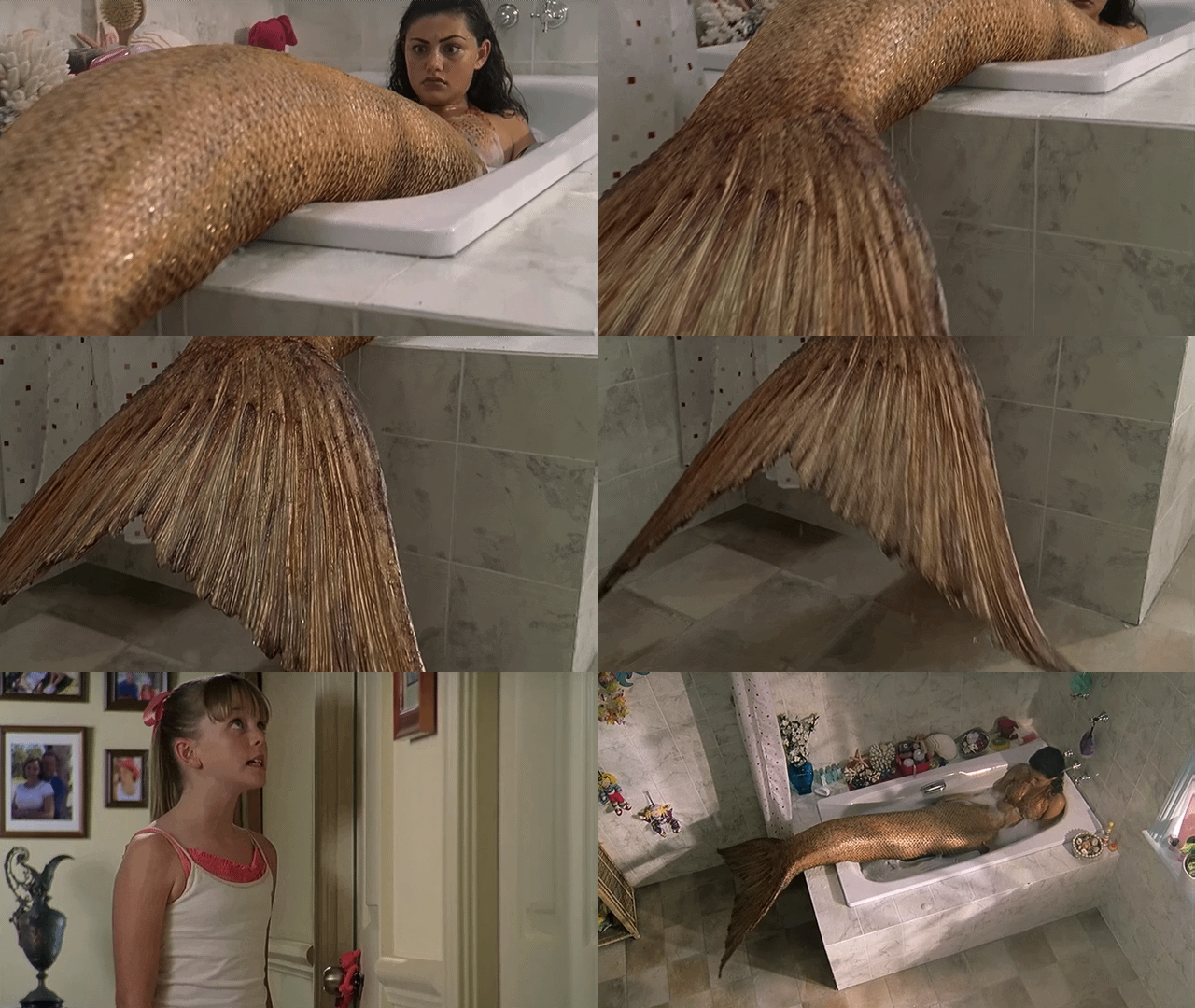
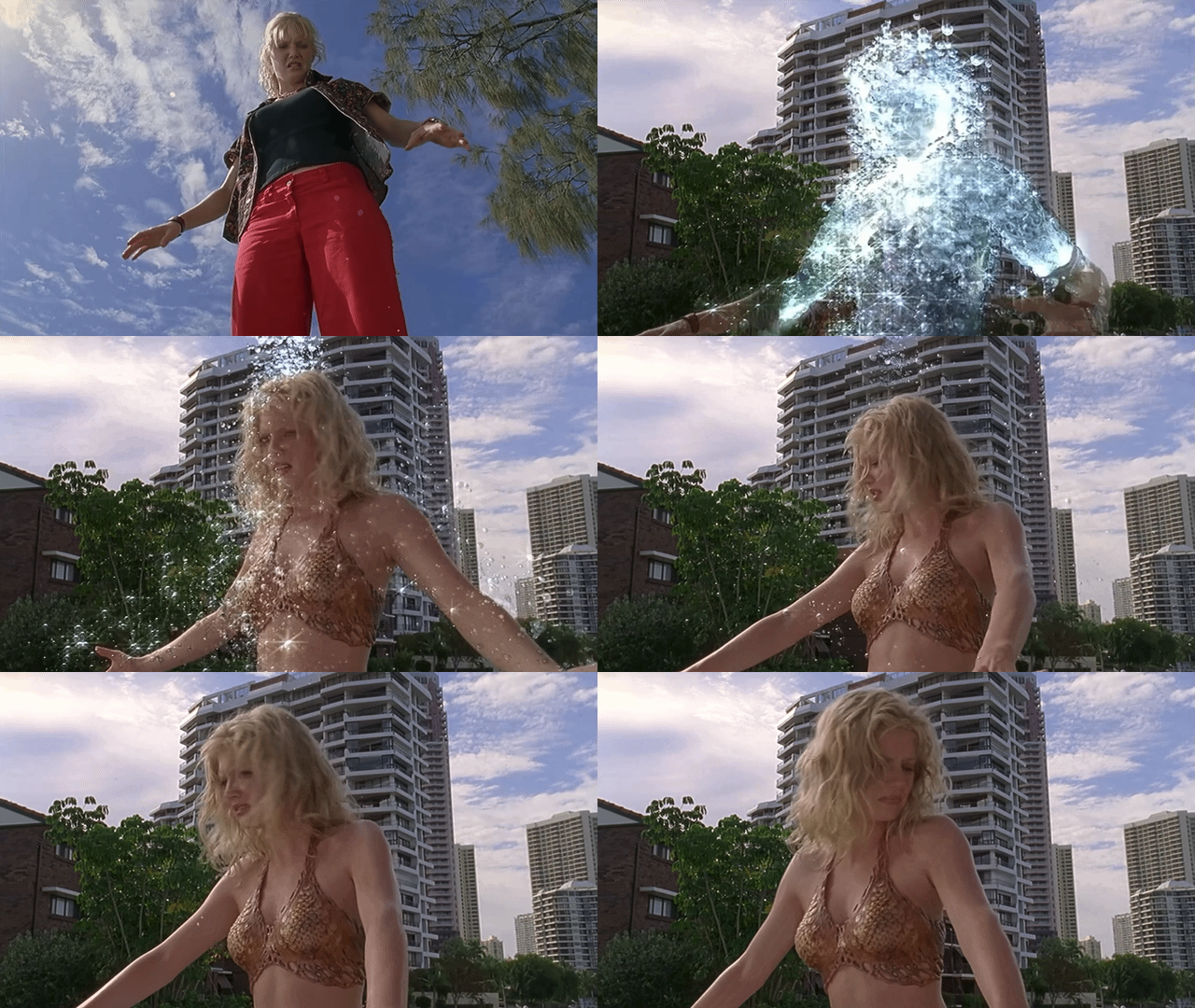
Stills from the film «H2O: Just Add Water» (2006)
Transformation and Abilities: The heroines' unique powers (freezing water, shaping it, heating it) were entirely digital. The scene where Emma turns a column of water into ice could not have been shot practically—the ice would have been so heavy that it would have tipped over the glass—so the «ice pillar» was created using CGI. Even in the project with a dominant practical component, the «magic» was realized exclusively in post-production.
Staff from the set of the television series «H2O: Just Add Water.» Behind-the-scenes footage from Befores & Afters (2006).
«Aquamarine» (2006): Hybrid pipeline and rotisserie rig
Promo still from the film «Aquamarine» (USA, Australia, 2006 — [3]
The tails for «Aquamarine» were also crafted by JMB FX, under the direction of Effects Designer Jason Baird. The VFX Supervisor for Animal Logic was Morgane Furio. Four tails were fabricated—made of silicone and foam material, each covered in over 5,000 scales, weighing more than 40 kg (some reports state about 45 kg), and nearly 2.5 meters long. One of the tails was cable-operated and designed for subtle fin movements that the actress could not replicate.
A special rotating platform (rotisserie rig) was constructed for the somersault scene, allowing the actress and the animatronic tail to rotate 360 degrees. Furio explicitly states that «a fully CG shot was not an option»: the water was filmed almost entirely—using a black tail dummy and a sandbag for splashes—and then supplemented with digital elements in Shake compositing. It is notable that for the transformation scene (when Aquamarine’s legs turn into a tail), filming took place in a green screen tank, after which the lower body was digitally replaced. Thus, even the «magical» transformation was built on a hybrid scheme, rather than being pure graphics.
Australia-based VFX company Animal Logic collaborated with a creature effects designer to give Aquamarine a 21st-century update on the lovely fish-out-of-water story. All images © 2006 Twentieth Century Fox. All rights reserved.- [4]
Section 2. The First Step Toward the Number: Mermaids in «Harry Potter and the Goblet of Fire» (2005)
If digital technologies played a supporting role in «H2O» and «Aquamarine» (such as removing props or adding splashes), then in the second assignment scene of «The Crucible,» the mermaids were entirely computer-generated characters placed within a real underwater environment. Actor filming took place in a blue screen tank, and for the second assignment episode, the largest indoor pool in Europe at that time was constructed at Leavesden Studios: dimensions were 18×18 meters, with a depth of 6 meters. However, the majority of the episode (more than six minutes of screen time), specifically the mermaids, the Grindylows, and a significant portion of the underwater scenery, was created by Framestore CFC as computer graphics or a combination with live-action footage.
Visual Effects Supervisor Tim Webber emphasized: «We started from a blank slate, not using anything created by other studios. I don’t think anyone had created an underwater world 100% composed of computer graphics before us.» Computer Graphics Supervisor David Lomax added: «Every object you see on the screen, as well as the water with its optical distortions and floating particles, was created on the computer.»
According to Tim Webber, even for Harry Potter, a digital model was used in long takes because the limitations on breath-holding prevented filming the entire scene with the actor.
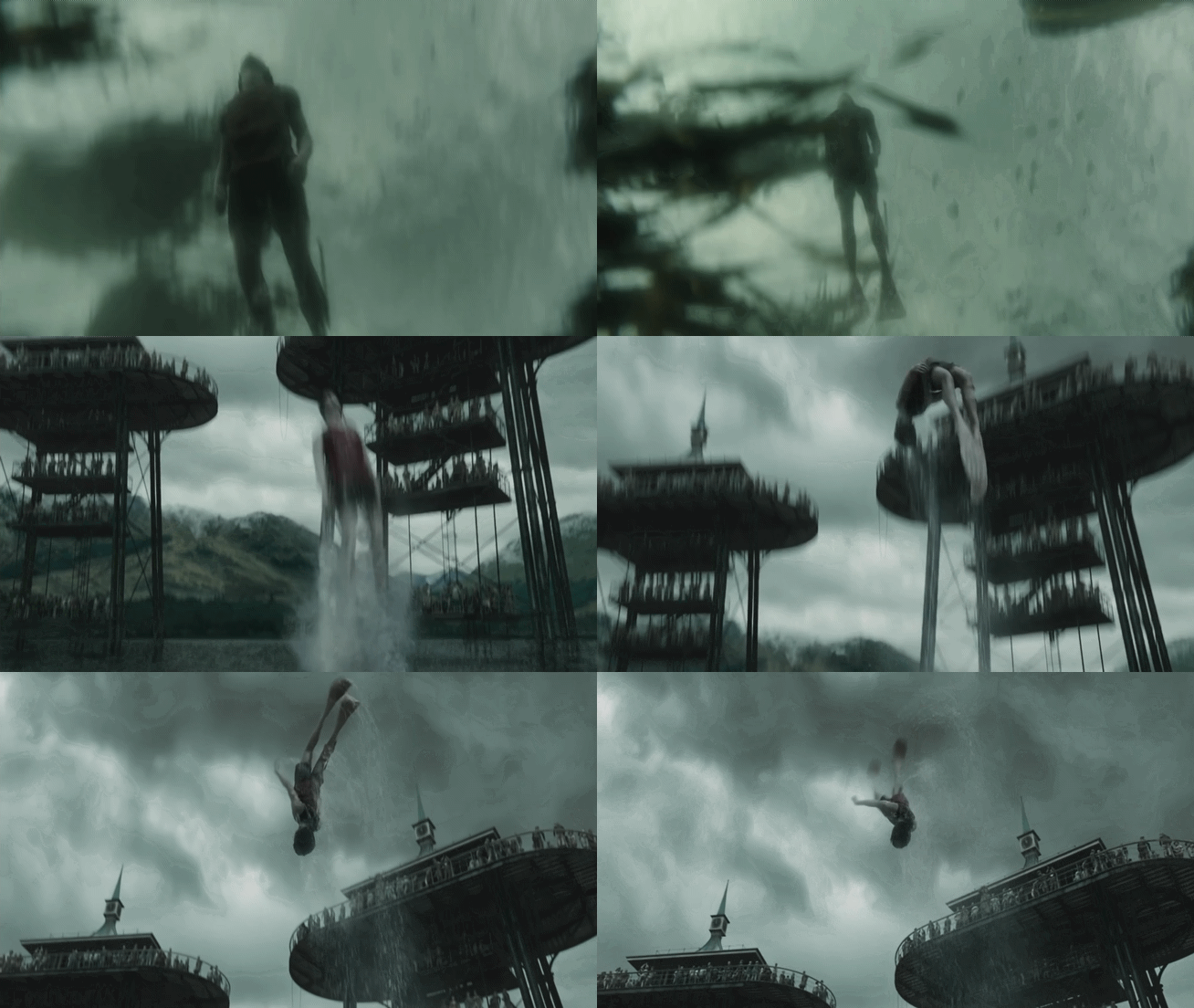
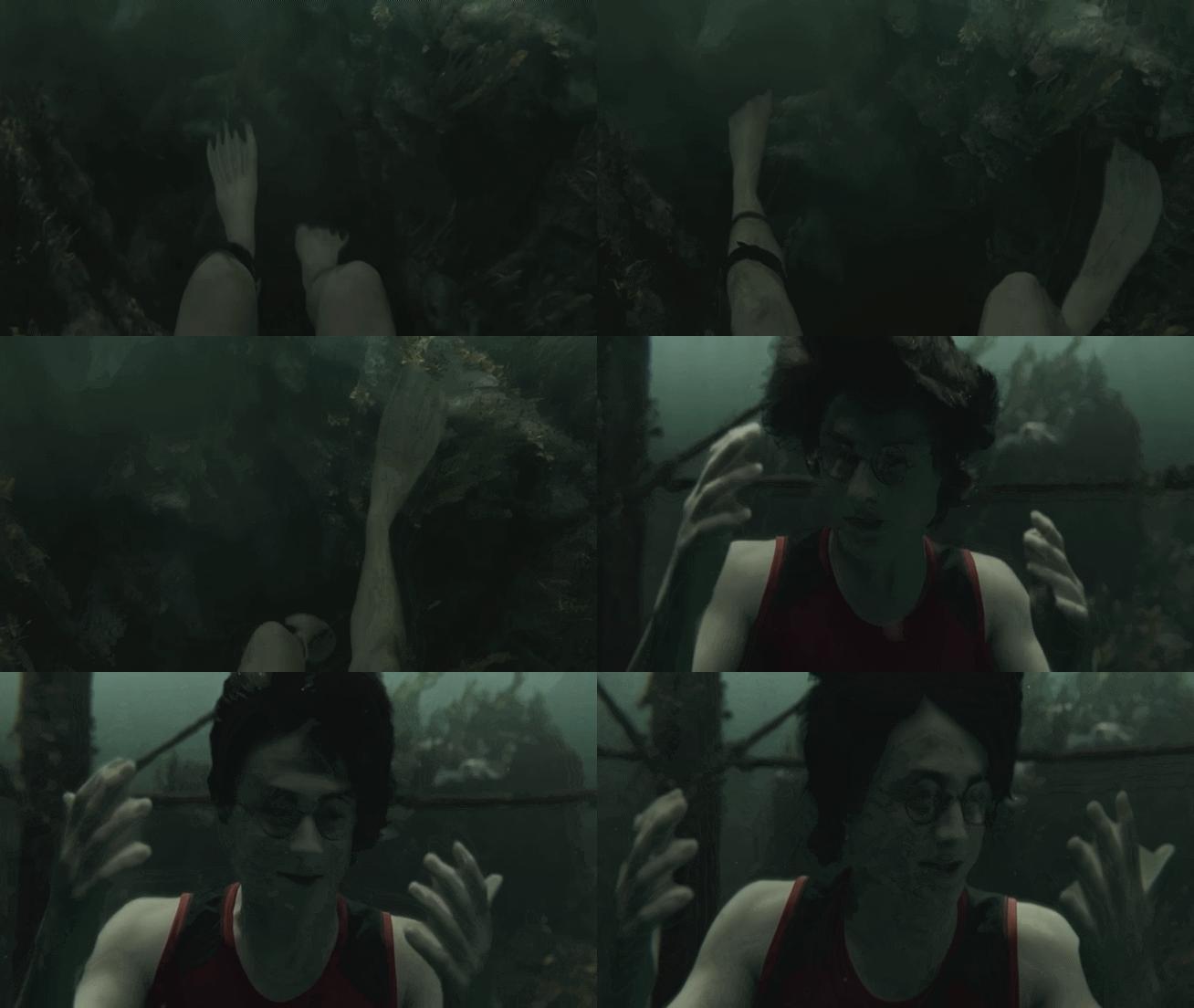
A frame from the film «Harry Potter and the Goblet of Fire» (2025)