A leader doesn’t give orders. They explain what is happening—and that is the entirety of their power.
History
«My neighbor having four arms was always the norm. That’s what the coalition decided. That’s what I decided.»
In «Afterparty, ” there is one main character—a leader who was elected because there was no one left to elect. He knows the truth about who the „survivors“ are. He knows the generator is dying. And he is the only one who has to decide whether to speak about it or not.
The other members of the coalition live in an illusion. They chose not to know themselves, because it is easier to get through their days that way. The leader gave them that option. And now he cannot take it back.
This story is about what happens when a person who carries the truth alone begins to doubt: what if the illusion is actually the truth? And what happens to power when it is built solely on a lie that you begin to believe yourself.
Leader
Какой выбор совершает главный герой?
Every day presents the same choice in a new guise: maintain the illusion or allow the truth to surface. To align with those at the bottom, beginning to suspect things, or to prop up the structure at the cost of increasingly pervasive lies. His choice is always between two forms of betrayal.
Why might they be making this choice?
The Leader has a resource that others lack: they can see the generator counter. Only they see the generator counter. This is both power and a curse—information that cannot be shared without destroying everything. They also have bodies at their disposal. Limbs can be acquired and appropriated. The more modifications, the greater the physical capabilities. But the fewer people are willing to help.
Maintaining Connections
To remain «ordinary» is to maintain trust. But without the resources of a body, control becomes physically more difficult.
It is important to remember that the longer the protagonist maintains the illusion, the more they begin to believe it themselves. This is not a metaphor: the game’s interface changes. Anomalies stop rendering as anomalies. The hero loses access to the truth they once protected.
You are not the only one who knows.
Among the coalition is someone who knew the truth from the very beginning—before the leader, before anyone else. Not the zombie who started to suspect, but the one who never believed. They don’t step into the light. Sometimes they rearrange facts that the leader has already explained. Sometimes they leave a question where it shouldn’t be—a note, a scratch on the wall, a misplaced digit on the generator’s panel. They aren’t trying to save the coalition with the truth. They simply want the leader to feel, just once, what it’s like not to control the narrative. The leader doesn’t know who this person is. All they know is that someone is constantly disrupting things.
«The generator dies at the same rate. The coalition believes only as much as it is allowed to. In this world, only one thing changes—the one who knows the truth. And the main question isn’t whether the illusion will survive. It’s whether he himself will survive—knowing what he knows.»
Essential
The player sees the generator’s counter. The coalition does not. The player sees anomalies in the neighbor’s body. The leader does not. The gap between what the player knows and what the character allows themself to know—that is the game’s mechanic, and it is what must be understood to comprehend it.
The Believers
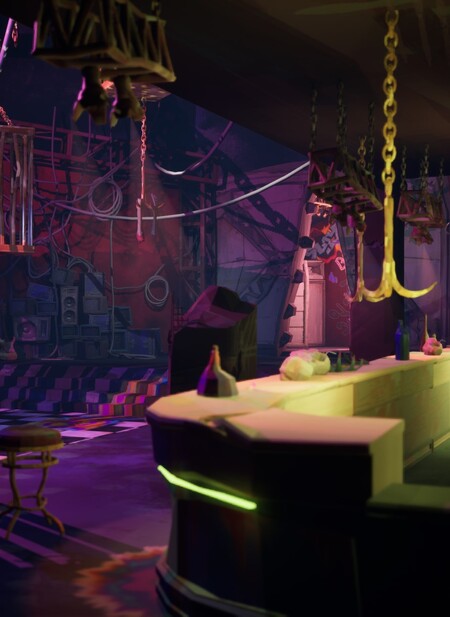
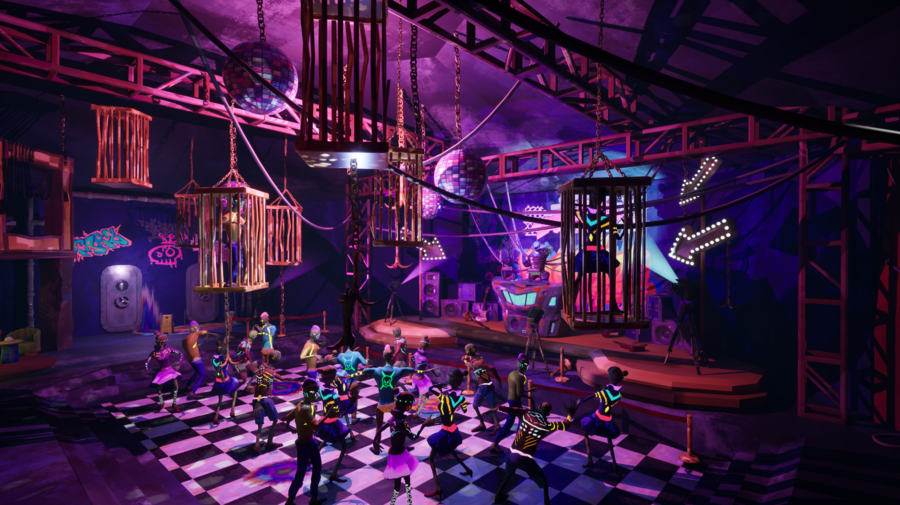
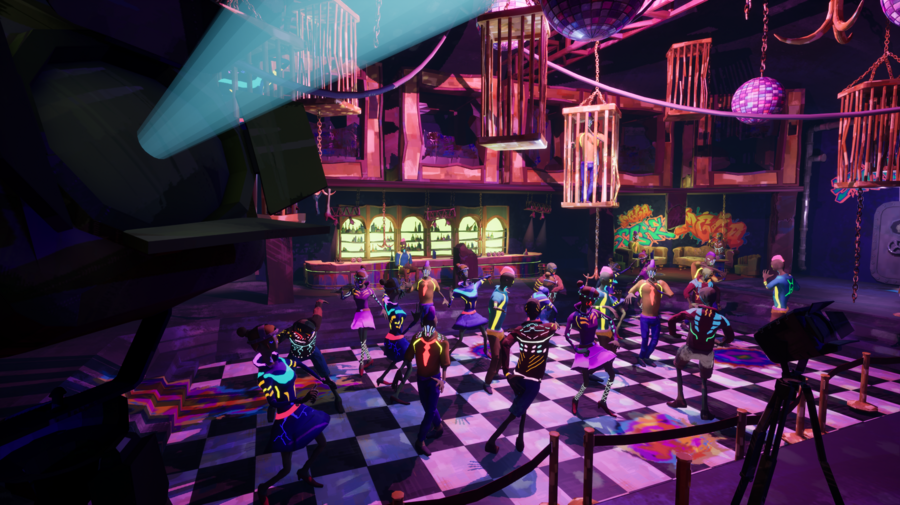
They live inside the legend, and it isn’t an act. The neighbor always had four arms; it’s just that no one used to count them. The smell is from the pipes—they needed fixing a long time ago. Mark is just tired and has been resting for three weeks. For them, it’s just a normal evening in a normal club, and as long as the leader maintains the story—that’s how it is. Taking care of them means preventing this picture from cracking. Every explanation they accept is another day they don’t know where they are. From the leader’s perspective, this is protection.
Short-Term Memory
The survivors’ memories don’t last long: a few days, sometimes less. This saves the leader: the same explanation can be given twice, and the second time it will sound like new information. No one remembers having heard it before.
But this is also what kills him. The faster the generator breaks down, the more incidents occur—and memory doesn’t have time to forget one before the next happens. If within three days he has to explain three different smells, two power outages, and the missing neighbor, forgetfulness won’t kick in. Coincidences start overlapping, and then even short-term memory builds a pattern.
The Heretics
Those who start staring a little longer than necessary. They ask about Mark for the second time. They notice that the explanation about the pipes doesn’t match what they were told about the pipes earlier. They aren’t intentionally searching for the truth—it just slips out on its own, and they don’t know how to look away from it. This makes them more dangerous than any open conflict. You can work with someone who is yelling. Someone who quietly counts arms and stays silent is much harder to handle. Sooner or later, they will either speak up or break. Both outcomes are costly.
Events
Every event is a question the coalition must not ask itself. The leader must answer before the question is even voiced aloud.
Events occur in two registers simultaneously—what actually happens and how the coalition explains it. The rift between these two is the engine of the plot.
There is what must happen, and that cannot be changed. The Generator is dying. This is known from the very beginning. The question is not if this will happen, but how the coalition will meet the moment when the lights begin to flicker.
However, in «Afterparty,» there are events that cannot be predicted: the heretic might begin speaking publicly, fuel depletion will exceed projections, and legends will start contradicting themselves.
The probability of such events depends on accumulated decisions. The archive of legends remembers every contradiction. The more incompatible explanations that are adopted—the higher the chance that someone will correlate them. The game generates crises from past choices, not from randomness.
Collisions
The hero and the coalition fear different things. That is the whole trap.
The hero loses himself. Every day he chooses the legend over the truth, he sees reality less clearly. By the end, he no longer knows what the truth originally was. In saving the coalition, he destroys the only person who knew what was happening.
The coalition loses its foundation. Its existence rests on one thing: the belief that everything is explained and under control. One crack in the legend doesn’t destroy a specific explanation. It destroys the possibility of explanations altogether. After that, the generator ceases to be important.
The desired outcome—the legend holds until the very end; the light fades quietly, and no one has time to realize what is happening.
The undesired outcome—the legend collapses before the fuel runs out, and the coalition has time to realize it.
And that time is the scariest thing in the game. Because the zombie that understands it is dead does not fall into quiet sorrow. A confined space, a crowd of beings without the instinct for self-preservation, and the sudden realization that they have been deceived the entire time—that is not a scene of mourning. It is the beginning of something that tears the club apart faster than any generator. Fights without cause. Attempts to get outside—that is, to die consciously. Someone attacks the leader simply because he was the one who said, «everything is fine, ” the longest.
Mechanics
The Legend. Whenever something goes wrong, you need a version of events. Mark isn’t moving—that means Mark is tired. Less fuel—that’s planned consumption. Versions accumulate, and sooner or later, one begins to contradict another. The game remembers this. Old explanations resurface at the most inconvenient moment.Heretics. Someone in the coalition starts to notice. You can convince them—but that requires a new narrative layered over the old ones. You can isolate them, but then people will start asking where they went. You can talk honestly, and then for the first time in all of time, someone who also knows the truth will be near. But they are also a zombie. And they will die before the fuel runs out.The Saboteur. Somewhere in the club, there is someone for whom the illusion was never real. They don’t dismantle the legend directly; that would be too easy to trace. They operate more subtly: they introduce an inconsistency that the leader didn’t create, they change a detail in someone else’s story, they leave a trace where no one should find it. The leader fights not only against the natural decay of the system but also against the one who is intentionally shaking it—and they don’t know who it is.Power here does not belong to the strongest. It belongs to the one whose version of events was spoken last—and no one managed to object.
Statuses
Three things decide everything. They are not directly connected—but each pulls in its own direction.
The Coalition Believes. While the music plays and someone sets the table—it believes. While the leader finds an explanation before anyone manages to ask a question—it believes. Everyone made a deal right at the beginning and has quietly renewed it every day since. It’s simpler not to look in that direction. It’s easier when someone else takes charge of the narrative and says, «It’s fine; I’ve got it covered.» When one explanation doesn’t align with a previous one, something in that agreement starts to slip. Quietly, like a slow leak. Each time, it costs more to repair than the last. There is a threshold beyond which no framing can patch it up—too much has accumulated. It is the only currency in this world. And the only thing that can run out before the lights go dark.
The generator is dying. Nonstop, without negotiation. The protagonist sees the meter—the coalition is gone. Of the three states, this is the most honest: there is nothing to resolve here, nothing to build upon. You can only slow things down. Spend less, celebrate less frequently, and avoid giving reasons for parties that burn fuel through the night. But celebrations keep the coalition’s faith afloat. You remove the music—the coalition starts listening to the silence. You leave it—the meter drops faster. The generator will die either way. The only question is what will collapse before it does.
Does the hero believe, or not? This is the hardest part. The more diligently he upholds the legend, the deeper he sinks into it. First, he simply stops questioning things internally. Then, he stops noticing the details that once bothered him. Next, he looks at his neighbor and honestly doesn’t understand what used to confuse him. The coalition follows without question because it senses that he truly believes what he is saying. When he clings to clarity—he sees the counter, the empty chairs that no one cleans, the excessive number of hands. He carries this alone, because any honesty would destroy what is still holding on. One can surrender to the legend and lose oneself. One can remain true to oneself and have no energy left for anything else. The game does not comment on the choice.