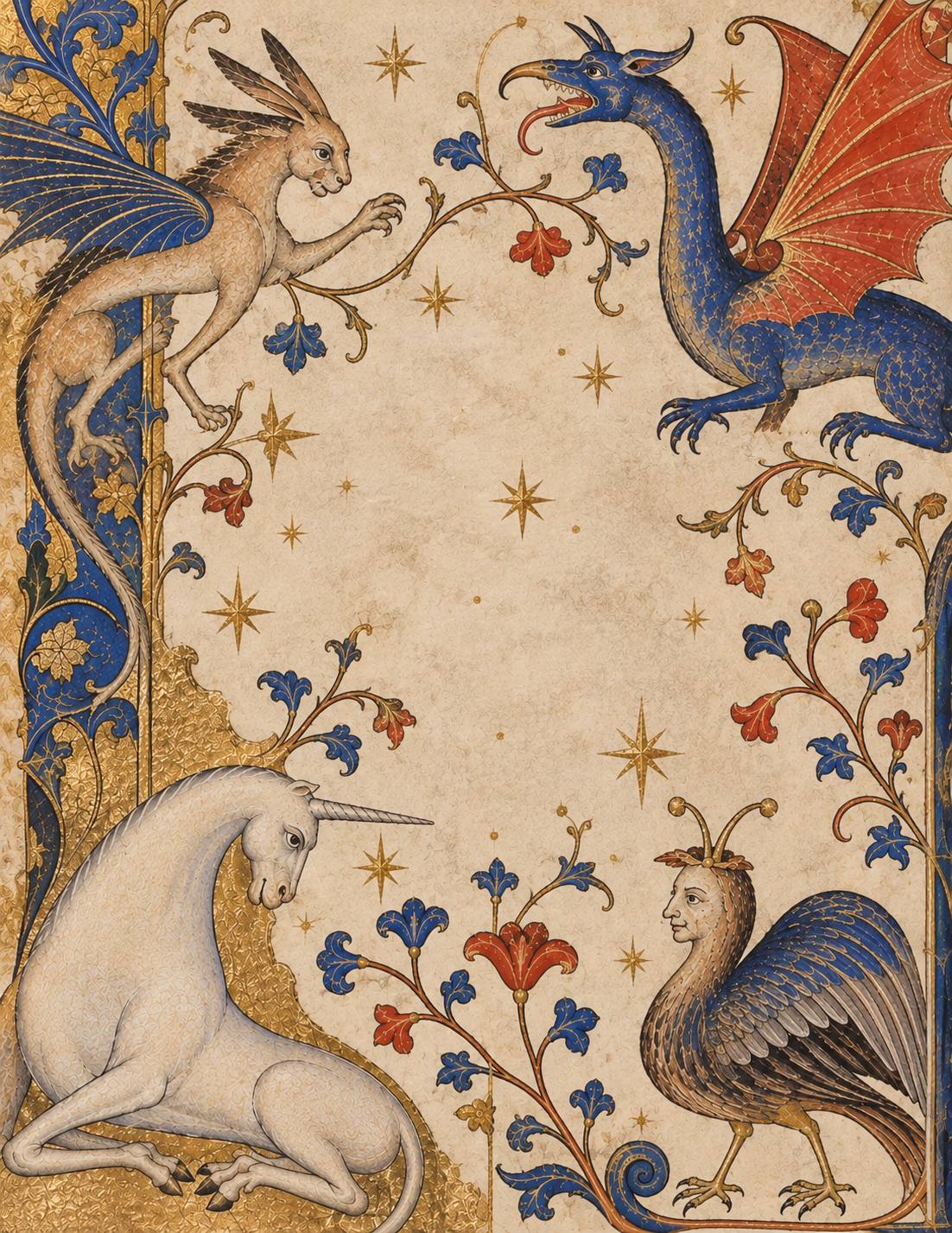
Чудовища на полях
Визуальное исследование фантастических существ в средневековых рукописях
The World on the Edge of the Page
Medieval manuscripts are not solely comprised of text and primary illustrations. They possess a distinct visual world along their margins—populated by animals, hybrids, fantastic creatures, and miniature scenes.
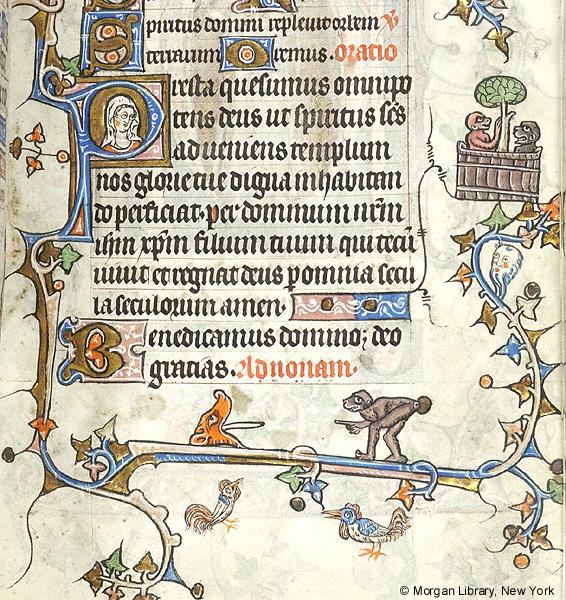
Marginalia in a Medieval Manuscript. 13th–14th Century.
What are marginalia?
Marginalia are images situated outside the main text block. They may relate to the page’s content, continue an ornamentation, or exist as independent scenes.
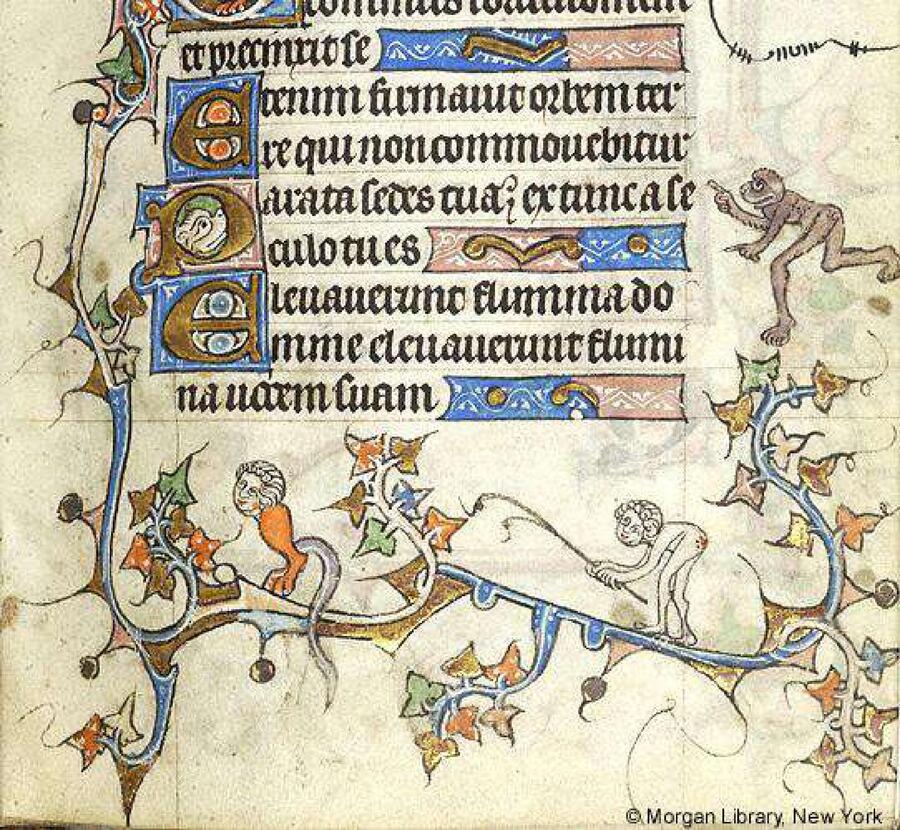
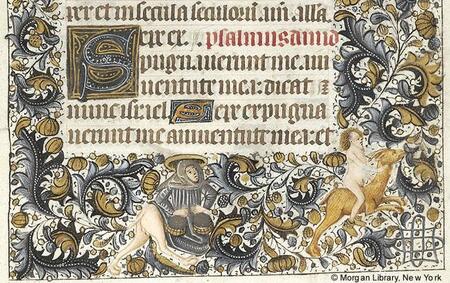
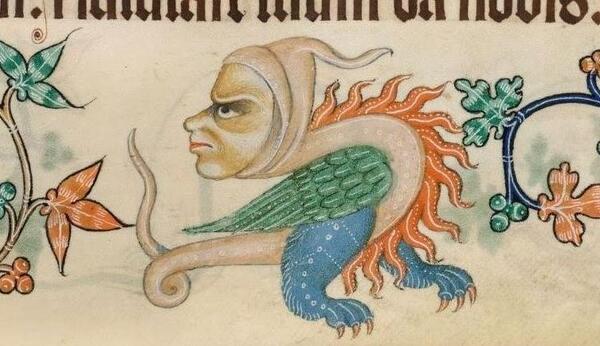
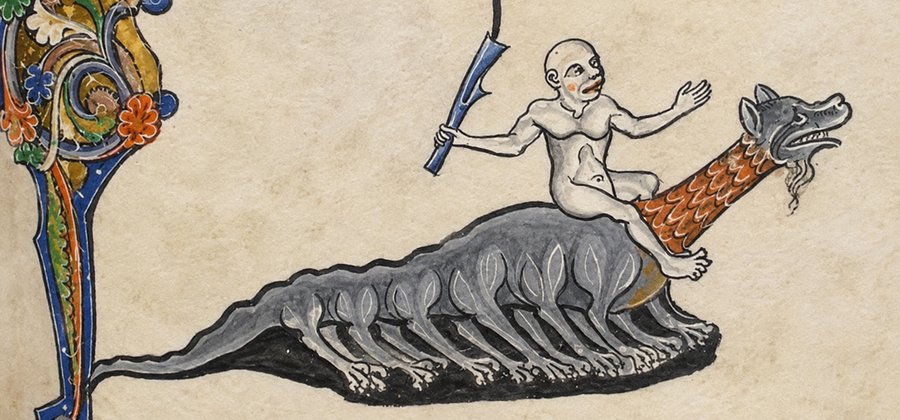
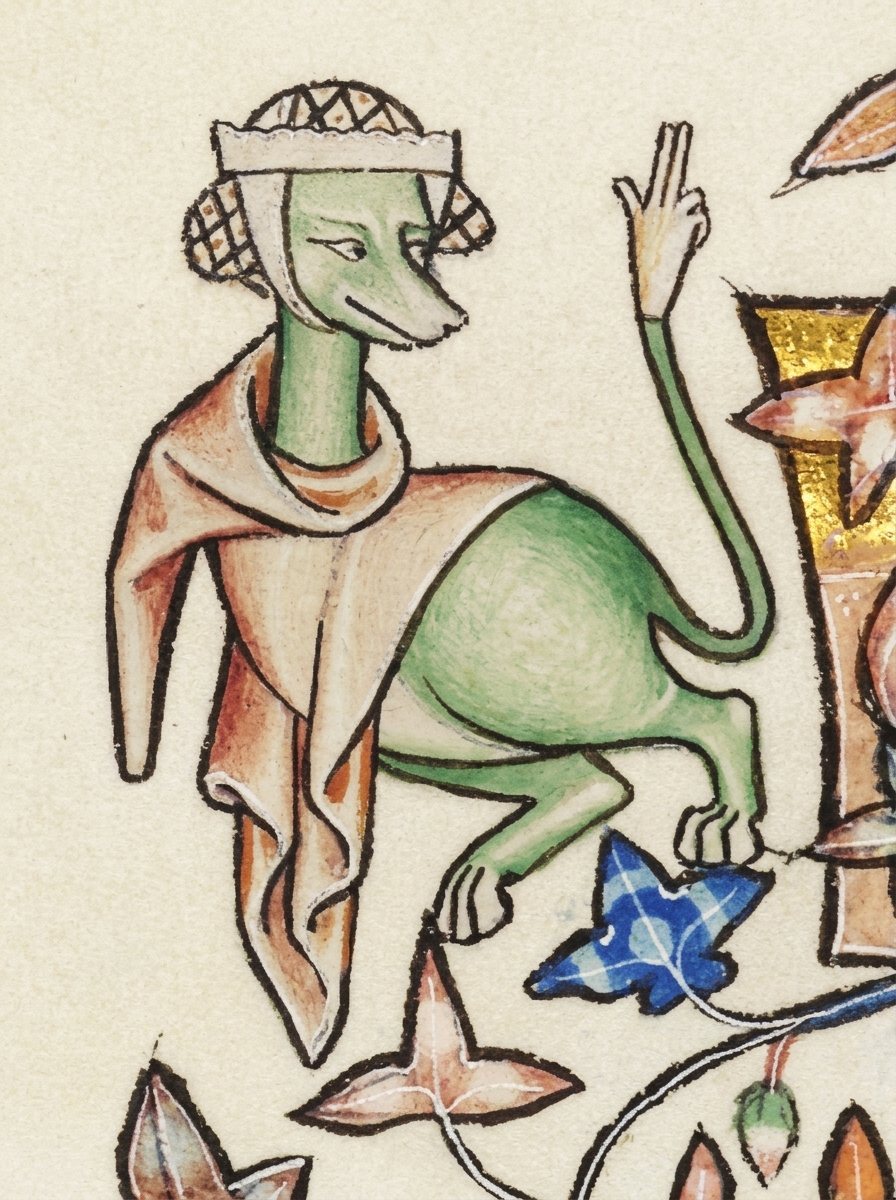
Fantastic creature on a manuscript page. 13th century. Hybrid creature in ornamentation. 14th century.
On the page, you can distinguish several zones: a text block, initials, ornamental frames, and blank space. The placement of a creature affects how it is perceived next to the main content.
Page from a medieval illuminated manuscript. 14th century.
Research Question: How do fantastic creatures interact with the main image and text? Do they repeat the narrative, challenge it, or create their own story?
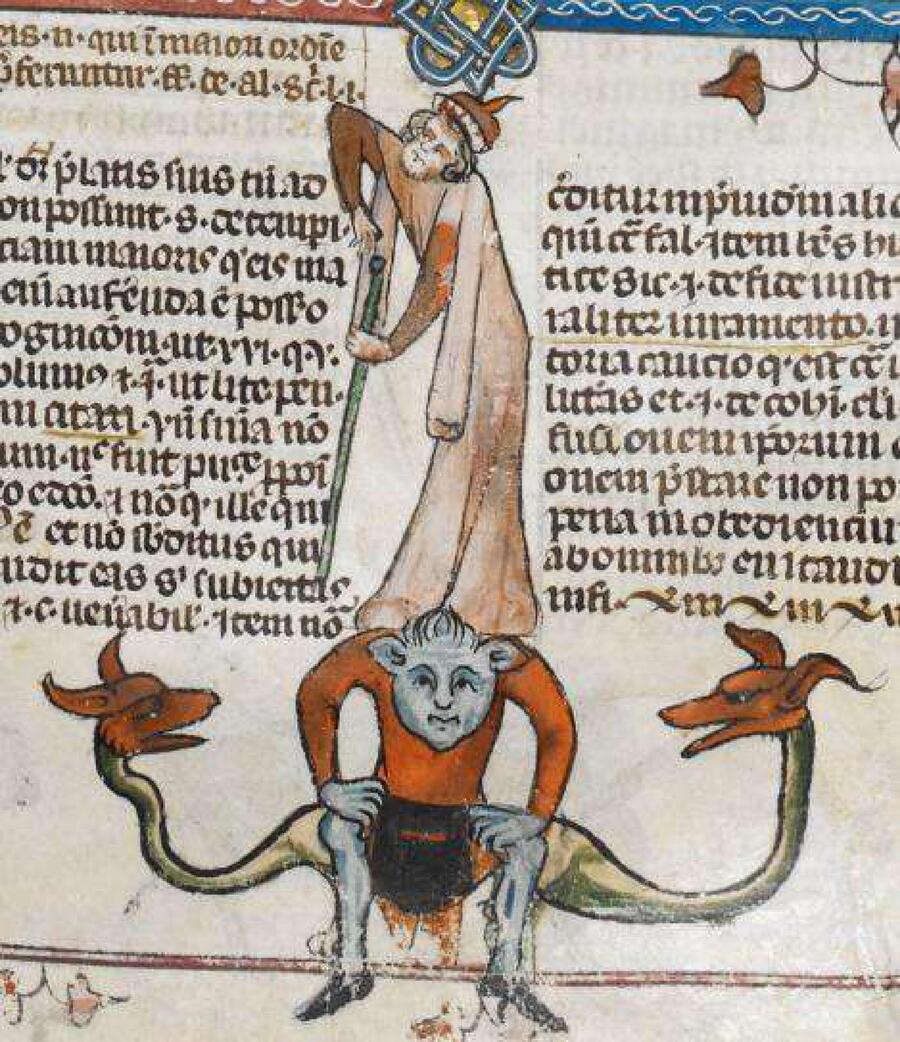
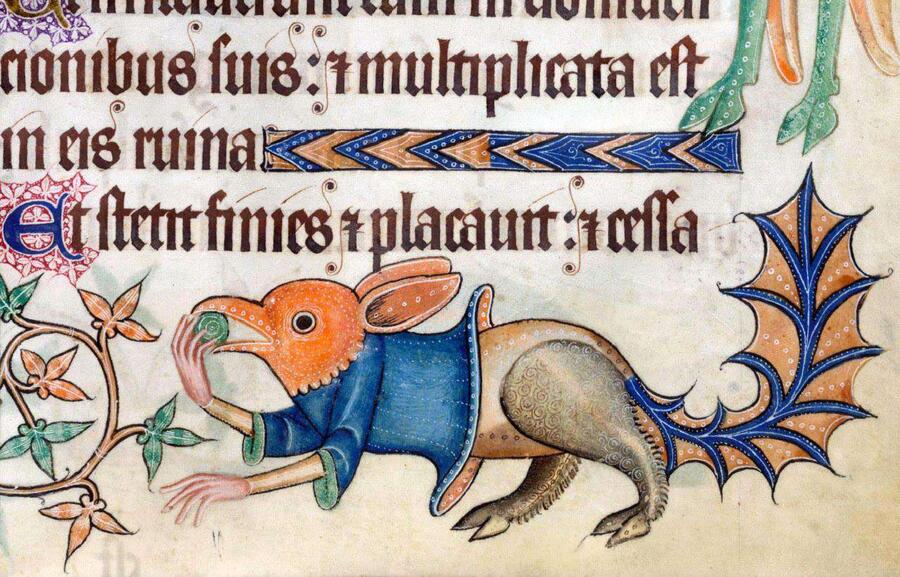
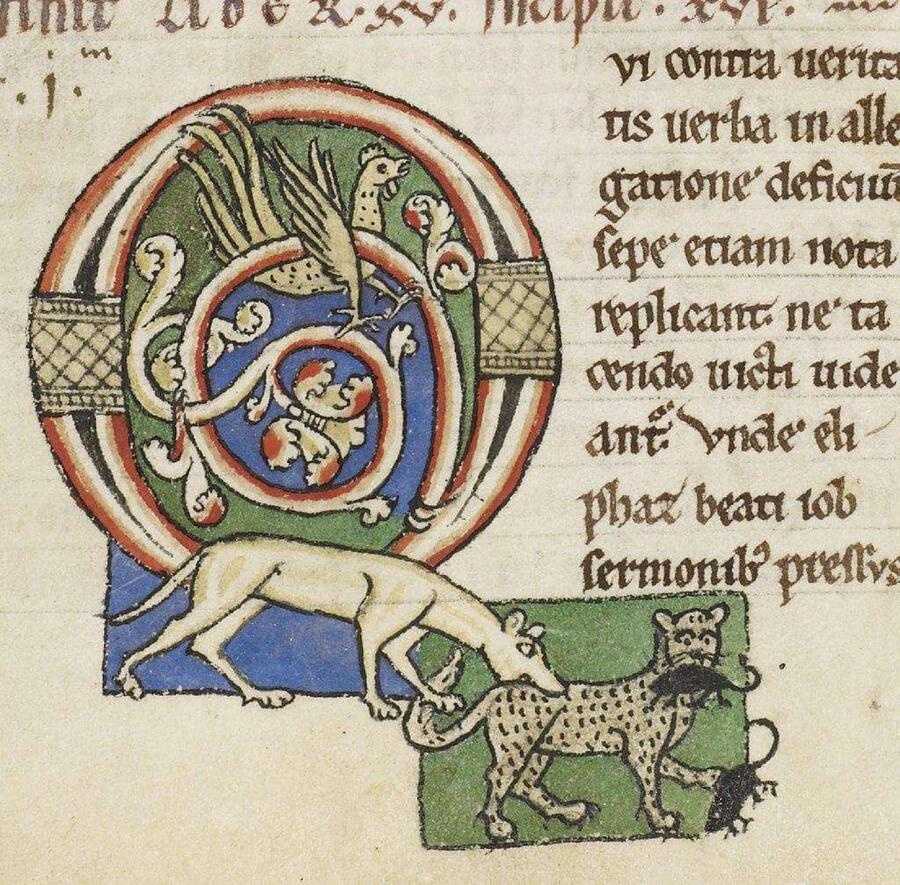
Creature next to the text. Medieval manuscript, 13th–14th centuries. Figure within an illuminated initial. Medieval manuscript, 13th–14th centuries.
In some manuscripts, the margins are so densely filled with imagery that they become an integral part of the composition. In Harley MS 6563, marginal scenes appear on nearly every page.
Book of Hours, Harley MS 6563, c. 1320–1330.