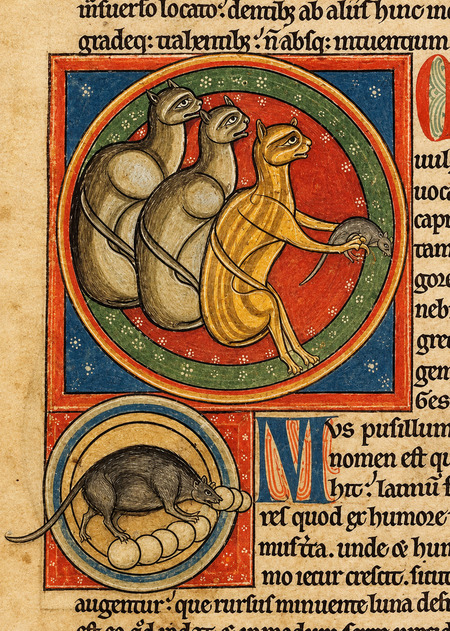
Concept
The depictions of medieval cats are characterized by a visual paradox: between the 12th and 14th centuries, the representation of this animal evolved from a useful hunter in bestiaries to a satirical character or a symbol of sin in marginalia. Underpinning these vastly different interpretations were everyday observations, moralizing narratives, and shifts in religious consciousness. I decided to analyze these three centuries to determine: is the unconventional graphics rooted in technical imperfection, or does it convey the era’s ambivalent attitudes through a conscious artistic language?
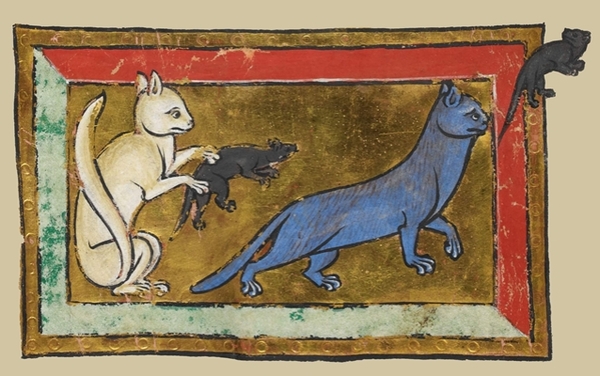
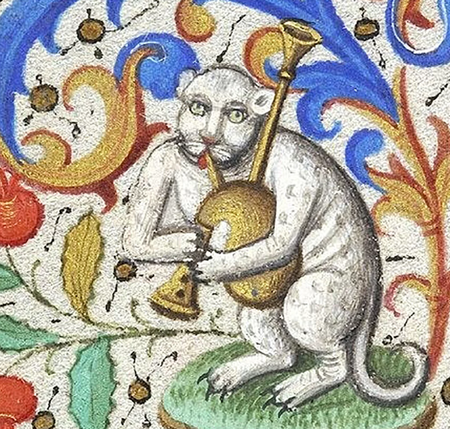
What visual devices did artists use to convey the era’s ambiguous relationship with this animal?
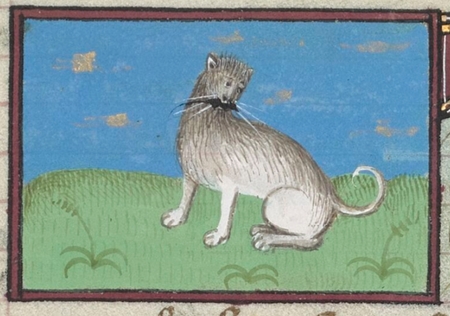
Key question: How did medieval miniaturists convey the shift from perceiving the cat as a useful animal to depicting it as an embodiment of vice during the 12th–14th centuries? My working hypothesis is that the «strange» anatomy and human facial features in later miniatures were not the result of the artists' inability to draw from life, but rather a conscious artistic device to imbue the animal with anthropomorphic traits and moral transgression.
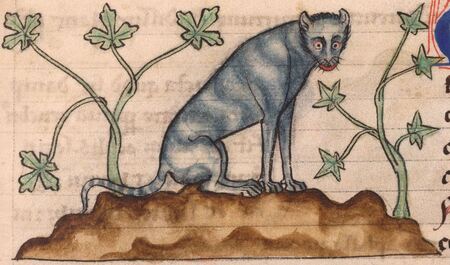
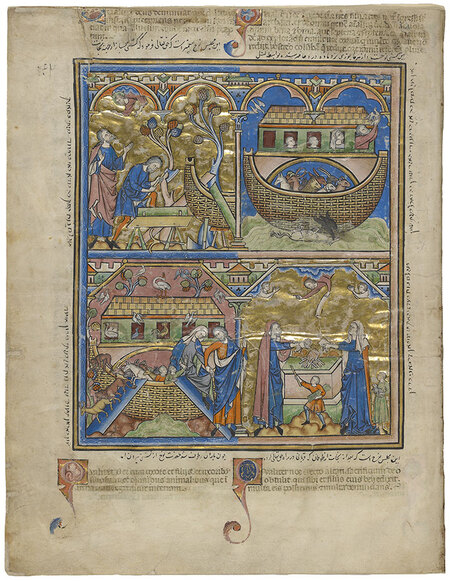
The study focused exclusively on examples of Western European book miniature and graphic arts from the 12th to 14th centuries (bestiaries, psalters, horologes, and chronicles). Objects of decorative and applied arts, small sculpture, and architectural ornaments were intentionally excluded. This approach maintains the purity of the visual analysis within a single art form.
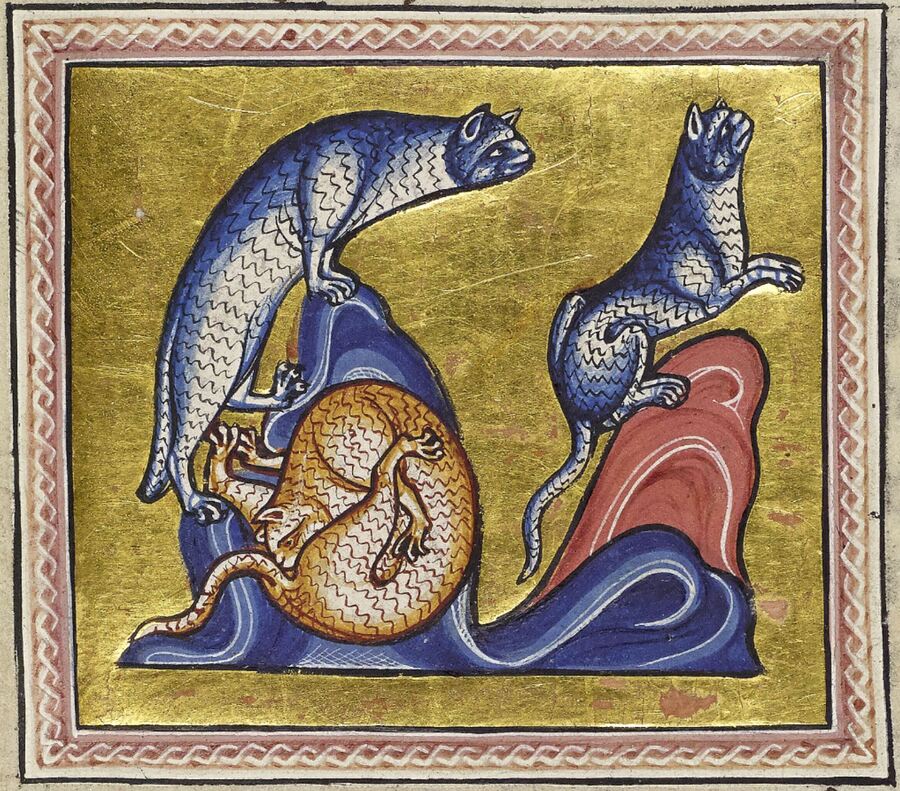
The study’s structure integrates both chronological and generic principles and is divided into three chapters, allowing for a staged examination of how different facets of this image evolved.
The first chapter examines the restrained naturalism and hunting plasticity found in early 12th-century bestiaries.
The second chapter focuses on 13th-century marginalia: the emergence of human facial expressions and satirical scenes.
The third chapter explores the techniques of demonization in moralizing manuscripts and chronicles from the 13th–14th centuries, where somber tonality, distorted proportions, and symbolism come to the forefront.
The key parameters for selecting textual sources were their reliability and depth of analysis of visual culture. The work utilized both medieval encyclopedias that shaped attitudes toward animals during that era (such as Isidore of Seville’s work, which noted that the cat «conquers the night darkness with the brilliance of its eyes») and research from contemporary medieval historians (M. Pastore, M. Camilla, M. Maisuls), which allowed for the correct deciphering of visual codes and the iconography of medieval marginalia. These texts, combined, enabled tracing the evolution of the image at every stage.
Chapter 1. The Useful Guardian: Naturalism and Symbolism in Early Bestiaries (12th Century)
The word «gifted» comes from the Greek word catus, derived from duo to (to ignite).
Chapter 2. Distortion of Form: Margins and «Human Faces» (13th Century)
Chapter 3. The Devil’s Tool: Demonization in Late Gothic (13th–14th Century)
Conclusion