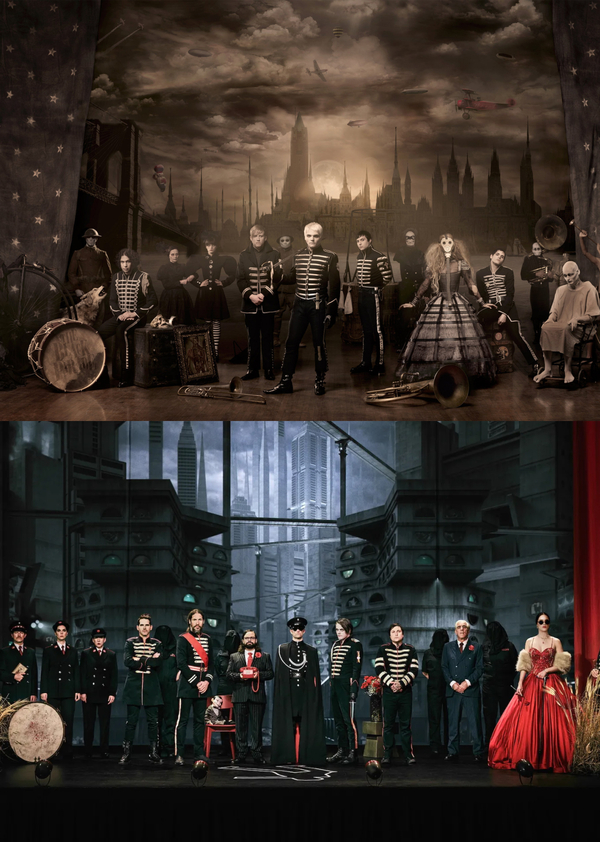
The Evolution of the Visual Concept for My Chemical Romance’s Album «The Black Parade»: From the Subcultural Context of the 2000s to the Stadium Spectacle of 2026.
Concept
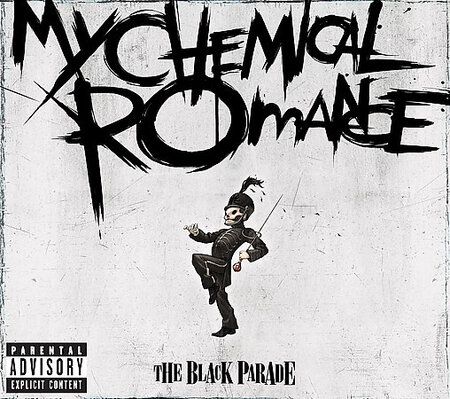
In October 2006, the American rock band My Chemical Romance (MCR) released the concept album «The Black Parade, ” whose visual identity became one of the most recognizable images of early 21st-century alternative music culture. Its aesthetic merged theatricality, dark illustrative graphics, the symbolism of death, 19th-century military parade uniforms, and elements of cinematic storytelling. Unlike the traditional presentation of a music release, the visual component here was not limited to the album cover and photographs; it unfolded sequentially across music videos, stage costumes, and concert productions.
Twenty years later, the band continues to reference this concept, though its contemporary embodiment differs from the original. In 2025–2026, the album’s visual world expanded into a self-contained stage narrative featuring new characters, graphic elements, and evolving plot episodes. This return allows for „The Black Parade“ to be viewed not merely as a musical artifact of a specific era, but as a developing system of visual communication.
This study addresses the question: what artistic and cultural sources shaped the visual concept of «The Black Parade, ” and how has this aesthetic allowed it to remain timeless over 20 years and successfully adapt to contemporary live show formats?
It is hypothesized that the durability of the album’s visual language rests on a synthesis of the aesthetics of 2000s alternative music culture and historically established artistic methods for depicting death, collective ritual, and military procession. Comparative references include medieval Danse Macabre iconography, German Expressionist cinema, and the aesthetics of the mass parade. Juxtaposing these with the band’s materials allows for the identification of visual parallels, recurring symbols, and compositional principles without assuming direct borrowing. This has enabled MCR’s visual language to detach from the fleeting trends of the „emo“ era and evolve into a lasting genre classic that remains relevant today.
For the analysis, materials from several periods were selected: the group’s visual communications leading up to the release of «The Black Parade, ” the original album campaign from 2006–2008, and the concert projects from 2025–2026. The primary focus is on graphic design, music videos, stage costumes, and scenography. Early period materials are included to establish the subcultural and artistic context, while contemporary productions are examined as an extension and reinterpretation of the original visual concept. Priority is given to objects where changes in specific visual elements can be traced: the color palette, symbolism, typography, costume, architecture, and staging methods.The material is organized not as a chronological recounting of the group’s history, but as an investigation into the relationships between historical artistic traditions and contemporary musical communications. First, the cultural environment surrounding the album’s debut is examined, followed by its narrative and visual foundations. Then, historical parallels and the embodiment of the artistic system across various media are analyzed. The concluding sections are dedicated to the transformation of the concert space, the emergence of new visual tools, and the album’s return to the context of the past two decades. Key sources include interviews with group members and production creators, official MCR materials, publications from experts in graphic and stage design, as well as studies on art history, medieval iconography, and cinema. Textual materials are utilized to establish artistic intent and historical context, whereas the independent comparative analysis of images serves as the main evidence for the hypotheses.
Navigation Menu:
- Pre-Parade: The early visual language of My Chemical Romance2. The Album as Theater: The concept of «The Black Parade» and the creation of a visual alter ego.3. Dance of Death: The historical iconography of death and the image of a collective procession.4. Distorted Reality: German Expressionism and the theatricalization of space.5. The Form of the Line: Military uniform, mass action, and the aesthetics of power.6. One Image—Multiple Media: Graphics, photography, music videos, and stage image.7. When the Album Takes the Stage: The original concert production from 2006–2008.8. Creating DRAAG: A new visual system, a fictional language, and characters of the concert world.9. The Evolving Production: Changes in stage narrative and visual direction in 2026.10. Twenty Years Later: The anniversary return and the ongoing life of the visual concept.
Before the Parade: The Early Visual Language of My Chemical Romance
My Chemical Romance, early promotional photo, 2002. From left to right: Frank Iero (rhythm guitar), Matt Pelisser (drums), Gerard Way (vocals), Mikey Way (bass guitar), Ray Toro (lead guitar)
In the early 2000s, MCR forged its identity within the alternative music scene of the United States. The band formed in New Jersey in 2001, and their initial releases combined aggressive guitar sounds, emotional expression, and a visual aesthetic characteristic of punk, post-punk, and alternative rock. While the music press often linked the band to emo culture, their creative influences extended beyond that definition.
The band’s visual identity was shaped at the intersection of punk culture, Gothic aesthetics, horror imagery, and elements of theatrical rock performance.
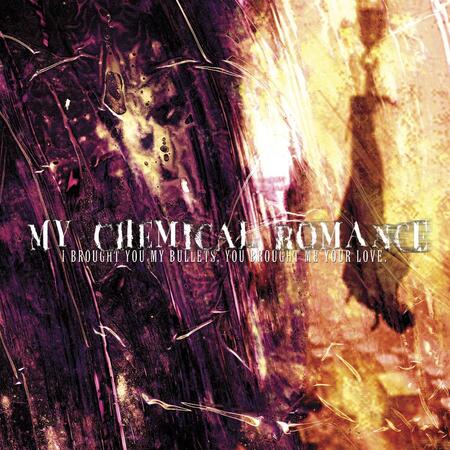
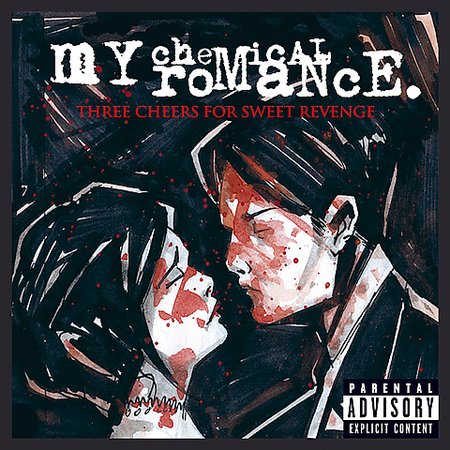
1. Gerard Way, cover art for the album «I Brought You My Bullets, You Brought Me Your Love, ” 2002. 2. Gerard Way, cover art for the album „Three Cheers for Sweet Revenge, ” 2004.
The conceptual approach to their releases was part of their creative process long before the release of «The Black Parade.» Even on their debut album, «I Brought You My Bullets, You Brought Me Your Love» (2002), the band engaged with narrative storytelling. One example is the track «Demolition Lovers, ” which tells the story of a couple who dies in a shootout. This narrative continued on the next album, „Three Cheers for Sweet Revenge“ (2004). Its visual concept was further developed in the music videos. Moreover, each video offers a distinct interpretation of the album’s thematic and emotional content.
Director Mark Webb, «I’m Not Okay (I Promise), ” music video, 2004.
This work draws upon imagery from American teen cinema: the clip is constructed as a parody trailer where the band members are presented as students who do not fit into the conventional social environment.
Director Mark Webb, «Helena, ” music video, 2005.
Here, in contrast, the group engages with Gothic aesthetics and the imagery of a funeral ceremony. The action takes place in a church, and the central visual element becomes the dance of a deceased young woman, transforming the mourning ritual into a theatrical performance.
Director Marc Webb, «The Ghost Of You, ” music video, 2005.
In this piece, we are shown yet another visual approach to the themes of death, loss, and memory: a different historical context is chosen—World War II. The clip merges scenes from a dance party with episodes of military action, using the contrast between everyday life and sudden bereavement.
Thus, even in MCR’s early work, a drive to construct musical pieces as independent artistic worlds is evident. The core concept of the conceptual album itself does not change, but the methods of its visual realization evolve: moving from experimental graphics and isolated narrative images to more complex compositions, cinematic storytelling, and a theatrical stage presence. This very approach forms the foundation for the further development of the visual concept for «The Black Parade, ” where previously used artistic devices are integrated into a unified system and gain full manifestation on stage.
The Album as Theater: The Concept of «The Black Parade» and the Creation of a Visual Alter Ego
Director Samuel Bayer, «Welcome to the Black Parade, ” music video, 2006.
„The Black Parade“ is the band’s third studio album, released in 2006 and marking a significant milestone in the development of their visual identity. Its central theme revolves around human mortality and reflections on a life lived. At the core of the album is the story of the Patient—a person facing death who is re-examining their own life. Death appears before him in the form of a parade connected to a vivid memory from his childhood: his father once took him to a similar procession. This image becomes the launching point for a further narrative about fear, regret, pain, loss, anger, and acceptance.
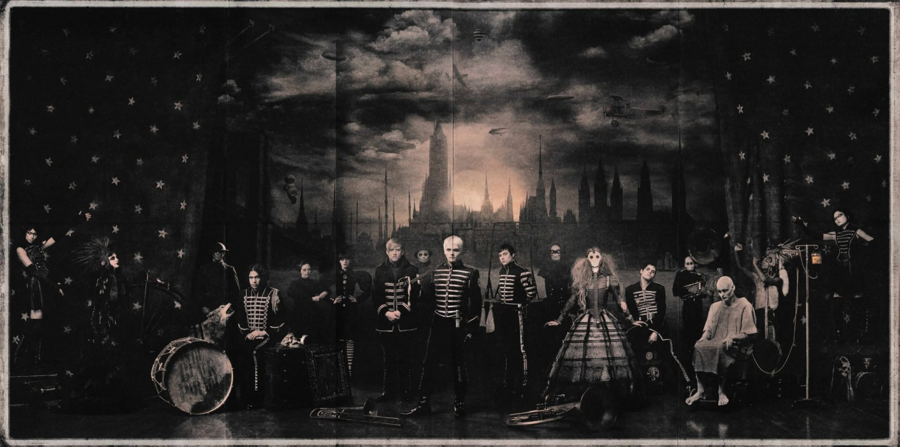
MCR in The Black Parade costumes, promotional photo, 2006.
The image of «The Black Parade» was conceived as the group’s theatrical alter ego. It allowed the musicians to physically embody the album’s concept and translate it from the musical recording to the concert stage. This influenced all subsequent visual decisions. The band members received unified stage costumes, changed their image, and began performing not just as musicians, but as characters from their own narrative. The album’s title gradually ceased to designate only the record and became associated with a distinct artistic world.
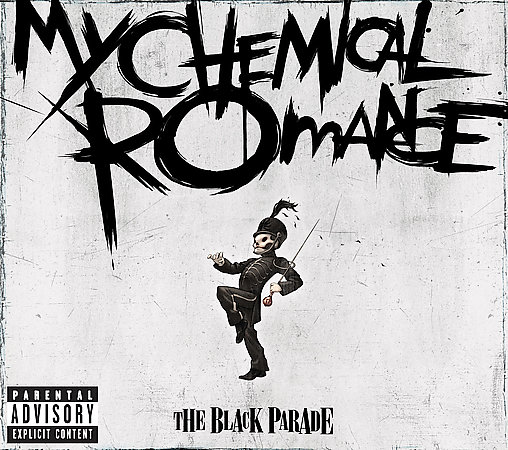
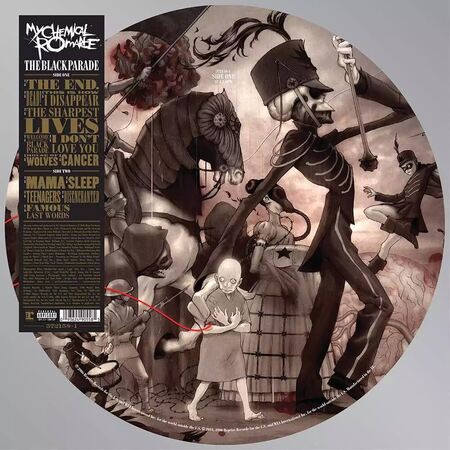
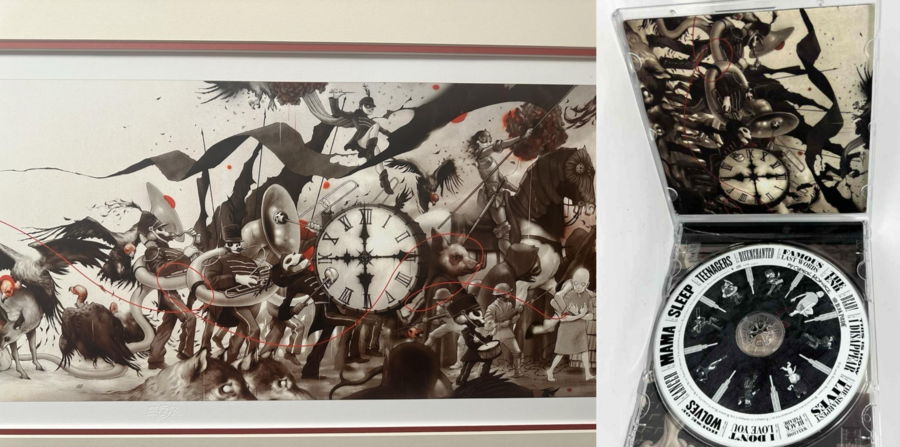
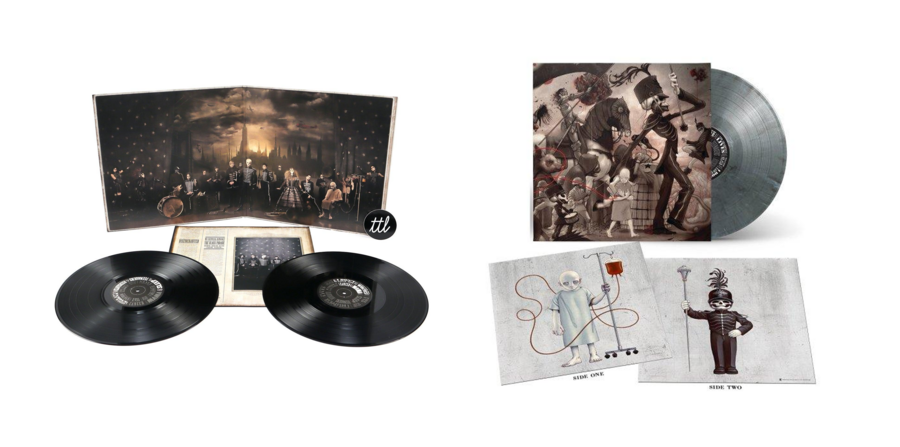
1. Illustrator James Jean, album cover for «The Black Parade,» 2006 2. Illustrator James Jean, 7-inch collector’s vinyl record for «The Black Parade,» 2006
The illustrations created by the cult comic artist James Jean held particular significance; they set the tone for the entire visual design. The album’s visual identity proved self-sufficient enough to exist alongside the music, supporting its content without the need for a literal narrative retelling.The composition does not depict a specific scene from the plot but rather establishes a general sense of the world into which the protagonist falls. The absence of realistic space and the combination of figures of varying scales create a feeling of theatrical action governed by its own rules.The narrative is supplemented by other characters who appear in the songs and participate in the Patient’s story. Among them are the figure of the «Mother War» (Mother War) wearing a gas mask and an opulent Victorian dress, as an embodiment of death, and other figures connected to his memories and internal experiences.