Research Content
- Concept
- Central Research Question
- History and Context (What is a Fayum portrait and how did it come into being?)
- Chapter 1. Egyptian Funerary Tradition
- Chapter 2. Greek Portraiture Style
- Chapter 3. Roman Garment Culture
- Conclusion
- Sources
Concept
In this visual study, the Fayum portrait is examined not merely as an Egyptian subject incorporating Greco-Roman traditions, nor as Roman painting transplanted into ancient Egypt, but as an autonomous cultural phenomenon—one that arose precisely because three traditions converged at a single point, unable to exist independently; their symbiosis has become one of the most fascinating cultural legacies.
The core research question
What does creativity born from the confluence of three cultures look like—and can we even precisely determine what has been borrowed and from where, if those traditions only existed in symbiosis?
History and Context (What is the Fayum portrait and how did it emerge?)
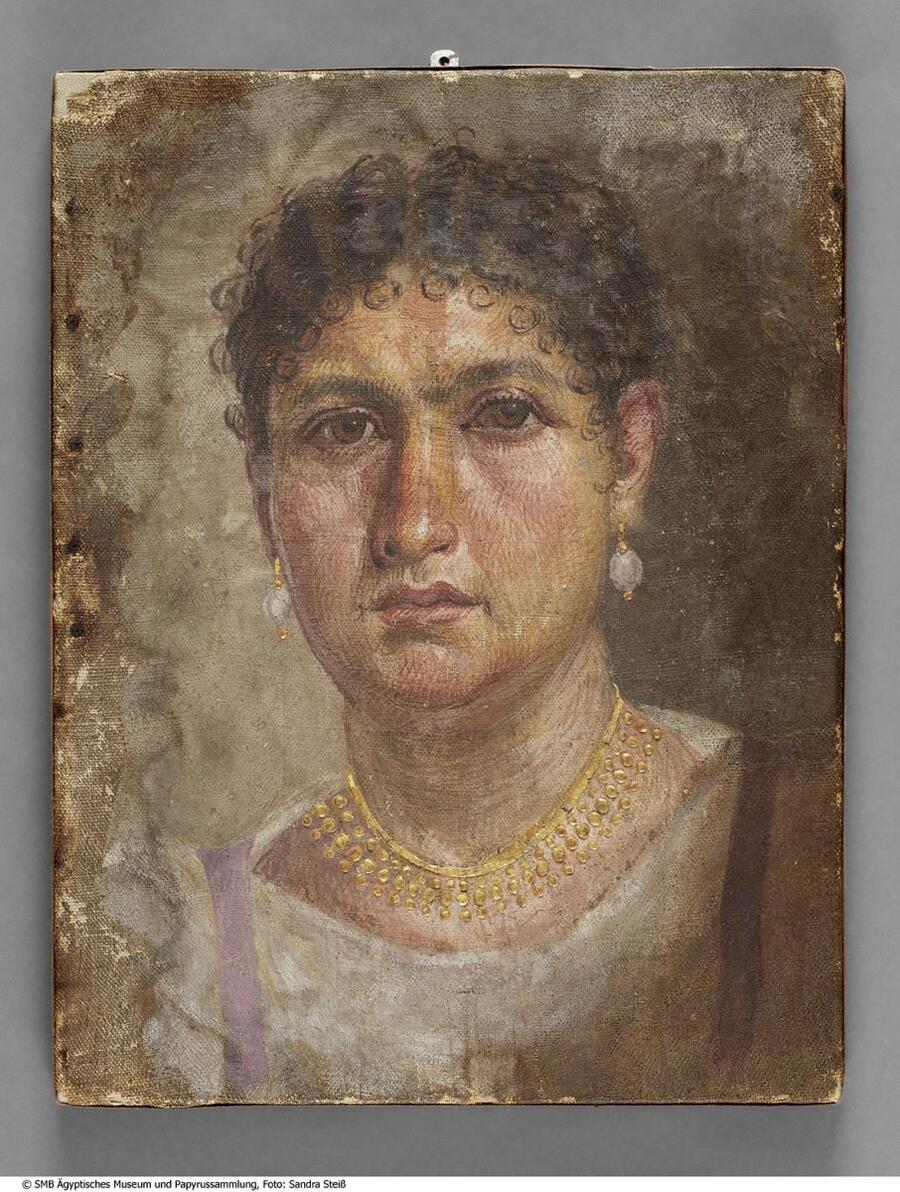
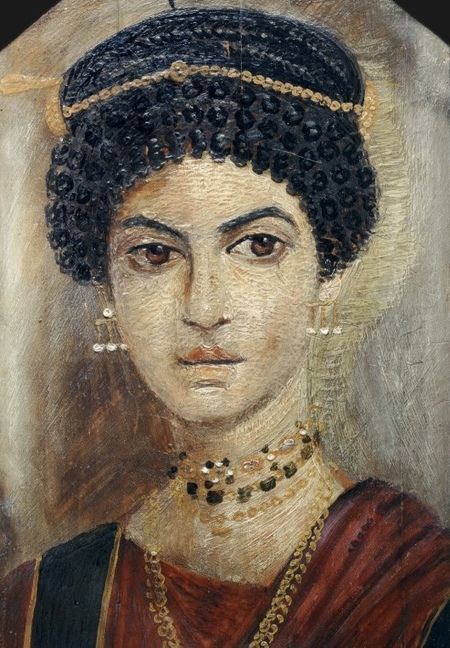
- What is the Fayum Portrait?The Fayum Portrait is a unique monument of ancient painting: funerary portraits created in Roman Egypt during the 1st–3rd centuries AD. They received their name from the location of the first major discovery in the Fayum Oasis in 1887 by a British expedition led by Flinders Petrie.
- How Did the Fayum Portrait Emerge?
The Fayum portrait is, above all, a product of a profound cultural synthesis that occurred in Egypt during the Roman period. In 332 BCE, Alexander the Great conquered Egypt, after which the Ptolemaic dynasty took power. Greek culture influenced Egyptian painting traditions, making them more realistic—specifically through the use of chiaroscuro and volume, as well as the encaustic technique (wax painting).
Features of ancient Roman art appeared a little later: in 30 BCE, after the death of Cleopatra, Egypt became a Roman province. The Romans inherited Greek artistic mastery and placed even greater emphasis on conveying the individual characteristics of a person.
Ultimately, representatives of different cultures coexisted in one territory over a certain period. This did not prevent the residents of Egypt from reinterpreting mummification while taking into account various cultural codes, thereby creating an entirely new cultural phenomenon that points to the immediate possibility of synthesis among different peoples.
Chapter 1. Ancient Egyptian Burial Traditions
Philosophy and Logic of Mummification
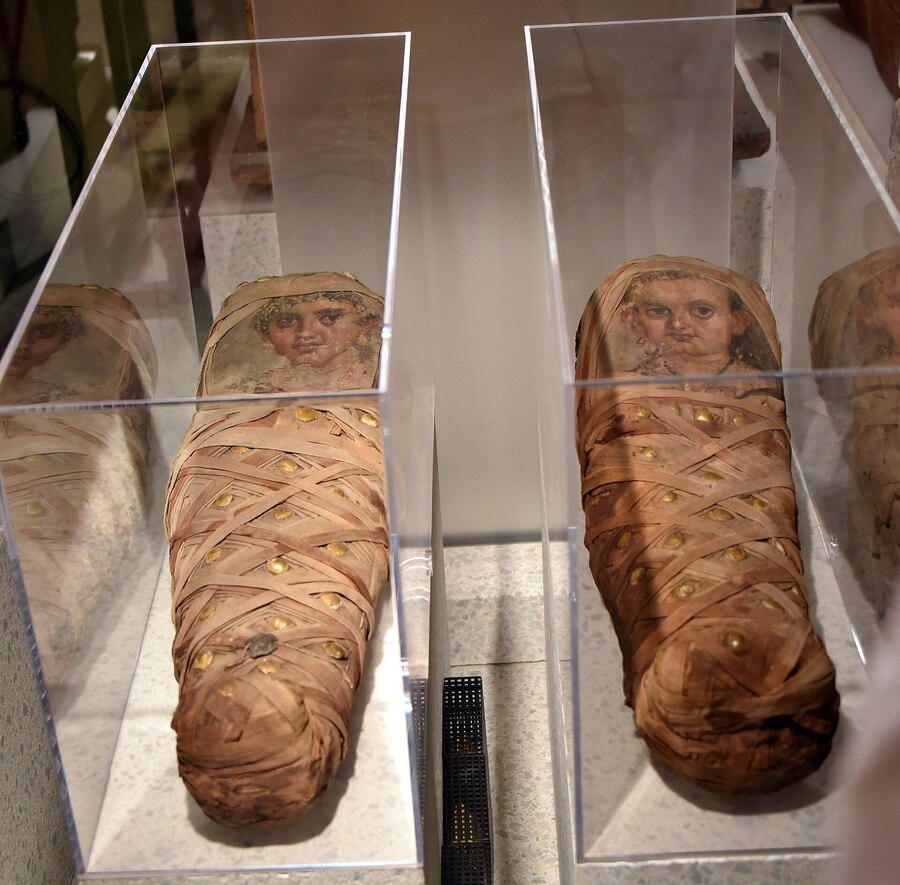
The Egyptians believed that to exist successfully in the afterlife, the physical body (the mummy) had to be preserved, and the deceased had to retain a recognizable appearance so that their spirit («Ka» or «Ba») could return and recognize its vessel. Previously, idealized masks or sarcophagi with canonical facial features served this function. However, during the Roman period, the Egyptian elite—who had adopted Greco-Roman tastes—wanted their eternal appearance to be not abstract, but individual and recognizably lifelike.
Therefore, portraits were painted onto wooden boards and inserted directly into the mummy bandages over the face, covering the deceased’s features. This was more than just sarcophagal decoration: the portrait became the mummy’s «face”—its permanent surrogate in the afterlife. It served a dual function: on one hand, it acted as a magical „anchor“ for the soul; on the other, it displayed the deceased’s status and cultural affiliation to those around them (and the gods), particularly since they had worn Roman clothing and hairstyles during life.