Concept
Rationale for Topic Selection
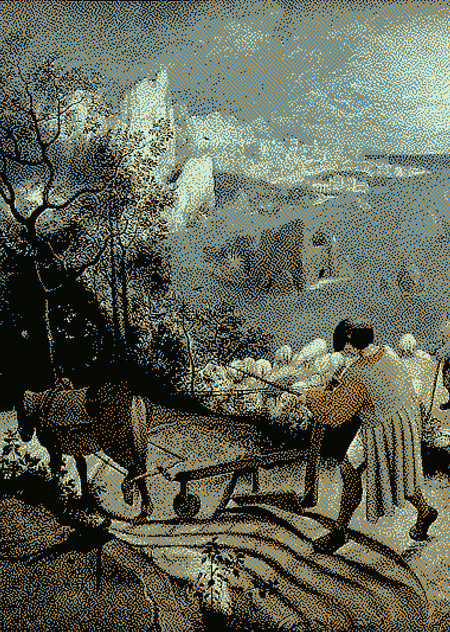
Pieter Bruegel the Elder is among the artists whose imagery has long transcended the boundaries of art history. His paintings are constantly referenced in literature, theater, and especially film. Andrei Tarkovsky incorporates «Hunters in the Snow» into Solaris and Mirror, and Bruegel also appears in Lars von Trier’s Melancholia. Cinema’s interest in Bruegel is not accidental. His paintings possess depth, depict multiple simultaneous events, and demonstrate a keen awareness of how figures are situated within space. Consequently, the theme of scale and the positioning of the human figure within the landscape helps explain why this visual language remains so highly sought after today.
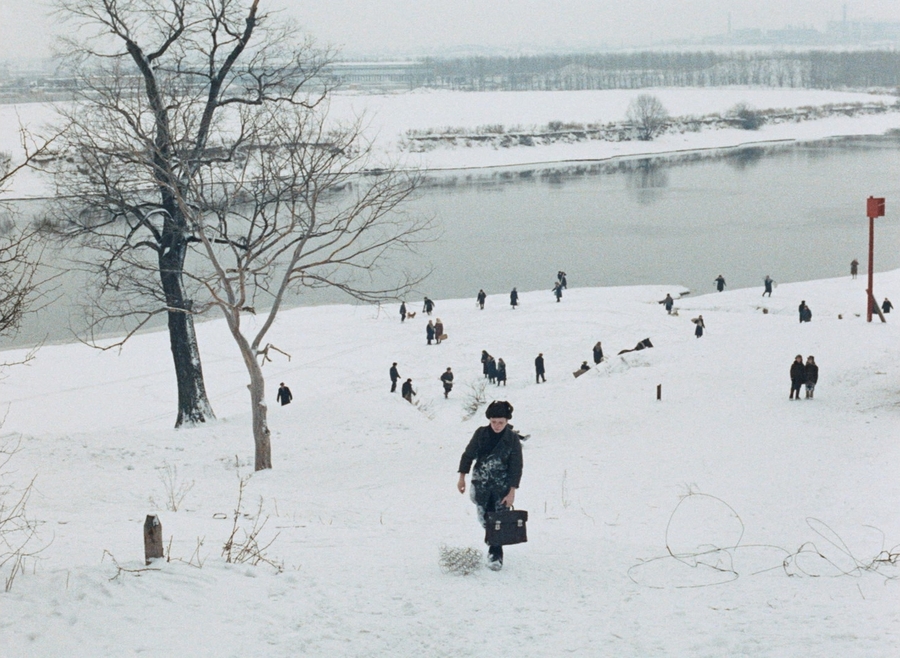
«Mirror» (directed by Andrei Tarkovsky, 1975).
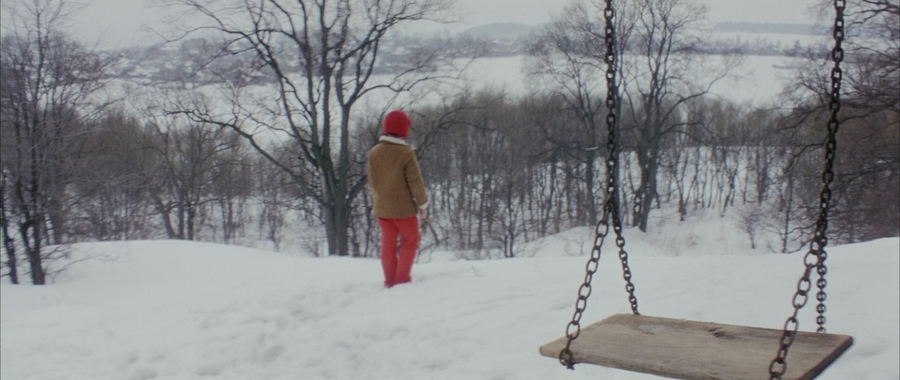
«Solaris» (directed by Andrei Tarkovsky, 1972).
«Solaris» (directed by Andrei Tarkovsky, 1972).
«Melancholia» (directed by Lars von Trier, 2011).
Material Selection Principles for Visual Research
Images are selected not based on fame, but on meaning. Each work is included in the research only when it confirms or clarifies a point made in the text. Because of this, the visual content and the text do not exist separately from one another: the image becomes part of the argumentation, not just an illustration. Works that do not help reveal the theme are kept outside the scope of the research, no matter how famous they may be.
Principle of Research Structuring
The research moves from the general to the specific: from Bruegel and the context in which his artistic language developed, to the methods and principles he employed to depict the world. This progression allows us first to grasp the general conditions and then to see how individual techniques operate within them. The work concludes with a finding regarding what these techniques reveal about the artist’s perception of the world and of humanity.
Principle of Selecting and Analyzing Textual Sources
The textual foundation was chosen from the most popular and accessible books about Braque available in Russian. The primary criterion was the openness of the material: any reader can consult the same texts and verify the conclusions. These books combine facts with the author’s interpretation, so they are not treated as ultimate truths, but rather as viewpoints to be cross-referenced with the paintings themselves. Quotes are used sparingly and are formatted with quotation marks and footnotes. The core of the research remains the original analysis of the images.
Key Research Question and Hypothesis
What techniques does Bruegel use to organize space? What place does humanity occupy in relation to nature?
In Bruegel’s paintings, humanity is not presented as the center of the composition, but as part of a larger world: of nature, of space, and of social life. The small scale and placement of the figure do not signify its insignificance; rather, they serve as a means of organizing space and distributing the viewer’s attention. Through this approach, Bruegel adopts a neutral stance, demonstrating a certain indifference from nature toward human affairs.
Introduction
Pieter Bruegel the Elder is one of the most significant figures in 16th-century Dutch painting. His work holds a special place in the history of European art due to his unique depiction of the surrounding world, his attention to everyday human life, and his complex construction of pictorial space. Bruegel addressed a wide variety of subjects—peasant life, natural landscapes, and biblical stories. Despite the diversity of his themes, many of his works are unified by a desire to present the world as a cohesive whole, in which nature and humanity exist in a symbiotic relationship.
Bruegel’s creative work developed during a period of significant historical and cultural change. The Netherlands in the 16th century was one of Europe’s most advanced economic and trading regions, yet it simultaneously experienced deep political and religious contradictions—the spread of Reformation ideas, the persecution of dissenters, and rising public discontent. While historical events were not always directly reflected in Bruegel’s subjects, their influence can be found in the general content of his works, his view of humanity, and his relationship with the surrounding reality.
«The Raven on the Gallows» (Pieter Bruegel the Elder, 1568).
The gallows and the festival coexist in the same space, and neither one dominates the other. I would interpret this composition as how people become accustomed to living alongside violence.
The traditions of Dutch painting, particularly the work of Hieronymus Bosch, played a crucial role in shaping Bruegel’s artistic language. From Bosch, Bruegel inherited an interest in complex, multi-figure compositions, allegorical themes, and the depiction of human vices. At the same time, the artist gradually developed his own approach, in which observation of real life, the depiction of nature, and everyday human activities gained increasing importance. His journey to Italy significantly influenced the development of his spatial thinking, during which Bruegel became familiar with mountain landscapes and the traditions of Italian art.
One of the most characteristic features of Bruegel’s painting is the use of vast panoramic compositions. The composition is often structured from a high vantage point, which allows the viewer to observe a large expanse of space and numerous events occurring within it simultaneously. This type of construction enables the unification of various spatial planes, human figures, and natural and architectural elements within a single painting. Furthermore, the viewer’s gaze is not always directed toward a single compositional center. Different parts of the image can possess independent meaning, and appreciating the work requires a sequential examination of individual details.
Despite the monumental scale of his compositions, Bruegel paid close attention to small figures and objects. Even secondary characters possess individual traits, gestures, and activities. It seems as if Bruegel aimed to depict the world in its totality while preserving the expressiveness of individual elements. This approach merges two seemingly opposing principles: the desire to encompass vast space and meticulous attention to the minutiae of human life.
Another significant characteristic of Bruegel’s work is the relationship between humanity and the surrounding space. Unlike compositions where a central human figure dictates the organization of the entire image, Bruegel often portrays people as one element within a grand world. Figures may occupy only a small portion of the painting, yielding scale to natural landscapes or architectural structures. However, this does not necessarily render them secondary. On the contrary, human activity becomes an integral part of the overall composition, and the significance of an individual figure is determined not only by its size but also by its placement and actions.
The depiction of space as an independent element of the work occupies a special place in Bruegel’s artistic language. In his paintings, the landscape is not limited to the role of a decorative background. Nature exists in its own rhythms—those associated with the changing seasons, weather conditions, and the passage of time. Humanity becomes integrated into these processes, and daily life becomes part of the natural cycle.
Space Organization
One of the defining characteristics of Pieter Bruegel the Elder’s painting is its intricate organization of space. The composition is frequently structured so that a single image manages to unite vast natural landscapes, architecture, numerous human figures, and several simultaneous events. In this work, space is not limited to the role of a background but becomes a vital element in structuring the entire image.
In the book «Pieter Bruegel the Elder,» Sergey Lvov connects the development of the artist’s spatial thinking with his journey to Italy. The mountainous landscapes particularly impressed Bruegel, as they were significantly different from the flat landscapes of the Netherlands that he was accustomed to. This helped Bruegel gradually move away from the traditional principles of landscape composition. Bruegel sought to convey a more complex space where planes do not always have distinct boundaries, and the transitions between them can be gradual and almost imperceptible.
«The Appeal of Paul» (Pieter Bruegel the Elder, 1567).
Savel, who falls from his horse, is lost among the warriors, and the appearance of Christ is given only by a ray emanating from the heavenly light. The central event is actually the smallest part of the painting. The significance of the event does not correspond to its size. The landscape forms the basis of the composition, while the human figure and their fateful moment are inscribed within it as an insignificant episode.