
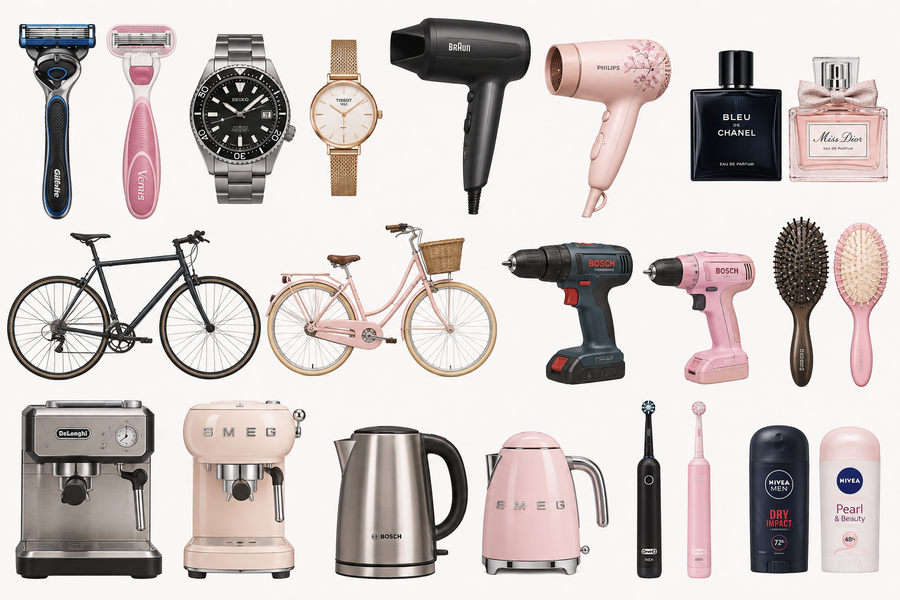
Why are some subjects perceived as masculine and others as feminine? How do color, shape, and materials influence our perception of objects?This study examines how gender perceptions are reflected in product design and why items with the same function often have different appearances.
01. Gendered Items
How do objects acquire gendered characteristics?
Objects do not have gender in themselves, but society assigns them specific characteristics. Color, shape, and design help create an impression of who the item is intended for.
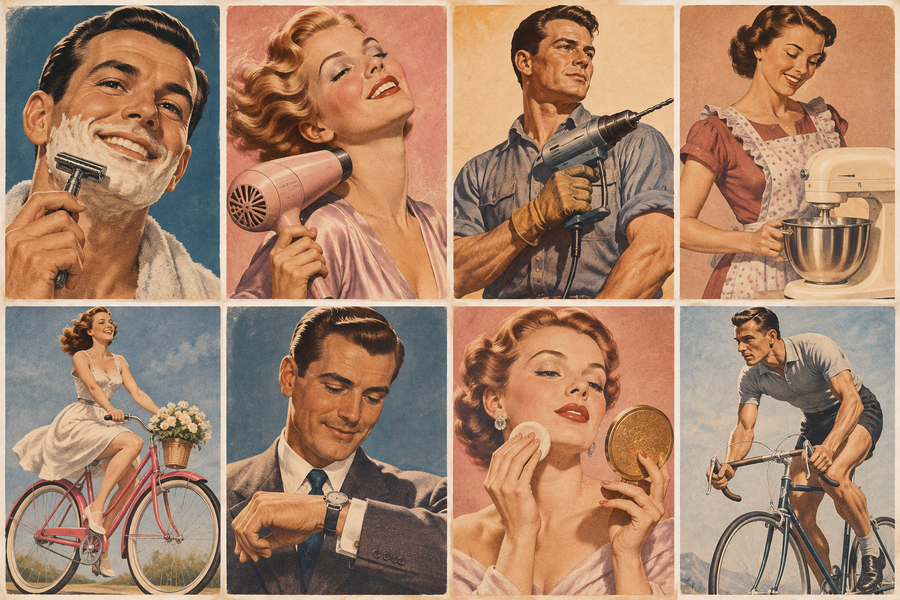
A collage of eight vintage advertising vignettes in the aesthetic of the 1940s–1960s.
In this chapter, it is important to understand that subject-based design does not merely reflect existing notions of gender—it actively participates in shaping them.
02. History of Gender Segregation
How did historical concepts transform into product design?
Industrial development, mass production, and advertising influenced the division of goods by gender. Let’s trace how the appearance of objects has changed from the late 19th century to the present day.
In the first half of the 20th century, advertising actively reinforced distinctions between male and female roles. Women were more often depicted in domestic settings, alongside household appliances and cosmetic products. Men were shown in professional environments, interacting with machinery, tools, and objects related to their work.
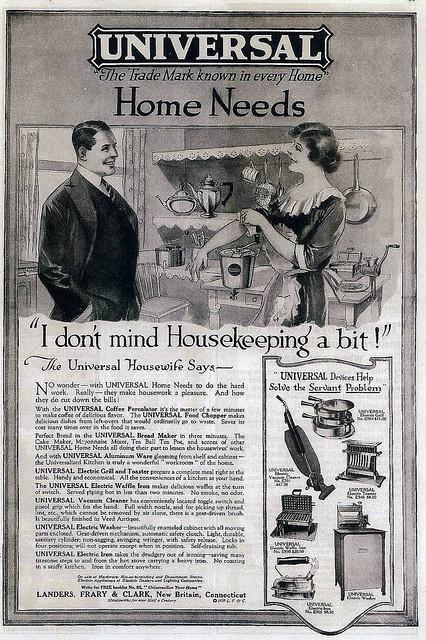
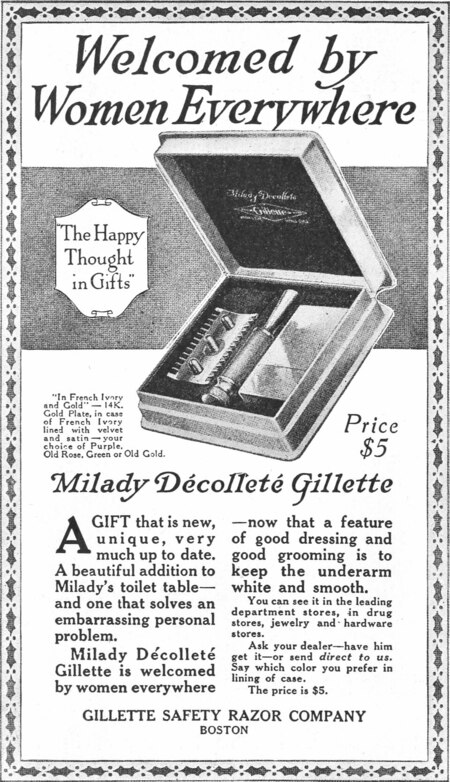
1920s Home Appliance Advertisement / Men’s and Women’s Grooming Product Ads.
Madame C. J. Walker Cosmetic Products
In the second half of the 20th century, the growth of the beauty, electronics, and personal goods industries expanded the possibilities for gendered positioning. Products began to differentiate more actively not only by function but also by visual design.
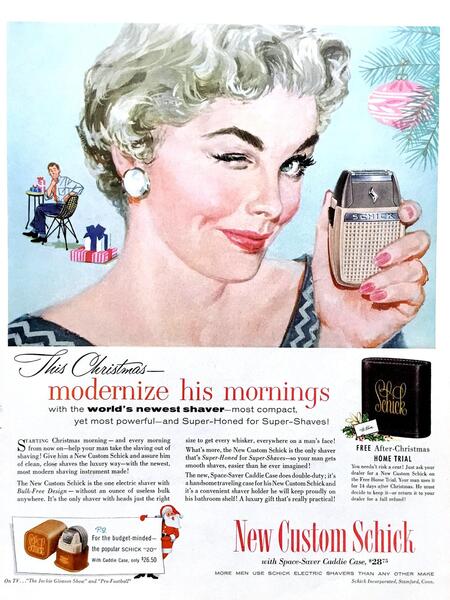
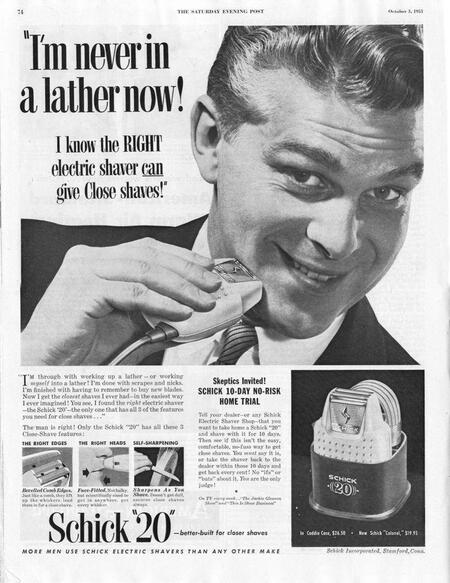
Schick Razor Advertisement (1953).
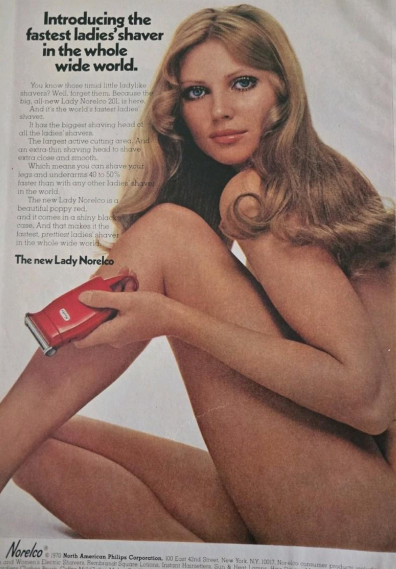
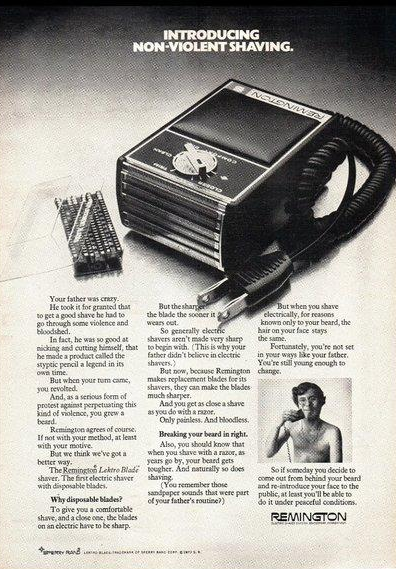
Lady Norelco, 1962 Women’s electric razor. Focus on beauty and grooming / Men’s. Focus on technological precision and shaving efficiency
At the end of the 20th and beginning of the 21st century, minimalism, evolving consumer habits, and shifts in social perceptions led to the emergence of more universal design solutions. However, gender segregation persisted across many product categories.
BIC For Her, 2011 Standard pens received a special women’s version
The history of product design shows that visual representations of masculine and feminine are not static. They evolve alongside society, and the objects themselves change with them.
03. Anatomy of the Gender Code
What constitutes the visual image of men and women?
We will examine the core elements that shape the gendered perception of objects.
Let’s examine the core elements that shape the gender perception of objects.
3.1. Color
Caldion, deodorants One bottle shape, but different colors and markings for men and women
Color is one of the most striking ways to gender a product. In modern consumer culture, pink is often associated with femininity, while blue, black, and dark shades are linked to masculinity. However, these associations are not immutable. Their meaning has been historically shaped by trends, advertising, and cultural context.
It is especially interesting to observe how the perception of the same object can change solely because of a shift in its color scheme.
Color is one of the most visible ways to gender a product. In modern consumer culture, pink is often associated with femininity, while blue, black, and dark shades are associated with masculinity.
However, these associations are not immutable. Their meaning has been shaped historically and has depended on trends, advertising, and cultural context.
It is particularly interesting to observe how the perception of the same object can change simply due to a shift in its color scheme.
Computer Mice Different colorways of the same model
3.2. Form and Silhouette
The object’s form also contributes to the creation of gendered imagery. Visual associations often link rounded, smooth lines with softness and femininity, while angular and massive constructions are associated with strength and masculinity. Such characteristics can be found across a wide range of categories—from household appliances to watches and tools. Importantly, it is essential to consider that form can be determined not only by aesthetics but also by ergonomics, manufacturing technology, and the object’s intended purpose.