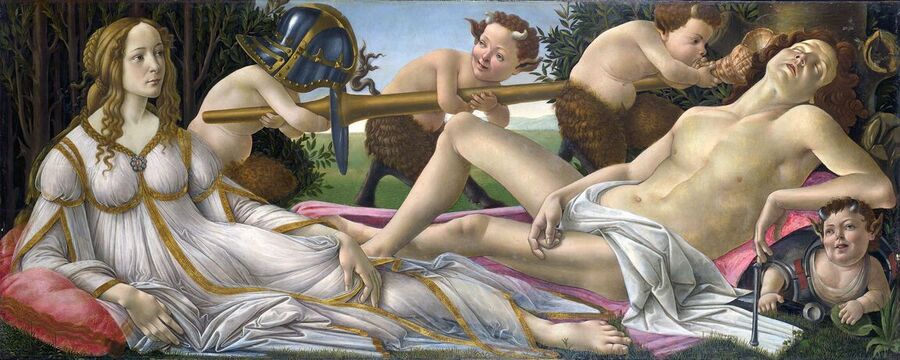
Botticelli, Venus and Mars (c. 1485)
Concept
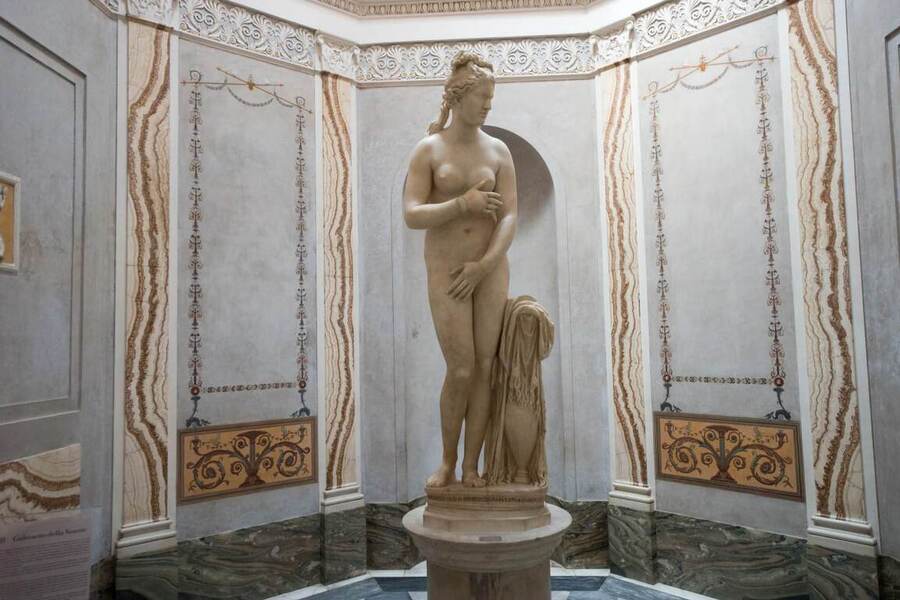
«Venus Capitolina» (Roman copy)
Beauty is an abstract concept that has not found a single form of expression throughout human history.
Venus—a goddess whose image seems woven from contradictions: she is both tender and daring, divine and achingly earthly. In myth, she is born from sea foam—and this immediately establishes her visual code: fluidity, moisture, pearlescent sheen, the sensation of a miracle just realized. Drops stream down her skin; her hair is heavy with salt, entangled with tiny shells and seaweed.
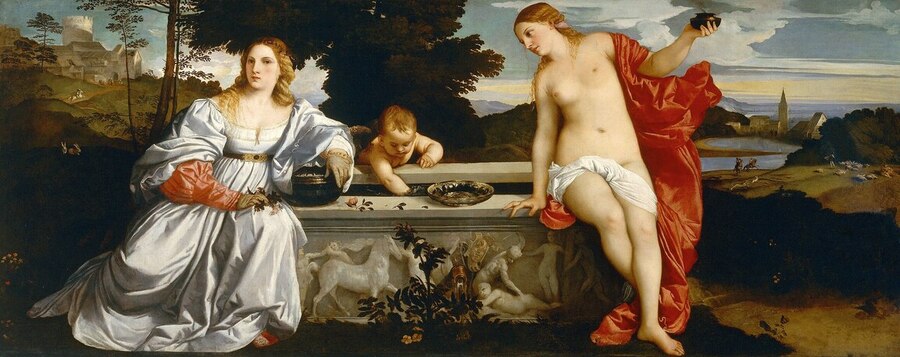
Titian, «Earthly Love and Heavenly Love» (c. 1514)
Venus—the only artistic archetype that has survived three millennia while never remaining the same.
Every era didn’t just depict a goddess—it «rewrote» her, imbuing the familiar silhouette with its own conceptions of the female body, desire, and power. The name remained constant; everything else changed: proportions, posture, gaze, environment, and even the right to be seen.
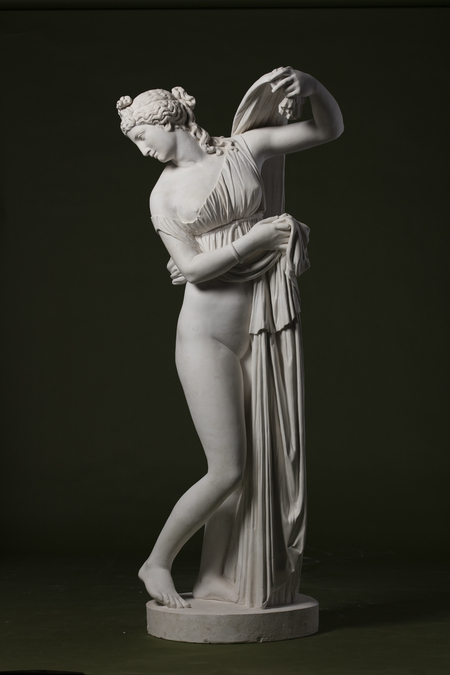
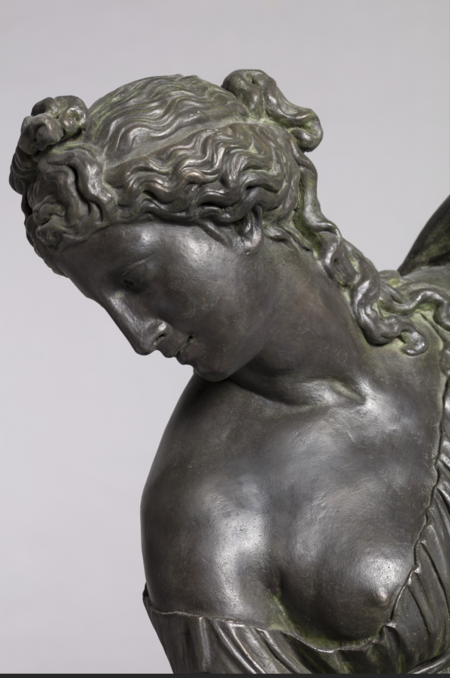
«Venus Callipygus»
That is the core of the research: to trace how the myth of the beautiful goddess transforms into a mirror of culture. Where Venus appears, culture speaks frankly about itself—about what was considered the ideal, what was considered sin, what became a commodity, and what served as a manifesto.
Upper Paleolithic
Venus as a Guarantee of Survival
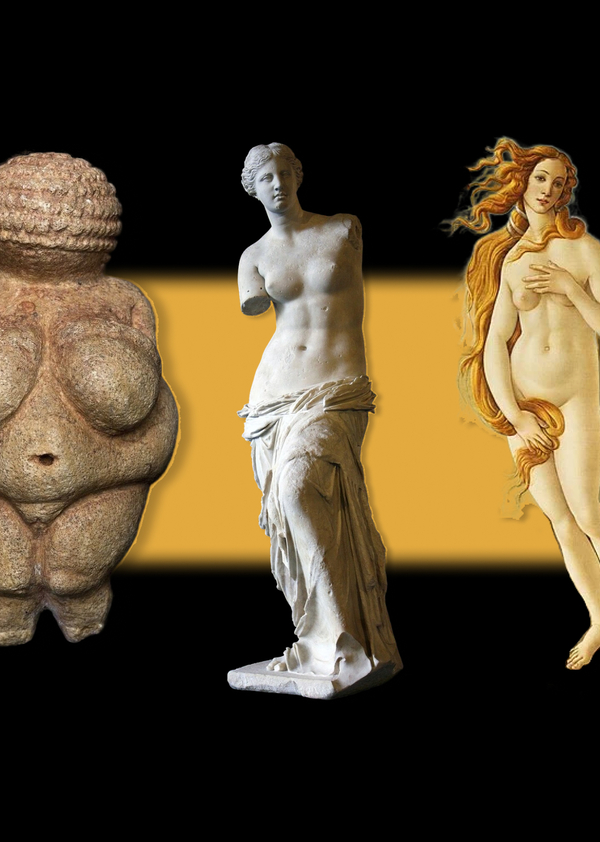
The oldest known image of Venus is the Willendorf figurine, an 11.1 cm statuette made of oolitic limestone and tinted with red ochre. The sculptor focused entirely on the body: hypertrophied breasts, abdomen, and hips—and a complete absence of a face and feet. The figure from Hohle Fels, like the Willendorf figurine, emphasizes body parts symbolizing fertility, while the head is disproportionately small compared to the body.
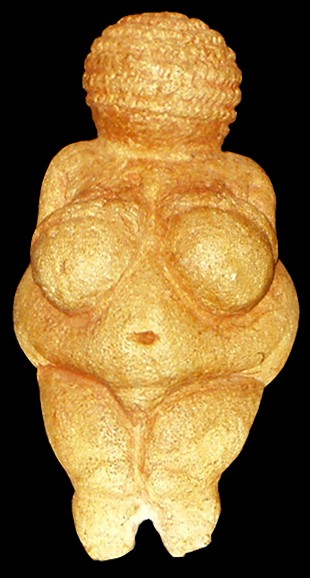
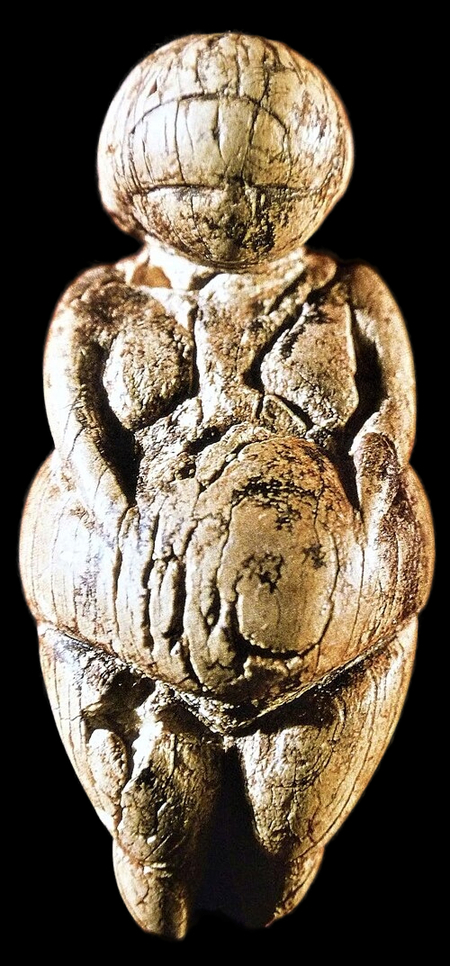
«Venera Villendorf» and «Venera Kostyonkovskaya»
The Willendorf figurine is not an isolated instance but part of a larger series; similar figurines have been found across a vast area stretching from France to Siberia. The oldest known—Venus of Hohle Fels (Germany, circa 40,000–35,000 years ago)—was carved from mammoth ivory and stands only about 6 cm tall; instead of a head, it has a loop, indicating the figure was worn as a pendant.
Venus of Hohle Fels (Germany, approx. 40,000–35,000 years ago)
Venus of Losel (France, c. 25,000 years ago)—no longer a statuette, but a relief on a limestone slab about 45 cm high: a woman holding a bison horn with notches, which is sometimes interpreted as a lunar or calendrical count.
«Venus of Lesbos» (France, c. 25,000 years ago)
Why is it like that?
In the primordial world, the ideal woman was one capable of bearing healthy offspring: fullness signified nourishment, health, and reproductive vitality. This is not a portrait, but a fertility amulet proclaiming «strong, nourished, fertile”—the survival ideal in the Ice Age. Nevertheless, scientists are cautious: „Researchers in the 20th century dubbed these figurines ‘Venus, ’ analogously to the ancient goddess, but their actual purpose—whether as an amulet, a mother goddess, or a portrait of a specific woman—remains impossible to confirm.“
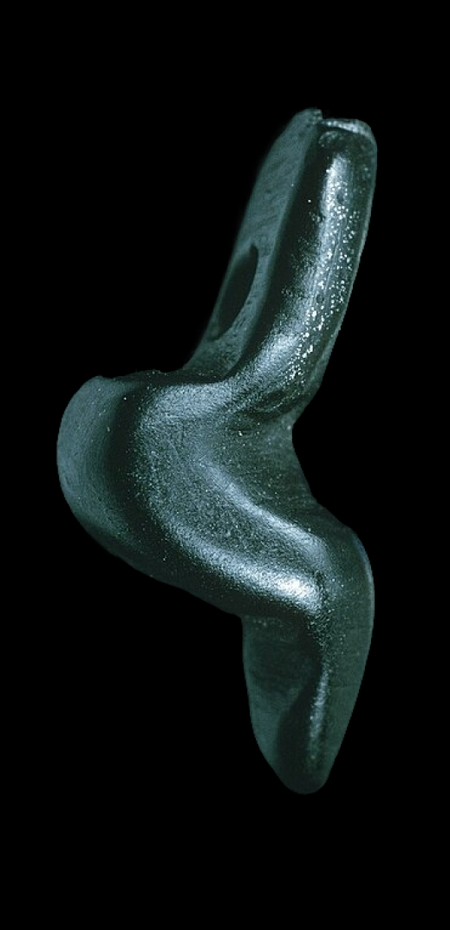
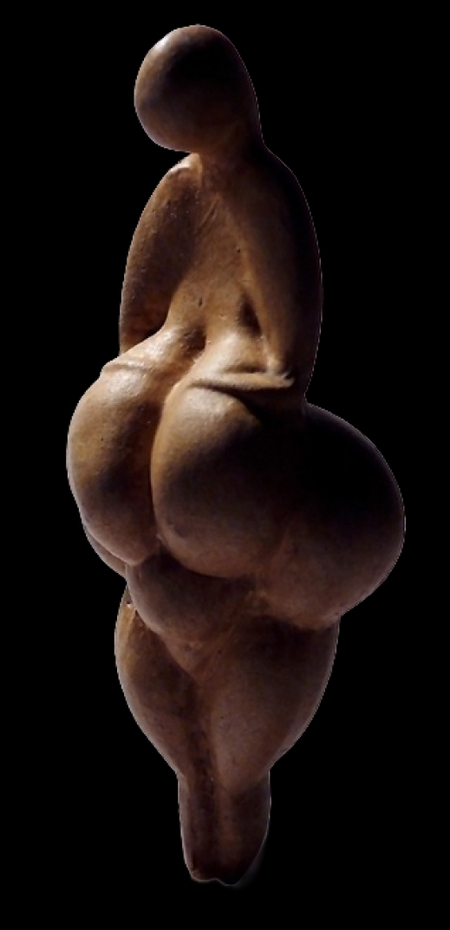
«Venus Nevshatelskaya» and «Venus Lespugskaya»
Antiquity
«Aphrodite of Milos» (c. 130–100 BCE)
Turning Point—Aphrodite of Knidos by Praxiteles (c. 350 BCE): the first depiction of the goddess completely nude. The contemporary reaction is telling: the residents of Kos, who commissioned the statue, were so frightened by the «wrath of Aphrodite» that they opted for a clothed version—though Knidos purchased the nude, which became a place of pilgrimage. The pose, with hands modestly covering the body, would later become cemented as the «Venus Pudica» canon—the «modest Venus.» The Venus de Milo (Hellenism, c. 130–100 BCE) perfected this canon: a proportional, realistic yet unexaggerated body, and a calm, impassive face—the «embodiment of eternal rational harmony.»
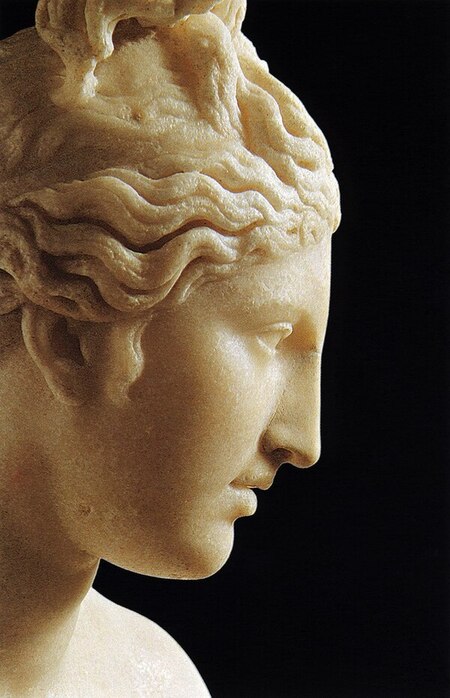
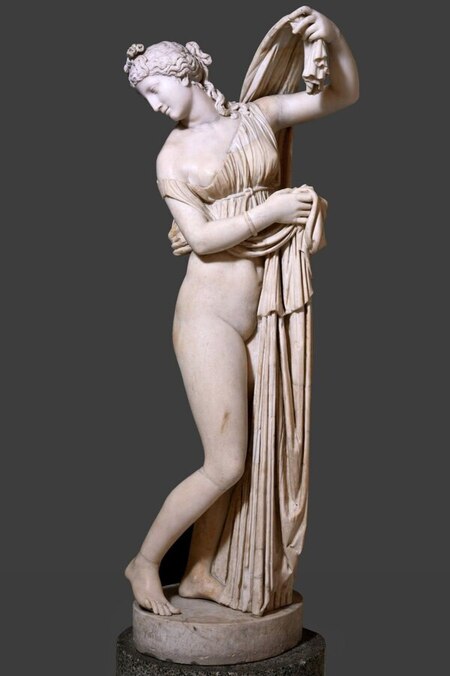
«Venus of Callipolis» (2nd century BCE)
Why Is It So?
Greek culture viewed the beautiful body as evidence of inner harmony: physical beauty attested to spiritual wellbeing, and depicting the gods in any form other than statuesque was simply unthinkable. Sculptors developed mathematical canons of proportion—Praxiteles calculated that the head should measure eight times the height of a woman. The ideal shifted from the «reproductive» body to the «harmonious» one: a woman’s value began to be measured not by fertility, but by measure and proportion.
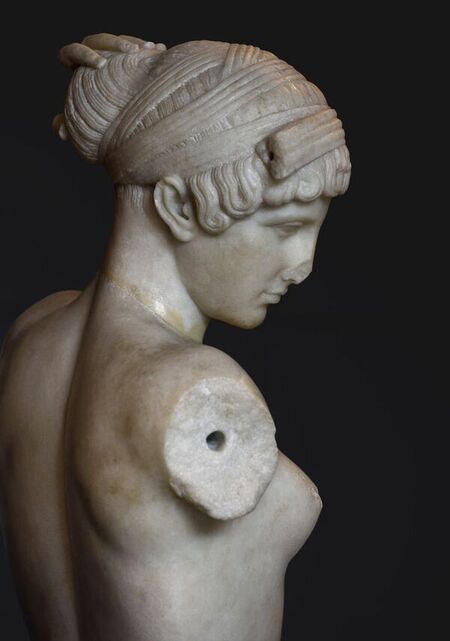
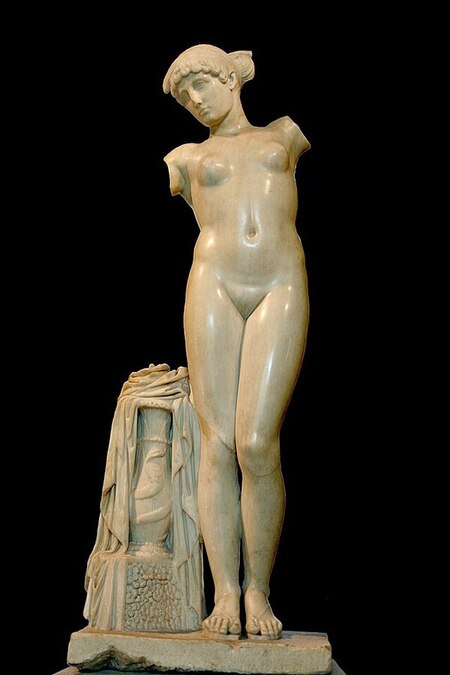
«Venus Esculapienne» (Roman copy, 1st century BCE)
The Middle Ages
Medieval culture rarely depicts Venus—and this in itself is a powerful visual fact of the era. Displaying nude female bodies in painting was not customary; Eve, the catalyst of the Fall, remained the only «acceptable» nude figure. The ideal became the Virgin Mary and pale-skinned «dames» with high foreheads, small breasts, and modestly downcast eyes; furthermore, the body was concealed and «corrected”—girls were bound in the chest from childhood to conform to the established canon.