Introduction
Jens Hoffmann transitioned to curating from the theater. In an interview with 200% magazine, he explains that when preparing an exhibition, he carefully considers the sequence of works, their connections, and the moments of pause in the viewer’s journey. His theatrical background helps him shape not just the exhibition itself, but also the entire process of how it is perceived [4].
For this presentation, I selected three projects where these questions are addressed in different ways. For the People’s Biennial, Hoffmann and Farrell Fletcher sought participants outside of the largest art centers in the United States [14]. For the 12th Istanbul Biennale, Hoffmann and Adriano Pedrosa grouped works around themes from the oeuvre of Félix González-Torres [20]. In Other Primary Structures, Hoffmann revisited a 1966 exhibition to re-examine the artists it featured [5, 31].
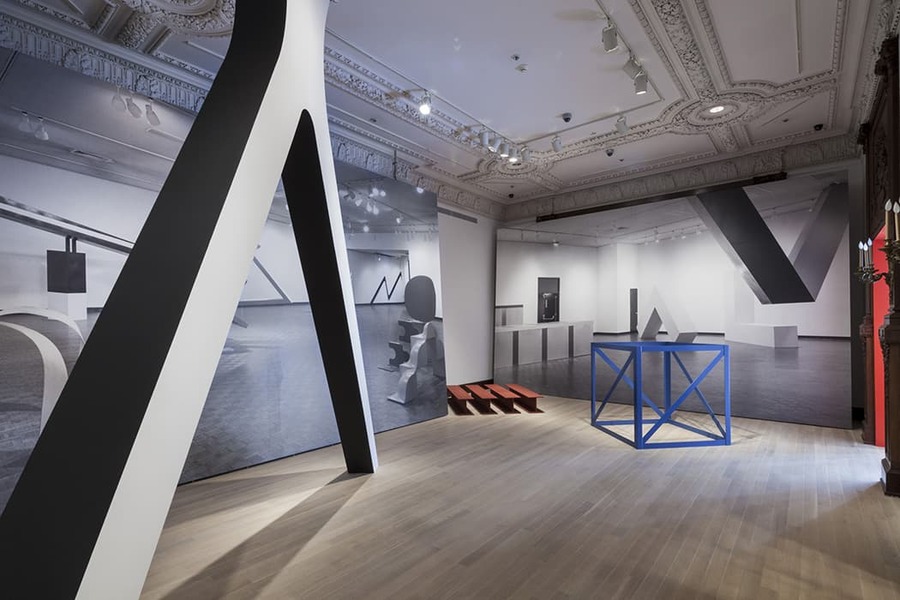
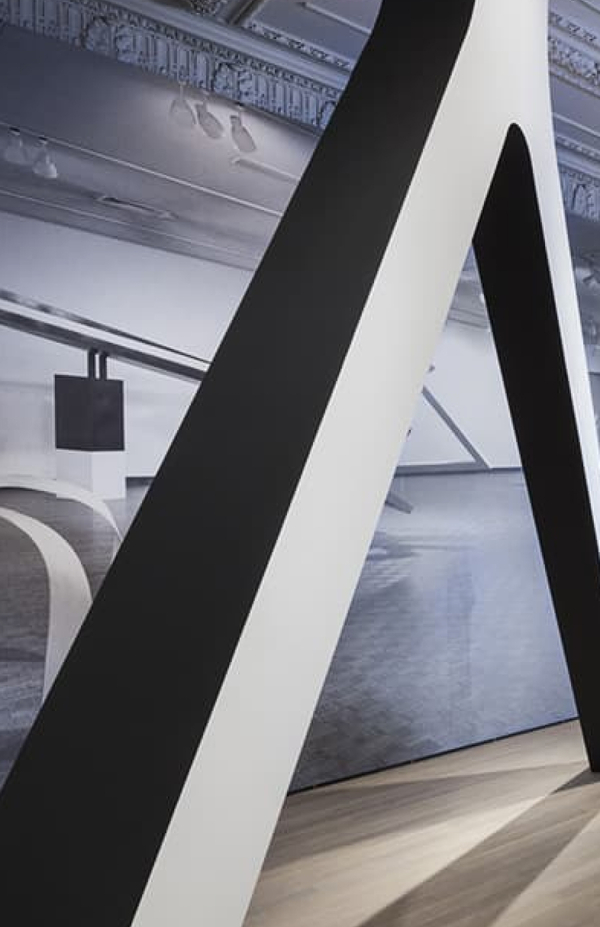
Other Primary Structures. Exhibition view. Jewish Museum, New York, 2014. Photo: David Heald. [1]
Jens Hofmann Biography
Jens Hoffmann Mesén was born in San Jose, Costa Rica, in 1974 [1, 2]. He studied directing and dramaturgy at Ernst Busch School of Dramatic Arts in Berlin, and he earned his Master’s degree at DasArts—the school for research in theater and dance at the Amsterdam School of Arts (1996–1998) [2, 3]. In an interview with the magazine 200%, Hoffmann mentioned that the Berlin school allowed him to deeply study Brecht, which influenced his understanding of the exhibition [4].He began his career in theater: he worked as a dramaturgy assistant at the Theater am Turm in Frankfurt, and in 1997, he collaborated with Tom Stromberg on the theater program for documenta X [1, 4]. He then moved into exhibitions: his work at the Dia Art Foundation in New York, his position as an assistant curator at the Museum of Modern Art (MoMA) (1998–2000), and his role as curator at Museum Kunst Palast in Düsseldorf (2001–2002) [1].From 2003 to 2007, Hoffmann headed the exhibition program for the Institute of Contemporary Art (ICA) in London, and from 2007 to 2012, he led CCA Wattis Institute for Contemporary Arts in San Francisco [1, 5]. In November 2012, he took on a specially created role as Assistant Director for Exhibitions and Programs at the Jewish Museum in New York [5], while concurrently, until December 2017, he served as curator for the Museum of Contemporary Art Detroit (MOCAD) [1, 6]. During these same years, he curated the 12th Istanbul Biennale (2011) with Adriano Pedrosa and was among the curators for the 9th Shanghai Biennale (2012–2013) [1, 5].In December 2017, the Jewish Museum ended its collaboration with Hoffmann following an internal investigation into staff allegations of sexual harassment. The Museum did not disclose details of the investigation [7]. Hoffmann denied knowingly allowing harassment or sexually inappropriate behavior [8]. All three projects under review date from an earlier period.
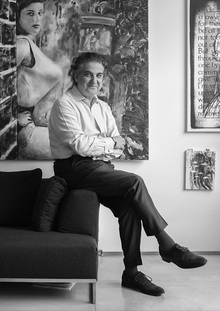
Jens Hofmann. Photo: Robert Adler. [2]
Books and Journal: The Exhibition as an Object of History and Theory
Book contents are provided according to publisher descriptions and reviews; links lead to publications used.
Hoffman has long been interested in exhibition history. According to Christopher Howard, whom he quotes, a course on exhibition history at the University of Konstfack in Stockholm led him to the project Exhibition Squared (2001)—an exhibition focusing on twelve exhibitions from the 1990s [9].
Ten Fundamental Questions of Curating (Mousse Publishing, 2013) is a collection edited by Hoffman. Ten curators, including Jessica Morgan, Maria Lind, and Adriano Pedrosa, each answer a basic question: What is a curator, an audience, an exhibition, and what is the curator’s responsibility? The essays were originally published in Mousse magazine between 2011 and 2012. The publisher presents the book as a return to the fundamentals of the profession amidst the rapidly growing body of literature on curatorship [10].
Show Time: The 50 Most Influential Exhibitions of Contemporary Art (Thames & Hudson, 2014). According to the Jewish Museum’s description, the book is dedicated to the recent history of exhibition practices and the changes in the work of contemporary art curators over the last twenty-five years [5].
(Curating) From A to Z (JRP|Ringier, 2014; supplemental edition — 2017)—a personal curatorial alphabet. Each letter introduces a concept from exhibition practice: A — artist, B — biennial, R — retrospective, W — «white cube.» The publisher emphasizes the book’s diary-like tone [11, 12].
Theater of Exhibitions (Sternberg Press, 2015). In the announcement for the Swiss Institute presentation, the book is described as an attempt to rethink conventional methods of engaging with art in the context of commercialization and digital image dissemination. Curatorship is examined in relation to social, political, and economic circumstances [13]. Christopher Howard, discussing the book and its presentation, notes that Hoffman places more emphasis on the structure of the artistic environment than on analyzing individual artworks. In Howard’s assessment, the connection to theater in the text is understated compared to what the title might suggest [9].
The Exhibitionist—a journal about creating exhibitions, which Hoffman founded and edited; the first issue was released in 2010 [1, 9]. Curators revisited their own exhibitions on its pages years after they had closed. Howard noted that the journal paid almost no attention to external critique—published reviews [9].
In all of these publications, the exhibition is viewed as an original work with its own history, which can be analyzed as thoroughly as a standalone piece.
Jens Hoffman. (Curating) From A to Z. JRP|Ringier, 2017 (first edition — 2014). Cover. [3]
Jens Hoffmann. Theater of Exhibitions. Sternberg Press, 2015. Cover. [4]
People’s Biennial: A Biennial Without Art Capitals
2010–2012. Five venues across the United States. Curators: Jens Hoffmann and artist Harald Fletcher. Organizer: Independent Curators International (ICI), New York.
Hoffman and Fletcher conceived the project in 2009. The organizers positioned it as an alternative to the «standard» modern art biennial, which primarily showcases art from a few major cities—New York, Los Angeles, sometimes Chicago, Miami, or San Francisco [14]. Over the course of a year, the curators explored the creative ecosystems of five cities outside the largest hubs of the American art market: Portland (Oregon), Rapid City (South Dakota), Winston-Salem (North Carolina), Scottsdale (Arizona), and Haverford (Pennsylvania). In each city, they collaborated with a local institution, participated in public discussions and open calls, and met with artists; according to the organizers, they encountered hundreds of artists [14, 15, 16]. Ultimately, the exhibition featured 36 participants, including collectives and collaborative projects [14]. The selection process is documented in the catalog People’s Biennial 2010: A Guide to America’s Most Amazing Artists (ICI, 2011)—featuring interviews with the curators, texts from the venue staff, and artist statements [17].The exhibition opened on September 10, 2010, at the Portland Institute for Contemporary Art, and was subsequently shown at the Dahl Arts Center in Rapid City, the Southeastern Center for Contemporary Art in Winston-Salem, the Scottsdale Museum of Contemporary Art, and the Cantor Fitzgerald Gallery at Haverford College, where it concluded on March 2, 2012 [14, 15].
Selection, organization, and exhibition
Curators combined open calls, public meetings, and author visits with the work of local institutions. The final decision rested with Hoffman and Fletcher [14, 16].
The project was not broken up into five separate local exhibitions: the same group of 36 participants moved through all the participating institutions [14]. Viewers in Rapid City could see the work of artists from Portland or Haverford. New York was not part of the itinerary, despite the organizer being based there.
I view the word «biennale» in the title as a reference to a familiar institutional format. Applying it to artists outside of major centers lends weight to the project while simultaneously setting the participants apart with the descriptor «grassroots”—as a group distinct from those typically featured in biennales. The format influences the overall perception of the project, but it does not dictate how to interpret individual works.
Forensic Illustration and Design Studio
The breadth of the selection is clearly visible in two works from the ICI photo archive [18]. Jennifer McCormick is a certified medical illustrator; she creates visual evidence for legal proceedings that explains the nature of injuries and the course of medical procedures to juries [19]. Her involvement in the ICI archive is represented by the works Medical Demonstrative Evidence (2006–2010) [18]. These images serve a professional purpose: to accurately and clearly convey information to people without medical training. This example illustrates the distinction between professional skill and recognition within contemporary art: a specialist from an adjacent field becomes a participant in an art exhibition.
Jennifer McCormick, Medical Demonstrative Evidence, 2006–2010.
Dennis Newell’s work, Lego Battle with Droids and Clones (2010), is featured in the ICI archive as fragment [18]. Judging by the title and photograph, this is a multi-figure battle scene constructed from construction toy parts; the material and subject matter reference mass-market toys and a popular film saga.Including images created for court and constructions made from toy parts in a single exhibition demonstrates the diverse practices brought together by the selection.
Dennis Newell. Lego Battle with Droids and Clones, 2010. Fragment. ICI Photo Archive; photographer not specified. [6]
The same archive also contains Bob Newland’s work, Keepin’ Kids off Drugs in South Dakota, dated 1983 [18]. Selection, therefore, was not limited to recently created pieces; curators included both new and earlier works.
Pros and Limitations
The project gained recognition, making inclusion in professional networks a prerequisite for participation. It had continuations: from 2011–2012, Hoffman and Fletcher held solo exhibitions of six participants at People’s Gallery in San Francisco, and in 2014, the second People’s Biennial took place at MOCAD [1].
The limitations are primarily procedural. Out of hundreds of authors the curators met, 36 were selected for the exhibition by these two individuals. The organizers called the exhibition a snapshot of America’s creative practice [14], but the 36 participants from five cities constituted a curatorial selection, not a representative sample. The organizers described the participants as artists outside the recognized artistic mainstream [14]. In my view, this definition unites very diverse circumstances: McCormick’s case shows that she may be supported by a professional from an adjacent field. By grouping the participants under a single label, the project risks obscuring the differences in their professional experience.
The 12th Istanbul Biennale: Foreign Work as a Key
Untitled (12th Istanbul Biennial), 2011. September 17 — November 13, 2011. Istanbul, Antrepo 3 and 5 Warehouses. Curators: Adriano Pedrosa and Jens Hoffmann. Organizer: Istanbul Culture and Arts Foundation (IKSV). Exhibition Architecture: Office of Ryue Nishizawa. [20, 21]The curators began by focusing on the work of Félix González-Torres (1957–1996). The title echoes his method of naming pieces: «Untitled» followed by a parenthetical clarification. Five group exhibitions—Untitled (Abstraction), Untitled (Ross), Untitled (Passport), Untitled (History), and Untitled (Death by Gun)—were each based on one of his works. Around these central pieces were placed more than fifty individual presentations; over five hundred works were displayed in total, and approximately 110,000 people visited the biennale [20, 21].González-Torres’s work had previously been shown at the 5th Istanbul Biennial in 1997 [22]. In 2011, the original pieces were not present in the halls; they were reproduced in the guidebook [20], and, according to critic Sarah-Nil Smith’s observation, each work in the exhibition was presented only with a descriptive wall text [23].
Selection, Organization, and Exhibition
Selection. Participants’ names were kept secret until the opening [20]. Each personal presentation was tied to one or more themes of the group exhibitions and, according to the organizers, expanded upon them [24].
Organization. Several previous editions of the biennial, starting in 2005, were distributed across historical city buildings and neighborhoods; Pedrosa and Hoffman abandoned the Istanbul theme and consolidated everything in one location [23]. The organizers stated that they were catering to those who value the accompanying events as much as the exhibition itself [20]. There were indeed few parallel programs: the Remembering Istanbul conference in November 2010 and the Untitled (Film) film program, which was prepared in collaboration with the Istanbul Film Festival [21, 23].
Presentation. Rieu Nisizawa Bureau constructed freestanding volumes within the warehouses. Each group exhibition occupied its own dedicated space, defined by gray walls, with small rooms for individual presentations situated around them [23, 24]. The visitor cycled through two modes: a thematic overview, where works from different artists were compared based on a single criterion, and an in-depth encounter with one artist.
Passport Section: two documents
In MoMA’s explanation of Sue Williamson’s work For Thirty Years Next to His Heart (1990), the purpose of the document she used is revealed. During apartheid, the pass served as a mandatory identification document for Black residents of South Africa, containing records that allowed authorities to control their lives and movements. The artist transferred every page into individual frames—the work consists of 49 photocopies [25]. In Istanbul, it was exhibited in the Passport section [26]. For me, what is important here is the transition from a small, personal object to a wall-mounted exhibition: the traces of everyday control become available for public examination.