
- Introduction.
- Communication Channels.
- Theoretical Framework: Elaboration Likelihood, Uses and Gratifications Theory
- Analysis.
- Conclusion & Recommendations.
- List of literature and sources of images
Introduction
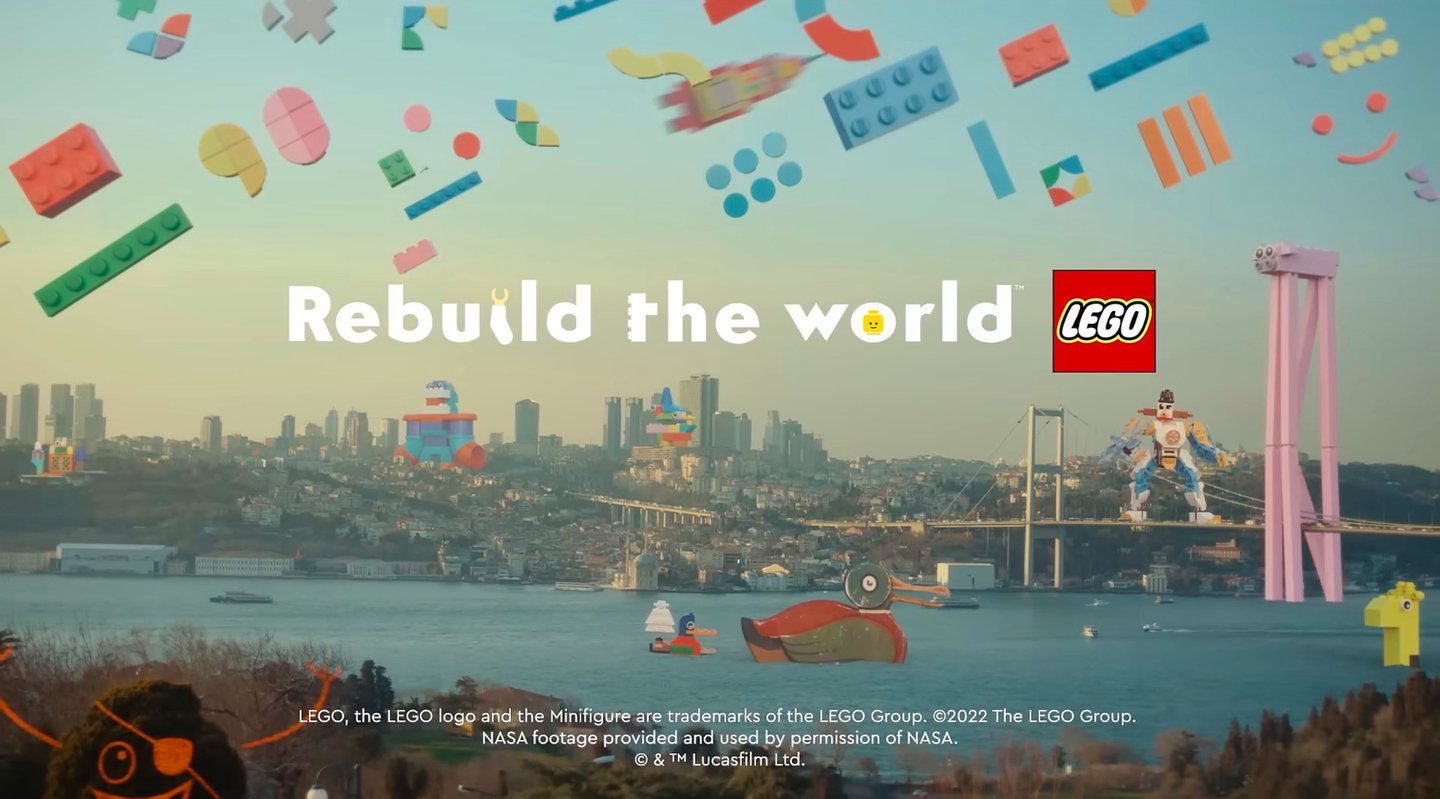
Frame from the LEGO 90th anniversary video
We chose LEGO because it is one of the most popular toy brands in the world. Many people know it from childhood, but the brand is also popular with adults. This makes the company interesting for communication analysis because they speak to different age groups. LEGO also has very strong visual communication. Their products are colorful, simple to recognize and easy to understand without many words. In addition there are remarkable symbols such as bricks and minifigures, which are wanted to be copied by many other companies, being not just a piece of game, but a complete collectable item. Another reason is the global audience. The brand is known in many countries and cultures. Which provides ways to create campaigns that are understandable for people from different backgrounds. For this project, we chose LEGO’s recent football collaboration connected with the FIFA World Cup 2026. This campaign is interesting because it combines LEGO’s playful visual style with global football culture and famous football players.
LEGO has a giant history spanning more than 90 years, but in this small study we focus on just one of its conceptual solutions: the collaboration with FIFA World Cup 2026, including the «Everyone wants a piece» commercial and the collectible sets featuring Messi, Ronaldo, Mbappé, and Vinícius Jr.
image, LEGO sets from the official website
Why this specific campaign? First, it is a complete, self-contained event that is easy to track and analyze. Second, it perfectly demonstrates how LEGO uses peripheral cues (famous athletes) to persuade a mass audience. Third, and most importantly, it speaks to all segments of LEGO’s diverse audience at the same time:
Children (4–12 years old): Attracted by bright minifigures of their football idols and the promise of immediate play. Parents (25–45 years old): Reassured by the trusted LEGO logo (safety, quality, educational value) and the familiarity of global stars. Adult Fans of LEGO (AFOLs) (18+): Motivated by collectible value, exclusivity, technical details (piece count, build complexity), and investment potential. Casual buyers: Guided by brand recognition, attractive packaging, and the «limited edition» cue. This campaign is tied to a global event (the FIFA World Cup), which allows us to examine how LEGO communicates across different cultures and age groups simultaneously.
By focusing on one conceptual solution, we can draw meaningful conclusions about the effectiveness of LEGO’s broader communication strategy without conducting a full historical analysis of the entire brand.
Communication channels
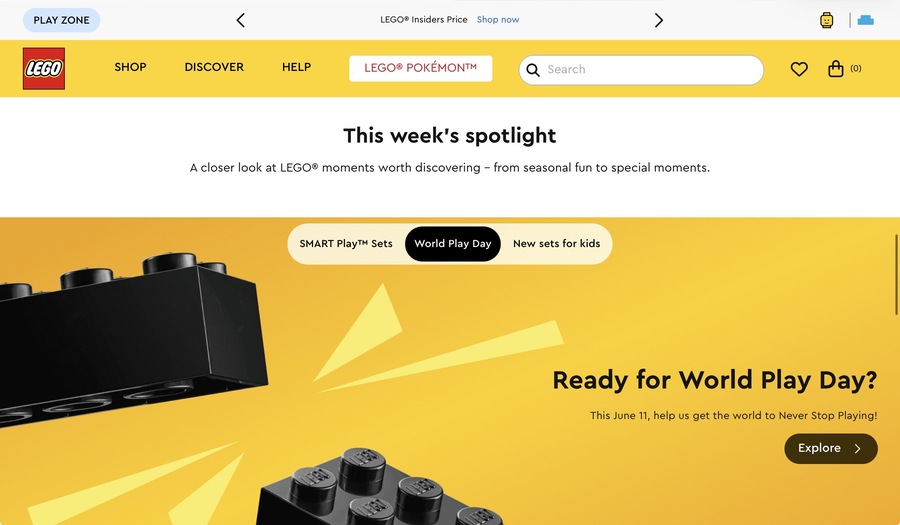
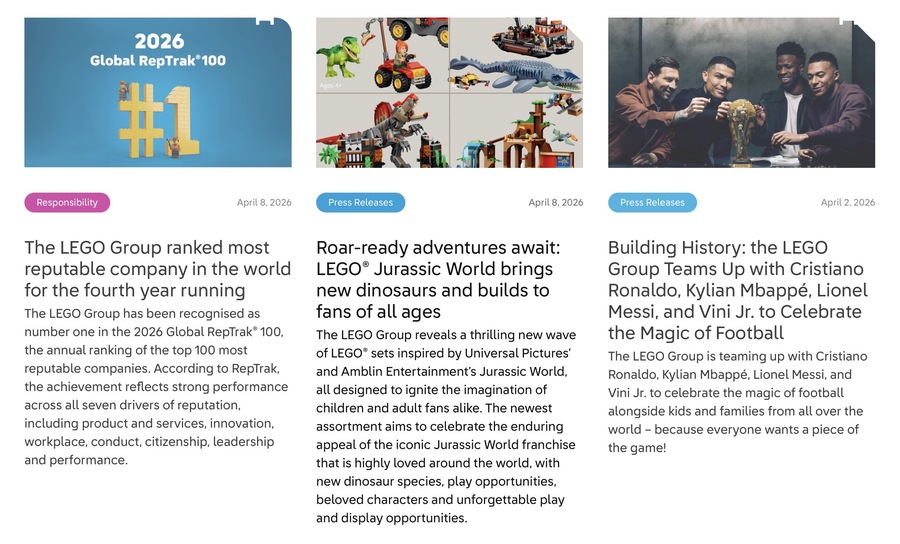
Screenshot of the official LEGO websites
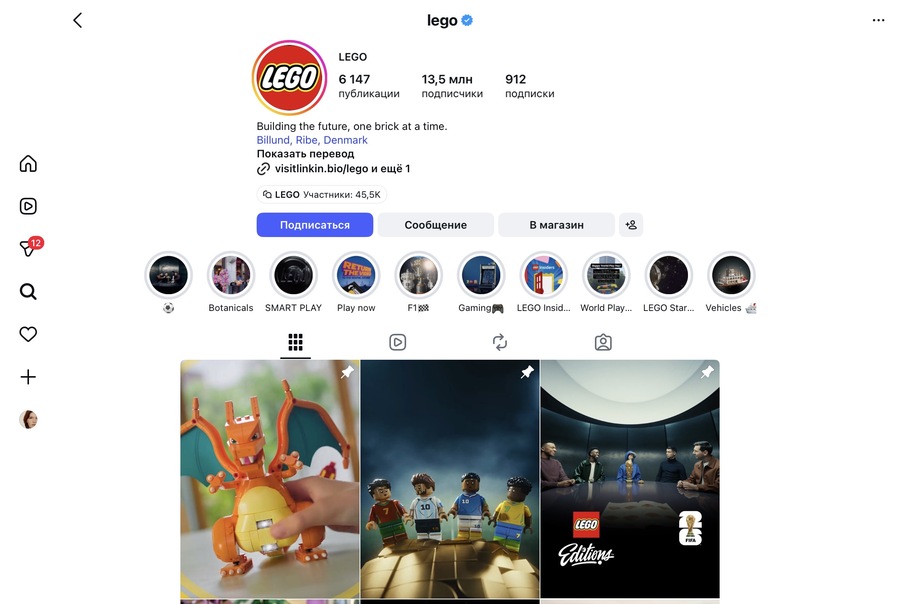
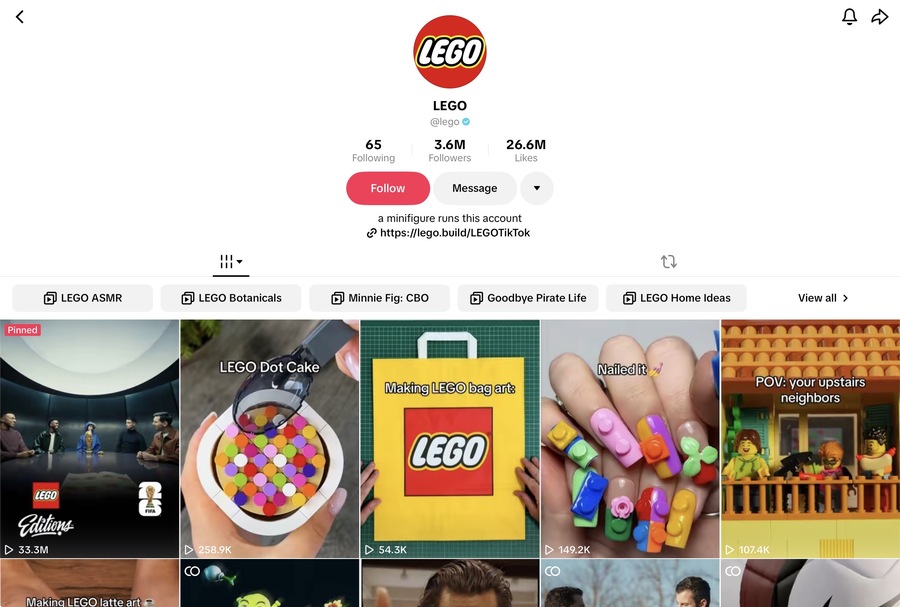
screenshots from LEGO social media
The official LEGO website gives more serious and detailed information. Social media is more visual, fast, and emotional. Media articles help the campaign look bigger and more important because other websites also write about it.
LEGO uses different communication channels to present this campaign. The main conduits are their official website, social media, and PR articles. This helps the brand reach different groups of people, so that everyone could get involved.
Social Media (YouTube, Instagram, TikTok, Twitter/X): The main commercial was launched on YouTube. Shorter clips and behind-the-scenes content appear on Instagram and TikTok.
Official Website (LEGO.com): This channel targets AFOLs and serious collectors.
PR and Media Articles: LEGO distributes press releases to sports and toy media. PR gives the campaign third-party credibility and makes it appear more important.
For this campaign, LEGO presents a collaboration with Cristiano Ronaldo, Kylian Mbappé, Lionel Messi, and Vini Jr, worldwide famous football players. This line is connected with the FIFA World Cup 2026 and brand-new football sets, representing sport’s icons and artifacts. LEGO claims that the campaign celebrates football, creativity, play, and fans around the world.
*Instagram, Facebook and other Meta services are recognised as extremist organisations and are banned on the territory of the Russian Federation.
Screenshot of the official LEGO YouTube channel page
Screenshot of the official LEGO YouTube channel page
The active promotion of LEGO’s FIFA World Cup 2026 campaign began in late March to early April 2026. The campaign was initially released on March 27, 2026, followed by the official global launch of the «Everyone Wants a Piece» commercial on April 2, 2026 on YouTube and social media. The commercial achieved over 180 million views within one day and surpassed 400 million views within one week. The LEGO Editions football sets officially launched in stores and online on May 1, 2026. The campaign is currently ongoing and actively developing. The most intensive promotion period is expected to coincide with the FIFA World Cup 2026 tournament, which will run from June 11 to July 19, 2026. During this time, LEGO plans to activate multiple initiatives, including «LEGO Goal Rush» in-store football challenges (starting May 30), the «LEGO Football Fest» pop-up, «Make and Take» activities, the «Build Up» live YouTube stream series, and LEGOLAND Resorts FIFA experiences across several countries. The total active promotion period of the campaign will be approximately four months, from late March to late July 2026.
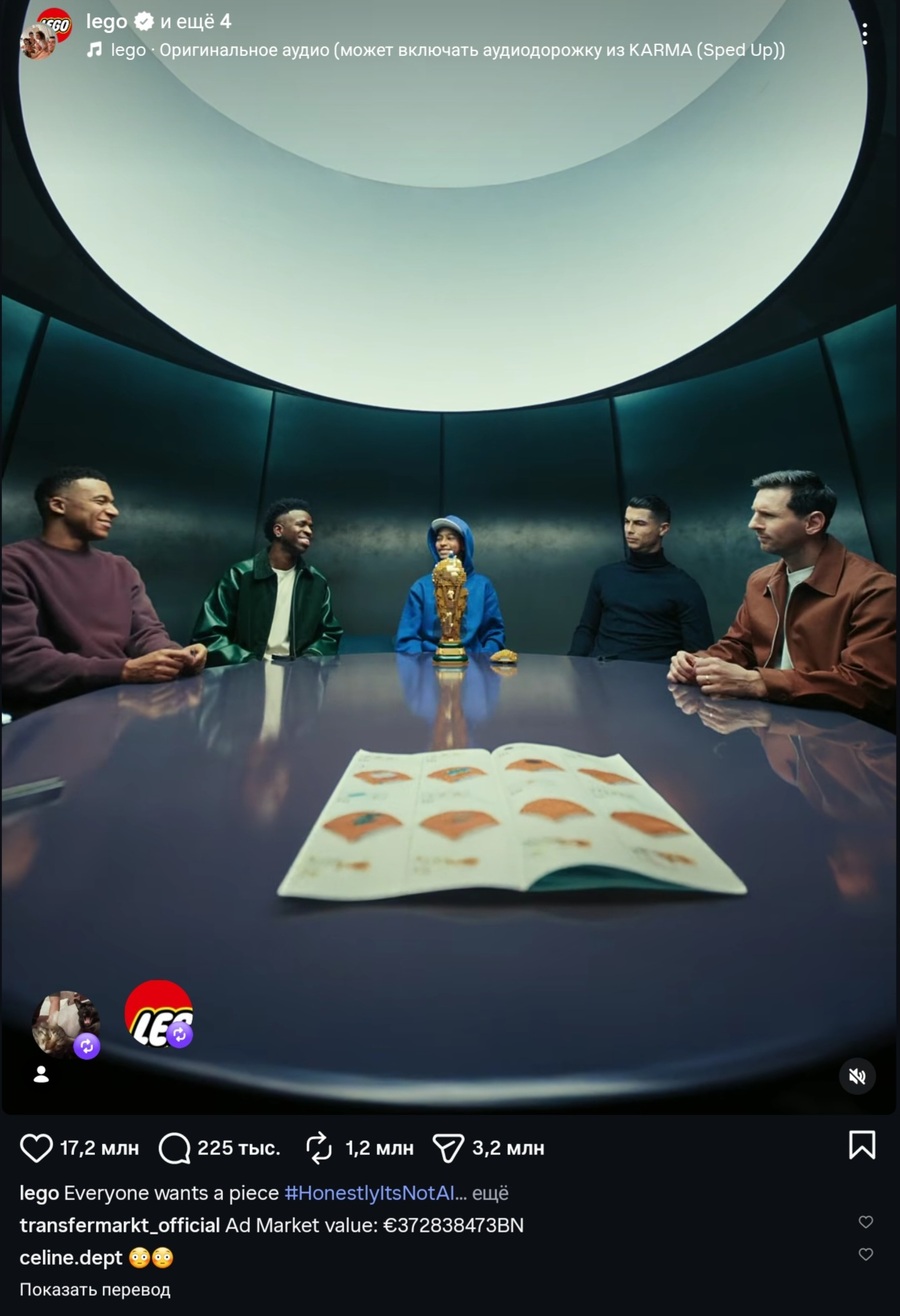
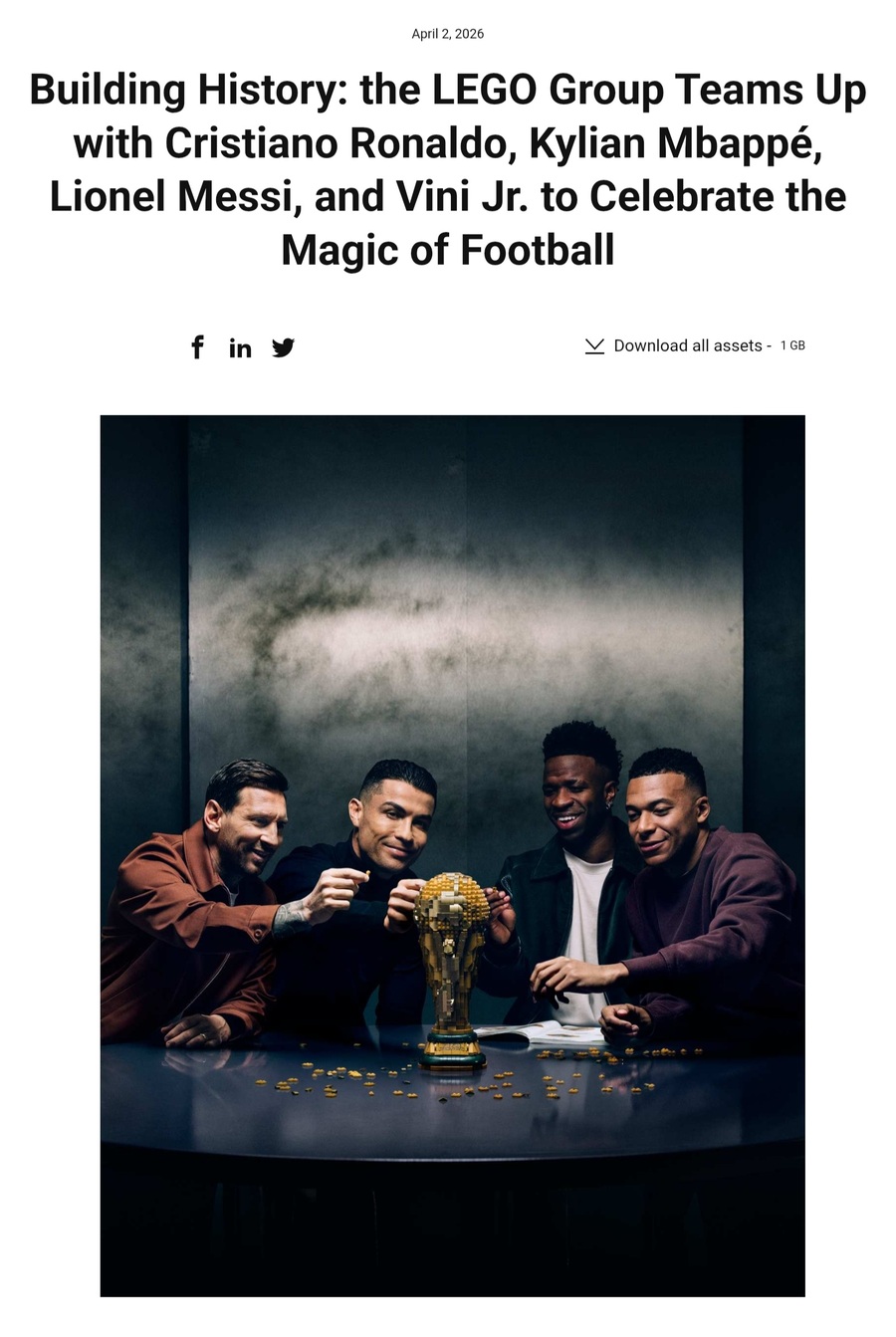
screenshots from LEGO social media / Screenshot of the article on Goal.com about the LEGO advertising campaign
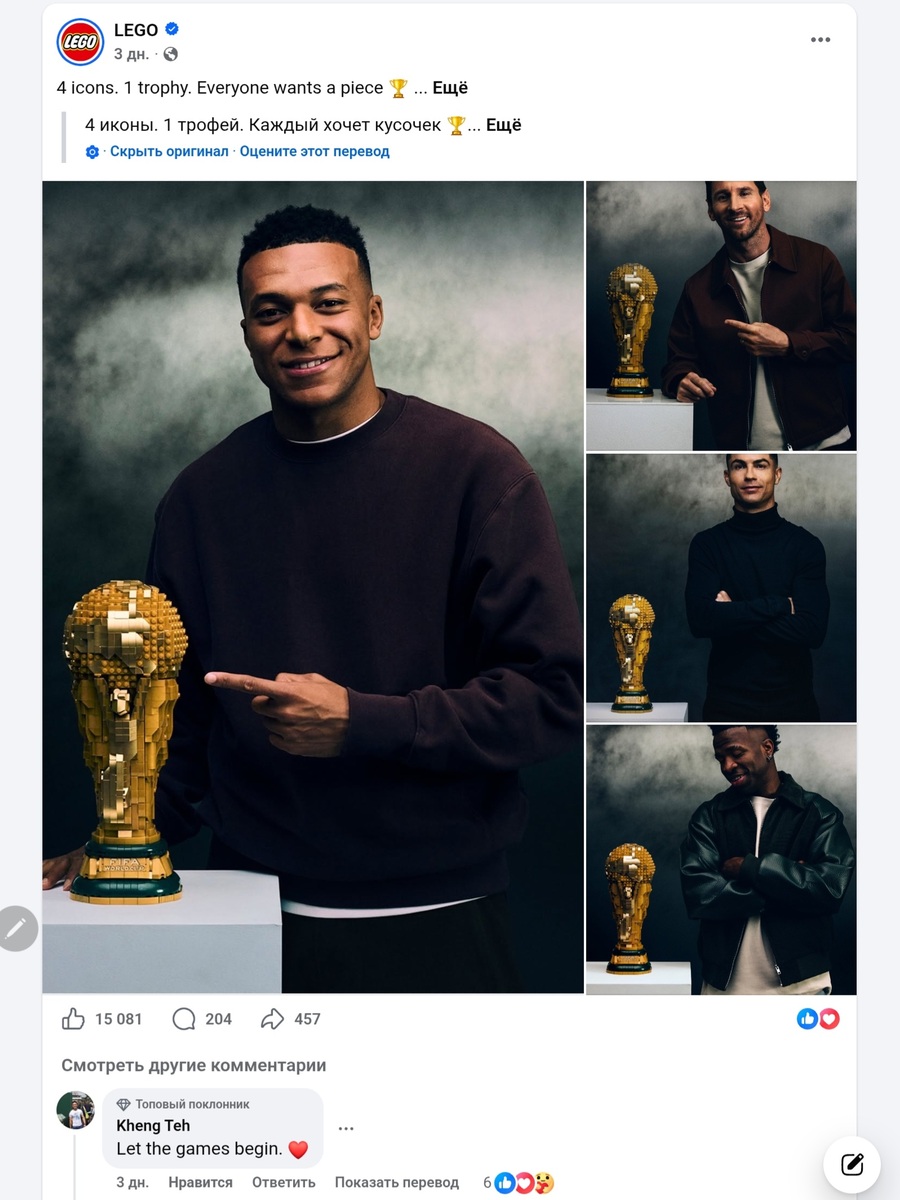
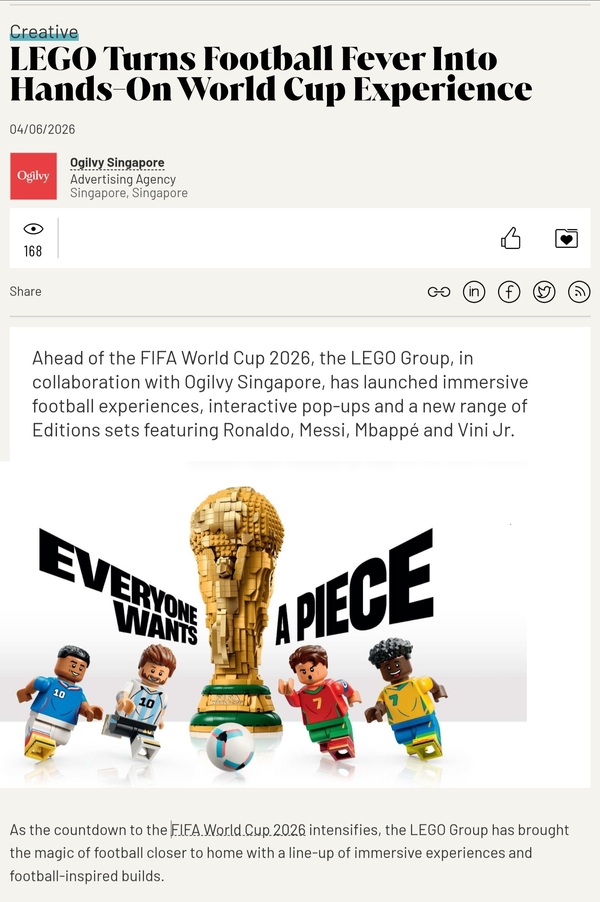
Screenshot of the official LEGO Social media / Screenshot of the article on LBBOnline about the debut of LEGO footballer minifigures
Theoretical Framework
To analyze the Lego brand’s communication strategy, we chose two complementary theories from this course: Elaboration Likelihood Mode (ELM) and Usability and Reward Theory (U&G). Below we explain why each theory is chosen and how to work together.
A possible development model, developed by Richard Petty and John Cacioppo (ELM), describes how persuasive messages change the attitude of readers or viewers. This theory has two convincing paths: the central route associated with high motivation, high attention and deep awareness of data processing efforts, and the peripheral route that rely on psychic qualities such as strength, sympathy, social proof, mutual compensation, consistency and deficit.
We chose ELM because the audience for LEGO is very diverse. On one hand, there is an adult LEGO fan (AFOL), a skilled and motivated collector. Which will carefully analyze technical details such as the number of parts, size, complexity of construction and price-to-value ratio. For this part, LEGO should provide interesting arguments for using the central route. On the other hand, there are children and regular customers (parents buy gifts) who have no incentive to process detailed information. For them, LEGO relies on secondary signals: Sympathy, reliable advantage, social proof and a shortage.
Thus, ELM allows us to scientifically explain how LEGO persuades different segments of its audience through different routes. The second theory we chose adds to this idea. U&G explains the audience’s active choice to consume media based on their needs.
The Uses and Gratifications Theory, introduced by Blumler and McQuail, offers a fundamentally different perspective. Instead of asking «what do media do to people?» (as traditional media effects theories do), U&G asks «what do people do with media?». The theory assumes that the audience is active and chooses media content to satisfy specific needs: diversion (escape from routine), personal relationships (social connection and parasocial bonds with celebrities), personal identity (self-expression and comparison with others), and surveillance (seeking useful information).
We chose U&G because it complements ELM. While ELM explains the mechanisms of persuasion (central vs. peripheral routes), U&G explains the motivations behind media consumption.
Analysis
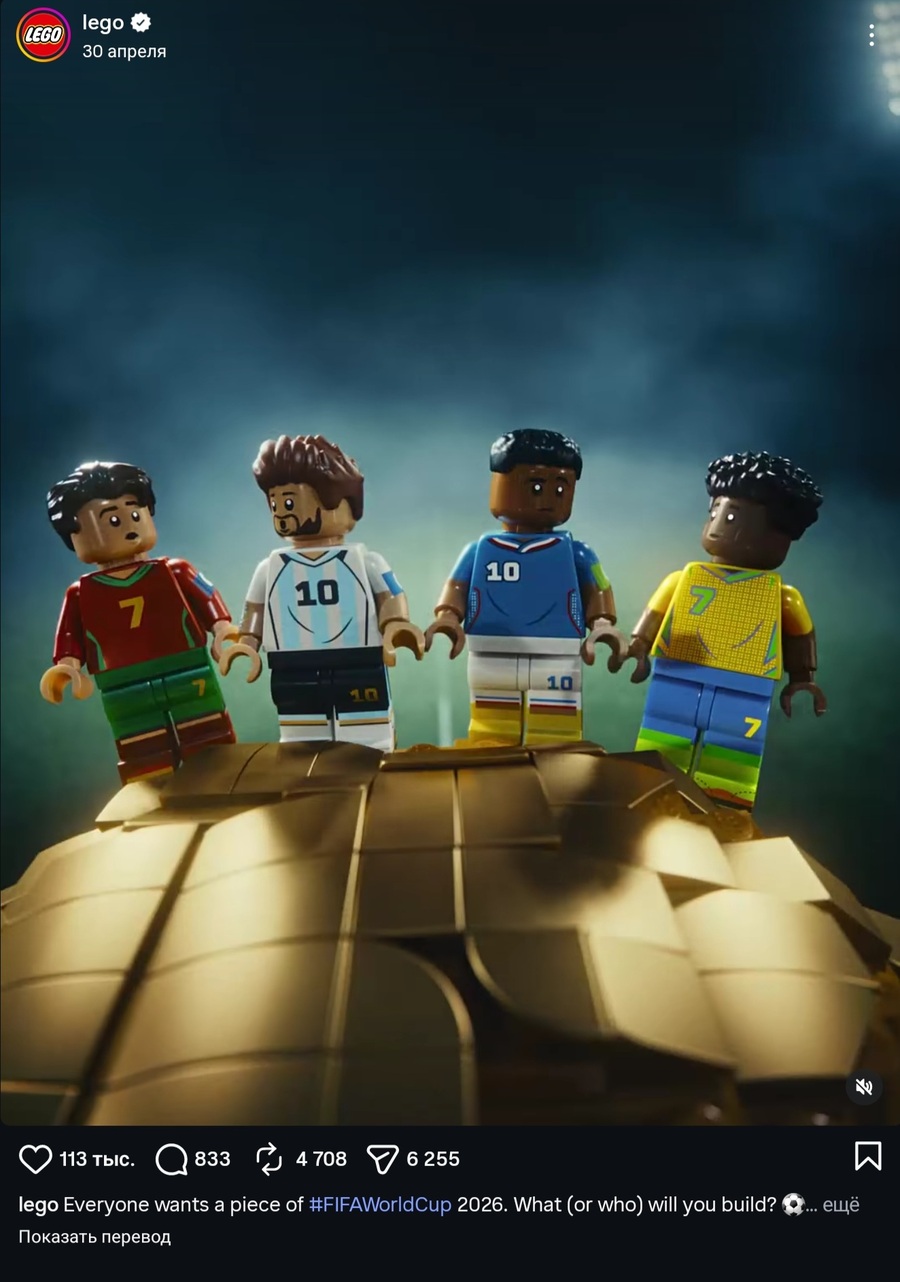
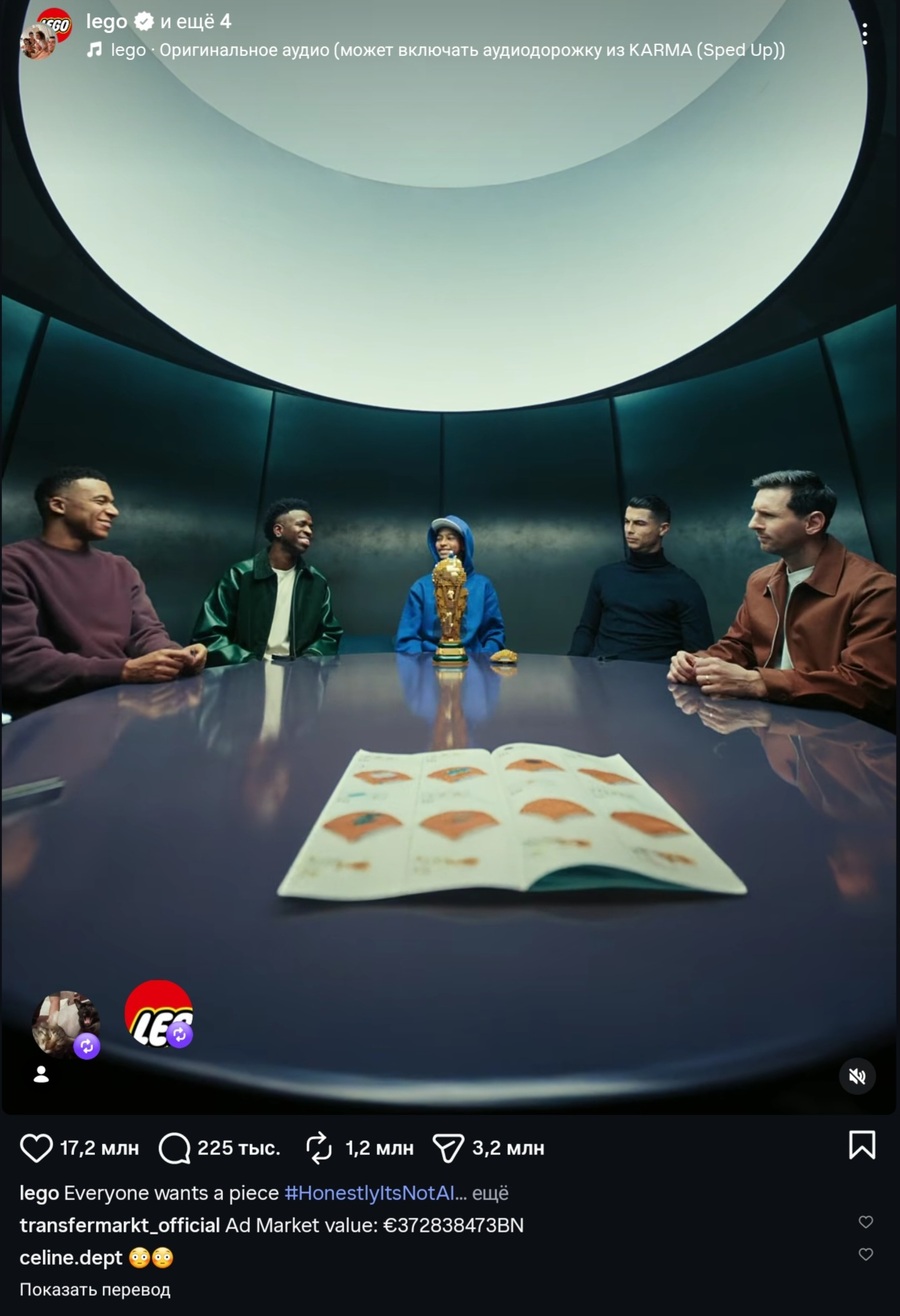
screenshots from LEGO social media
Theory 1: Elaboration Likelihood Model The theory divides how a viewer processes an advertisement into two routes: deep analysis and peripheral thinking.
The focus of the advertisement is shifted from product positioning to strong peripheral cues: featuring the most high-profile football figures with massive audience reach, as well as their direct interaction. Specifically, Ronaldo and Messi are shown in a playful confrontation within a Lego game format, attempting to place their mini-figures at the top of the World Cup trophy.
Also the appearance of a fan in the video, with the main faces of football. This unconsciously creates the right perception and reduces the direct detachment between football players and their fans, ensuring the correct interpretation of the advertisement. There is an underlying message that anyone can play an important role and make a move, not just football celebrities.
Information about the sets themselves serves merely as the final frame of the commercial, completing the chain of reactions and reminding the viewer of the company’s products. It links a positive peripheral image to the brand itself a function also performed by the trophy set around which the commercial’s plot revolves.
The advantages of using the peripheral route include the ability to immediately engage a mass audience of football fans who are not inclined to scrutinize arguments.
Screenshot of the official LEGO websites
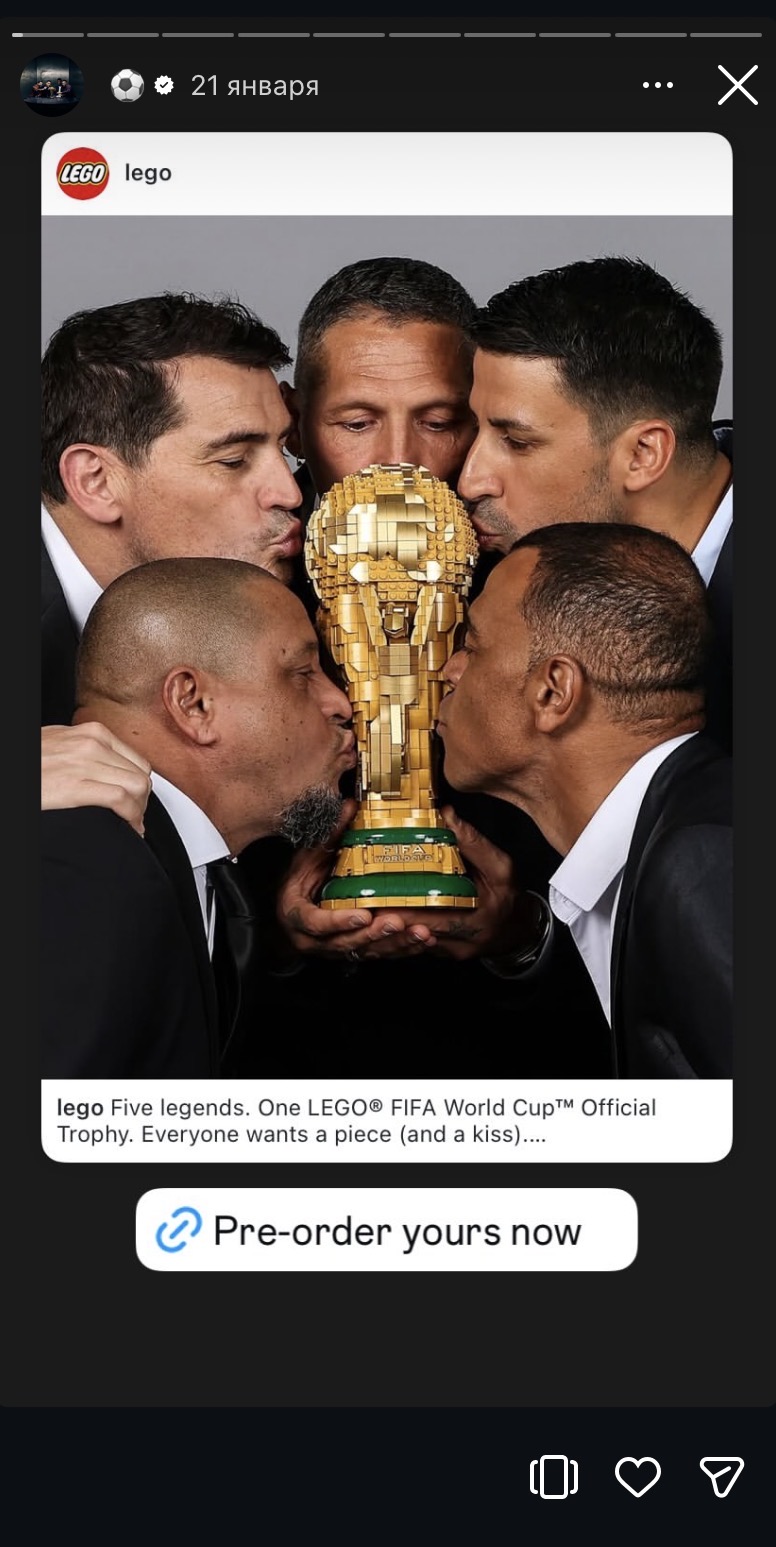
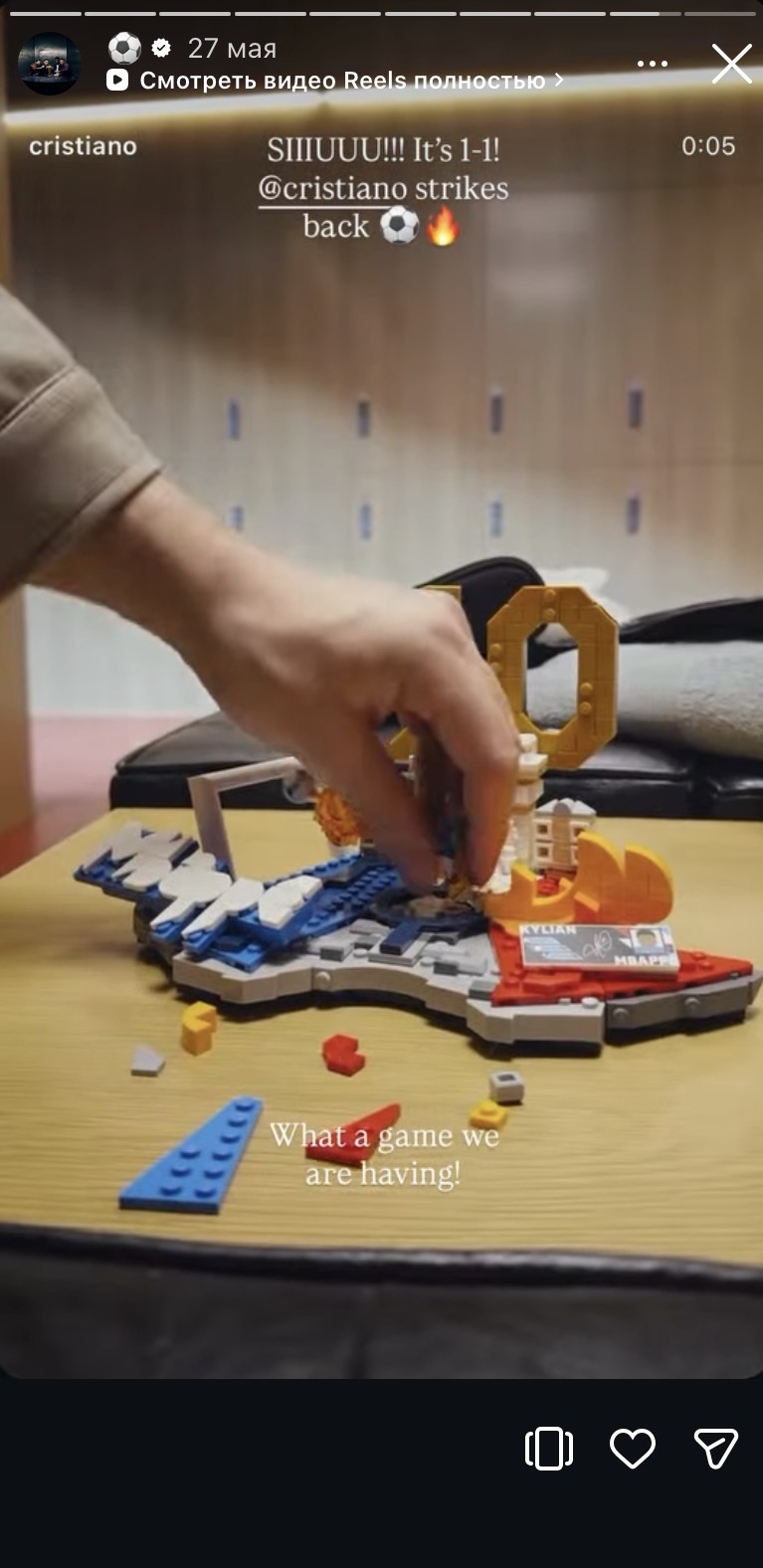
screenshots from LEGO social media / Screenshot of Cristiano Ronaldo’s Instagram story featuring the LEGO campaign
LEGO’s «Everyone wants a piece» commercial is a classic example of peripheral route persuasion. The advertisement relies on attractiveness (Messi, Ronaldo, Mbappé, Vinícius Jr.), triggering the «transfer» technique where viewers project positive feelings toward the athletes onto the brand. It also uses double authority (football legends + LEGO logo), making the message trustworthy because it is delivered by «those who know.» Social proof signals that if idols enthusiastically build LEGO, it is a norm worthy of imitation. Additionally, a sense of scarcity is created. Together, these peripheral cues instantly engage a mass audience without requiring deep analysis, effectively linking the brand to the positive image of global football stars.
Based on deep analysis, there is a viewer perception issue regarding the overvaluation of marketing over the original product. Following the initial emotional reaction, the viewer connects the increased price of Lego products with an expensive marketing campaign. Questions of this nature appear most frequently in the comments under official publications.
The peripheral route’s drawback — LEGO fans seeing marketing overvaluation — is neutralized by the central route. On LEGO’s website, fans find strong arguments: piece counts, dimensions, build options. AFOLs engage in deep analysis, and for them, strong arguments matter, not peripheral cues.
This is proven LEGO marketing. LEGO has used this dual-route strategy for years across all major campaigns (Star Wars, Technic, Creator Expert). Flashy peripheral ads capture mass attention, while detailed central-route information secures collector trust. The weakness of the peripheral route is neutralized — and LEGO knows this works.
Image of the «Builder» instruction for assembling the trophy on the LEGO website
image, LEGO sets from the official website
image, LEGO sets from the official website
Theory 2. Supporting theory: Uses and Gratifications Theory. The theory primarily addresses the interaction between people and advertising, suggesting a conscious path of advertising consumption rooted in the background of a viewer who is already involved in a specific cultural phenomenon.
Social integration and sudden news in the football world are immediately picked up by fans, who start sharing and discussing them. This generates the core effect itself and provides a massive PR boost from a large fan base for a video closely tied to football in this case. It acts as a form of escapism and social identity.
The advertisement partially shows the rivalry between famous football players, but to a greater extent, it shows that they are all engaged in a single process while sitting at the same table.
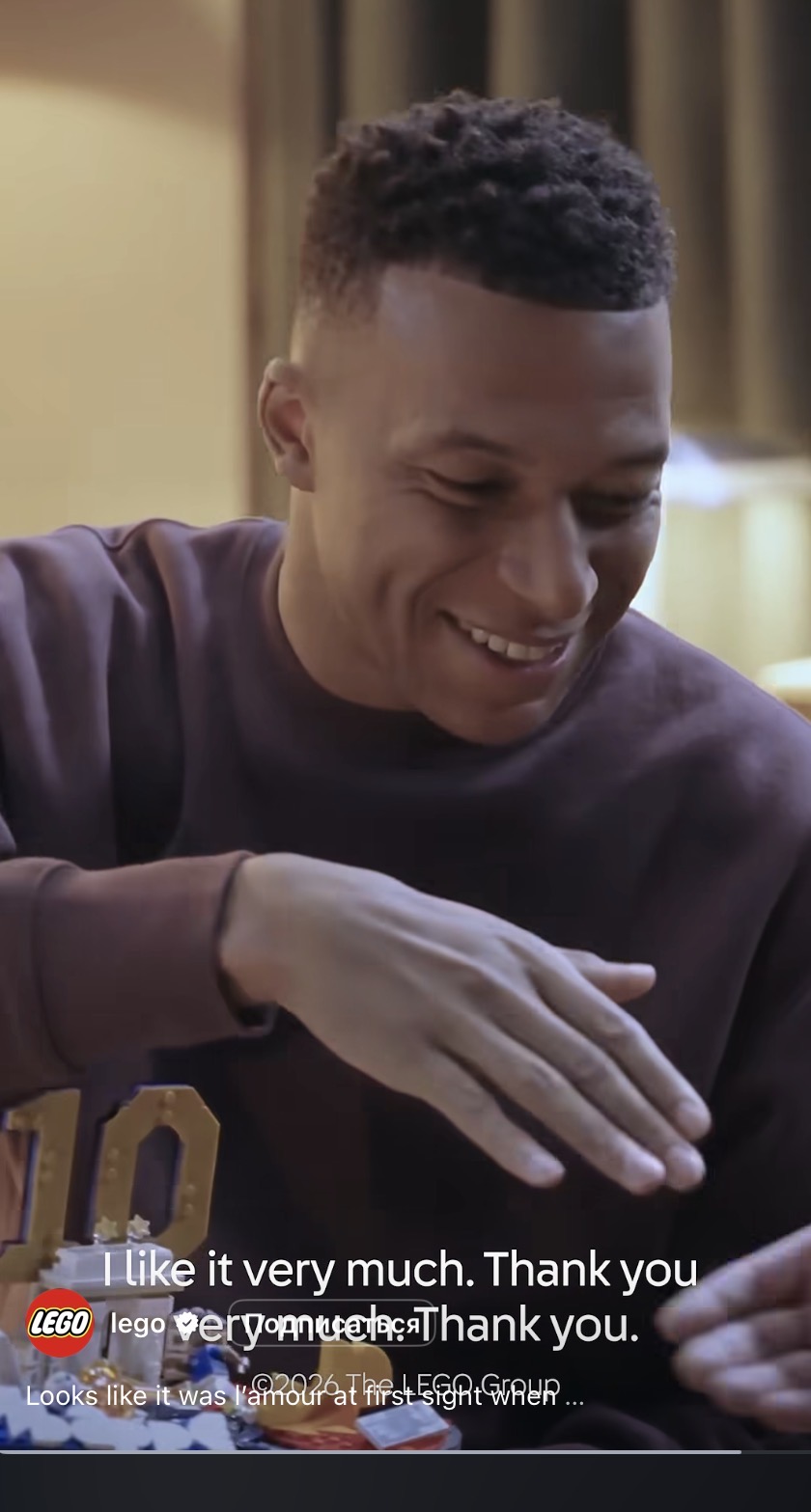
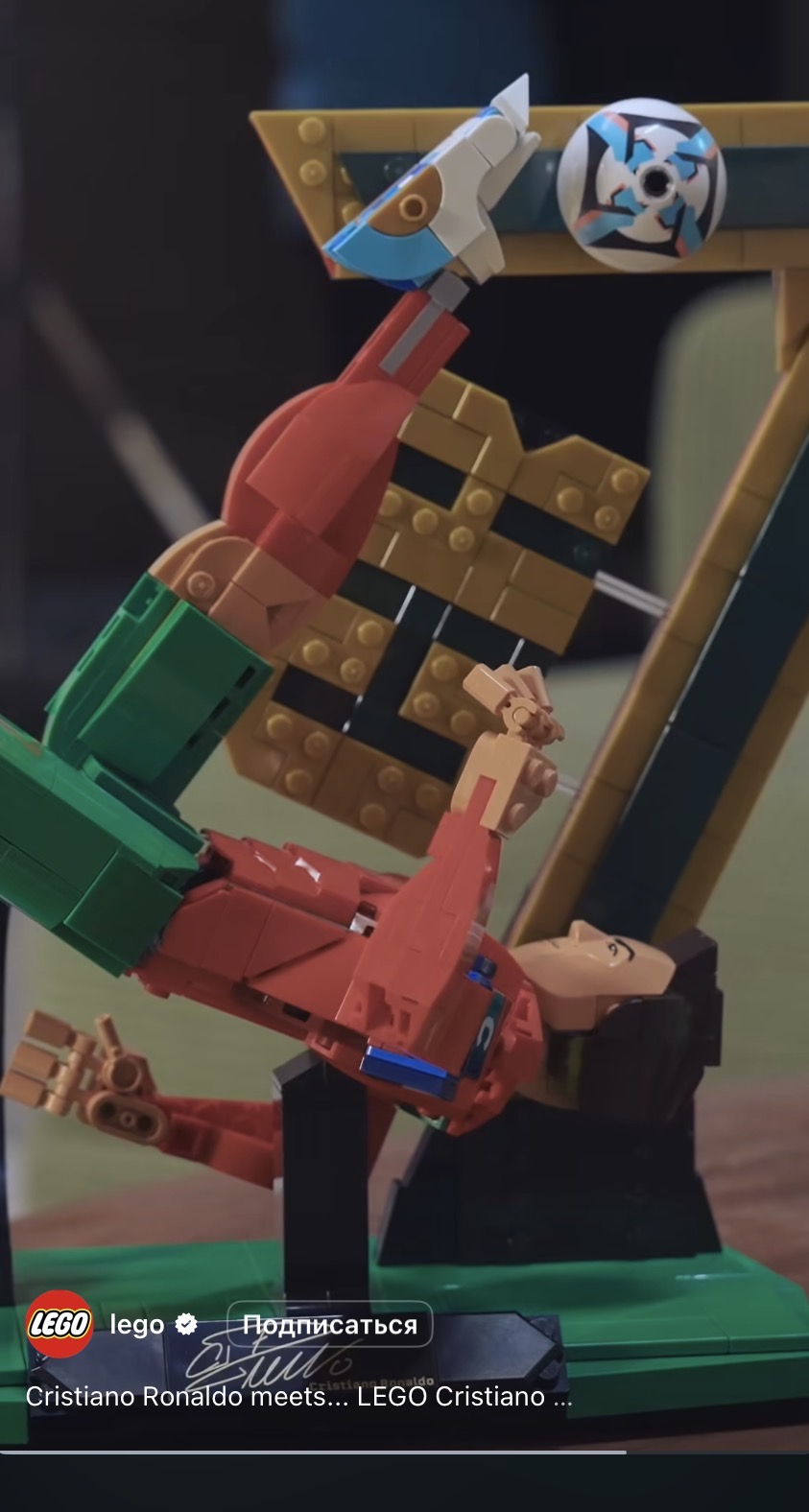
screenshots from LEGO social media
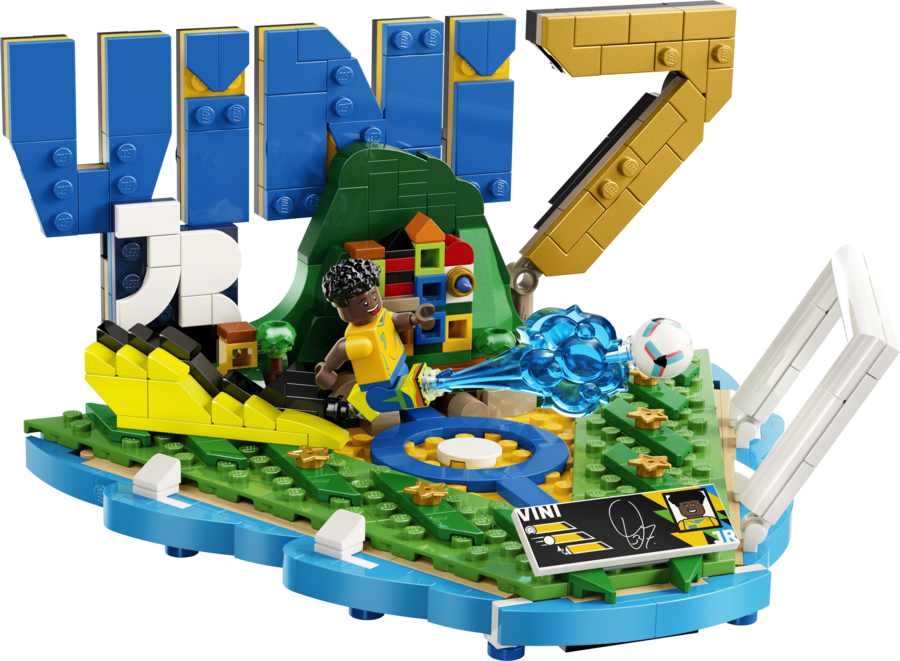

image, LEGO sets from the official website
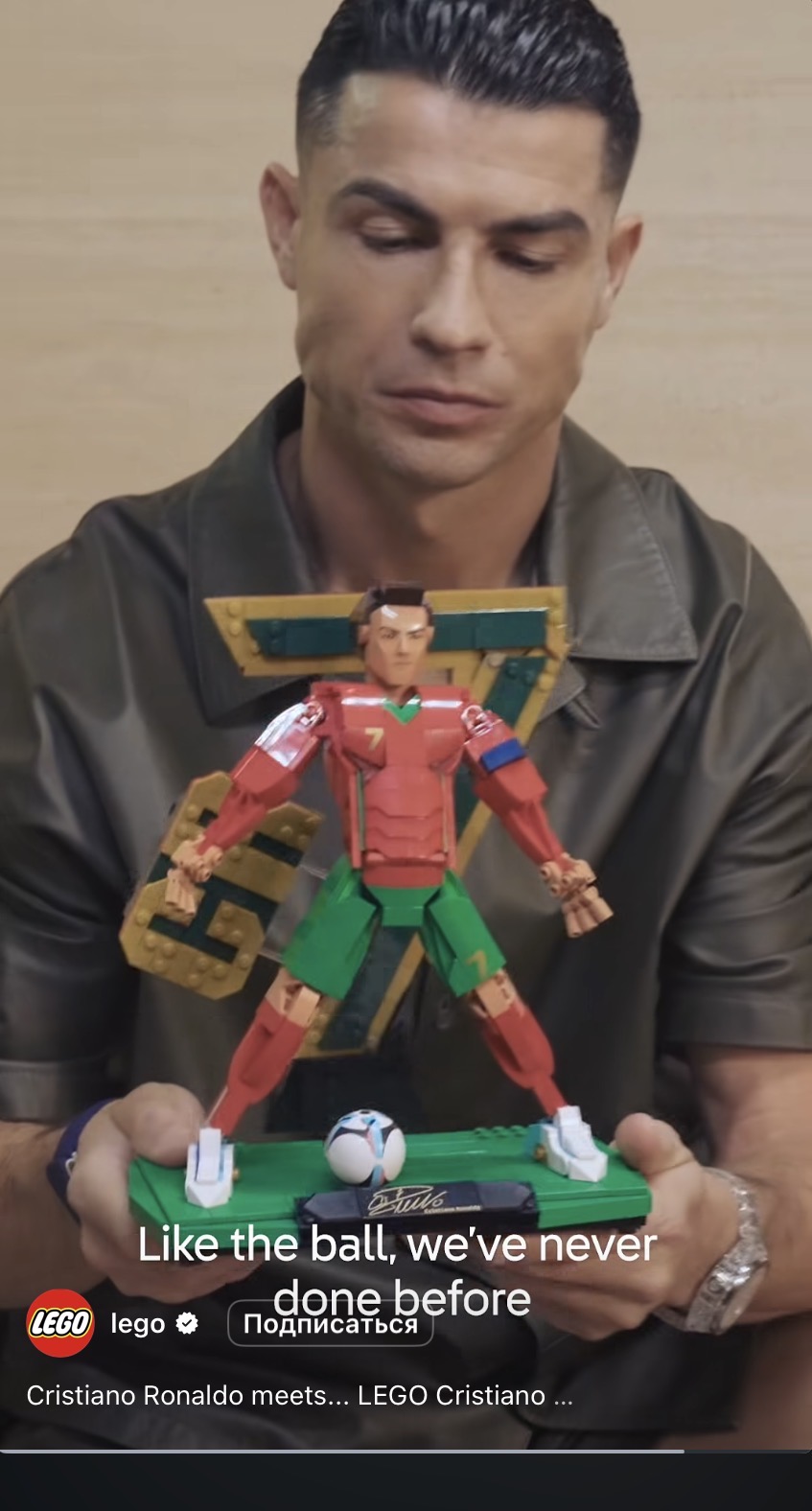
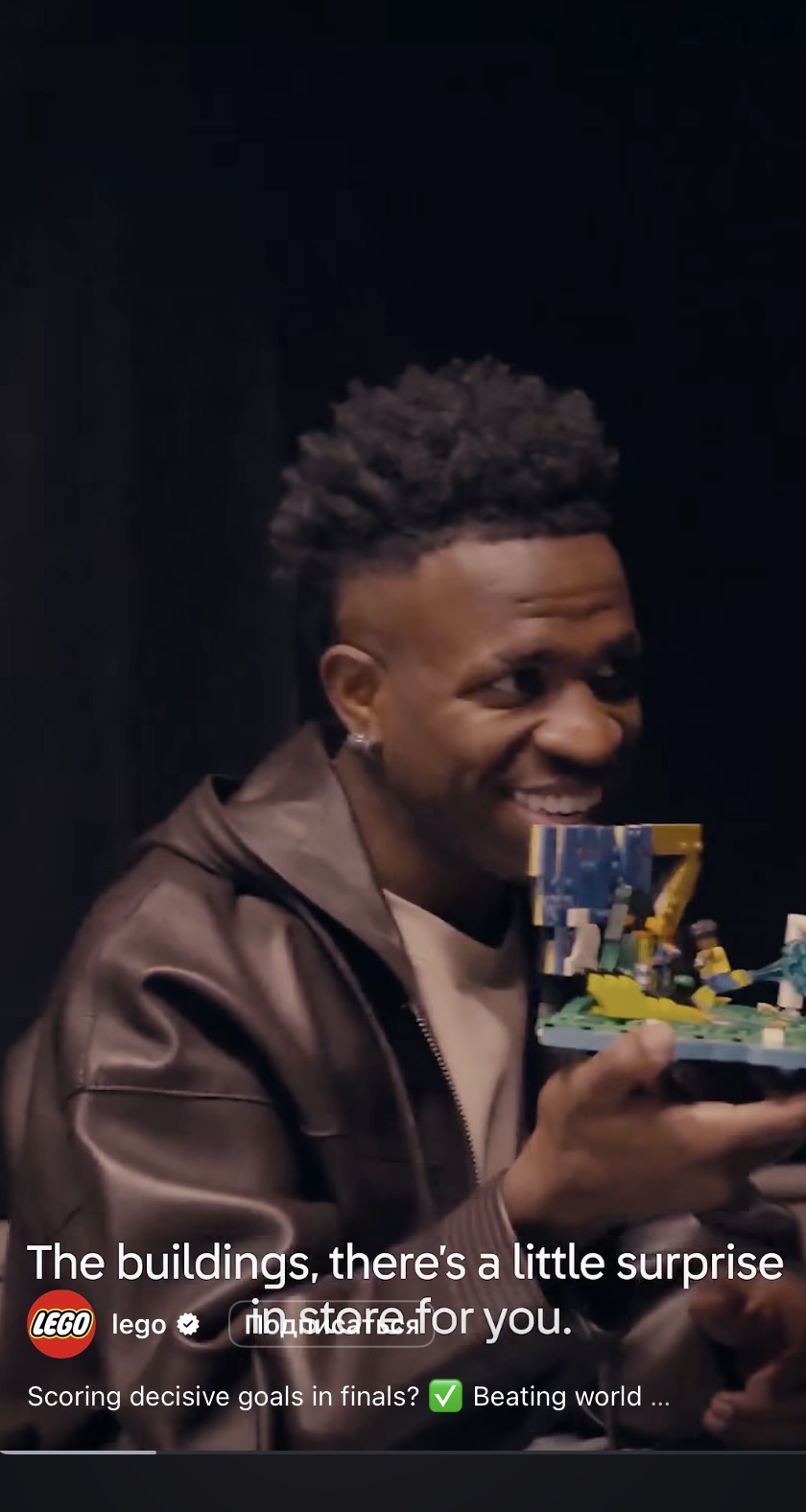
screenshots from LEGO social media
This closely resembles assembling a Lego set in a circle of friends. The same goes for the appearance of a young fan, who strongly resonates with all ages of in this case the male population, acting as a main protagonist for children and evoking nostalgia for adults.
The advantages of this strategy include ultra-high engagement and the viewers need and desire to discuss such an event. This brings direct benefits to the brand, instantly making it the talk of the town and gaining 314 million views on social media within 24 hours. The brand positions itself not just as a manufacturer of plastic sets, but as a brand that creates events and, from an ethical standpoint, reconciles rivals, placing them on equal footing during the process of building the World Cup trophy.
The disadvantages of this approach lie in the risk that the fans reaction might completely bypass the brand. Their response may be directed solely at the event of seeing football’s top stars together on one screen, entirely ignoring the Lego brand itself and its products.
LEGO successfully satisfies all four U&G needs: diversion (entertaining star interaction as a mental break), personal relationships (parasocial bonds with footballers + real community discussions), personal identity (self-expression through football and creativity), and surveillance (detailed product information for informed purchases). The main risk is that fans' attention may focus entirely on the celebrity event, bypassing the LEGO brand itself. However, by embedding the product within the emotional context of football fandom, LEGO minimizes this risk and turns passive viewers into active, engaged participants.

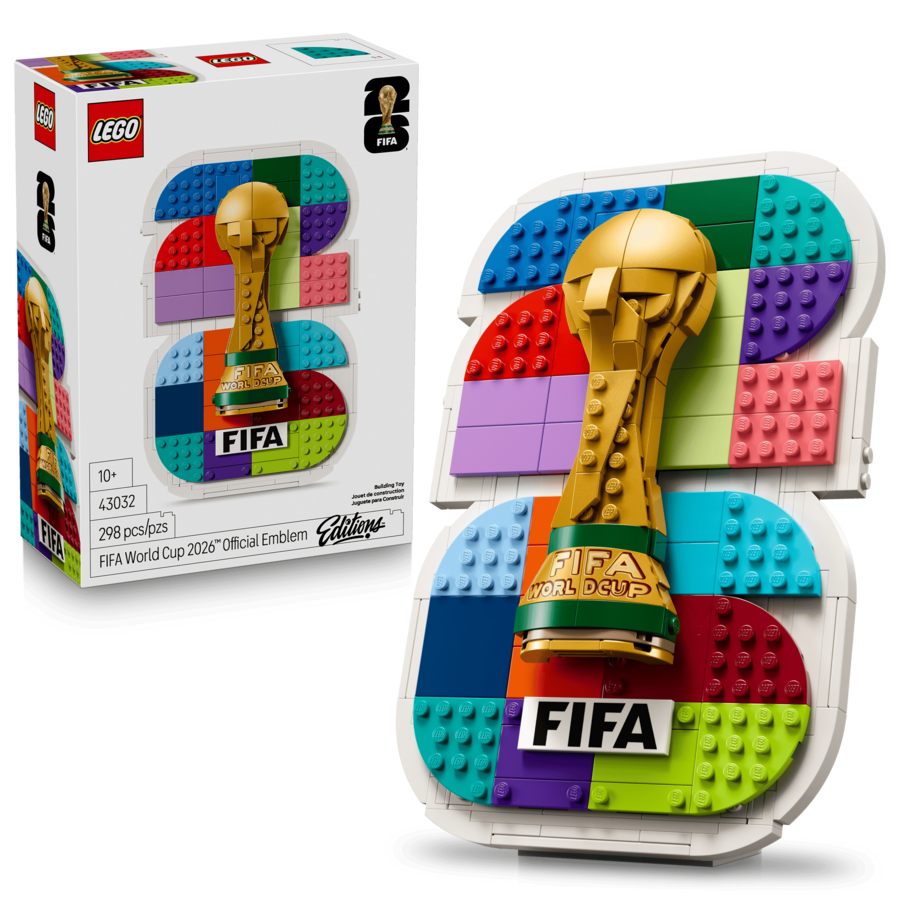
image, LEGO sets from the official website
image, LEGO sets from the official website
Conclusion, recommendations
The advertisement reaches the audience and creates a historic reach within the cultural sphere of football, but engagement is divided into camps with polarized types of reactions.
The communication strategy of the advertisement works, as Lego has created a cultural event by uniting the main icons of football on one screen. This generated viral reach according to Elaboration likelihood models, triggering a vivid emotional reaction by utilizing the peripheral route, which provided an impetus for discussion and satisfied the fans need for entertainment and collective discussion through Uses and Gratification Theory.
The company’s problem is primarily provoked around loyal fans of Lego specifically, rather than football, as well as among rational buyers. They saw this as unreasonable marketing spending that primarily hits the consumer’s wallet, and a pursuit of a popular event at the expense of product quality.
image, LEGO sets from the official website
For a more streamlined marketing campaign in the long-term brand life planning, aimed primarily at a loyal audience, a series of interactions could have been added, targeting familiar patterns, as well as people who primarily love building Lego rather than watching football.
According Uses and Gratifications Theory A contest for the best fan submissions could be launched, focusing on building themed sets about football and the World Cup Personal identity/ Self-Actualisation.
And by applying the theory of Social media affordances, through publishing all submissions on the Lego website and launching a joint public vote for the best work which would then join the Lego set lineup under the new football theme it would allow shifting the focus to an opportunity for self-actualization through the contest. This builds direct parallels with the marketing scenario of the video, where the turning point centers on a young fan placing their mini-figure on the World Cup trophy, customer engagement.
According to the Elaboration Likelihood model aimed at the rational part, not the primary reaction, but at the fans of the series. A narrower advertisement following the high-profile video could also help the old Lego fans. Its main focus would not be world football stars, but why and how exactly the new World Cup and other football sets were created. It would emphasize how important it was to create the sets themselves rather than the commercial, showing the approach itself and previously undisclosed details regarding design approval or other interesting production insights, thus sustaining the interest of the loyal audience, need for cognition.
Using Relationship management theory building greater trust with the audience, mutual understanding, and openness, long-term relationships.
Blumler J. G., Katz E., editors. The Uses of Mass Communications: Current Perspectives on Gratifications Research. — Beverly Hills: Sage Publications, 1974. — 318 p. — (Sage Annual Reviews of Communication Research; vol. 3).
Petty R. E., Cacioppo J. T., Schumann D. Central and Peripheral Routes to Advertising Effectiveness: The Moderating Role of Involvement // Journal of Consumer Research. — 1983. — Vol. 10, no. 2. — P. 135–146.
Frame from the LEGO «Everyone Wants a Piece» commercial: [screenshot] // YouTube: official LEGO channel. — 2026. — April 2. — URL: https://youtube.com/@lego? feature=shared (accessed: 14.06.2026). — Image.
Frame from the LEGO 90th anniversary video: [screenshot] // YouTube: official LEGO channel. — 2026. — URL: https://youtube.com/@lego? feature=shared (accessed: 14.06.2026). — Image.
Frame from a YouTube Short featuring a clip from the advertising campaign: [screenshot] // YouTube: official LEGO channel. — 2026. — URL: https://youtube.com/@lego? feature=shared (accessed: 14.06.2026). — Image.
Screenshot of the official LEGO YouTube channel page: [screenshot] // YouTube. — 2026. — URL: https://youtube.com/@lego? feature=shared (accessed: 14.06.2026). — Image.
Collection of images of assembled LEGO sets from the official website: [screenshots] // LEGO.com. — 2026. — URL: https://www.lego.com (accessed: 14.06.2026). — Images.
Collection of screenshots of the official LEGO website interface and pages: [screenshots] // LEGO.com. — 2026. — URL: https://www.lego.com/en-us (accessed: 14.06.2026). — Images.
Screenshot of the «Builder» instruction for assembling the trophy on the LEGO website: [screenshot] // LEGO.com. — 2026. — URL: https://www.lego.com/en-us/service/building-instructions/43020 (accessed: 14.06.2026). — Image.
Collection of screenshots from LEGO social media (TikTok, Instagram, Instagram Reels): [screenshots] // TikTok: official LEGO account (@lego); Instagram: official LEGO account (@lego). — 2026. (accessed: 14.06.2026). — Images.
Screenshot of Cristiano Ronaldo’s Instagram story featuring the LEGO campaign: [screenshot] // Instagram: official Cristiano Ronaldo account (@cristiano). — 2026. (accessed: 14.06.2026). — Image.
Screenshot of the article on Goal.com about the LEGO advertising campaign: [screenshot] // Goal.com. — 2026. — April 2. — URL: https://www.goal.com/en-ug/lists/video-cristiano-ronaldo-lionel-messi-kylian-mbappe-vinicius-jr-lego-world-cup-advert/blta6bf4b502982325d (accessed: 14.06.2026). — Image.
Screenshot of the article on LBBOnline about the debut of LEGO footballer minifigures: [screenshot] // LBBOnline. — 2026. — April 2. — URL: https://lbbonline.com/news/Cristiano-Ronaldo-Kylian-Mbappe-Lionel-Messi-and-Vini-Jr-Make-LEGO-Minifigure-Debuts (accessed: 14.06.2026). — Image.
Project cover image with FIFA World Cup 2026 branding: [image] // Pinterest. — URL: https://i.pinimg.com/736x/62/01/6b/62016b74ff5f9ba3b77d979422298955.jpg (accessed: 14.06.2026). — Image.