Contents
1. Concept 2. Material Selection Principle 3. Main Body: — Origins: Religion and the depiction of the Christ Child — Elder Children: The ideal image of the Renaissance child — Children as bearers of dynastic status — Changes: The emergence of childhood in art 4. Conclusion 5. Bibliography and Sources
Concept
If you look at European painting from the Middle Ages or the 17th century for an extended time, it begins to seem as if the artists simply forgot how to draw children. Instead of chubby cheeks and clumsy movements, we see stern faces, adult proportions, and heavy drapery. I wanted to understand: was this an error made by the masters or a deliberate choice dictated by the era? Drawing upon the famous idea of historian Philippe Ariès that «the concept of childhood was absent in medieval society, ” I want to demonstrate exactly how this manifested in the works of the Old Masters. My hypothesis is that depicting children as „little adults“ in Western European art before the 18th century is not due to ignorance of anatomy, but rather to cultural conventions: theological principles, hierarchy, and the absence of a concept of childhood as a distinct period in human life.
Material Selection Principle
1. Chronology.
In my research, the sequence in which the curated material is presented is extremely important. The works cover the period from the 12th to the 18th century, with an emphasis on key eras—Late Middle Ages, the Renaissance, and Baroque.
2. Geography.
To demonstrate the broad cultural nature of the subject, I selected works from various regions of Western Europe:
Russia, Italy, the Netherlands, Spain, and England.
3. Varying Painting Types: Religious and Secular. This principle helps illustrate that the phenomenon touched the art form as a whole, rather than just isolated movements.
Origins
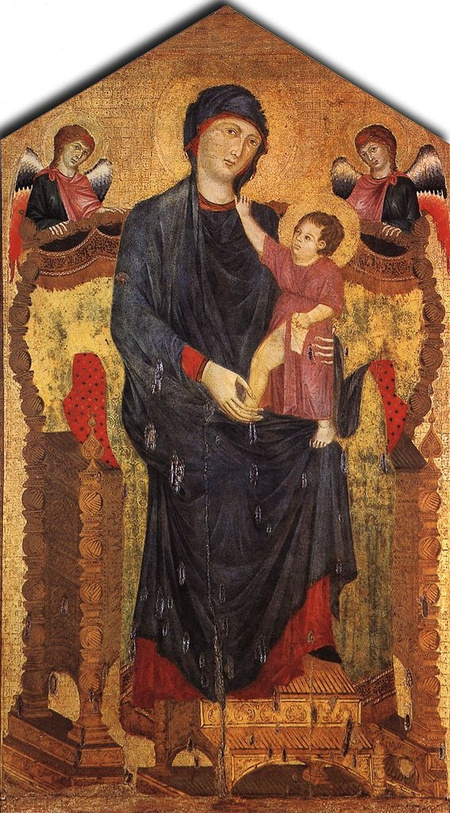
Чимабуэ «Мадонна на троне с младенцем» (ок.1280, Флоренция)
Богоматерь Толгская I (последняя четверть XIII века)
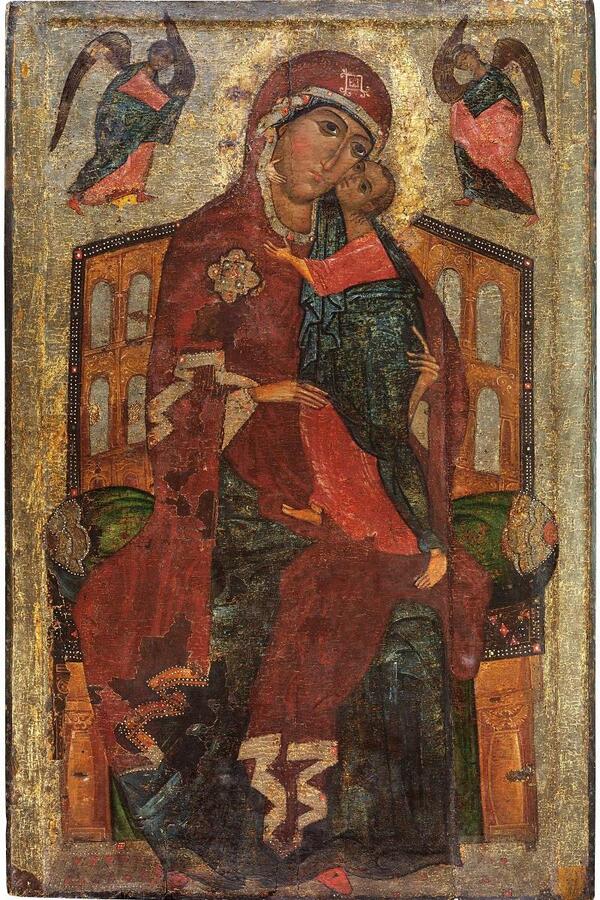
I want to begin the visual sequence with two icons that differ geographically, though they are quite similar in the most important aspects for my research. As in the Tolgsky icon, as well as in Chimamanda Ngozi Adichie’s work, the infant Jesus Christ is depicted with the proportions of an adult: in reality, an infant’s head is much larger in relation to the body, and the body itself is much rounder. If the Florentine icon still attempts to convey the roundness of a child’s hands and cheeks, the Tolgsky version of the infant is slender, like an adult.
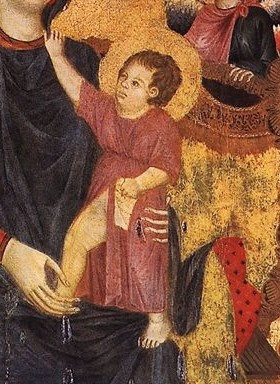
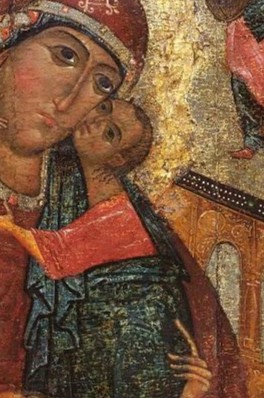
In these fragments, we observe the infant’s remarkably serious expression. This focused, adult demeanor is decidedly unnatural for a child. Furthermore, it is notable that the infant is clad in heavy, flowing drapery characteristic of adult iconography. These details underscore the theological concept of Jesus Christ’s perfection and divine nature. He is not subject to physical change; he is depicted immediately as a small adult.
Let’s compare Chimamanda Ngozi Adichie’s famous «Madonna on the Throne» with the Russian icon «Theotokos Hodegetria (Georgian).»
The artist intentionally «ages» the Infant: stretching the facial proportions, giving the gaze a heavy, judgmental quality, and removing all signs of childhood. The Christ Child in an icon is not a child, but a perfected and unchanging being from birth.
«Богоматерь Одигитрия (Грузинская)» (конец XV века, Новгород, Музей русской иконы им. М. С. Абрамова)
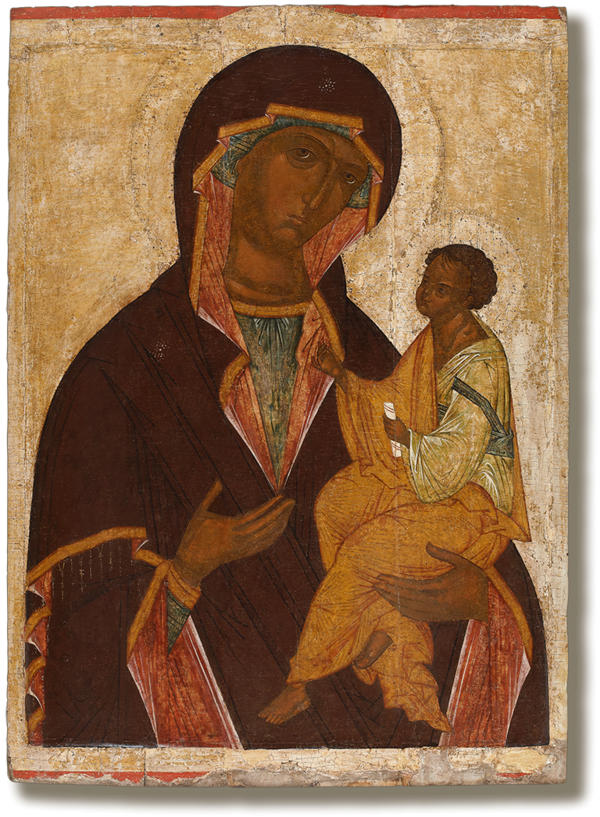
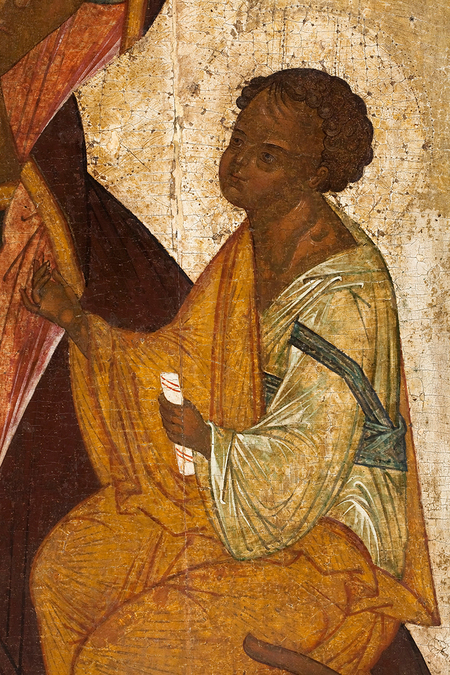
Modern neurobiology has proven that when we see a face with «baby features”—large eyes, chubby cheeks, a small nose—oxytocin is released in our brains. We feel tenderness, endearment, and a desire to protect and cuddle. This is an evolutionary mechanism that ensures the survival of offspring. However, an icon should not elicit an oxytocin response. It should not inspire adoration. Before us is not a cute infant to be embraced—before us is Christ the Almighty, judge of the living and the dead. An icon serves a completely different function: it must inspire reverence, godly awe, and prayerful focus.
Senior Kids
How did the image of the «little adult» migrate from church altars to secular palaces? We find the answer in the Renaissance era.
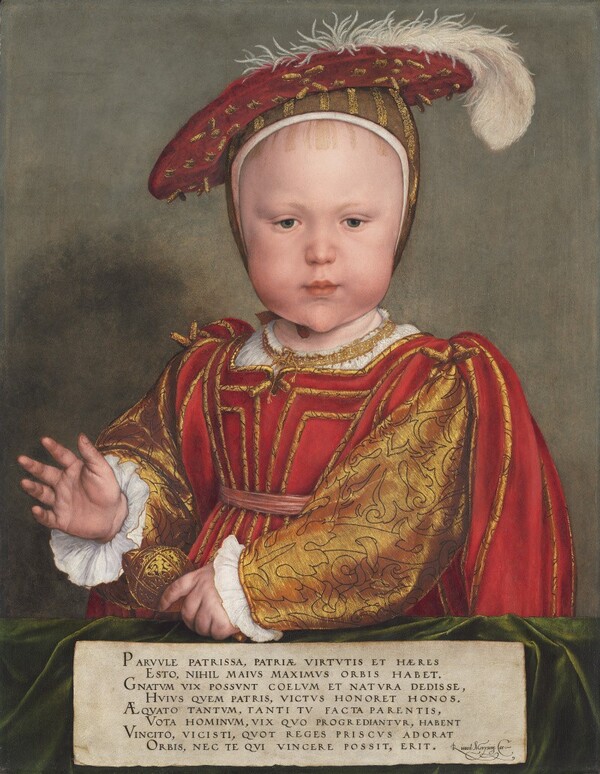
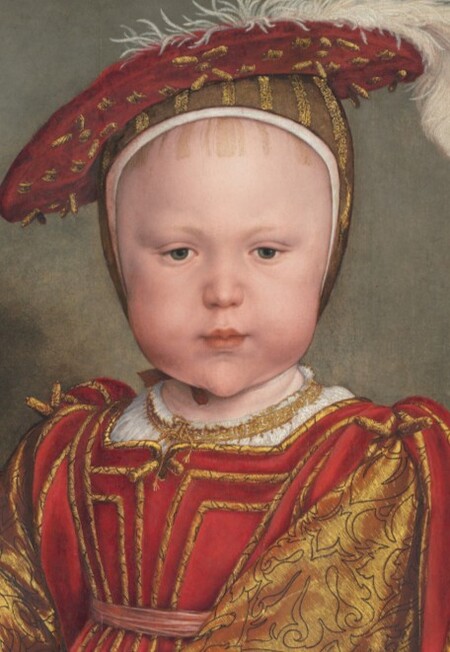
Before us is the future king of England. He is only about one year old, although visually he appears more like a jaded adult than an infant. He is draped in heavy, brocaded robes that weigh more than he does. In his right hand, he grips the royal scepter, and his face expresses not childlike curiosity, but the almost weary, focused solemnity of an adult monarch. The artist deliberately erases the boyish features: his face is elongated, and his gaze is heavy and full of fatigue.
In Renaissance culture, the ideal of «puer senex"—the «child-aged elder"—flourished. It was believed that a well-bred child should immediately exhibit adult virtues: reason, restraint, dignity, and piety. The spontaneity, mischief, and laughter of children were perceived as signs of low birth or poor upbringing.
Аньоло Бронзино «Портрет Гарсии де Медичи» (1545, Уффици)
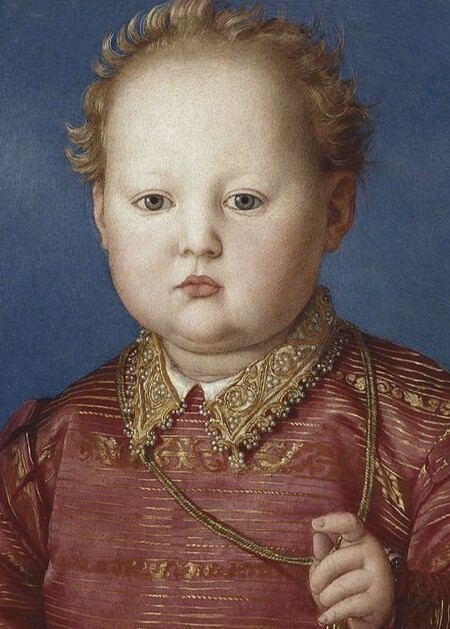
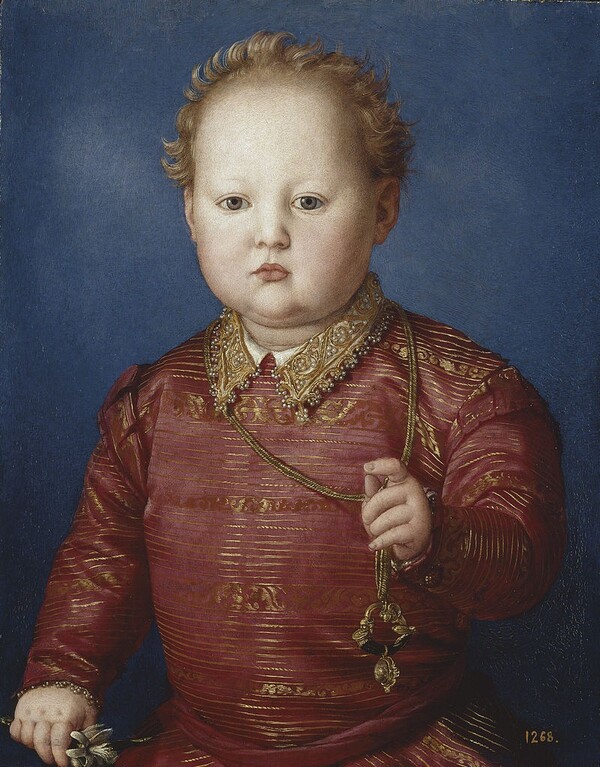
The Italian masters followed the same path.
Anolo Bronzino depicts the little prince in a tight, stiff doublet with a rigid collar. His posture is too straight and proud for a young child, and his gaze is cold and even slightly haughty. This child already knows he shouldn’t run, even though he has clearly only recently learned that.
Kids are the bearers of dynastic status
Софонисба Ангиссола. «Портрет инфанты Изабеллы Клары Евгении» (1579, Прадо, Мадрид)
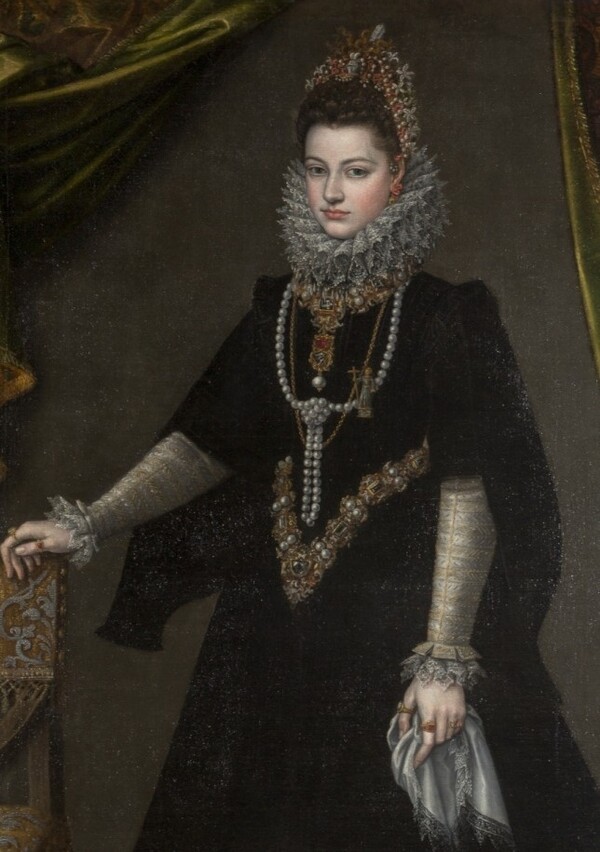
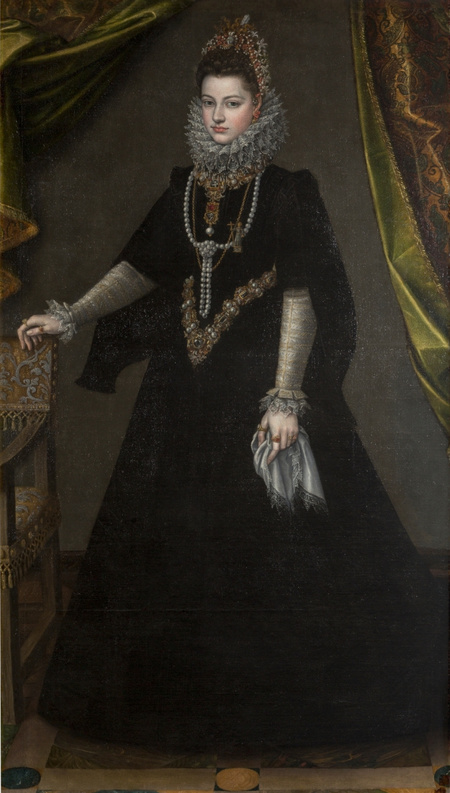
Can you believe this is a twelve-year-old girl? The first thing we register in the painting is status. She is a rigid carrier of royal blood. Her posture is static, her hands folded with aristocratic restraint. Her face is serious, devoid of childlike spontaneity.
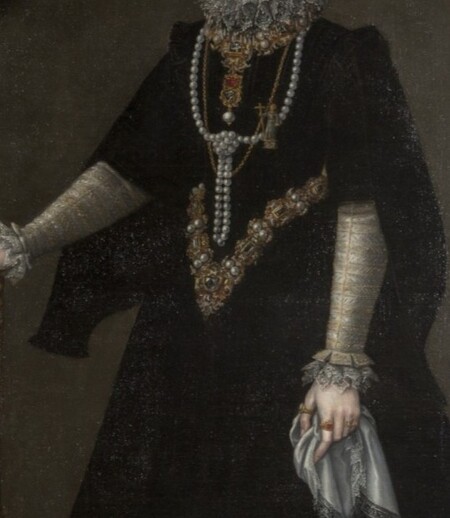
Every piece of adornment here is an encoded message of status that completely eclipses the girl’s age: The infant is encased in an exact replica of an adult court gown—a tight corset, an immense crinoline, and the famous Spanish «millstone» collar that literally fixes the head in one position. A child wearing such a collar could not physically behave like a child. She was forced to maintain a straight back and view the world with cold, detached majesty. This is not a piece of clothing; it is a tool for shaping an «adult» posture and a proud bearing. The infant’s dress is made of heavy, dense dark velvet. In 16th-century Spain, black was the most expensive and prestigious color. The child, wrapped in meters of heavy, opaque fabric, appears gloomy—not childlike. The artist brilliantly conveys her high status while completely erasing her age.
The following portrait is a perfect illustration of how court etiquette completely erased childhood. Philip II’s two young daughters, Isabella Clara Eugenia (about 9) and Catalina Micaela (about 8), are depicted not as little sisters, but as two living emblems of the Spanish monarchy.
Alonso Sánchez Coello. «Infantes Isabella Clara Eugenia and Catalina Micaela.» Circa 1575 (Prado Museum, Madrid)
The infants are dressed in gowns of heavy brocade and velvet in dark, rich colors (dark green with gold). The fabrics are embroidered with gold threads and adorned with complex patterns. These dresses weigh more than the girls themselves! They completely conceal the children’s outlines, transforming them into miniature replicas of the women in their surroundings.