Concept
«Between the Lines» is a Telegram channel dedicated to poetry, feelings, and experiences for which it is difficult to find the precise words.The project proposes viewing poetry not as a mandatory part of the school curriculum, but as a way to better understand ourselves and the world around us. Each publication becomes a small emotional experience—an introduction to a work, an author, or a thought that might resonate with the reader.The primary object of study is the literary and cultural material that forms the channel’s content. This includes poems, books, letters, author biographies, literary studies, cultural events, as well as reactions and suggestions from the audience.The goal of this new phase of the project is to develop a system for collecting, classifying, and processing information, which will allow for more effective searching of literary materials, formation of thematic selections, and preparation of publications.Meanwhile, the core concept of the first project remains unchanged: finding words for what we feel, but sometimes cannot explain.
The media concept from Assignment 2 did not change.
Data Sources for Media
For «Between the Lines, ” data sources include materials upon which the editorial team builds the literary and cultural context for publications. These can be divided into four groups.
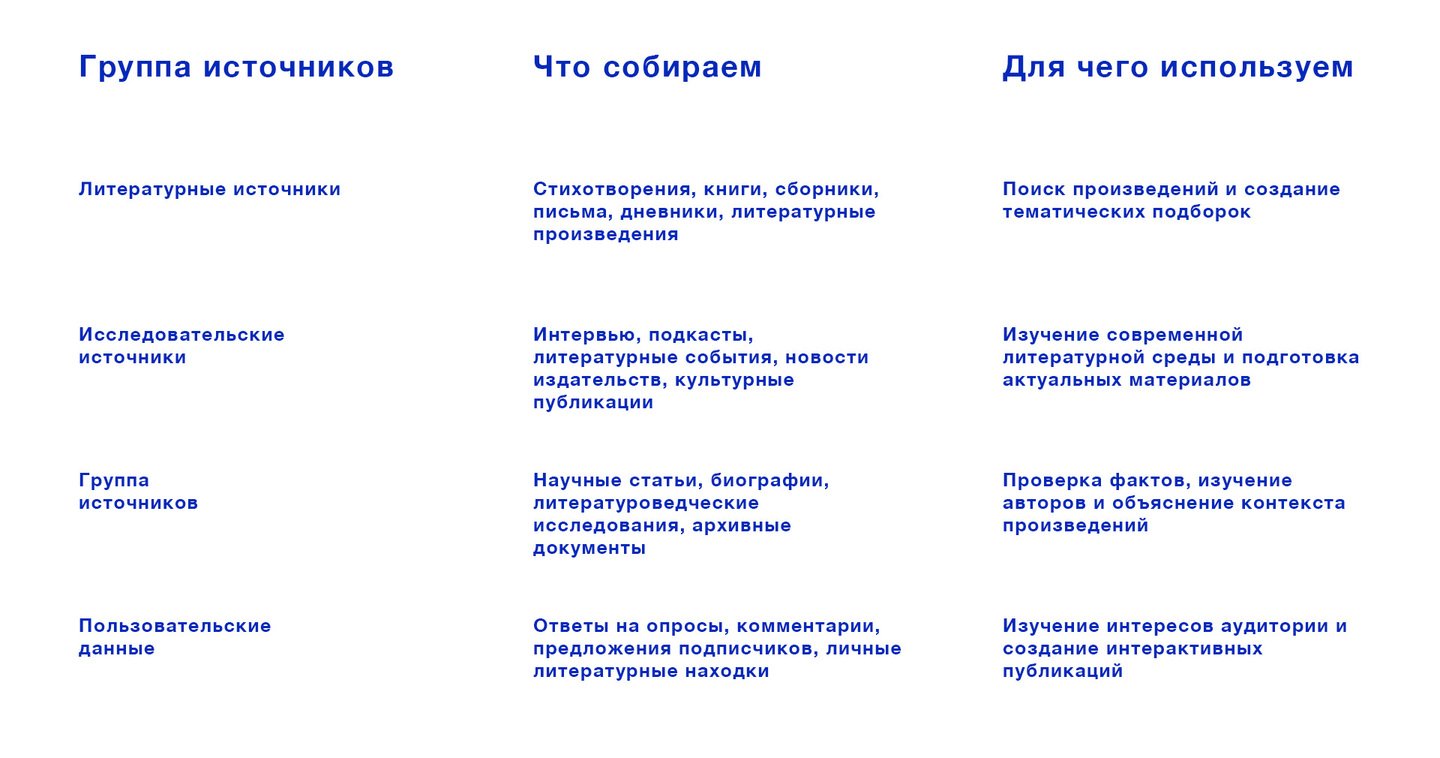
Where to find materials:— Libraries and electronic catalogs: National Electronic Library, Russian State Library.— Literary archives and museums: digitized manuscripts, letters, diaries, and biographical materials.— Academic resources: CyberLeninka, scholarly journals, and literary studies.— Cultural media: Kultura.RF, interviews with writers, literary podcasts, and publishing projects.— Channel audience: polls, comments, suggestions for works and authors.— Channel internal data: publication views, reactions, comments, poll results, and shares.Source utilization principle:Every factual piece must have a verifiable source. For literary works, the author, title, source, and publication details must be recorded. For biographical and historical information, links to corroborating materials must be retained.When using copyrighted works, it is necessary to respect the rights of the authors and copyright holders. Personal stories and subscriber messages are published only with the consent of their authors.
Data Schema
In «Between the Lines, ” we use a hybrid information processing model: automated services assist in collecting, sorting, and preliminarily analyzing materials, while humans are responsible for interpretation, veracity, and the final outcome.
Structure without data
- AUTHOR — name, biography, dates of birth and death, literary movement, source link.
- WORK — title, author, creation date, text or licensed excerpt, literary theme.
- SOURCE — title, type, link, publication date, and access date.
- TOPIC — category name, keywords, related works.
- PUBLICATION — text, section, release date, format, and preparation status.
- FEEDBACK — anonymized reactions, survey responses, comments, and suggestions.
- STATISTICS — views, reactions, shares, and other available performance metrics.
The relationship between data
— One author may have multiple works.— Each work is linked to a specific author and source.— One work may belong to several thematic categories.— One publication may group multiple works and sources.— Each publication has its own audience engagement metrics.— Engagement results are used to refine the future content plan.
Information Flow Diagram
DATA SOURCES (books, archives, research, cultural media, audience)↓INFORMATION GATHERING (searching for works, authors, and materials)↓DATABASE (author, work, theme, source, publication)↓PROCESSING (classification, relationship mapping, analysis, and drafting)↓EDITORIAL REVIEW (fact-checking, authorship verification, source and interpretation review)↓OUTPUT (finished publication in the Telegram channel)↓ANALYTICS (views, reactions, shares, comments)
What does the machine process, and what does the human?
The main difference is that the machine accelerates technical and repetitive processes, while the human makes editorial decisions. Automatically generated text, a found date, or a biographical sketch are not considered verified facts until checked by an editor.
Guidelines for Automated Services in the Scheme
These guidelines define how artificial intelligence and other automated tools should interact with the «Between the Lines» materials.
Fact-Checking and Verification
Automated services can search for information, compile brief summaries, and suggest thematic selections. However, they must not independently determine the veracity of contested details. All dates, names, titles of works, quotations, and biographical facts are verified against primary sources or reliable publications.
2. Working with Sources
For every material, you must save the source name, link, publication or creation date (if known), and the date you accessed it.The service must not invent links, authors, quotes, or the origin of artworks. If a source cannot be verified, the material will not be used as credible.
3. Preservation of Authors' Style
The copy must retain the signature tone of «Between the Lines»: calm, contemplative, emotional, and accessible to a young audience.
It is essential to avoid cliché phrases, overly academic language, and superficial literary analysis.
While AI can suggest drafts and phrasing options, the final editorial approval always rests with the project author.
4. Working with Visual Materials
The visual language of the project is rooted in literary artifacts, manuscripts, books, archival materials, and original graphic works. Priority is given to imagery with verified provenance. Artificial intelligence may be used to generate illustrations and graphic design elements; however, generated images cannot be presented as authentic photographs of writers, historical documents, or archival materials.