Research Plan
- Concept
- 1983–1988. Body and the Possibility of Expression
- Late 1980s—Mid-1990s. From the Artist’s Body to the Viewer’s Body
- 1990s–Early 2000s. Home and Material Traces of the Body
- 1996–2026. Map, Boundary, and Movement
- Additional Themes
- Conclusion
Concept
Daily life relies heavily on trusting the objects around us. We become accustomed to their form and function, expecting convenience and protection, and for that reason, we rarely notice how much they shape our sense of security and our feeling of «home.» This trust becomes particularly palpable when the familiar order is disrupted: a known object retains its appearance but no longer meets our expectations. It is in this discrepancy that the tension explored by Mona Hatoum arises. In her work, the everyday environment allows for a commentary on human vulnerability and how the instability of the external world is reflected in the closest and most familiar things. [1]
A characteristic of her method is the alteration of the conventional relationship between a person and an object. A baby crib, meant to protect a child, becomes fragile or potentially injurious; a kitchen grater expands to the size of a partition; household furniture is connected with electrical wiring, and a map of the world can change from a single awkward movement. These alterations affect familiar bodily expectations—to lean on, to touch, to approach. Vulnerability becomes tangible through the material, scale, and construction of the object. As Hatoum explains, the viewer mentally imagines using the furniture, and its transformation into an unfit or threatening object questions the reliability of the surrounding world. [1]
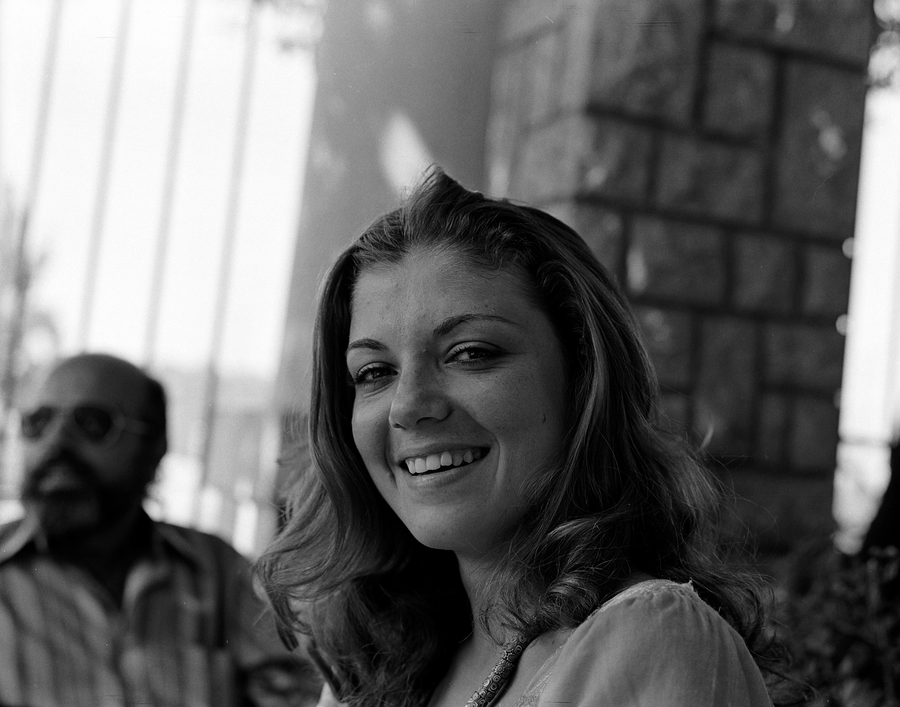
Fig. 1. Mona Hatoum at the festival in Baalbek, 1973. Photo: Waddah Faris. © Waddah Faris. Courtesy the photographer estate.
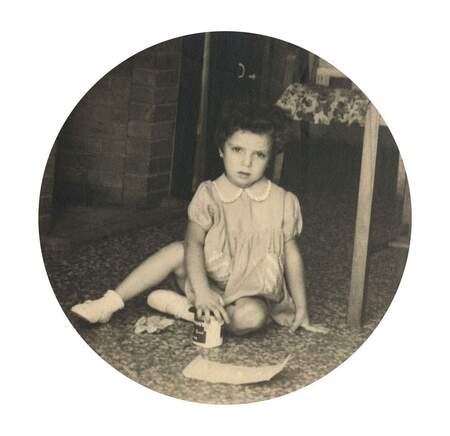
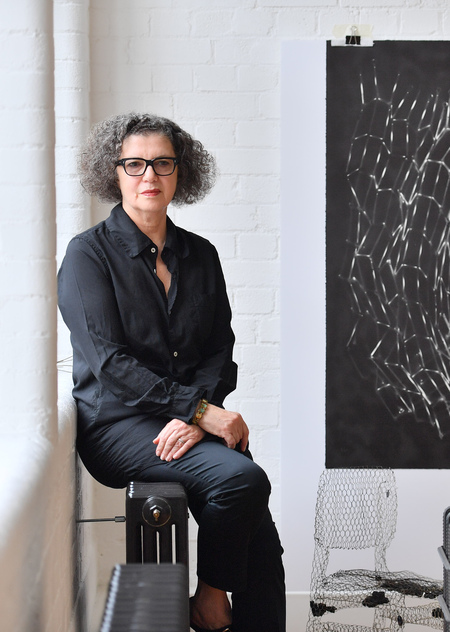
The experience of a deep sense of vulnerability and forced displacement is part of Hatoum’s family history: she was born in Beirut in 1952 into a Palestinian family after her parents left Haifa in 1948 and were unable to return. In 1975, separation also affected the artist herself: the civil war in Lebanon prevented her return from a brief trip to London. Remaining there, Hatoum transitioned from graphic design and advertising work to art education at the Byam Shaw School of Art and Slade School of Fine Art. [2]Contemporary military conflicts and social tension intensify questions about safety and the ability to influence one’s own life. The relevance of examining Mona Hatoum’s work stems from the profound reflection on these compelling themes found in her art—a reflection that can subsequently help one view the modern world differently. However, it is important to emphasize that biographical circumstances do not directly explain every piece: Hatoum objects to interpretations that confine her art to its origins, underscoring the importance of geometry, abstraction, and artistic form. Therefore, in this study, life events are correlated with works only where such a connection is supported by sources. [1]Fig. 2. Mona Hatoum in the living room of her family home, Beirut, circa 1955. Photograph provided by the artist; photographer is not credited. Source: Tate Etc.
The aim of this study is to trace precisely how Mona Hatoum conveys the experience of human vulnerability through the depiction of the body, everyday objects, and spatial organization. The hypothesis tested is that as the work moves from performance to objects and installations, the body retains its central importance, but the form of its presence changes. It is hypothesized that the artist’s focus gradually shifts from the performer’s body to the spectator’s body, and further—to the objects and systems upon which human life depends.
To achieve the stated goal, the research examines how the manner of expressing vulnerability shifts when transitioning from the artist’s body to the viewer’s experience, and subsequently to objects and space. Early performances and videos form the basis for comparison: in these works, bodily presence is linked to the capacity to speak, act, and maintain intimacy. Analyzing the installations allows us to test how these relationships are conveyed to the viewer through materials and spatial arrangement. The sections on domestic objects, maps, and boundaries reveal the connection between embodied experience and everyday and societal living conditions. The main comparative section is further enriched by an overview of five individual works, which broadens the understanding of the artist’s thematic range through inquiries into spatial confinement, growth, cultural memory, and recovery. This sequence allows us to test the hypothesis that the body retains central significance even as artistic mediums change. Comparing works from different years also helps determine whether the changes form a continuous trajectory from body to home and world, or if these themes develop in parallel. Periodization is used conditionally: the shift from performance to installation sets the chronological framework, while subsequent sections group intersecting thematic threads to which Hatoum returns in different years. [1; 5]In four main sections, the works are compared based on common practice, material, or object function. First, the basis for the comparison is explained, followed by an analysis of how differences in material, scale, and placement influence viewer perception and potential action. In an additional section, each piece is examined individually through its specific material, configuration, and thematic context. This structure allows us to delineate other avenues of Hatoum’s practice without reducing them to a mere stage in chronological periodization.
1983–1988. Body and the Possibility of Expression
Early videos and performances establish the starting point for testing a hypothesis: the artist’s body is physically present before the viewer, or it is preserved within video footage. Personal experience relates to various circumstances here—public political speech, urban environment, and family separation. Initially, the works focusing on voice and the ability to speak are examined, followed by those addressing movement and connection with a loved one.The works So Much I Want to Say and The Negotiating Table are unified by the discrepancy between the visible body and the audible speech. These pieces were chosen for comparison to illustrate two stances a person can take toward public expression: their own voice may be suppressed, yet discourse about their condition can continue without their direct involvement.
Fig. 3. Mona Khatum. So Much I Want to Say, 1983. Video still.
In So Much I Want to Say, 1983, male hands cover the artist’s mouth, while the phrase from the title continues to sound in the soundtrack. The image was transmitted using slow-scan technology, causing the movement to break down into discrete states. The physical suppression of speech and the ongoing voice exist simultaneously. [7] In The Negotiating Table, 1983, the contradiction between image and sound takes on a different structure: the artist lies on a table, wrapped in polyethylene, while empty chairs are placed nearby. Concurrently, the soundtrack merges news reports with speeches by Western politicians regarding world peace. The work arose in response to Israel’s invasion of Lebanon in 1982. [8; 9]
Fig. 4. Mona Khatum. The Negotiating Table, 1983. Performance documentation at Western Front, Vancouver.
The juxtaposition reveals two modes of separating the body and public speech: on one hand, the voice persists despite attempts to silence it; on the other, speech fills the space yet remains detached from the static, vulnerable body. The empty chairs in the second work intensify this distance, as the structure of the discourse is present, but interaction among the participants does not occur.
Following explorations of possibility, the research addresses the capacity to act and maintain connection with a loved one. Roadworks and Measures of Distance illustrate limitations in two everyday scenarios: navigating the city and communicating with family. Their comparison broadens the concept of vulnerability—incorporating both physical barriers and distance, which alters human relationships.
In Roadworks (1985), Hatoum transfers action onto the streets of London’s Brixton. She walks barefoot, dragging heavy work boots tied to her ankles. Footwear, which typically protects the feet, becomes an external burden impacting movement. [10] In an interview, Hatoum explains that the boots allude to the police and racist skinhead groups, while the barefoot woman suggests a vulnerable person under surveillance. [5; 6] This association links physical defenselessness to specific forms of societal violence. The police boots signify state control, and their connection to skinheads introduces the theme of racist aggression. This interpretation supports the structure of the action itself: the boots attached to her feet follow the artist with every step. They can be seen as a symbol of constant threat from which one cannot simply walk away. Thus, the hampered gait reveals how control and violence intrude upon and restrict an individual’s daily life.
Fig. 5. Mona Khatoum. Roadworks, 1985. Photo: Stefan Rohner.
In Measures of Distance, 1988, the relationship between the body and external circumstances is revealed through the artist’s interaction with her mother. Images of Mona Hatoum’s mother are overlaid with Arabic script from a letter; conversations are audible, and the author reads correspondence with a loved one in English. The various linguistic and visual layers simultaneously bring the viewer closer to family communication while simultaneously impeding direct access to it. [11]
Fig. 6. Mona Khatoum. Measures of Distance, 1988. Video still.
While Roadworks expresses a limitation of freedom physically, Measures of Distance presents distance and the impossibility of being near family through the mediation of image, text, voice, and translation. The connection with another person is maintained but requires intermediaries; thus, the title can relate both to geographical distance and to the differences in modes of perceiving communication. In an interview, Janine Anthony Khatum clarifies that the photographs of her mother were taken in Beirut in 1981, while the work was completed in 1988. She views this piece as the conclusion of an early narrative thread, allowing her to transition to more discrete, less elaborate aspects of her lived experience. [3]In her earlier works, vulnerability is revealed through the contradictions between body and speech, movement and restriction, closeness and distance. From this point on, a broader question emerges: what do the conditions around us make a person feel? The next stage develops this question through the viewer’s direct experience.
Late 1980s — mid-1990s. From the artist’s body to the viewer’s body
Transitioning to an installation changes the way the work is encountered. The viewer must now relate their own position to the materials and spatial arrangement. Hatoum explains this shift and the characteristics of the working process: after her performances, she wanted more time to develop the piece and test her solutions before the public showing. In an interview, she articulates this change very clearly: «In the installation, the space of my body was taken over by the body of the viewer.» [5] The works in this section are compared through the conditions of perception: what draws the eye, what compels a pause, and how a familiar form alters its relationship with the human body.
«The Light at the End» and «Light Sentence» are comparable because in both works, light influences the viewer’s position, yet they employ different methods of impact: heat restricts proximity to the object, while moving shadows alter the perception of the entire space. This comparison allows one to trace how bodily experience emerges from the structure of the installation.In The Light at the End (1989), vertical heating elements are enclosed within a metal structure. The light draws attention, and upon approaching, its physical effect—heat—is discovered. [12] Hatoum calls this work «the beginning of a completely new way of working.» According to her explanation, the meaning here arises directly from the properties of the material and its interaction with space. [4]
Fig. 7. Mona Khatum. The Light at the End, 1989. Photo: Edward Woodman.
In Light Sentence, 1992, metallic mesh cabinets form a spatial structure within which a light bulb moves slowly. Its movement inside the installation alters the scale and position of the shadows cast upon the walls of the room. [13] The mesh structures and their shadows can evoke prison bars, and this interpretation aligns with Hatoum’s commentary: she compares the moving light to jail lighting and connects it to control. [6] However, the artist does not consider the sensation of unfreedom to be the only possible reaction to the installation. In an interview with The Talks, she recalls a viewer who saw hope in the moving shadows and positively assessed their response. [5]
Fig. 8. Mona Khatum. Light Sentence, 1992. View from the Centre Pompidou exhibition, 2015.
In the works above, light serves various functions. In The Light at the End, it is connected to a specific source of warmth and influences the distance between the viewer and the object. In Light Sentence, light spreads the structure’s impact throughout the entire space. However, the works unite in a common sense of threat—on one hand, physical, and on the other, associative.
If vulnerability in light installations is related to the viewer’s position within the space, then Corps étranger shifts focus to the boundaries of the body itself: the camera makes visible what is usually hidden from the external gaze. This work is included in this section to demonstrate how the artist’s body returns to the installation after early performance and video art pieces, once again becoming the subject of observation—but this time from the inside.In Corps étranger, 1994, a video shot using medical imaging is projected onto the floor inside a cylindrical space. Fragments of the body’s interior space appear before the viewer as an unfamiliar, difficult-to-recognize image. [14]
Fig. 9. Mona Hatoum. Corps étranger, 1994. View of the exhibition at the Centre Pompidou, 2015.
Hatoum connects her work to meticulous observation: according to her explanation, the medical camera pushes her to the limit because even internal body parts become visible. Vulnerability is revealed through the loss of privacy, as a viewer—a complete stranger—gains access to a space that is usually inaccessible to the outside gaze. [6] The artist also explains that the concept originated while she was studying at Slade, but it was realized later thanks to a commission and the support of the Centre Pompidou. The return of this early idea in a new form demonstrates why the shift from performance to installation should not be understood as the complete disappearance of her own body from her practice. [4]Conclusion: the installations maintain the body’s central significance, but they change the manner of its participation in the work. In the light installations, the viewer relates their position to the warmth and the interplay of light and shadow. In Corps étranger, the artist’s body becomes an object of observation, and the camera’s access to its internal space allows for a discussion of lost privacy. The works are permeated by the idea—vulnerability is conveyed through the conditions of perception and the limits of access to the body. The next section examines how these relationships manifest in everyday objects intended for care, support, and protection.
1990s — early 2000s. Home and the material traces of the body