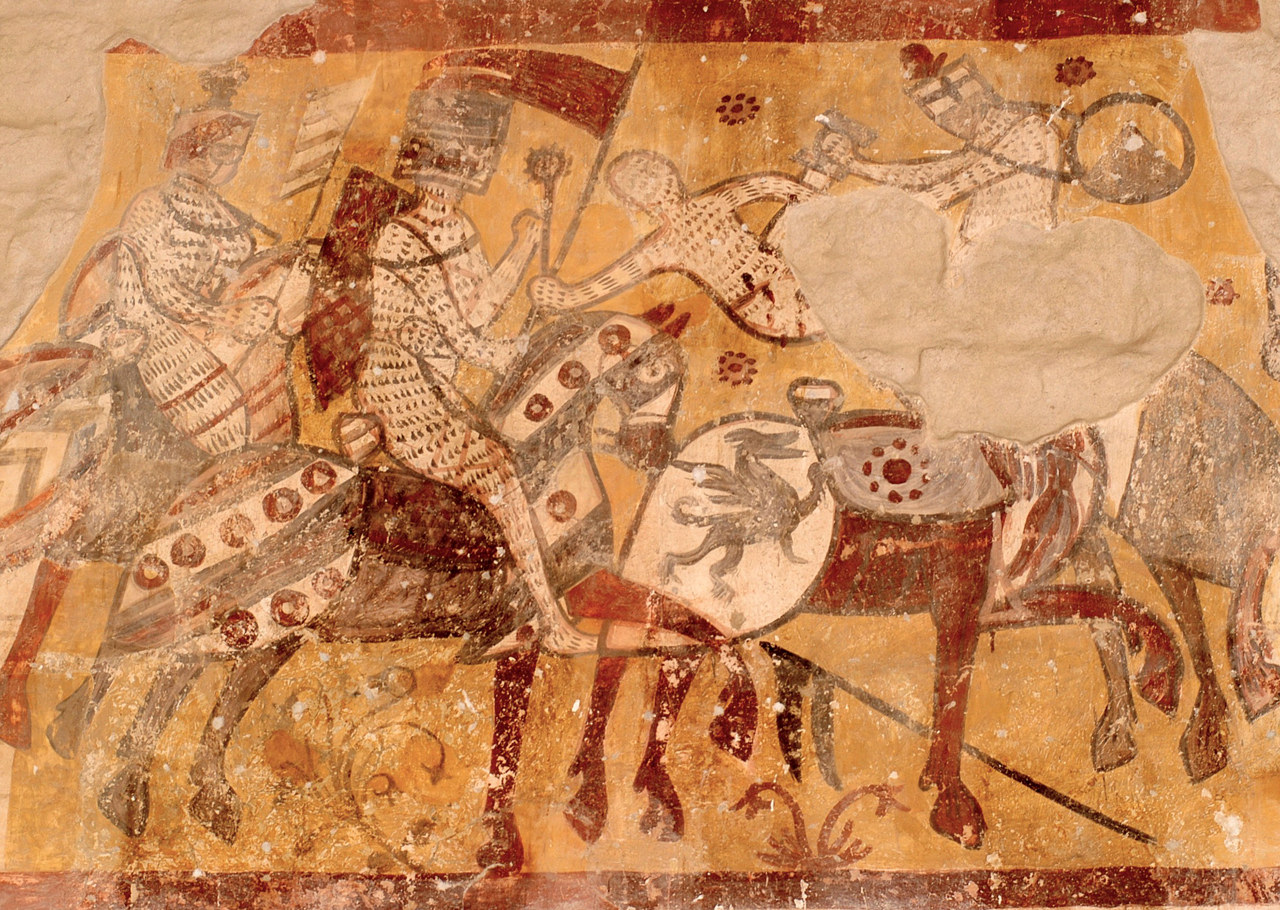
МОНАХ И ВОИН. Двойственность образа рыцаря-монаха в средневековом искусстве XII — начала XV века
Тамплиеры. Госпитальеры. Тевтонский орден
«Those who have entered the clerical state or monastic life are forbidden to serve in the military or hold secular office; otherwise, we shall anathema those who dare to do so and fail to repent and return to what they originally chose for God.»
Council of Chalcedon, 451 AD. Canon 7.
This norm emerged more than six centuries before the Knights Templar. In the 12th century, the Church recognized a community of brothers whose religious vows were combined with armed service.
Research Concept
The figure of the knight-monk unites activities that require different bodily comportments. A warrior needs agility, strength, and readiness to strike. Prayer demands concentration; in depictions, it is often conveyed through a static pose, a bowed head, and clasped hands.This study examines the duality of the knight-monk image in art from the 12th to the early 15th century. The focus is on the Templars, Hospitallers, and Teutonic Knights. Their comparison is significant because common monastic obligations and military duties could take on different artistic expressions. The mounted knight in battle, the master before the cross, and the brother under the protection of the Virgin Mary offer various facets of this single archetype. This raises the question of which characteristics maintain the connection between these roles.The study incorporates images associated with the three orders, as well as several comparative works: a chivalric tombstone, the figure of an abbot, weaponry, and liturgical items. These allow for a closer examination of signs of military and religious status. The progression moves from symbols of brotherhood to action and prayer. First, seals and monastic vestments are compared. Next, knights, weaponry, and scenes of aid are examined. The depictions of the Hospitallers and Teutonic Knights connect personal devotion to God with the image of an entire community. Manuscripts reveal the culture of literacy, while tombstones preserve the memory of their brethren. Miniatures from the late 14th to the early 15th century conclude the narrative of the Templars.The historical foundation is built upon Russian-language research on military-monastic orders, the translation of the Templar statutes, and Bernard of Clairvaux’s treatise on the new knighthood. For the Teutonic Knights, V. I. Matuzova’s work on spiritual culture is important; for the Hospitallers, information regarding their hospital and military activities is utilized.
Project
Medieval imagery and objects related to knighthood and monastic military orders from the 12th to early 15th centuries.
Key Research Question
How do the clothing, weaponry, gestures, and environment of the figure convey the unity of monastic service and military roles?
Boundaries
Western and Central Europe, Prussia, and the Latin East; 12th–early 15th centuries. Late order miniatures are viewed as a memory of events from the early 14th century.
Navigation
- Three Orders in One Time
- Armed Knights
- Service and Hope for Salvation
- Prayer, Book, and Weapon
- Prayer Gesture and Memory
- Conclusion
Three Orders in One Time
The Templars emerged around 1120 as a brotherhood of pilgrim protectors. The Hospitallers received papal recognition in 1113; in the 12th century, military duties were added to their care for the sick and pilgrims. The Teutonic Hospitaller Brotherhood was established in 1190 and became a military monastic order in 1198.
In the 13th century, all three orders existed simultaneously. The brothers were united by vows of obedience, poverty, and chastity, life according to the rule, and membership in the community. The military duties were performed by the knightly brothers and sergeants; the religious services were conducted by chaplains.
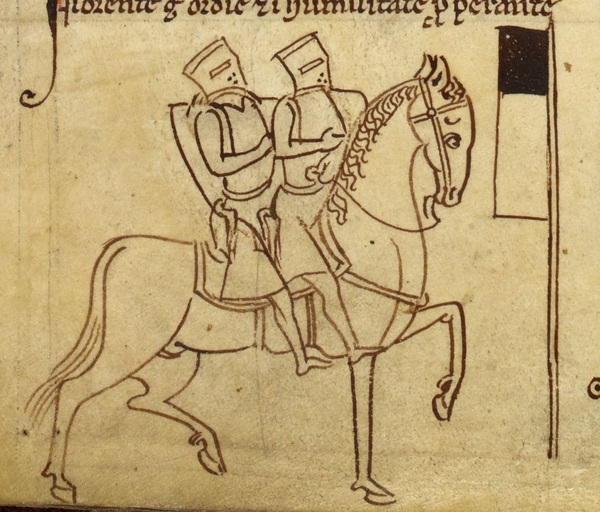
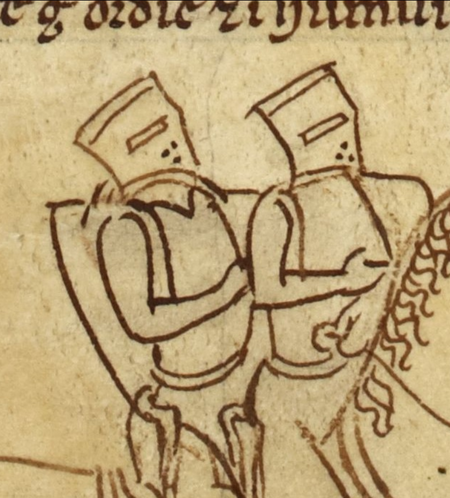
Matvey Parizhsky. Two Templars. Historia Anglorum, c. 1250–1255. British Library, Royal MS 14 C VII, f. 42v
Two riders sit on one horse. Their bodies are close together. The shared support allows the pair to be read as a symbol of brotherhood: individual warriors acting in concert. Helmets, shields, and armor retain the military character of the group. The composition is repeated on the order’s seal, where it becomes even more compact.
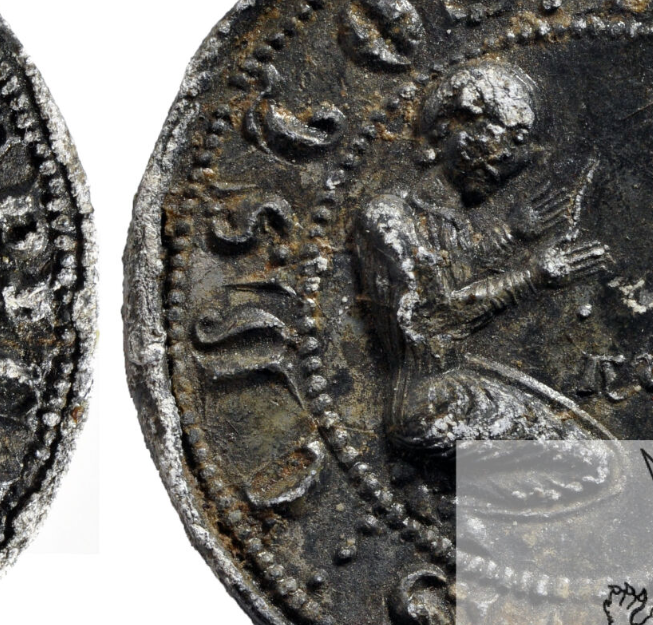
Sixth seal of the Temple Order, 1259 type. The photo shows the cast. Archives nationales, SC/D/9863
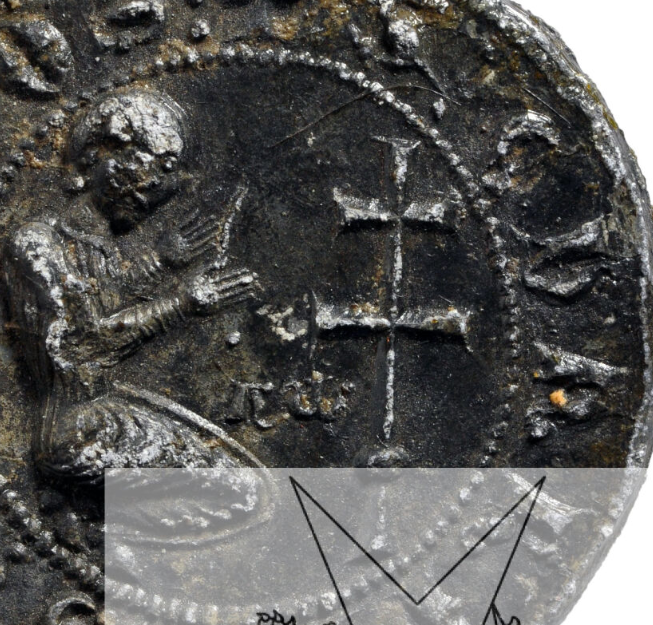
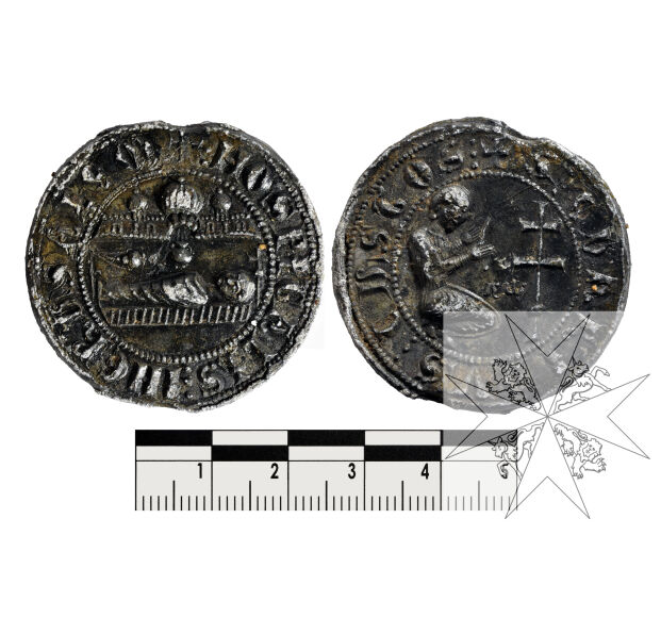
The same motif is compressed into a small circular field. Two riders, one horse, and a circular inscription create the overall emblem of the order. The outlines of the figures partially overlap, which makes the pair look especially closely connected. The seal certified documents on behalf of the community. The image of the joint ride became its official representation. On the seals of the Knights Hospitaller, prayer before the cross holds the central position.