Concept
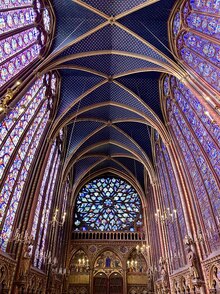
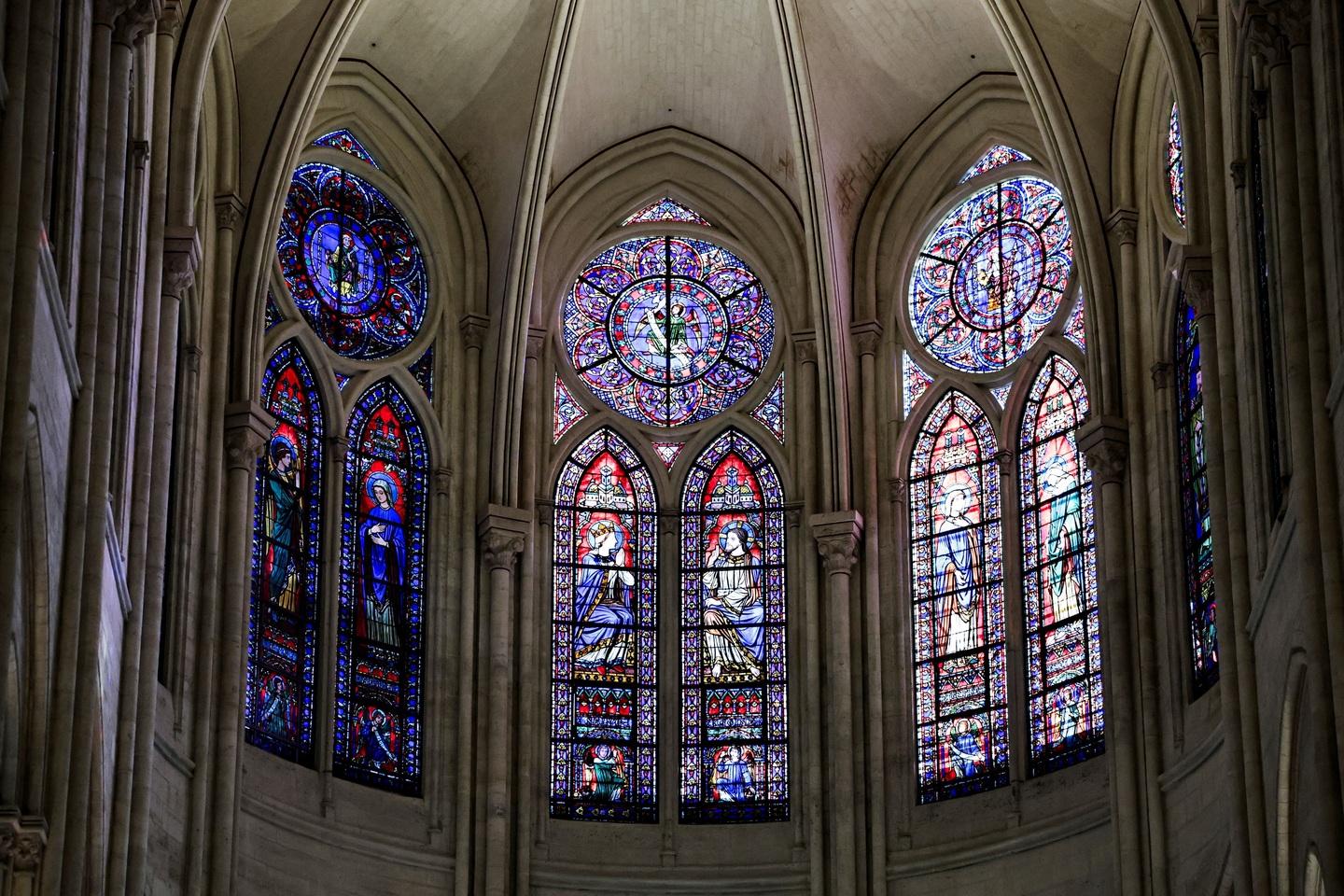
Gothic architecture is a style from Western European Middle Ages, spanning the 12th–16th centuries, which primarily developed in ecclesiastical architecture. Its defining characteristics include a vertical emphasis in composition, a complex spatial structure, and a close relationship between architecture, sculpture, and stained glass. The evolution of the style is divided into Early Gothic, High Gothic, and Late Gothic periods.
Gothic was not a monolithic style: contemporary glass research shows that the visual differences between French, English, and German stained glass are rooted in distinct chemical recipes, which directly influences color and light transmission. Comparing stained glass from different regions will help reveal both common trends and significant variations, demonstrating that artistic shifts occurred unevenly and were dependent on specific local conditions.
Material Selection Principle
The theme of architectural Gothic was close to me even before beginning the research. Subsequently, when selecting a topic, I based my choice on a desire to delve deeply into the system of the pictorial image, which achieves its full potential through rays of light. Thus, studying the transformation of stained glass in Western and Central Europe during the 12th–14th centuries allowed me to engage with a fundamental question in art history: is the pictorial language dependent on regional capabilities?
Research Hypothesis
The painterly language of stained glass was not conventional; rather, it evolved under the pressure of local conditions—available raw materials, regional theological concepts, and specific lighting solutions. Transformations in visual culture are far from linear evolution; they must be perceived solely as layers of variable solutions, each possessing its own internal logic. These solutions could have been equally expressive because they addressed different tasks and were formed within diverse material and cultural contexts. Studying this mechanism based on the 12th–14th centuries allows us to understand how material, technology, and worldview collectively create a unique artistic form.
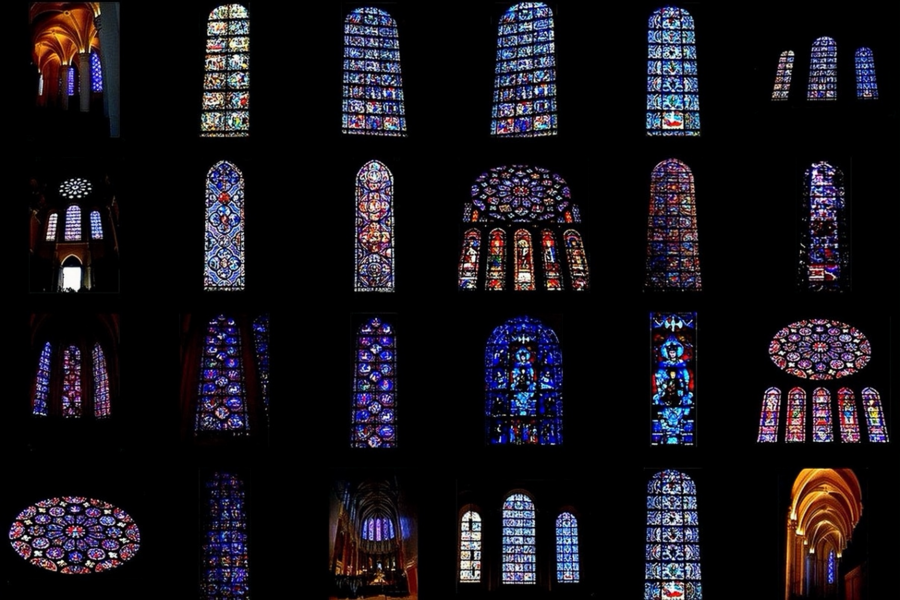
Chartres, France, Chartres Cathedral (Cathédrale Notre-Dame de Chartres); Photo: Martin Greslou
A multifaceted analysis of Gothic art monuments will allow us to view stained glass not merely as a spatial image, but as an art of perception: how light, passing through colored glass, transforms the cathedral’s space and influences the completeness of image interpretation. This approach connects the features of regional culture with its material foundation, without dismissing the pictorial element.
Categories
CHAPTER I. MATERIAL CHAPTER II. LIGHT CHAPTER III. COLOR CHAPTER IV. NARRATIVE BIBLIOGRAPHY
Chapter 1. Glass: Composition, Production, Texture
In the Middle Ages, glass was created from raw materials, an alkaline component, and lime, with the composition changing regularly. The mixture’s structure influenced the melting temperature, transparency, color, and durability of the resulting material. Naturally, the recipes varied depending on the time and place.
After melting, the glass mass was turned into sheets using two primary methods. In the most common, cylindrical method, the artisan would draw molten glass onto a glassblowing tube, blow a long bubble, stretch it into a cylinder, then slice it lengthwise, reheat it, and flatten it into a thin sheet.
The slightest errors during the fusing process could completely destroy the visual magic of the future stained glass. Production inconsistencies and their optical effects created numerous problems. Blisters, stripes, and uneven thickness emerged during creation—all of which seriously affected the passage of light through the flawed panels.
View of a stained glass window in the Stained Glass Museum in Ely Cathedral. Pic: 2023, Robert Lamb
In the early 13th century, glass was thick, often greenish or rosy, with transparency varying from piece to piece. By the latter half of the century, it became almost milky-white, clearer, and smoother. This was due to improvements in purifying sand from metal oxides, more stable melting, and better blowing techniques, which allowed for the production of larger and thinner sheets.
Technological Foundation (according to Theophilos’s treatise)

The most complete written evidence detailing the exact process of creating a medieval stained-glass window is Theodore Presbyter’s treatise, Schedula diversarum artium, composed in the first quarter of the 12th century. The second book of the tract is entirely dedicated to glassmaking, allowing us to visualize not only the final appearance but also the manufacturing process itself.
According to Theophilus, the glass mass was made from three components: ash, washed sand, and frit—crushed colored granules of a bright, vitreous powder that gave the future sheets their color.
St Mary, Staines — Stained glass window, 2016, John Salmon
France
French workshops operated within the same technological framework but utilized their own unique recipes. Chartres is a telling example: the cobalt used for its famous blue tones was imported from Bohemia, which attests to the dependence of French glassmaking on raw material supplies from abroad.
Stained glass windows of Chartres Cathedral, Chartres, France: The Redemption. Pic: 2008. Harmonia Amanda
The vast majority of the stained glass windows in Chartres Cathedral date back to the early 13th century. This was a period when the growth of cities led to an increased role for the middle class. Agriculture and craft technologies were becoming increasingly sophisticated, which fostered economic prosperity. Furthermore, it was a time of peace that guaranteed flourishing and, consequently, the blossoming of art. One of the most crucial tasks for the government of that era was strengthening the position of Christianity. All of these historical factors played a role in the creation of the Chartres Cathedral stained glass and are reflected in its iconography.
Detail of a stained glass window from the Notre-Dame Cathedral of Chartres, commissioned by Thibaut VI of Blois, Count of Chartres. Pic: 2009. Vassil
«Chartres Blue”—the deep shade from the stained glass windows of Chartres, which over time has become one of the most recognizable images of French Gothic. The name describes an artistic impression, not a single recipe.
Germany
In medieval Germany, the primary raw materials for glass production were quartz sand and plant ash, especially wood ash. The detailed treatise De diversis artibus («On Various Arts»), written in the first half of the 12th century, aided the manufacturing process. It describes making glass from two parts of ash and one part of refined sand. The ash was more than just fuel—it supplied potassium, necessary for melting, calcium, and other mineral components that influenced the properties of the final product. The recipes of Theophilus are an important testament to a specific technological tradition, but they are far from a universal formula.