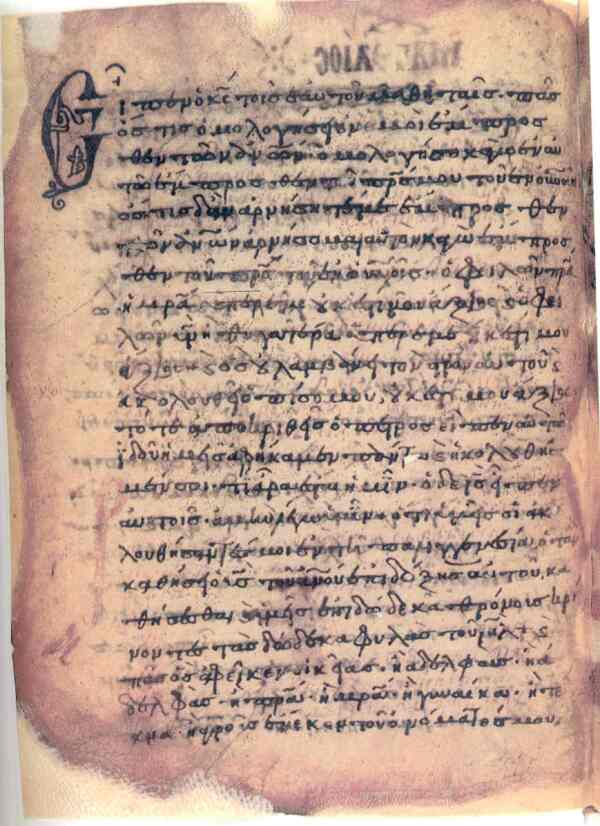
Concept:
A palimpsest is interesting for visual investigation because it symbolizes memory of the past. In most cases, this technique arose from a need for material: an old text was scraped off or washed away to record something new because the medium was expensive. Yet, it is this very practicality that generated the image of a past that never completely disappears. The palimpsest is an unusual historical device because different eras and contexts are visible on a single sheet. We don’t just know that there is another layer underneath; we are looking at the trace of someone’s hand.When selecting materials, I followed clear criteria. Only objects where the old layer of text or image had been erased, rubbed away, or covered, but left a visible or physical trace, were included in the study: manuscripts, portraits, and reliefs with defaced faces and names, wax tablets marked with scratches from previous inscriptions, architectural imagery, and spolia—ancient details incorporated into medieval structures. In addition, I included materials that offered detailed accounts of different types of manuscripts. All objects date from before the 13th century.I progress from how the palimpsest appeared to what it signifies. First, I examine the material: why people erased the old to write the new, and what caused this. I start with common materials. Then, I explore other methods of applying text or an image so that a trace remains. Next, I focus on architecture, and finally, I provide examples where this layering technique can be seen in our modern time.I gathered the information like taking notes. First, I simply collected data on the topic, and then I extracted the most important points from it. In the end, I noted which sources proved to be the most useful.
Is it possible to completely erase text or imagery from a tangible object dating from the 4th to 13th centuries, or does the old layer always remain part of the new?
This question became my starting point. The counterintuitive aspect of the answer is that erasure is done to destroy, yet it leaves a trace that often draws attention back to what has vanished. The scribbled-out text seems gone, but the ink is embedded in the material, and many ancient manuscripts have survived in this way.
I hypothesize that absolute erasure is impossible. Destroying what is connected to the past does not remove it forever. Any attempt to remove the previous layer leaves a physical trace on the medium—a relief, a scratch, or a visible pigment.
Palimpsest (Greek: παλίμψηστος — «scraped again») is a parchment or papyrus on which new text has been written over earlier, scraped-off text.
A palimpsest is structured in layers. At the bottom is an ancient text that is barely visible. On top is the new text written over the previous one. Between them remain traces that create a texture of unevenness and wear.
Palimpsests include manuscripts that have been erased, portraits and reliefs, wax tablets, and architectural imagery dating back to before the 13th century. However, this technique can still be found today. We will examine various materials and layering methods, and we will also pay attention to how the necessity of applying the palimpsest has become an intrinsic part of art.
Rubric:
1. Features of using standard materials.
2. Alternative methods for applying text and images.
3. Architecture where the overlay technique holds key historical significance.
4. The evolution of the palimpsest: from ancient manuscripts to contemporary art.
Features of using standard materials.
To begin, one should consider why the palimpsest technique was employed. People resorted to this method out of necessity—to conserve resources. Papyrus was particularly widespread in Egypt, Greece, and Rome, whereas vellum became one of the primary materials for creating manuscripts in medieval Europe.
Efremov Codex, 5th Century. Bibliothèque nationale de France, Paris.
The Ephrem Codex is a manuscript of the Greek Bible whose pages were reused during the Middle Ages. The original text contained portions of both the Old and New Testaments. The sheets were recycled, and the old biblical text remained preserved beneath the later inscription.
Archimedean Manuscript. 1490s. Walters Art Museum, Baltimore
The Archimedes palimpsest is a manuscript that preserves the texts of an ancient mathematician. The manuscript was originally created in the 10th century in Constantinople. Three centuries later, the parchment was scraped, the old text was erased, and it was reused to create a prayer book. In the 13th century, Archimedes' works were deemed obsolete, so monks scraped them from the manuscript. This decision was partly due to the high cost of the parchment. In any case, Archimedes' works did not vanish completely, as the writings of the ancient Greek scholar became useful to people again many centuries later.
Illuminated Gospel Book. 11th Century. Russian National Library (RNL) in St. Petersburg
The text of the Zograf Gospel is written on parchment in Glagolitic—the most ancient Slavic alphabet. It is a nearly complete collection of four Gospels: Matthew, Mark, Luke, and John. In the 12th century, several sheets were added to the manuscript to fill in lost parts of the text. Thus, these pages preserve two layers of Old Church Slavonic script.
Zograf Evangelist. 10th Century. Russian National Library (RNL) in Saint Petersburg
Iconographic Gospel. 10th Century. Russian National Library (RNB) in St. Petersburg
The manuscript was long kept in the Scriptorium of the Zograf Monastery in the town of Ieriss on Mount Athos, and was later transferred to the monastery. Many texts created using the palimpsest technique are preserved on the pages of this book. It contains 304 parchment leaves.
An interesting nuance regarding the erasure of old text: people scraped off ink with a knife, rubbed it with a pumice stone, softened it with milk, sawdust, or lime, then smoothed the paper, often turning it 90 degrees so that the new lines ran perpendicular to the old ones.
Thus, we understand that papyrus and parchment were expensive materials. People had to choose which manuscripts to sacrifice in order to record matters considered more important during that time. This helps us learn about the values of those generations. Furthermore, due to the permanence of the inks, old records continued to be preserved, not disappearing from history forever.
Alternative methods for applying text and images.
It is important to remember that other materials were also used for writing. For instance, people wrote not only on papyrus and parchment, but also on wax tablets, ostraca, stone, and wood. Additionally, leather was used to create various objects.
Novgorod Codex. 11th Century. Novgorod Unified State Museum-Reserve
Here is an image of the oldest known book from Rus', created in the 11th century. The Novgorod Codex, crafted on birch bark, was discovered on July 13, 2000, during archaeological excavations in Veliky Novgorod that had been ongoing since 1973. The book consists of three linden wood boards, each measuring approximately 19 × 15 × 1 cm. Each board features a rectangular indentation measuring 15 × 11.5 cm, filled with wax. The boards themselves are connected by wooden pegs. Evidently, people wrote on the wax using the sharp tip of a metal or wooden stylus—a pisalo.
Roman Wax Tablet
Ancient Greeks and Romans used wax tablets, upon which they wrote with a stylus. The text could be easily erased and replaced. For them, this was a familiar tool of daily life: students practiced writing, kept accounts, recorded letters, and made drafts and notes on these tablets.
Signs from Vindolanda. Greek text from Egypt. British Museum. 1st–2nd century