INDEX
- Concept
- Gaze into the Void
- Symbolic Gaze
- Fearful Gaze
- Prayerful Gaze
- Conclusion
- Bibliography
- Image Sources
CONCEPT
There are things that don’t require translation: we instantly read another person’s emotions from their gaze. In the history of art, the eyes have always been the primary tool of communication, yet over millennia, artists' views on how and where characters should look have changed radically.
My research focuses on the evolution of the visual representation of the gaze in art, from the Paleolithic era through the Late Middle Ages. I am interested in tracking how the human relationship with the «viewer» and the «one who is viewed» has changed.
The key research question
How did the evolution of humanity’s concept of its «self» boundaries and its interaction with the divine or natural world manifest through the alteration of the eye in art (its size, direction, emotionality, and meaning)?
Research Hypothesis
I suggest that the image of the eye has traversed a path from the «magical marker» (in the Paleolithic, where the gaze was directed outward toward the viewer as an amulet) through the «sacred mask» (in Byzantium, where the eyes look through the viewer into eternity) to the «psychological portrait» (in the Gothic period, where the gaze becomes personal and expresses emotion). In other words, the evolution of the gaze proves that art gradually began to reveal the individual within human nature.
Material Selection Principle
In this research, I am utilizing works where the eyes serve as the primary compositional or thematic focal point. I selected these pieces based on the principle of maximum visual expressiveness. The material is structured to trace a progression—from magical perception to the sacred, and subsequently, to the psychological.
Structuring Principle
The work is divided into four thematic sections, each revealing a layer of meaning. This structure allows us not just to list historical eras, but to demonstrate how the role of the viewer and the image itself has evolved throughout the centuries.
GLANCE INTO THE VOID
In the most ancient times, art did not know the viewer in the modern sense. Imagery was created in the darkness of caves or within sealed tombs. The gaze of characters from these eras was either directed into the void or lacked individuality, as humans had not yet come to recognize themselves as separate individuals.
Unknown Artist. Bison (fragment of the ceiling painting in the Main Hall). Circa 15,000–13,000 BCE (Upper Paleolithic, Magdalenian culture). Altamira Cave, Santillana del Mar, Cantabria, Spain.
In Paleolithic art, the eyes of animals are often exaggerated. This is a magical symbol—the hunter had to «capture the gaze» of the beast to bring it under control.
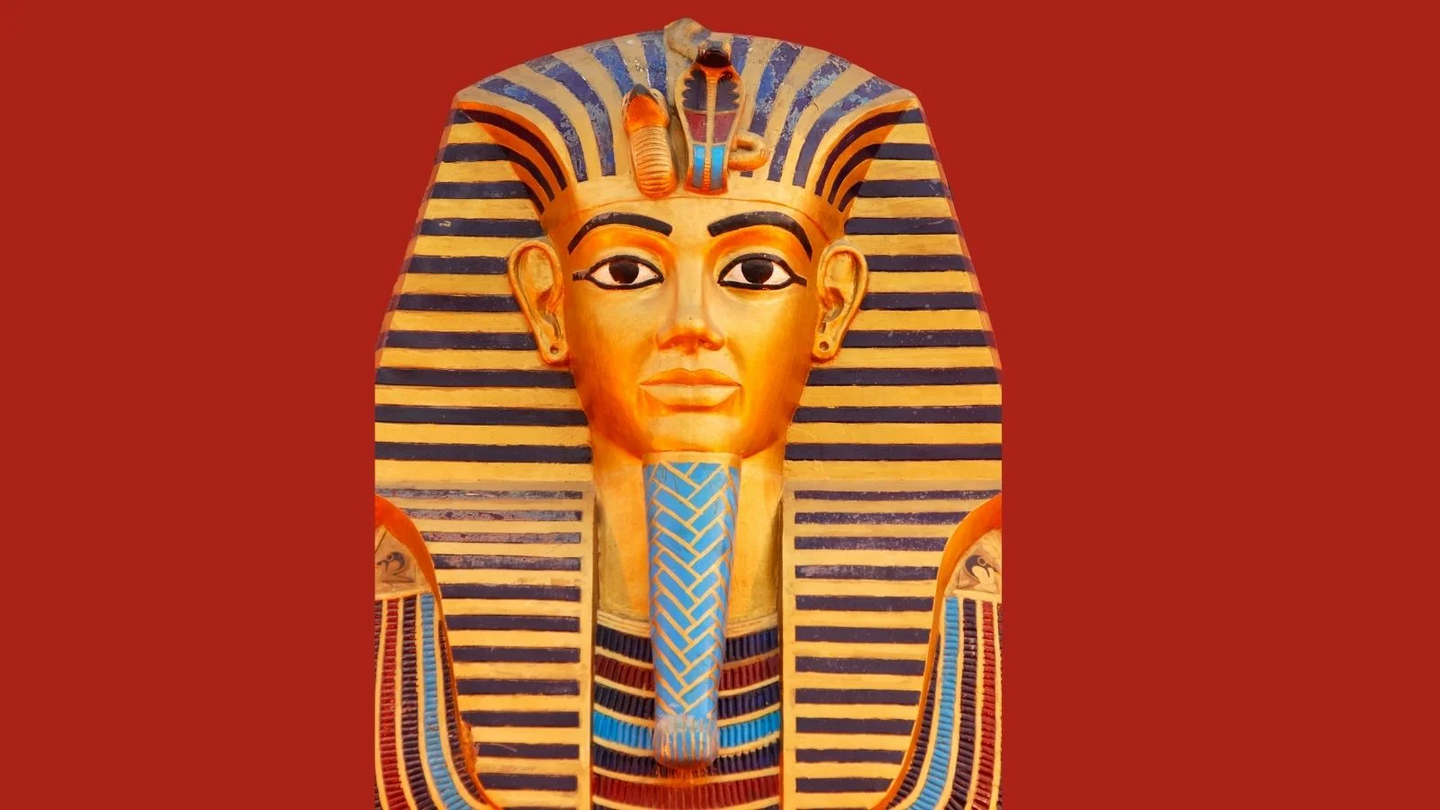
Unknown artist. Funerary mask of Tutankhamun. c. 1323 BCE. Egyptian Museum, Cairo.
In Ancient Egypt, the gaze became a symbol of eternal life. The eyes look directly at the viewer, yet within them is not human warmth—only divine power.
Unknown master. Wadjet amulet (Eye of Horus). Ancient Egypt, 1st millennium BCE. Egyptian faience.
The eye also becomes an independent object and an amulet. It separates from the face and transforms into a magical instrument.
Unknown artist. Fragment of the Nefermon Tomb painting. Thebes, Egypt. c. 1350 BCE. British Museum, London.
Egyptian Canon—the face is in profile, but the body is always facing forward. This is necessary so that the gaze always remains «alive» and can interact with the world and the viewer.
VIEWPOINT—SYMBOL
With the arrival of Christianity, the function of the gaze began to change. Art was no longer meant to frighten or defend; it was intended to guide toward God. In the Byzantine tradition, the gaze becomes vast, immobile, and detached. The figures do not look at the viewer; they look through them.
Unknown artist. Christ Pantocrator. Byzantium, 6th century. Monastery of Saint Catherine, Sinai.
It is evident that the Byzantine perspective lacks emotion. Christ’s enormous eyes do not look at a specific viewer, but rather seem to look right through them.
Unknown artist. Emperor Justinian I with his entourage. c. 547. Basilica of San Vitale, Ravenna.
It can be noticed that all characters share the same gaze. Individuality is erased; everyone is looking in the same direction.
Unknown Artist. The Vladimir Mother of God. Byzantium (Constantinople), early 12th century. State Tretyakov Gallery, Moscow.