Block 1. Concept
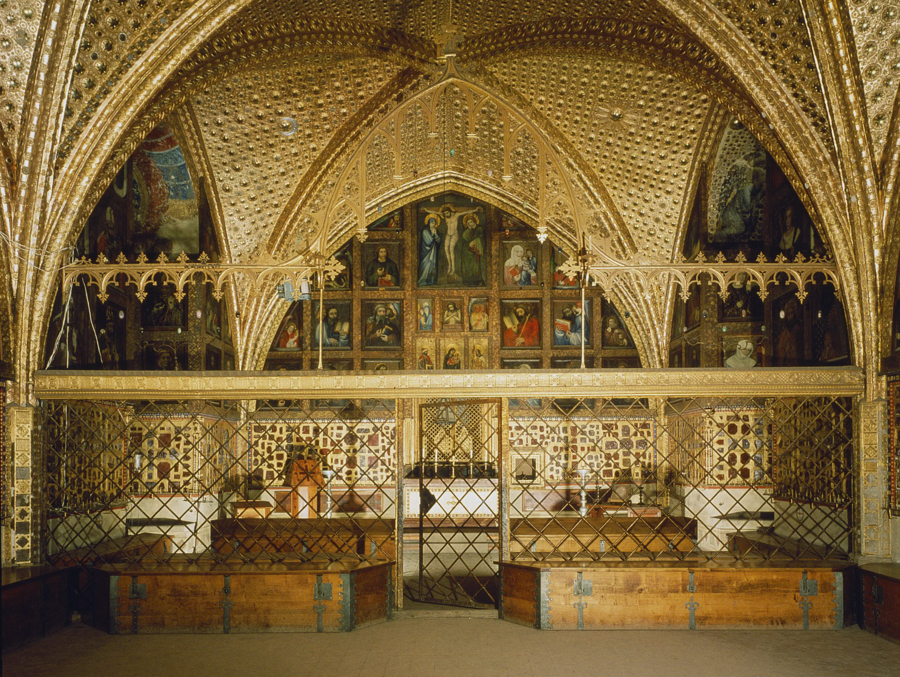
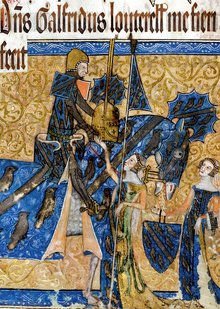
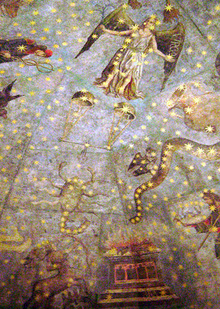
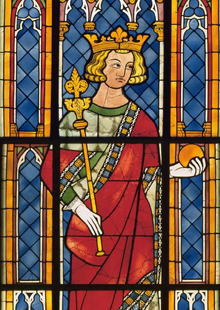
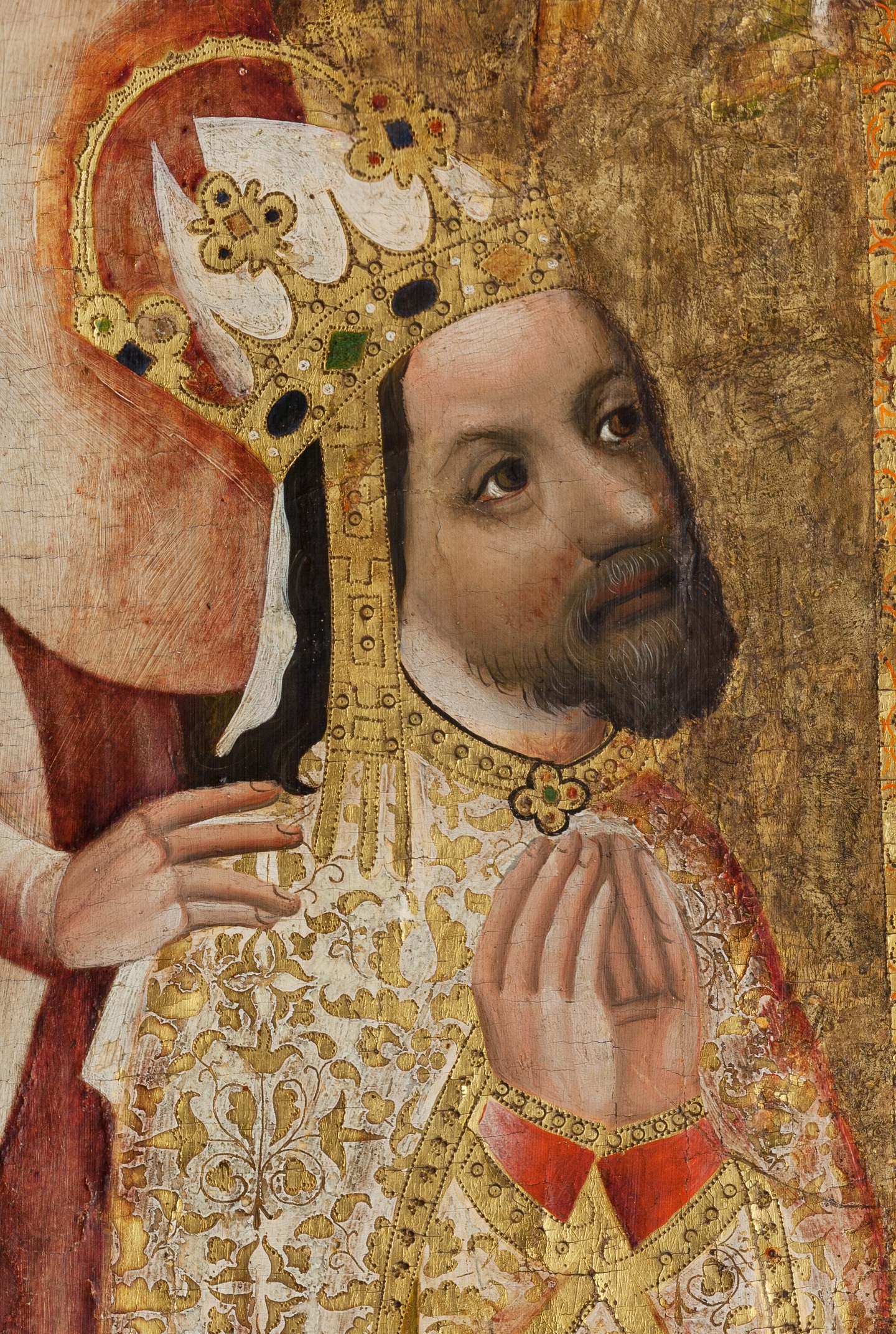
St. Cross Chapel in Karlstein Castle. Decoration 1357–1367
The transition to Northern Renaissance art can be perceived as a sudden qualitative leap. The contrast between the conventionality of medieval painting, with its gold backgrounds, and the meticulous naturalism of 15th-century Netherlandish masters creates the illusion of a break in tradition. However, this impression only arises when evaluating the final artistic outcome without considering the formation of the very demands placed upon depicting faces, textures, and detail.
This work shifts the focus of the investigation from 15th-century the Netherlands to Prague in the 1350–1380s. It was during this period, at the court of Charles IV, that a system of artistic principles developed—principles from which the new canons of International Gothic emerged, influencing the development of the Northern Renaissance, among other things.

The working hypothesis is that the Northern trajectory began not with a technological breakthrough, but with a refusal. At the same time Italian painting was learning to construct space, the Prague School renounced it. This refusal led to the formation of several characteristics, some of which would later be identified as Northern.
The topic was chosen because Prague, in this context, serves as a prime example of a shift in the trajectory of artistic style formation during the 14th and 15th centuries: a courtly center open to Italian and French influence that voluntarily chose a different approach. This material demonstrates that style is shaped by problem-solving.
The comparison in this work is between the set of requirements for representation active during Carlstein’s reign and those that were developing concurrently. Northern painting is brought in as a horizon for inquiry, not as a secondary object of study.
Why did the Prague School of the 1350–1380s—despite possessing Italian tools of volume and chiaroscuro—decline to construct space and instead focus on rendering an image around a single face and surface—and why did this very refusal become a stable convention inherited by the «soft style» and Northern painting of the 15th century?
The rejection resulted from the task: the chapel repository for relics required a complete, named, and identifiable collection of saints. European practices were maintained, but their hierarchy shifted—the figure became more important than the action, the surface more important than depth, and the unit more important than the scene.

For this study, we selected Czech panel painting from 1350–1380: the Vyšehrad Altarpiece, Theodorich’s and his workshop’s boards from Karlštejn, and the Trschebon Altarpiece. Within Karlštejn, we selected boards where the figure is identifiable as a specific individual; ornamental and heavily damaged fragments are not being studied.
Topics
Block 1. Concept
Block 2. The Commission: Why Prague?
Block 3. The Face
Block 4. Format
Block 5. Texture
Block 6. Tserbonik Altar
Block 7. Toolkit of the Northern Renaissance
Block 8. Conclusion
Block 2. Order: Why Prague?
Bohemia is a historical region in Central Europe covering the western and central parts of modern Czechia. It lies beyond the Roman Limes—legions operated here, but the Roman provinces never fully extended into this area. By the 14th century, what remained from antiquity was only the country’s name, derived from the Celtic tribe of the Boii.
Thus, the Italian tradition of direct influence on the formation of Prague painting did not occur, but it nonetheless established a canonical model. The Prague School acquired its own characteristics later—through the internal transformation of this canon, driven by social, geographical, and political circumstances.
Before the reign of Charles IV, Prague painting adhered to Italian canons.
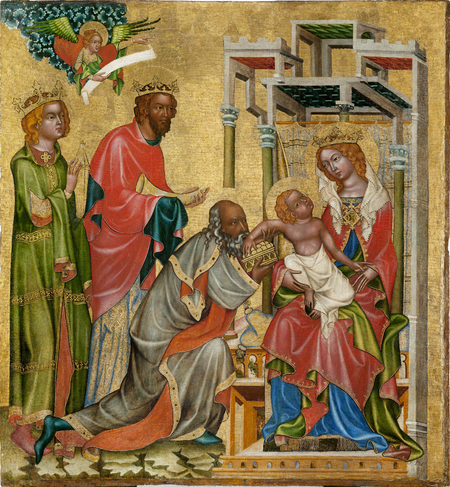
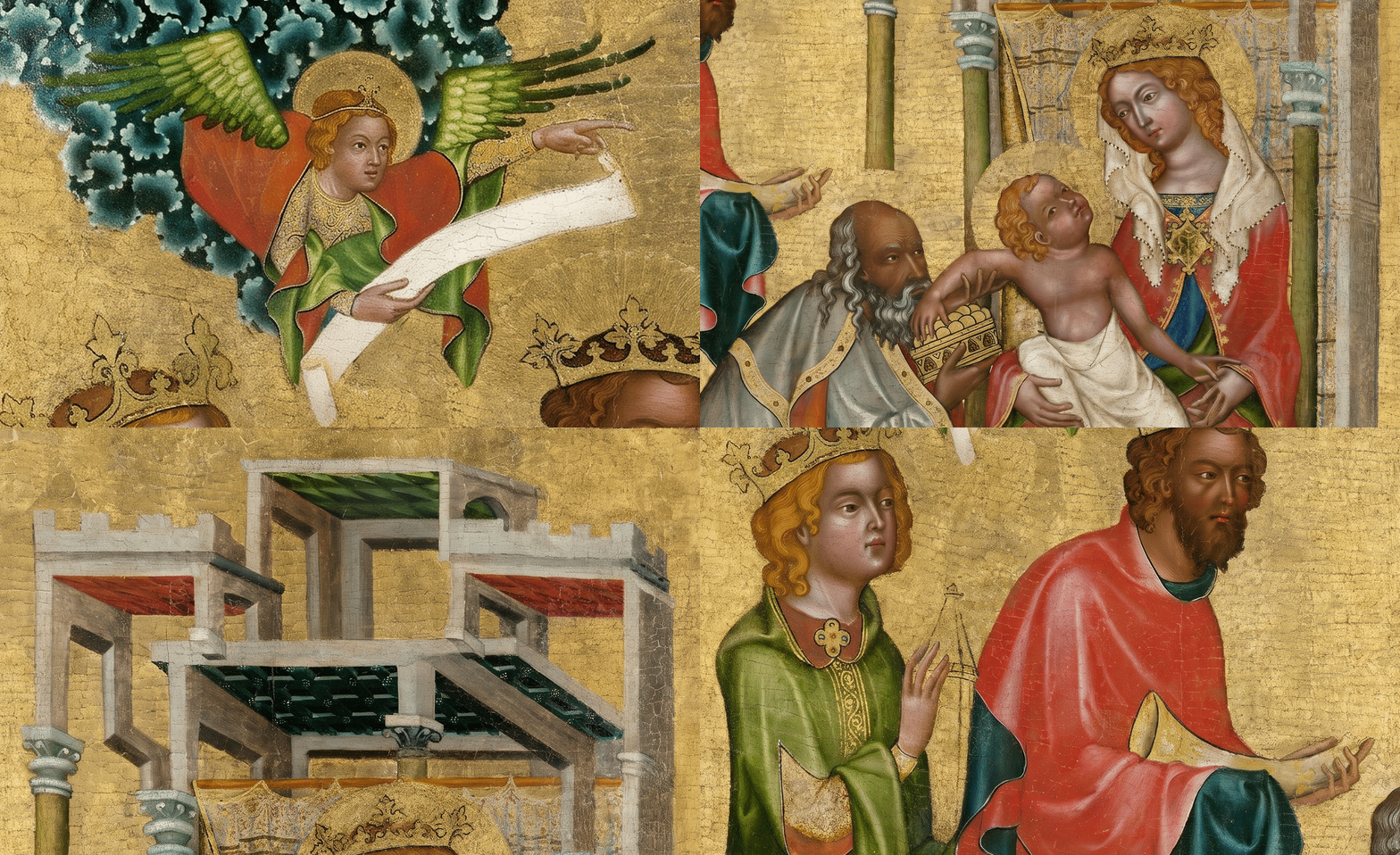
Master of the Visebrod Altarpiece. Adoration of the Magi. c. 1345–1350. National Gallery in Prague
The Vyšehrad Altarpiece was created before the character of Prague painting evolved. The nine panels, originating from the Cistercian monastery, adhere to Gothic and Byzantine iconographic canons (the method of rendering volume and space). This pattern is clearly traceable in «Adoration of the Magi.»The symbolism of color, the flat gold background, and the combination of reversed and conventional perspective without a single vanishing point are preserved. Hierarchy is indicated through scale. Christ and the Mother of God are painted larger than secondary characters and angels; the patron (Peter of Rožmberk) is positioned at the feet of the Madonna. Emotions are conveyed through canonical gestures, poses, and head tilts. The figures are lyrical and otherworldly, lacking the individualized representation found in the style of Sienese masters.
These canons are changing in the next generation of Prague artists—the Masters of the Theodoric and Tršobonsky Altarpieces.
The new dynasty required legitimacy, and it could not be drawn from lineage but from objects. A relic, at that time, served as a political argument—who possessed the sacred object, that person held the right to speak on behalf of the Christian world.
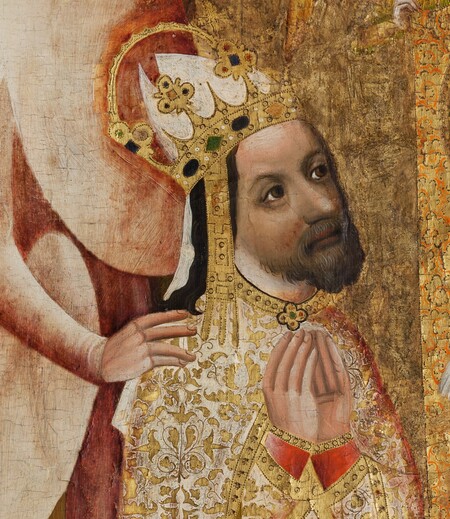
In 1346, Charles IV becomes King of Bohemia, and in 1355, Emperor of the Holy Roman Empire. Prague serves as the capital of the empire for several decades: in 1344, the archbishopric is established there, and in 1348, the university is founded. The city is built as a capital, and painting receives increased attention and commissions. Karlštejn is founded in the same year, 1348.Fragment of the votive plaque of Archbishop Jan of Olomouc: Charles IV and Wenceslas before the Madonna. c. 1370–1371.
Karlstein Castle. Founded in 1348.
This is how the Chapel in the Great Tower appears—that is, in the storage area itself. It was consecrated on February 9, 1365, and the furnishings date from 1357–1367. There was no parish here; services were held rarely, and access was closed during the Emperor’s reign. The audience of one hundred twenty-nine boards was the court and Karl himself, not the general public.
Here, the main difference from the conventional idea of the Chapel becomes apparent—it lies in whom the decoration is intended for. Italian painting of the 14th century was fundamentally urban. Siena and Florence were republics, and the art there addressed the citizens, the piazza, the commune; Lorenzetti painted his allegories of governance in the hall where the council met. Such painting needed to persuade many people immediately, which required scenes, space, and perspective—the crowd had to see the event and understand it without explanation. Czech painting of that era, however, was courtly. The patron was singular, the audience narrow, and the setting enclosed. There was no need to convince a crowd; the requirement was that everything be correct and complete. Thus, Prague painting began to be filled with detail.
Block 3. Face
The decoration of St. Cross Chapel is associated with Theodoric—one of the few 14th-century Czech painters whose name has survived. In the 1359 document, he is named malerius imperatoris, or «painter of the emperor.» This is a record of his position, not his date of appointment; equating the individual named in the document with the painter remains a subject of discussion. Since the workshop was at work, not a single author, further analysis proceeds in series rather than by individual names.
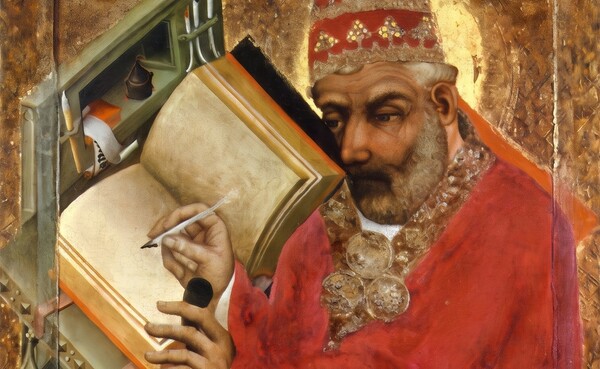
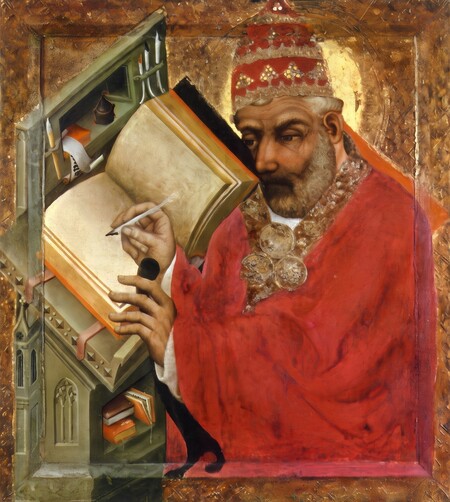
Theodoric of Prague. Saint Gregory. c. 1370. National Gallery in Prague, 115 × 105 cm.
Compared to the VyShebrod altarpiece, a number of techniques have changed. The cycle of scenes is replaced by a series of individual images. Each panel in Karlstein is autonomous. Active action disappears. Figures are depicted from the waist up, without setting or event. This is explained by the function: the saints serve as intercessors to whom one approaches personally. The half-length figure, facing the viewer, achieves this directly, whereas the scene allows for observation from a distance. Space recedes. The architectural settings and inclined planes of VyShebrod are replaced by a heterogeneous gold background that does not depict a location. If in VyShebrod the characters are distinguished by age and beard, in the Karlstein panels, the distinction is conveyed through facial structure. This enhancement of individualization contributes to a feeling of direct contact.
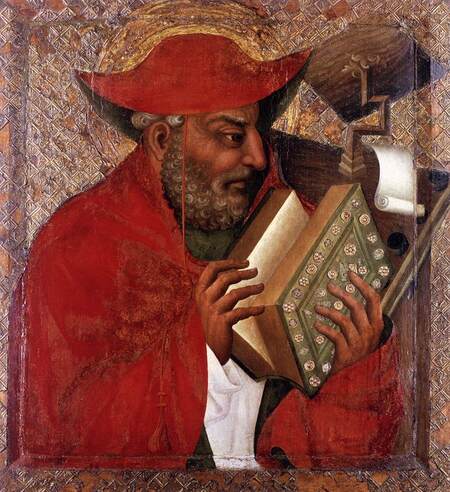
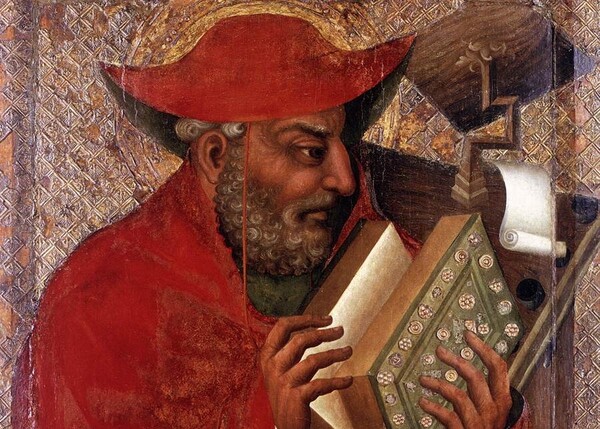
Theodoric Pražský. Saint Jerome. 1360–1365.
The same techniques can be observed in the work of St. Jerome. The figure is shown from the waist up, moving away from spatial representation. More detail is given to the shape of the head, the placement of the eyes, and the line of the mouth. Age is recognized not by attributes, but by graying hair and wrinkles. Greater attention is paid to the details of the clothing—the form of the headwear, the soft folds, and the decorative tassel on the gallero cord.
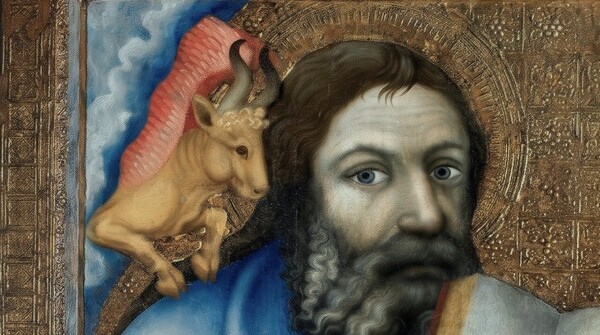
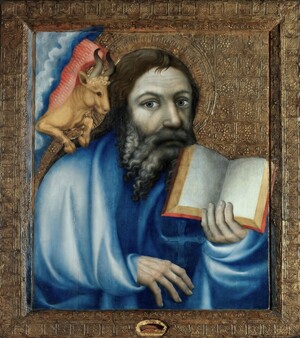
Theodorich of Prague. St. Luke. 1360–1365.
Luke is an evangelist and he has attributes. However, comparing him to Jerome based on attributes is meaningless. Theodoric, on the other hand, depicts Luke’s hair, beard, and changes the shape of his nose, eyes, and posture, thereby creating characters distinguishable by individual features, independent of external objects.
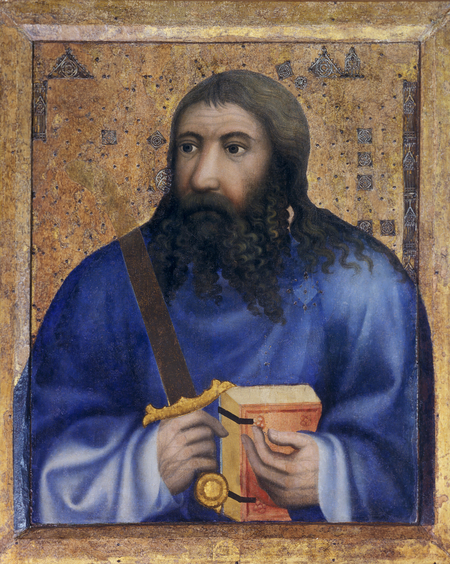
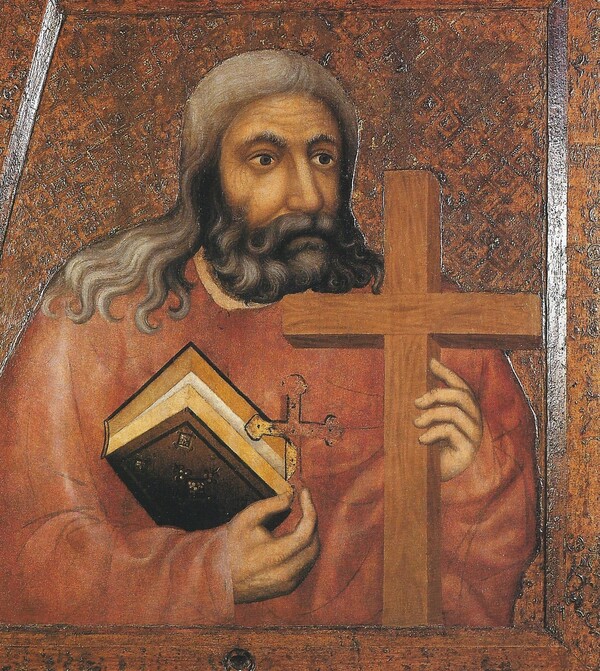
1. Theodoric of Prague. St. Simon Zealot. c. 1360–1365. 2. Theodoric of Prague. St. Jude Thaddeus. 1360–1365.
The distinction between Simon and Judas is not based on attributes either. One figure is older, and their eyes are positioned differently while their mouth is outlined distinctly. Theodorich illustrates the structure of the hair, the shape of the eyebrows, and the amount of rouge.
Compared to earlier Prague works, an intensification of detail is clearly visible. Veins are discernible on the hands, and the folds of the clothing become tactile. Despite the absence of a narrative background or objects with clear perspective, volume emerges in the works.